Math online worksheets - Page 21
772 filtered results
Difficulty Level
Grade
Age
-
From - To
Subject
Activity
Standards
Favorites
With answer key
Interactive
Counting Birds Worksheet
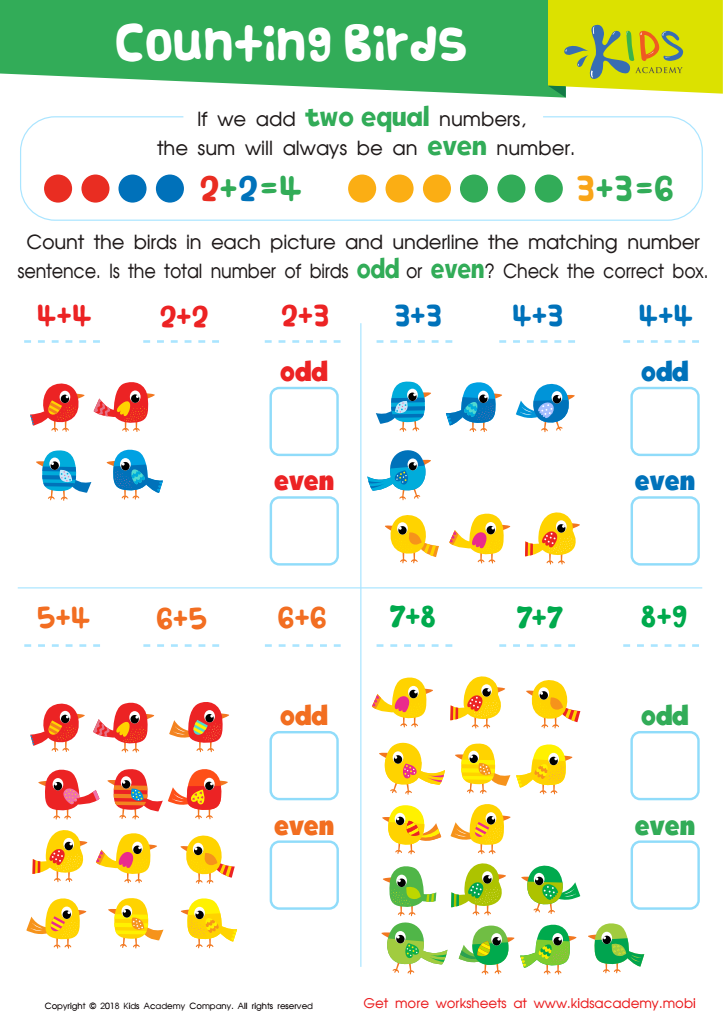
Help your child count and underline the matching number sentence in the worksheet. Ask them if the total number of birds in each picture is odd or even, then check the correct box. When two equal numbers are added, the sum is always an even number (e.g. 2+2=4, 4+4=8, both divisible by 2).
 Assign to My Students
Counting Birds Worksheet
Worksheet
Fishy Numbers Worksheet
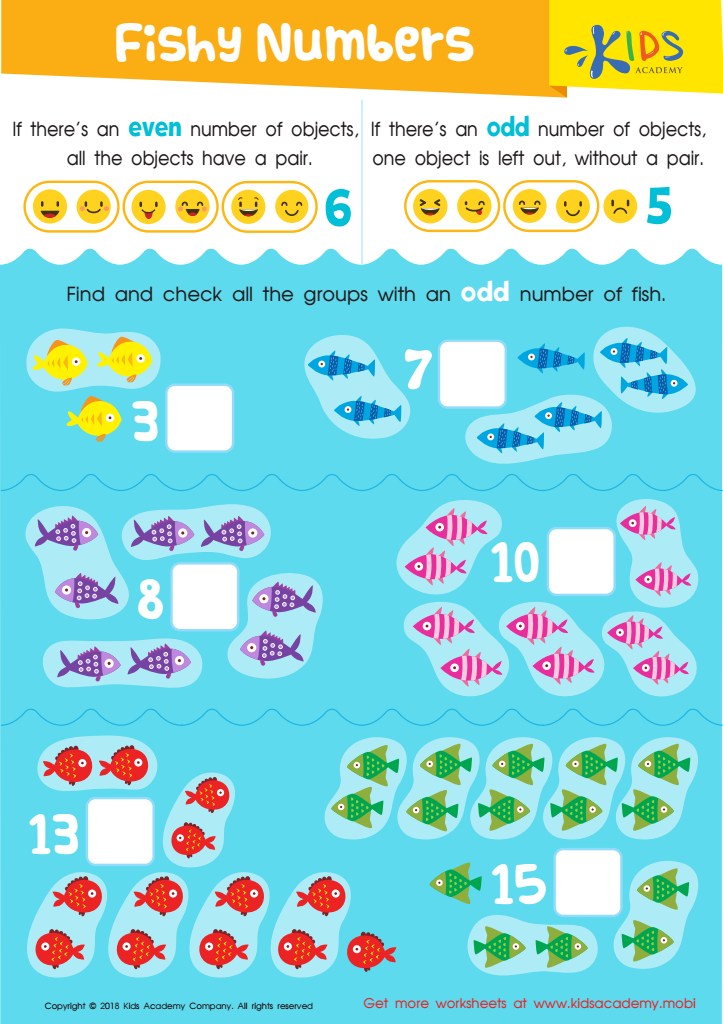
Explain to your kids even and odd numbers using this worksheet. All objects in a group of even numbers can be paired in twos, while an odd number leaves one object unpaired. Ask your students to find and check the groups with an odd number of fish, counting and figuring out which ones are odd.
Fishy Numbers Worksheet
Worksheet
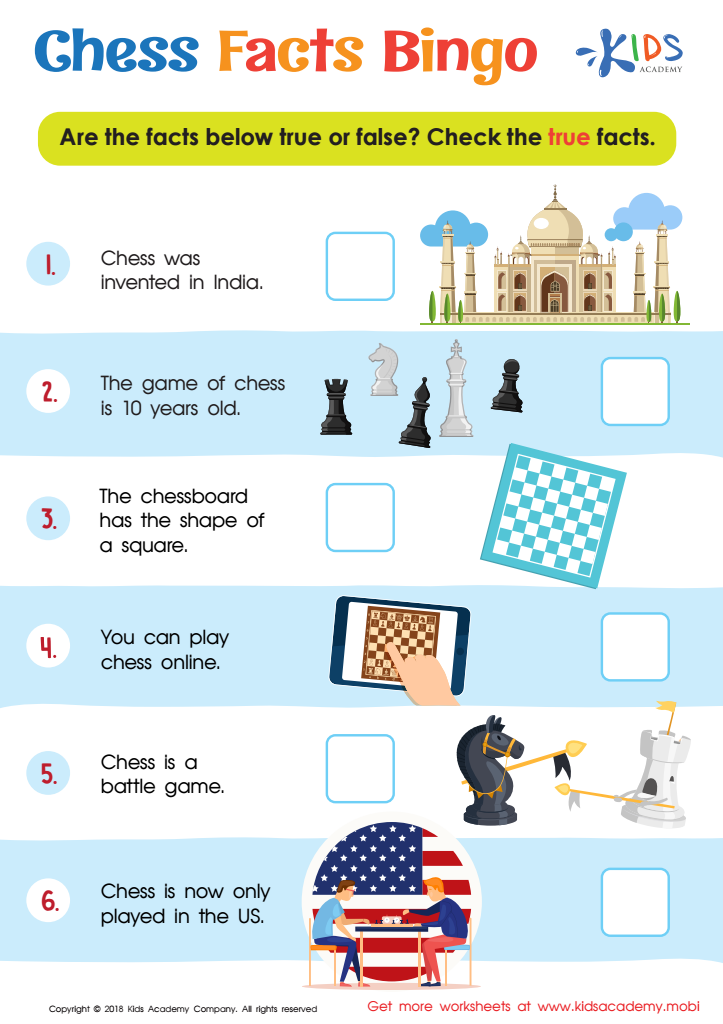
Chess Facts Bingo Worksheet
Help your child assess their knowledge of chess with our simple worksheet. It contains six questions; read them to your child and ask them if the statements are true or false. Once they check the boxes for the true statements, you'll have a better understanding of their understanding of the game.
Chess Facts Bingo Worksheet
Worksheet
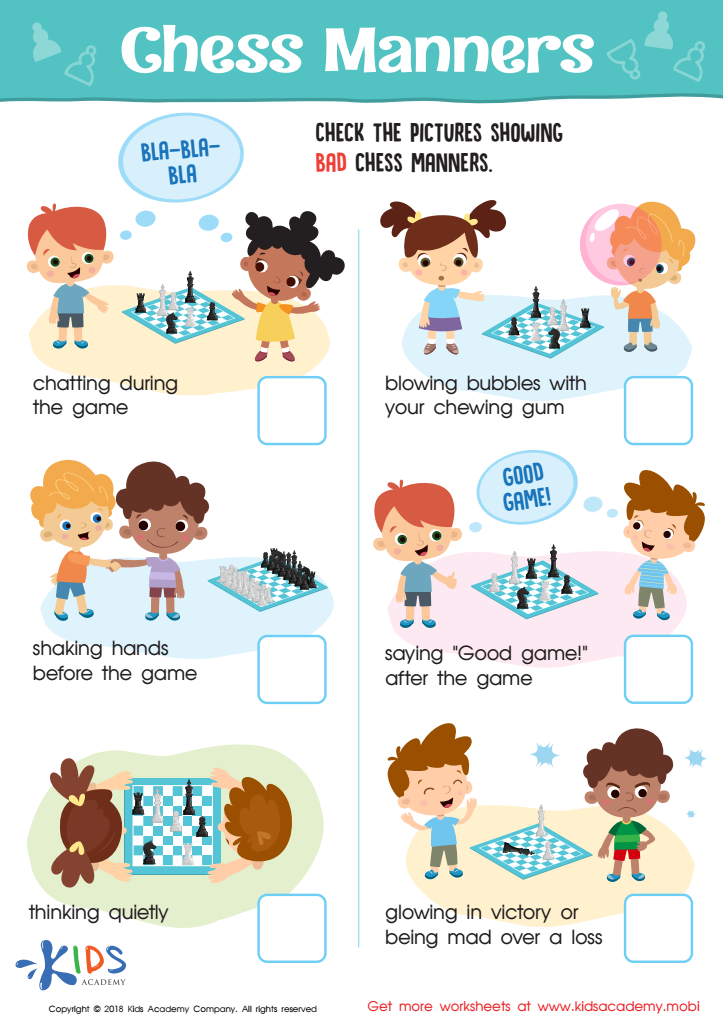
Chess Manners Worksheet
Teach your child chess manners in addition to table and social ones. Chess has clear rules and etiquette which must be followed for a proper game. Review this worksheet with your kid and discuss the pictures that show inappropriate behaviours. This will help them understand how to play the game correctly and with good manners.
Chess Manners Worksheet
Worksheet
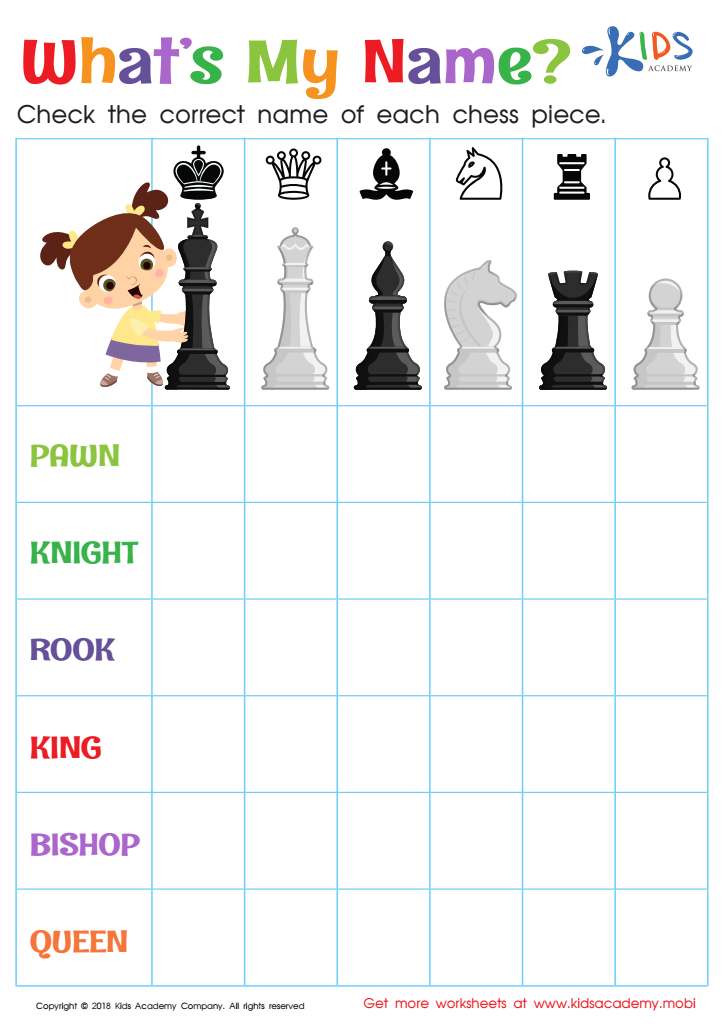
What's My Name? Worksheet
Test your child's chess knowledge with this colorful worksheet! There are six pieces lined up with names underneath. Ask your child to name each piece, then check if it's correct. Help them succeed by brushing up on the different pieces and their names.
What's My Name? Worksheet
Worksheet
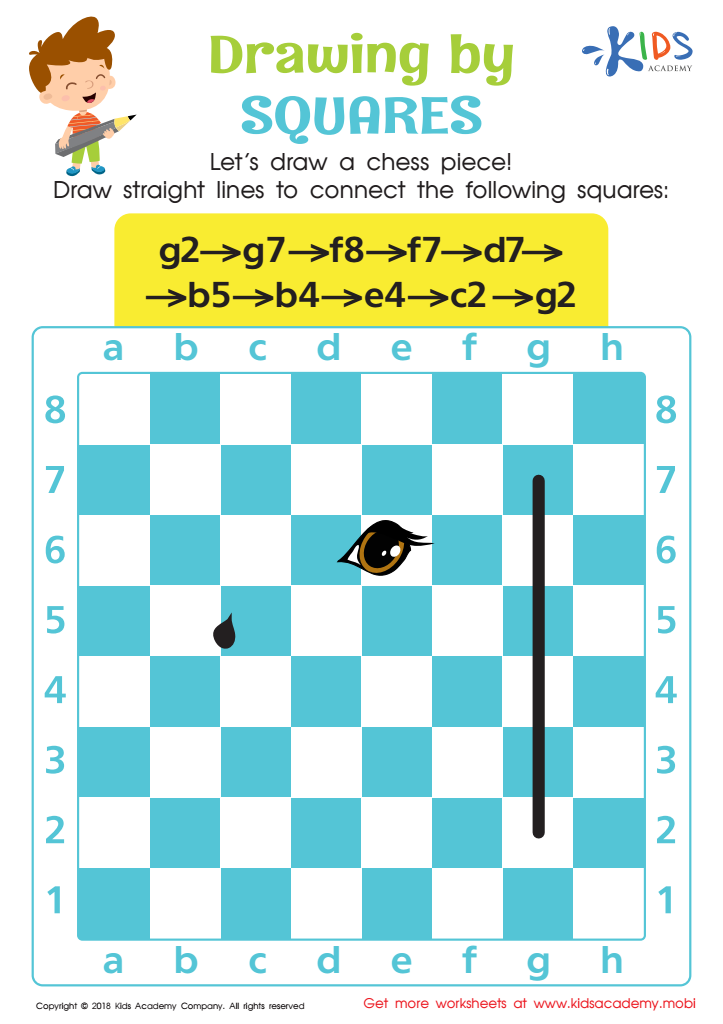
Drawing by Squares Worksheet
Test your child's chess skills and ability to name squares with this worksheet. Have them draw a chess piece from the squares at the top of the chessboard in the picture. Guide them to draw lines between the given squares for the correct outline of a chess piece.
Drawing by Squares Worksheet
Worksheet
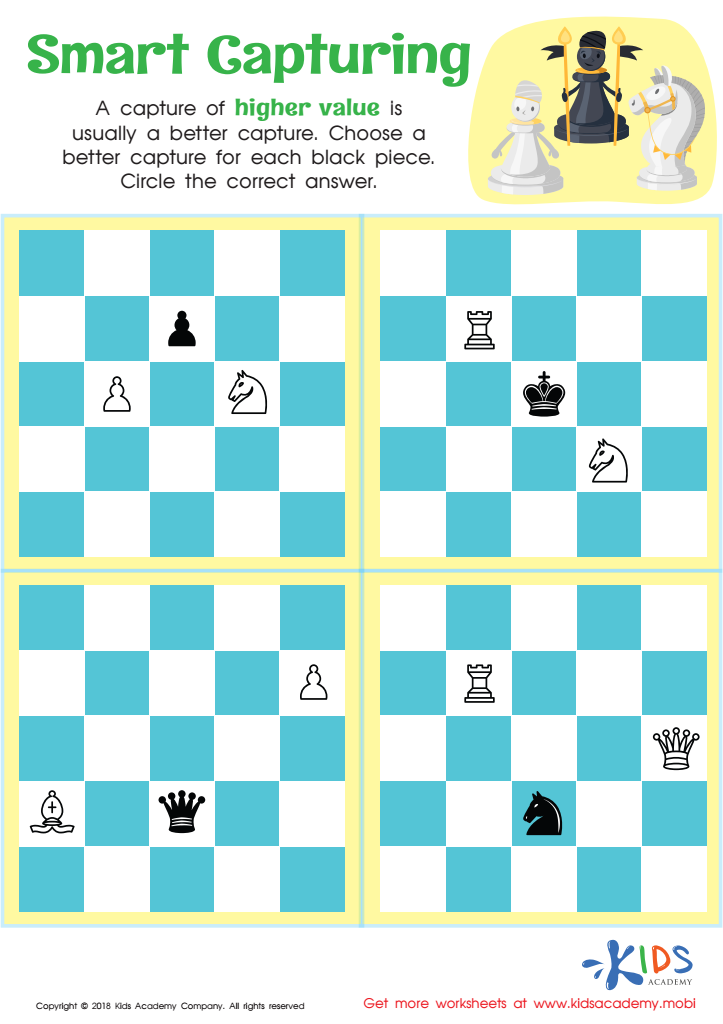
Smart Capturing Worksheet
Chess is a game of strategy and calculation. When presented with two captures, a player should always go for the one that yields the highest value. For example, taking a knight over a pawn. In this worksheet, your children will choose the best capture for each black piece. Ask them to circle the correct answers. (80 words)
Smart Capturing Worksheet
Worksheet
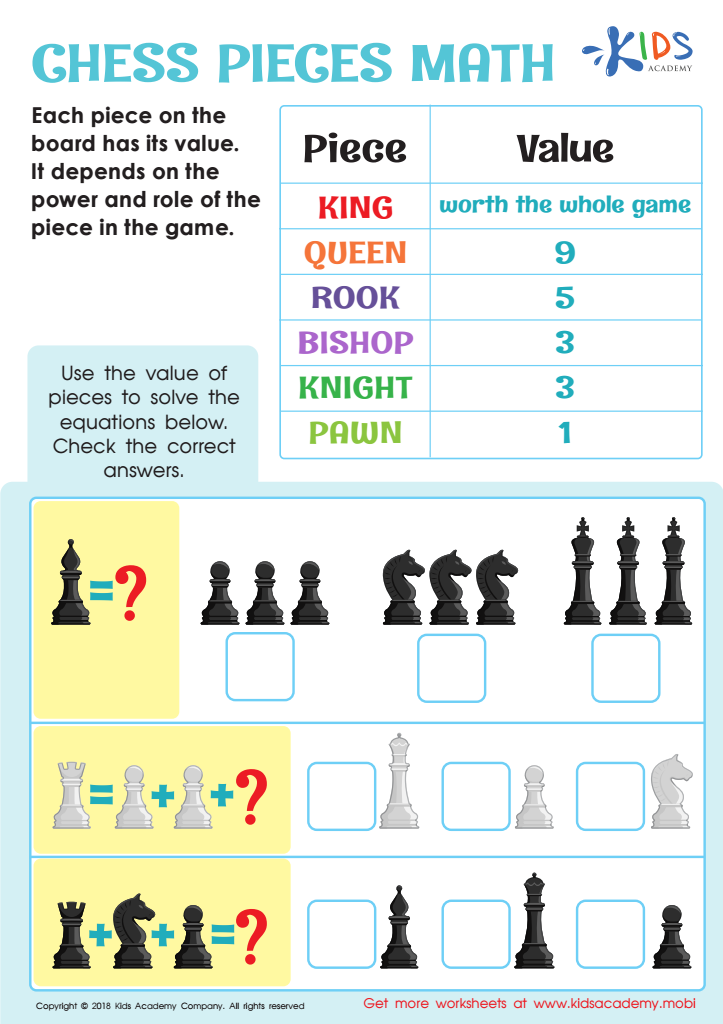
Chess Pieces Math Worksheet
Chess involves math! Each piece has its own value, from the king (worth the entire game) to the queen (9 points), varying according to their power and role. In the worksheet, your child must use these values to solve the equations at the bottom.
Chess Pieces Math Worksheet
Worksheet
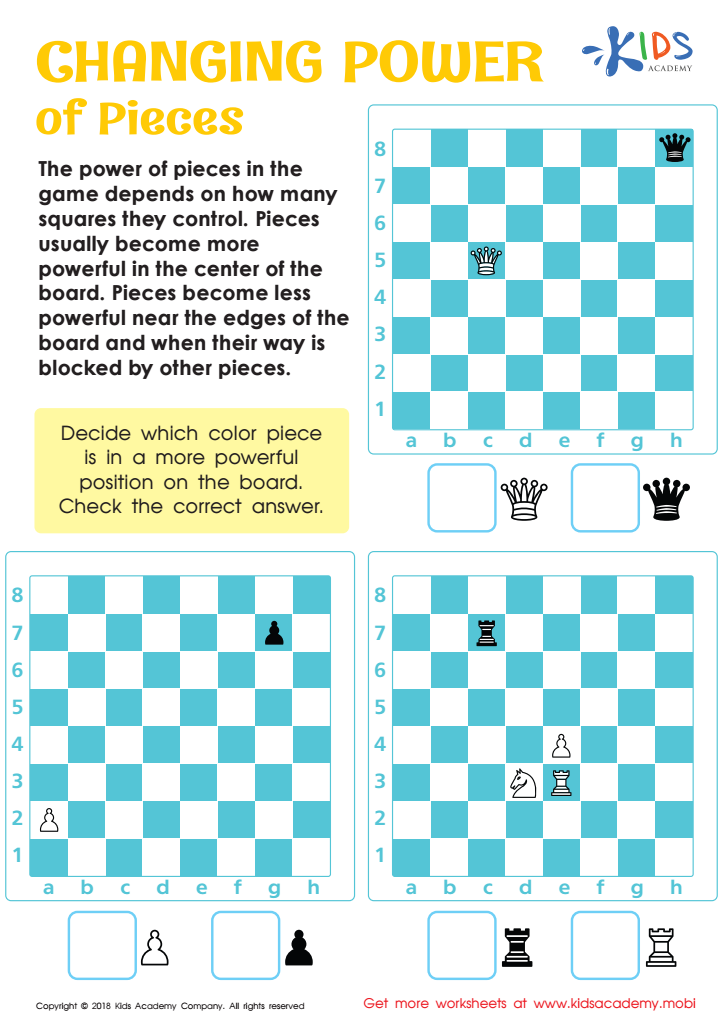
Changing Power of Chess Pieces Worksheet
Chess pieces have different power levels based on their position. When in the middle of the board, they are strongest; at the edges or blocked by other pieces, they are weakest. Help your child learn which pieces are in powerful positions by examining the worksheet.
Changing Power of Chess Pieces Worksheet
Worksheet
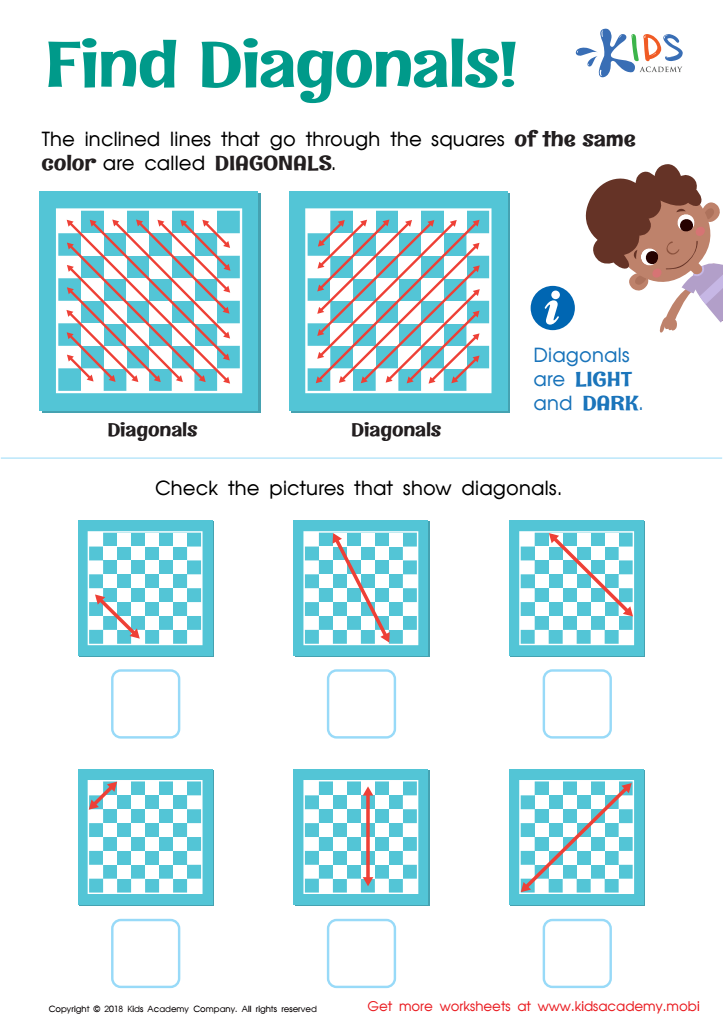
Find Diagonals Worksheet
Help your child learn the name of the lines that go through squares with this fun worksheet. Diagonals slant in left or right directions and create the same shape. Ask your child to identify the pictures with correctly drawn diagonals.
Find Diagonals Worksheet
Worksheet
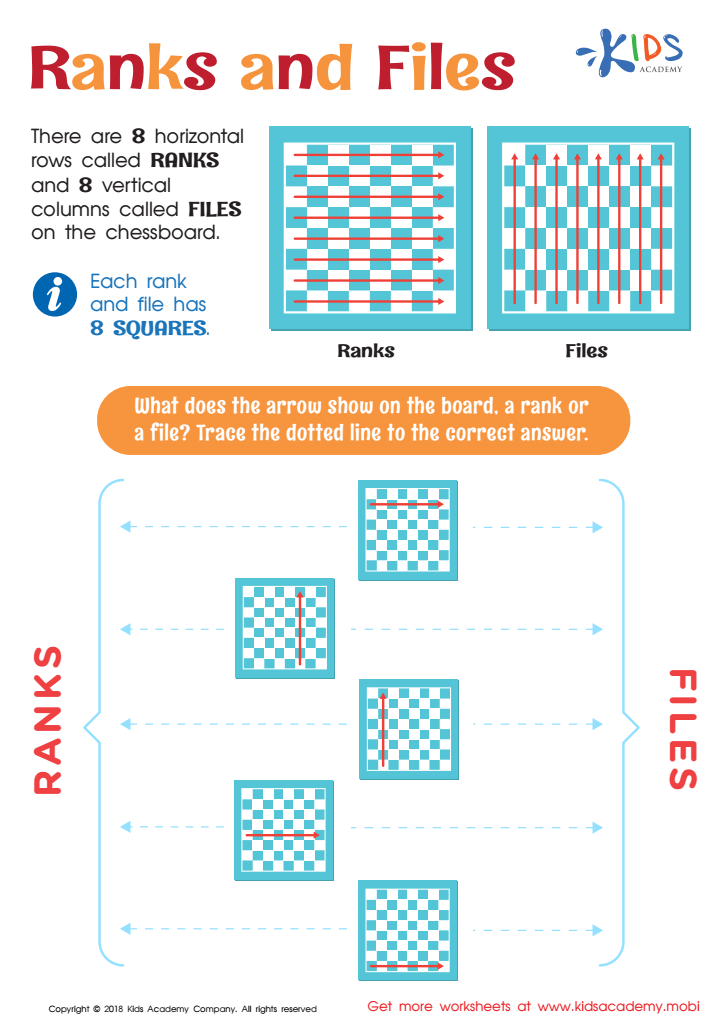
Ranks and Files Worksheet
A chessboard has 8 horizontal ranks and 8 vertical files, each with 8 squares. Test your child's understanding of these directions with this fun worksheet!
Ranks and Files Worksheet
Worksheet
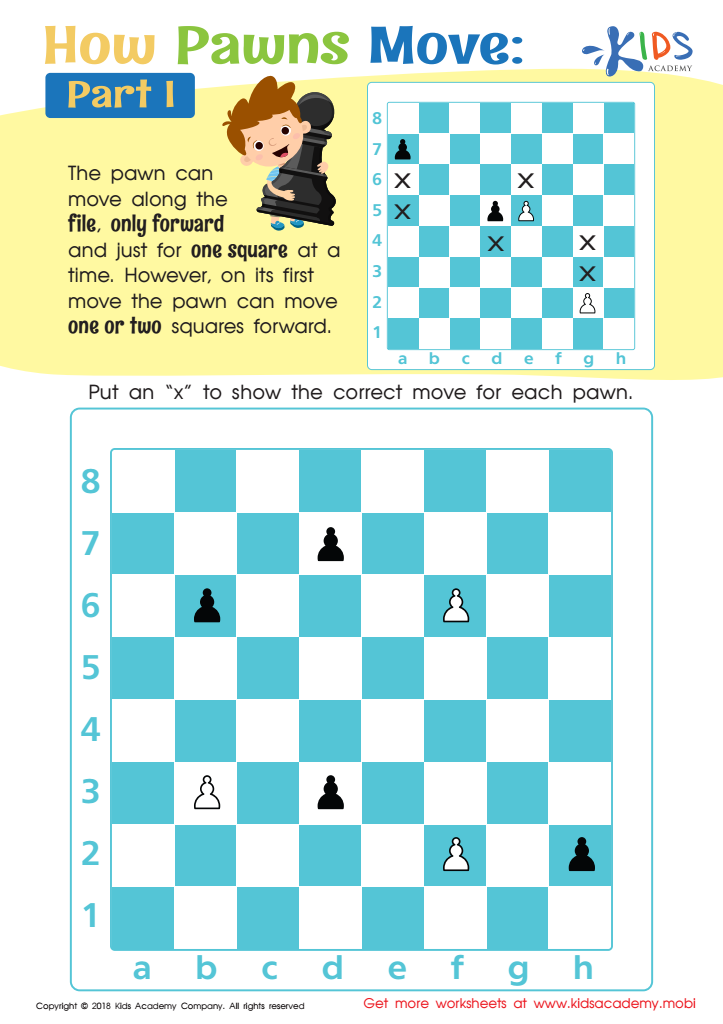
How Pawns Move: Part I Worksheet
Pawns can only move forward along the file one square at a time. For its first move, a pawn can move one or two squares. Show your child how to move pawns by asking them to put an X for the correct move on this worksheet. This exercise will help them gain confidence in using pawns.
How Pawns Move: Part I Worksheet
Worksheet
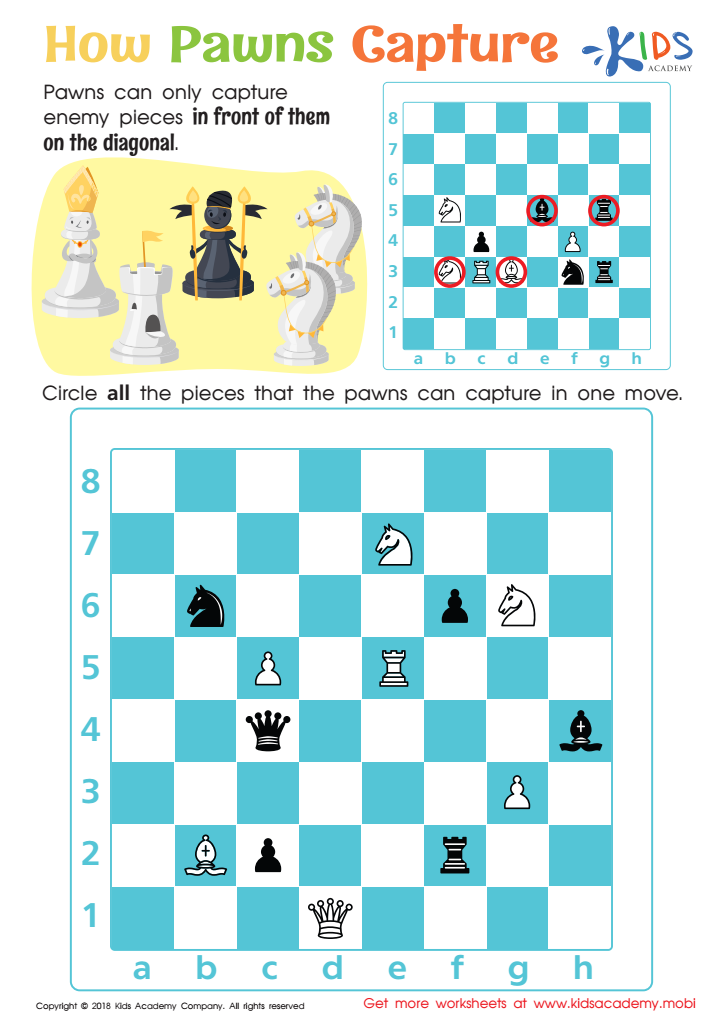
How Pawns Capture Worksheet
Ask your child to circle all the places a pawn can capture in one move on the diagonal. Pawns are limited in the moves they can make, but can still capture enemy pieces. This worksheet will help brush up on their knowledge of the rules of chess.
How Pawns Capture Worksheet
Worksheet
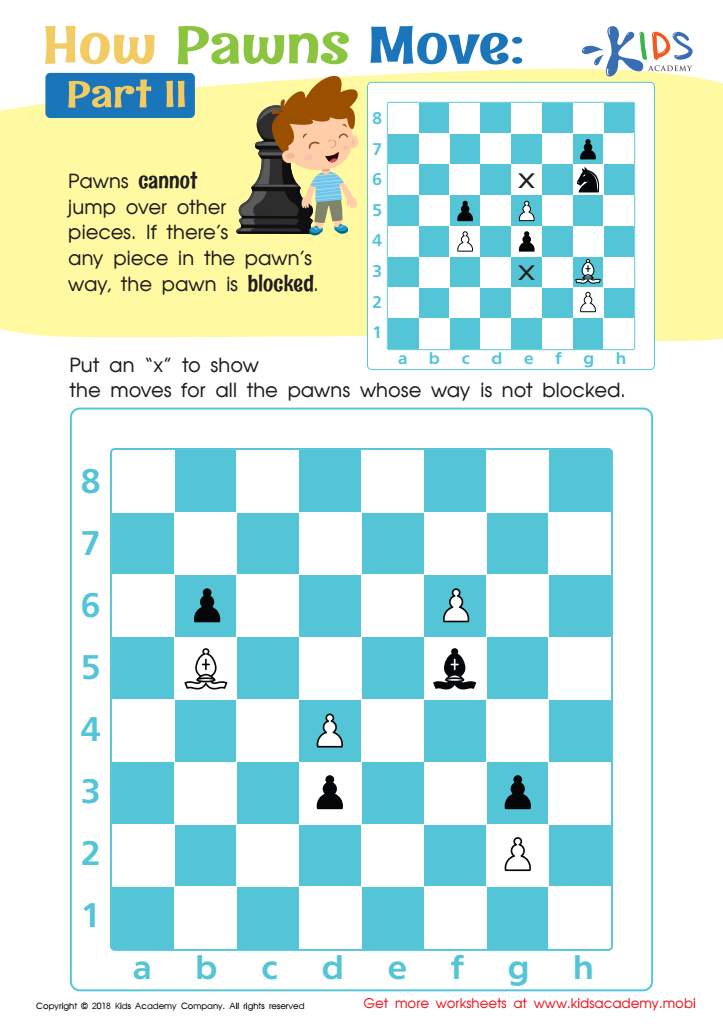
How Pawns Move: Part II Worksheet
Pawns are the first to attack in chess and each player has the most pieces. They can't jump over other pieces, so if there's an obstacle, the pawn can't move. Ask your child to put an X to show all possible moves for the pawns not blocked by other pieces. (80)
How Pawns Move: Part II Worksheet
Worksheet
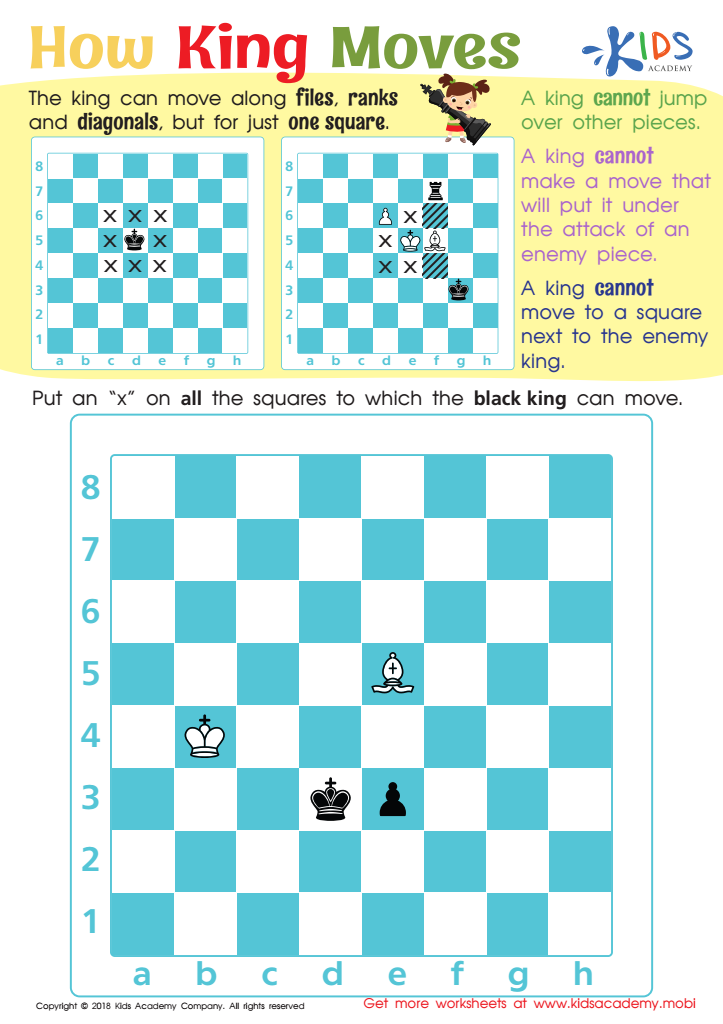
How King Moves Worksheet
Teach your kids the fundamentals of chess with this worksheet! The goal is to checkmate the opponent's king, so it must be protected at all times. The king moves along files, ranks, and diagonals (except one square at a time), and cannot move to a square next to the enemy king. Your kids will soon master the art of checkmate!
How King Moves Worksheet
Worksheet
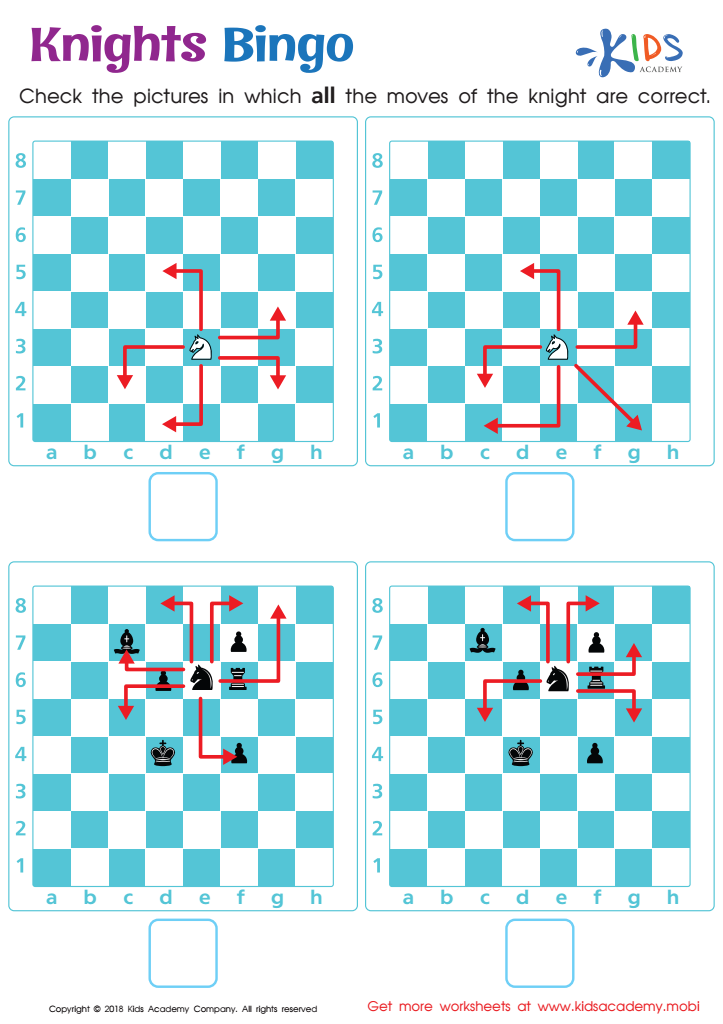
Knights Bingo Worksheet
Help your child identify legal knight moves in this easy worksheet. Review each picture with them, questioning if the knight moves are correct. Then have them verify pictures with correct moves.
Knights Bingo Worksheet
Worksheet
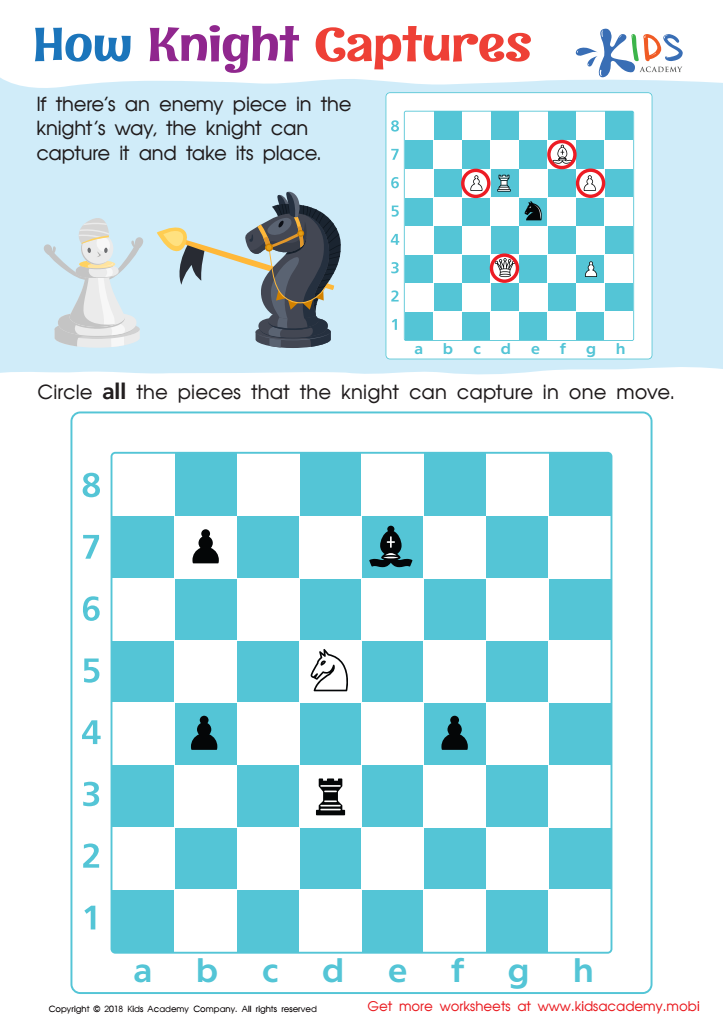
How Knight Captures Worksheet
Test your child's knowledge of chess pieces by asking them to identify the knight. It is shaped like a horse and its goal is to capture the enemy king in order to win the game. The knight has the advantage of being able to jump over other pieces, taking them out and taking their place. See how many pieces the knight can capture in one move with this worksheet.
How Knight Captures Worksheet
Worksheet
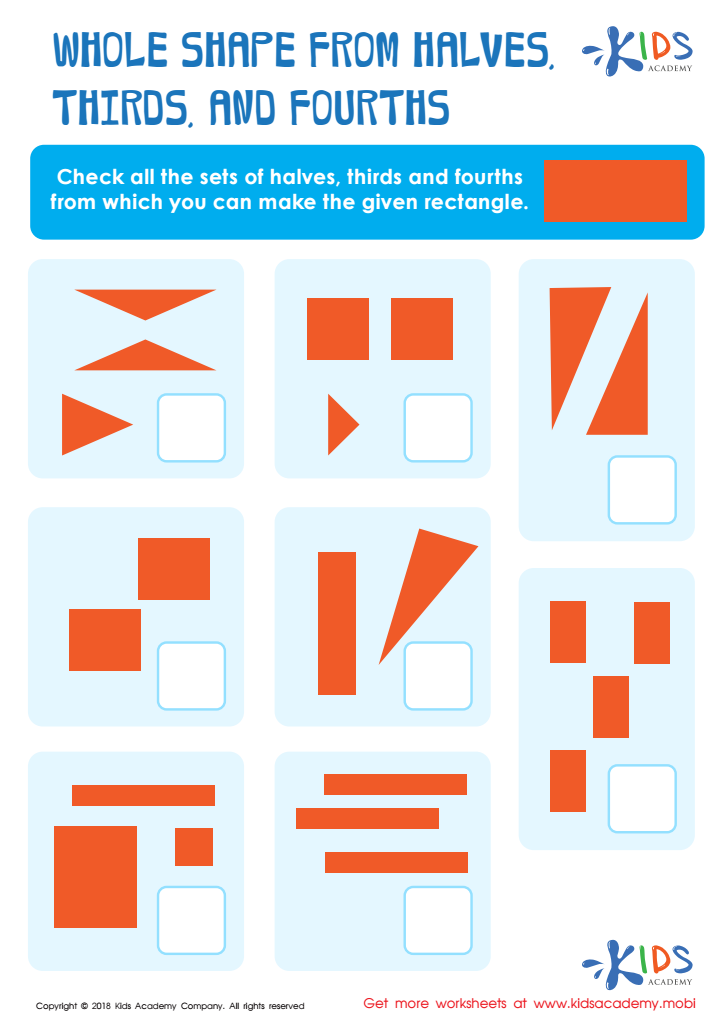
Whole Shape from Halves, Thirds and Fourths Worksheet
Explain to your students that they can make a new shape by combining halves, thirds, and fourths of a shape. Show them the worksheet with the rectangle at the top and ask them to find which sets of halves, thirds, and fourths make it. Have them check all the correct sets.
Whole Shape from Halves, Thirds and Fourths Worksheet
Worksheet
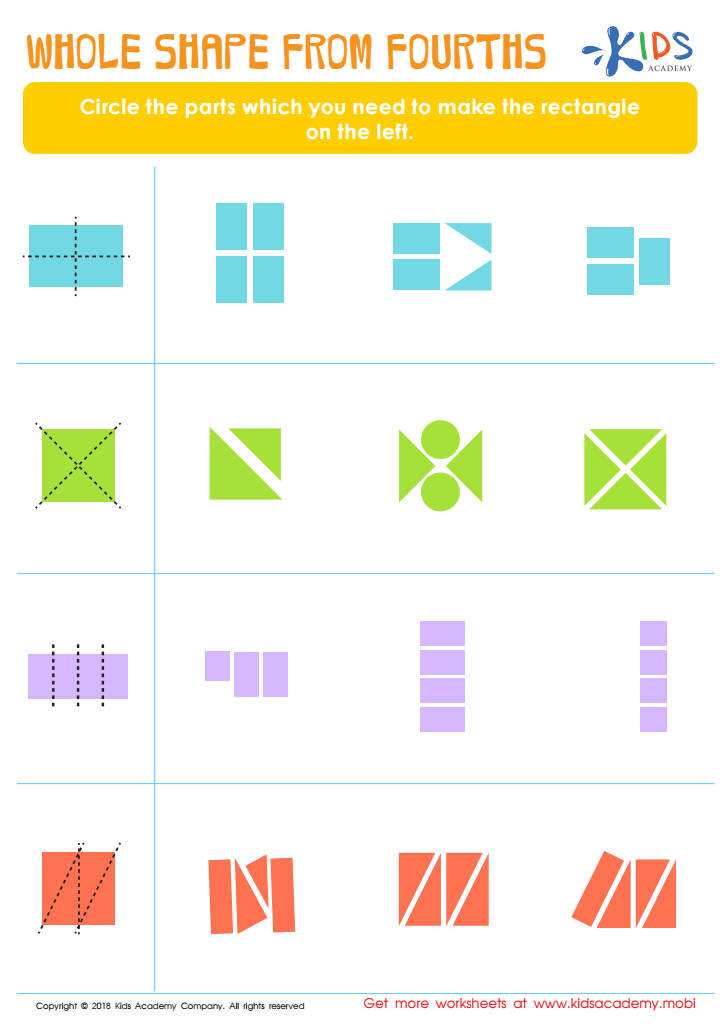
Whole Shape from Fourths Worksheet
Have your kids circle the shapes that'll form the rectangle on the left. It'll test their knowledge of shapes and ability to put them together to make a new one. Ask them to look at the parts on the right and circle the ones that'll form the rectangle.
Whole Shape from Fourths Worksheet
Worksheet
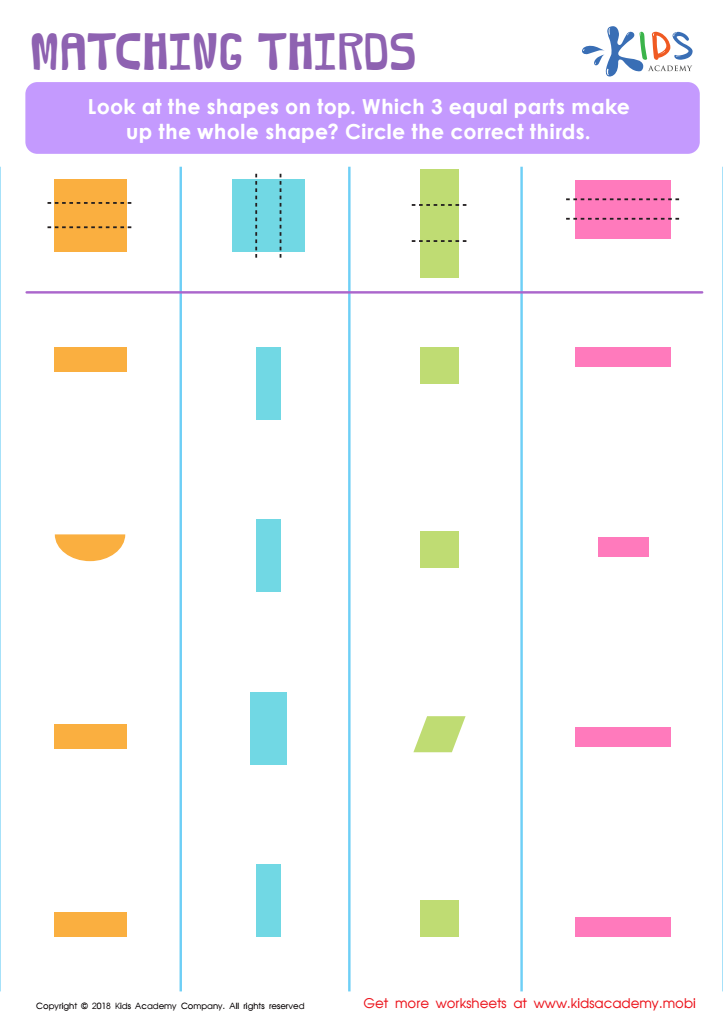
Matching Thirds Worksheet
Have your child examine the shapes on the worksheet. Ask them to identify them and then look at the fractions underneath. Ask them to circle the 3 parts that make up the whole shape. Understanding shapes and fractions is key!
Matching Thirds Worksheet
Worksheet
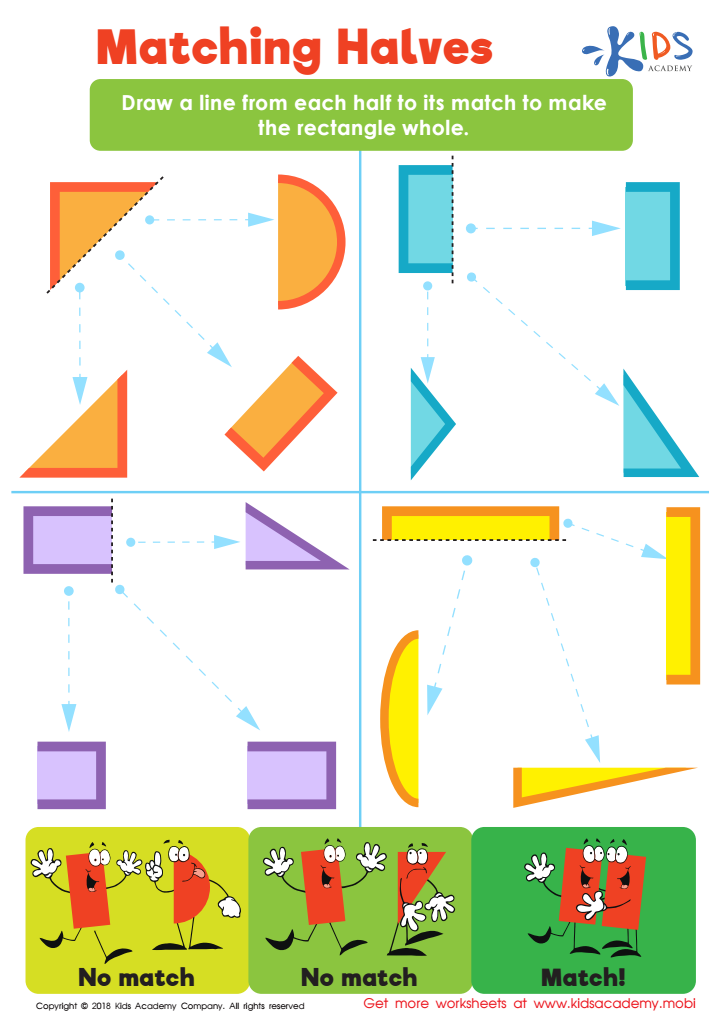
Matching Halves Worksheet
See how your child fares in matching two halves to form a complete rectangle. Provide them with four options, and ask them to draw a line connecting the two correct halves. Put their shape knowledge to the test with this simple worksheet!
Matching Halves Worksheet
Worksheet
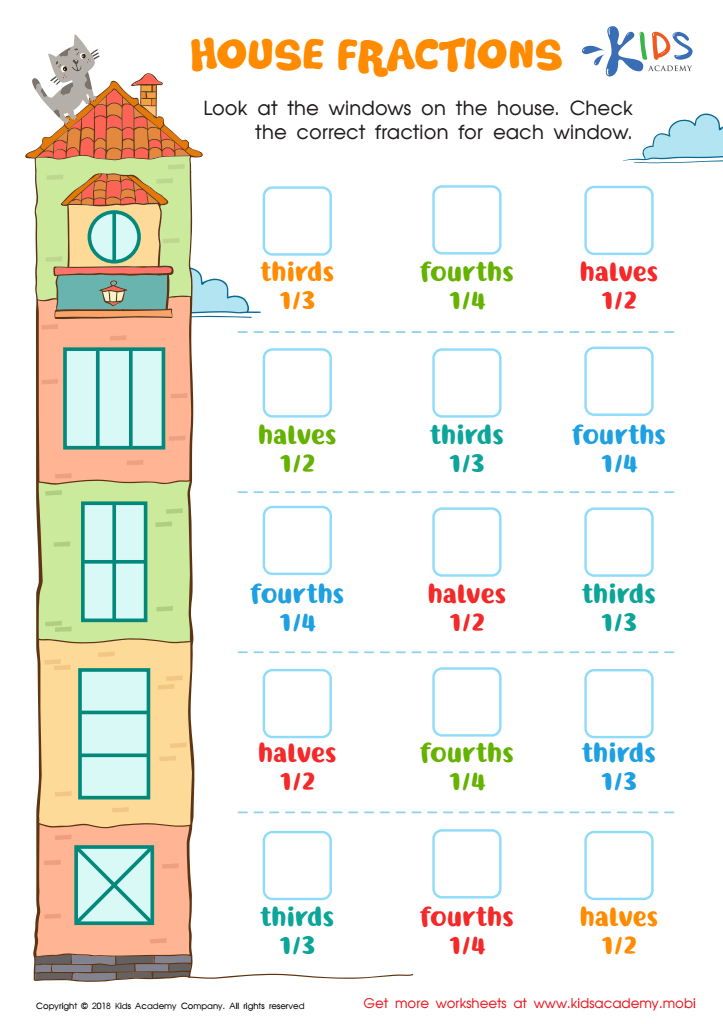
House Fractions Worksheet
Test your child's knowledge of fractions with this worksheet! Have them examine the windows of a house and select the correct fraction from the options given. This is a great way to see how much they understand about wholes, fractions, halves, one thirds, and one fourths.
House Fractions Worksheet
Worksheet
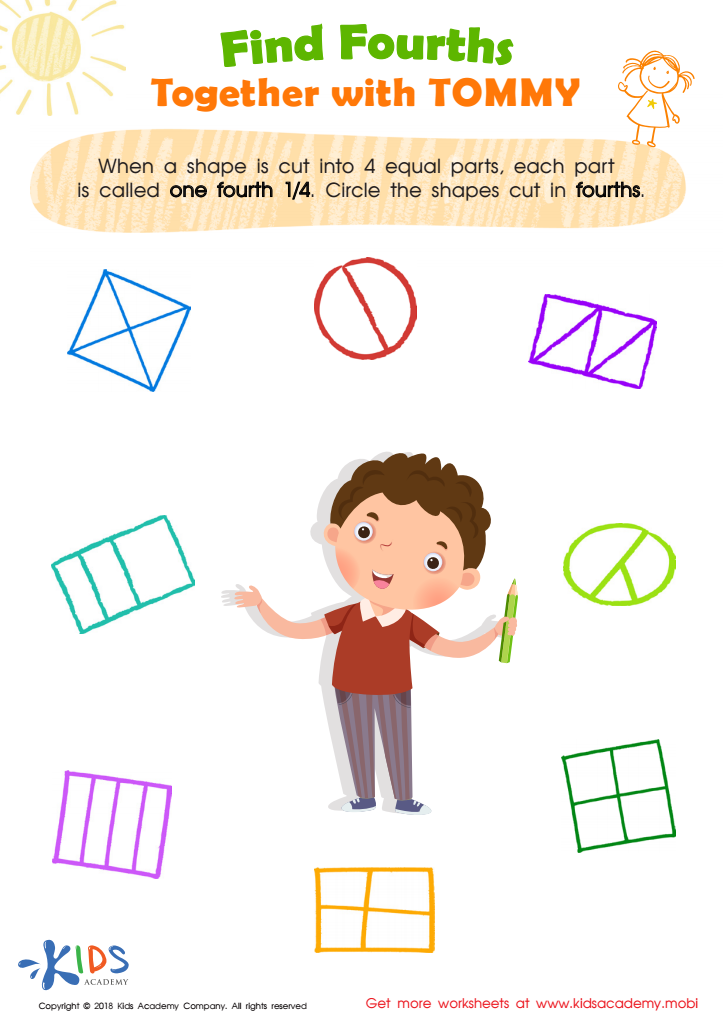
Find Fourths Together with Tommy Worksheet
Teach your kids fractions with this easy and fun worksheet! They should already know that two equal parts is a half, and three is a third. Now, help them understand one fourth (¼) by asking them to circle shapes that are divided into four parts. Make fractions learning stress-free for you and your children!
Find Fourths Together with Tommy Worksheet
Worksheet
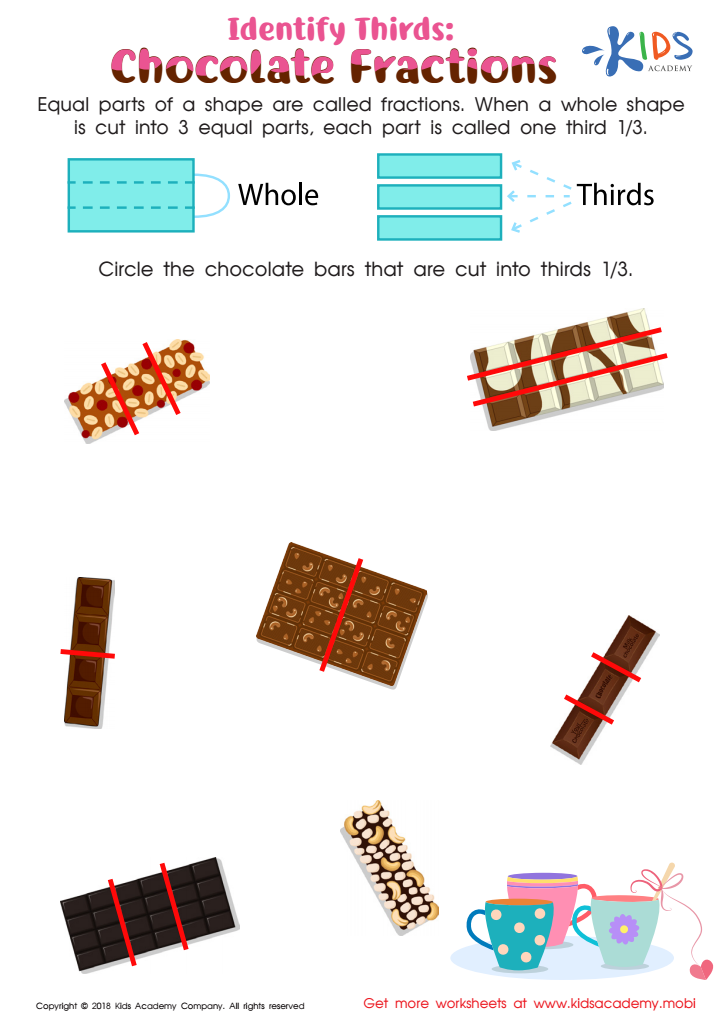
Identify Thirds: Chocolate Fractions Worksheet
Divide shapes into equal parts and explain fractions to your child. Show them a worksheet with pictures of chocolate bars cut into thirds (1/3) and ask them to circle them.
Identify Thirds: Chocolate Fractions Worksheet
Worksheet
Join Kids Academy for Free
Who is primarily going to use this learning content?