Easy Multiplication and Division Word Problems Worksheets for Ages 3-6
4 filtered results
Difficulty Level
Grade
Age
-
From - To
Subject
Activity
Standards
Enhance your child’s math skills with our "Easy Multiplication and Division Word Problems Worksheets" designed specifically for ages 3-6. These fun, engaging activities help young learners understand basic math concepts through real-life scenarios. Ideal for boosting problem-solving skills, our worksheets feature colorful illustrations and simple questions that captivate young minds. Created by expert educators, they provide a solid foundation in early math, preparing them for future academic success. Accessible anytime, these printable worksheets are perfect for at-home practice or classroom use. Download today and watch your child's confidence and abilities grow rapidly!
Favorites
With answer key
Interactive
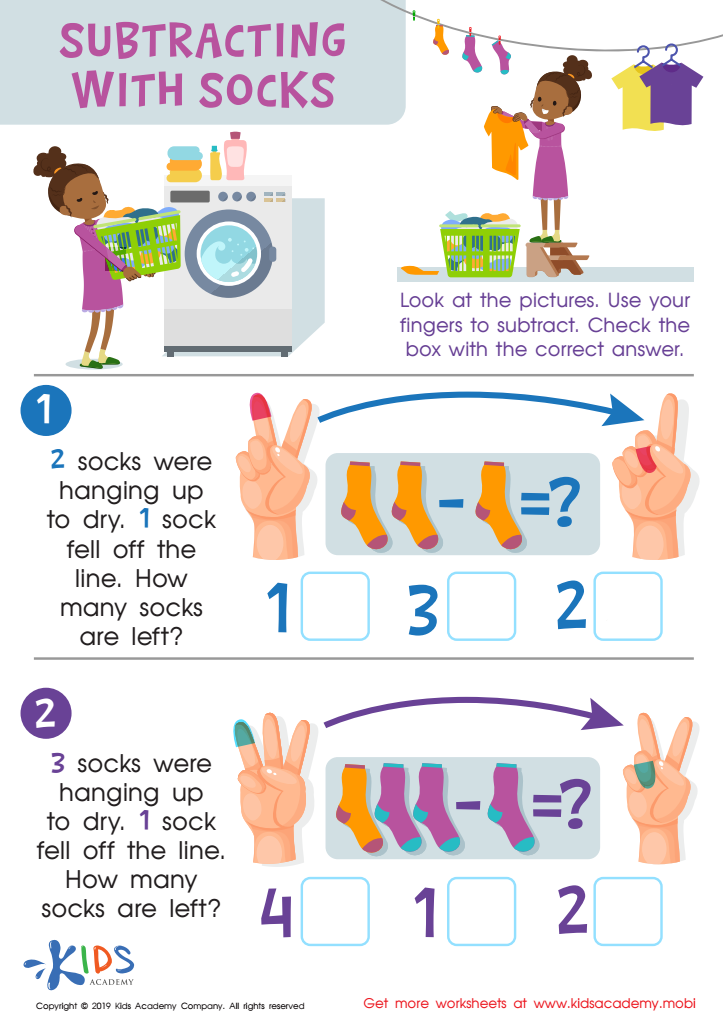
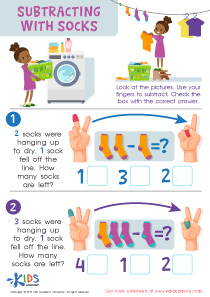
Subtracting Socks Worksheet
Before beginning this exercise with your children, warm them up with a counting game. If math is not their favorite subject, use this worksheet. Help them read the two word problems, then use their fingers to count and subtract. Ask them to select the correct answer and check the box.
 Assign to My Students
Subtracting Socks Worksheet
Worksheet
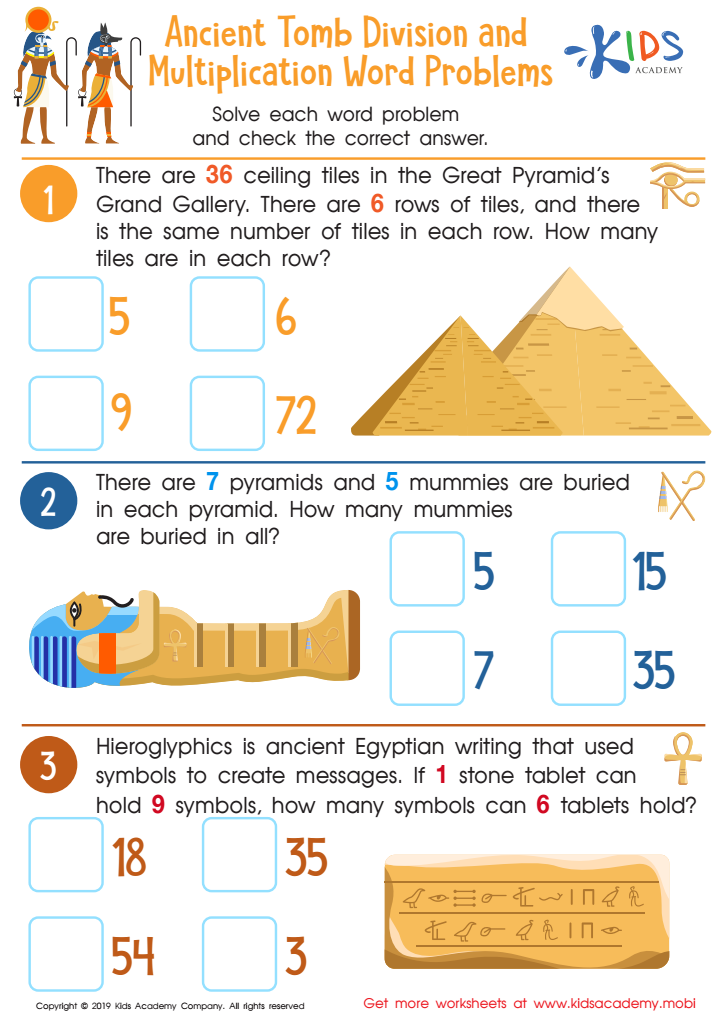
Ancient Tomb Division and Multiplication Word Problems Worksheet
This worksheet teaches kids math, plus a bit about ancient Egypt. Read the text and point to the pictures to explain them. There are three word problems - help kids interpret and solve each one, then find and check the answer. 80 words
Ancient Tomb Division and Multiplication Word Problems Worksheet
Worksheet
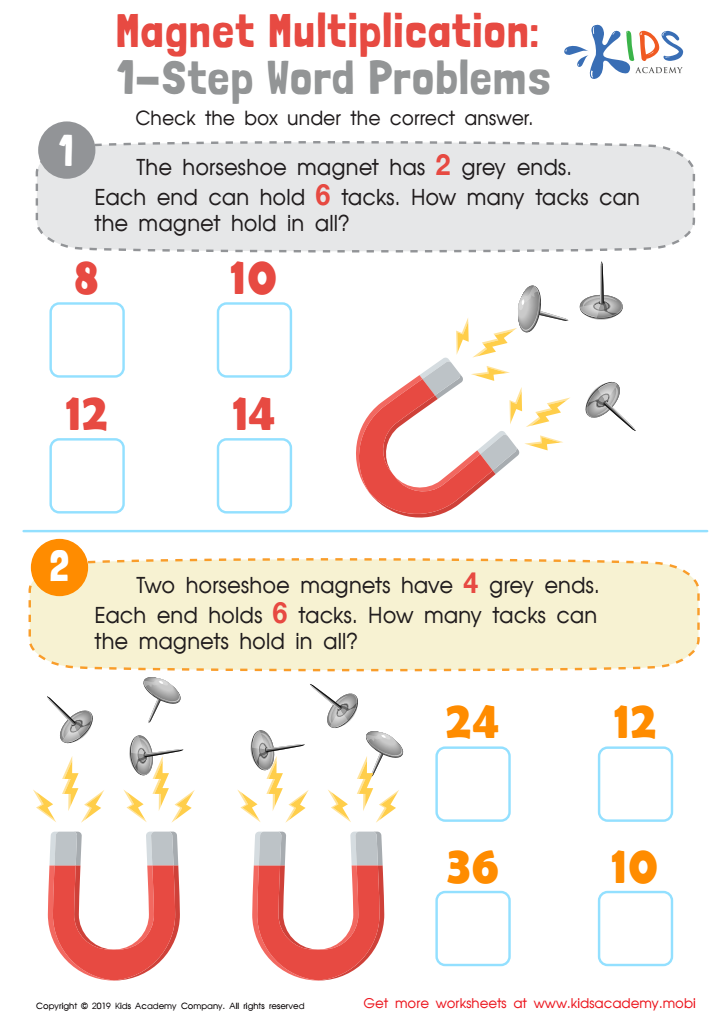
Magnet Multiplication: 1-Step Word Problems Worksheet
Refresh your students' knowledge about magnets with a simple math worksheet. Download the PDF with two word problems, along with pictures to help. Read the problems to the class, and help them identify the correct answer by checking the box. This activity will help them harness their science knowledge and practice their math skills.
Magnet Multiplication: 1-Step Word Problems Worksheet
Worksheet
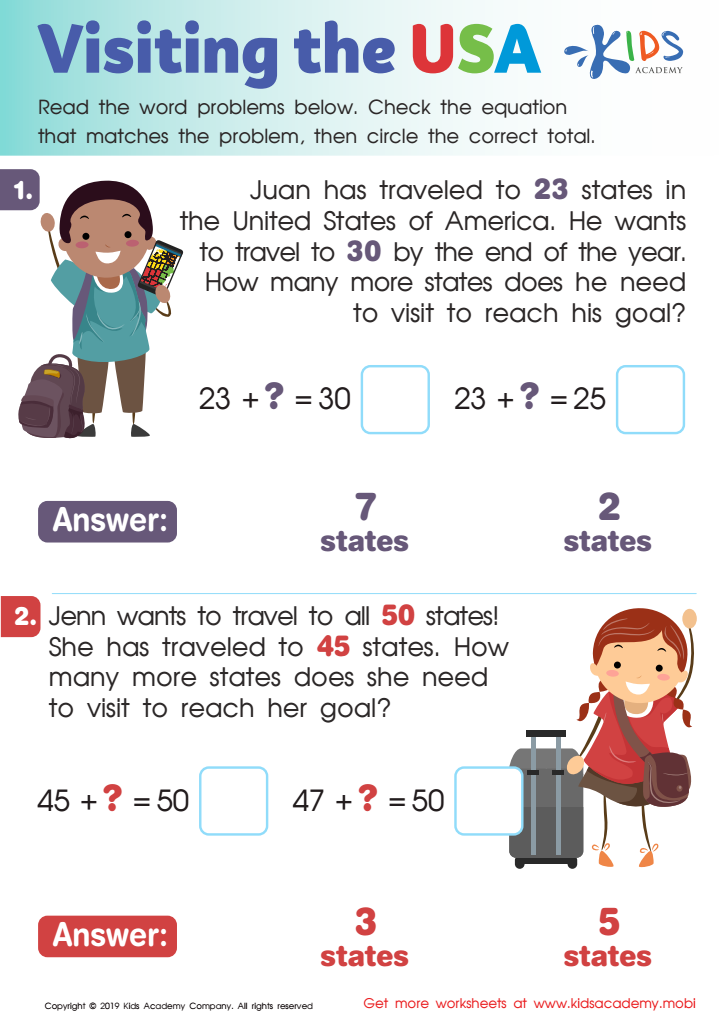
Visiting the USA Worksheet
Do your kids love travelling? Ask them why and find out what they look forward to the most. People travel for a variety of reasons, such as adventure, holiday, or business. Juan and Jenn in the picture travel for adventure and have a goal they want to achieve. Read the word problems to your kids and help them pick the right equation and match the total.
Visiting the USA Worksheet
Worksheet
Join Kids Academy for Free
Who is primarily going to use this learning content?







Parents and teachers should care about easy multiplication and division word problems for ages 3-6 because early exposure to these concepts sets a strong foundation for mathematical understanding. During these formative years, children's brains are highly adaptable and capable of grasping foundational concepts that will shape their future learning experiences.
Introducing children to multiplication and division through age-appropriate, engaging word problems helps them understand not just the operations, but also the practical applications of math in everyday life. Word problems encourage critical thinking, problem-solving skills, and logical reasoning, fostering a growth mindset in children toward tackling challenges.
Additionally, these early experiences with math problems can build confidence. Familiarity and success with simple problems can prevent math anxiety, making children more comfortable and willing to tackle complex math problems as they progress through school.
Multiplication and division word problems also support language development by enriching their vocabulary and comprehension skills. By framing mathematical operations within stories, children better understand the processes, boosting both their math and language abilities.
Therefore, emphasizing easy multiplication and division word problems at this young age not only enhances children’s numerical skills but also prepares them for more complicated mathematical concepts, setting them up for long-term academic success.