Easy Geometry Worksheets for Ages 3-8 - Page 3
52 filtered results
-
From - To
 Assign to My Students











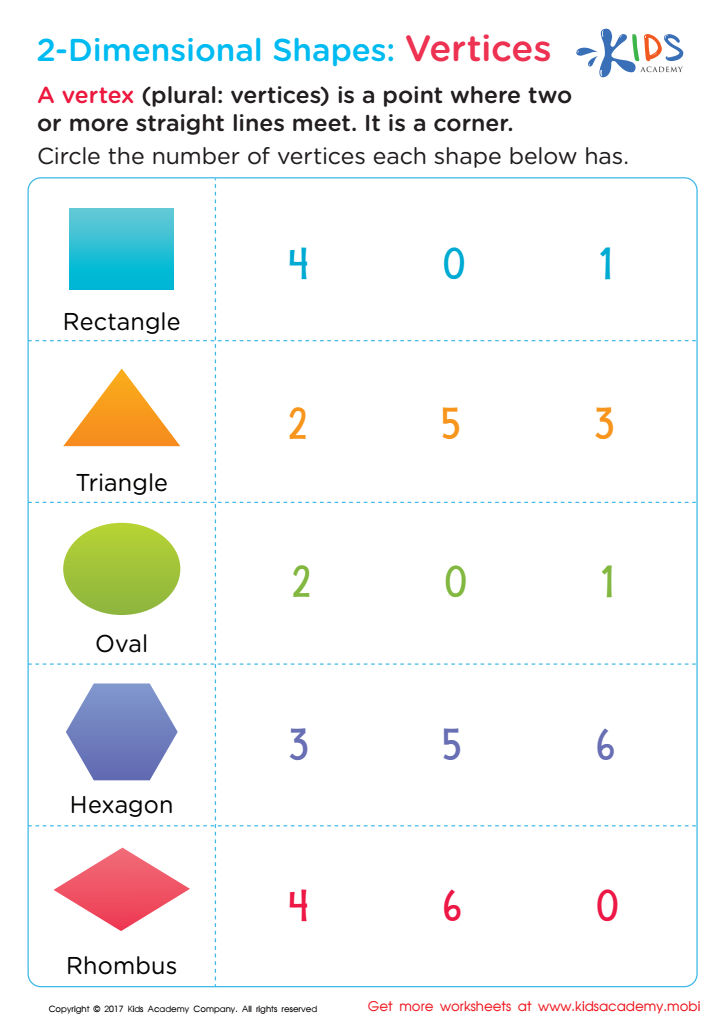
Two–Dimensional Shapes: Vertices Printable
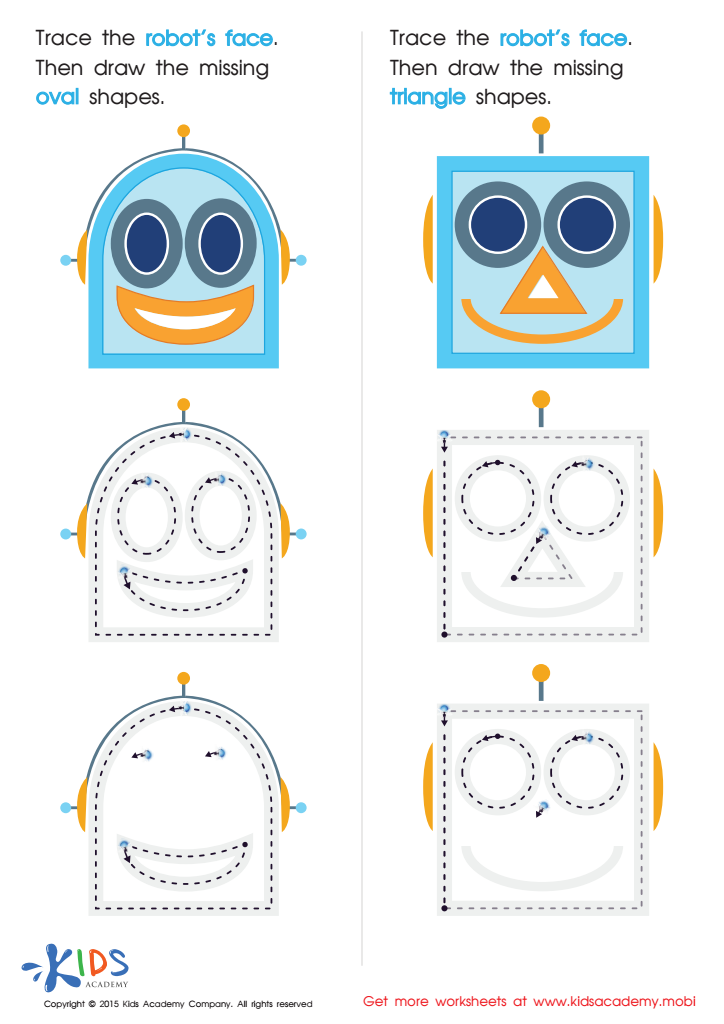
Drawing Ovals And Triangles with Fun Printable
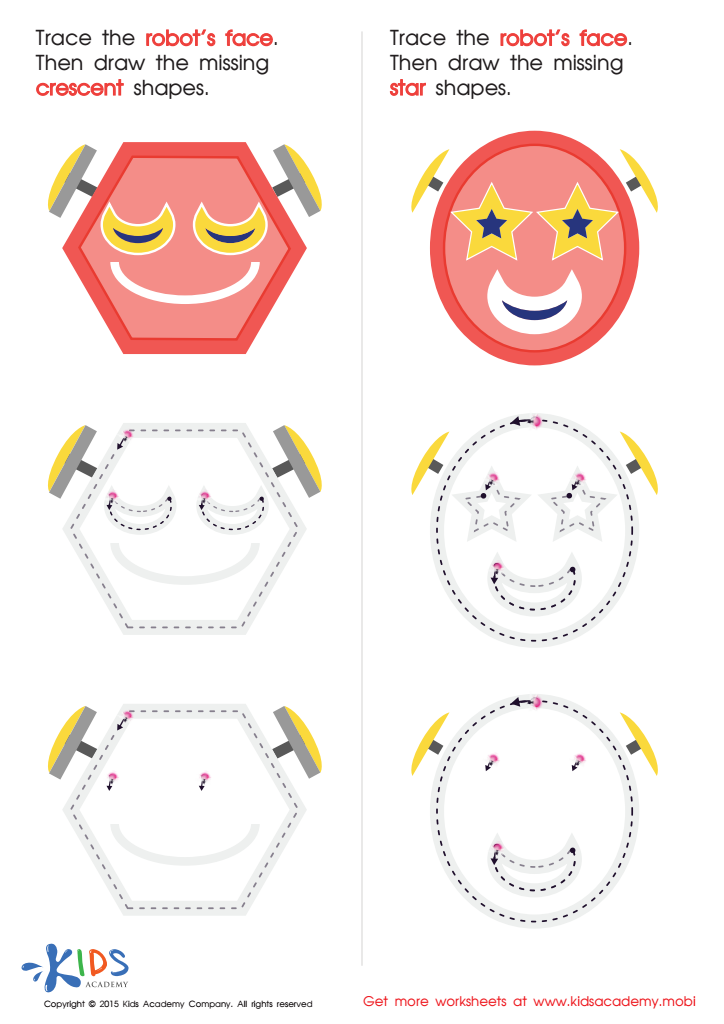
Composing a Robot's Face of Crescents And Stars Worksheet








Parents and teachers should prioritize Easy Geometry for Ages 3-8 because early exposure to geometric concepts lays a foundational understanding of mathematics that is essential for future learning. At this tender age, children are naturally curious and eager to explore the world around them—geo-spatial awareness promotes problem-solving skills and creativity. Engaging with shapes, patterns, and spatial reasoning fosters critical thinking abilities that extend beyond math, impacting areas like reading comprehension and artistic expression.
Easy Geometry activities are often hands-on, making learning enjoyable and interactive. Through play, children can manipulate shapes, recognize patterns, and engage in fun, exploratory lessons that stimulate their cognitive development. Moreover, incorporating geometry encourages collaboration and communication when children work together on projects or games, teaching valuable social skills.
Another compelling reason to focus on geometry is its vital role in developing logical reasoning. By understanding relationships in space, young learners can better tackle challenges across subjects later in their academic journey. Furthermore, building a positive attitude towards mathematics in early childhood can diminish math anxiety, promoting lifelong confidence in their mathematical abilities.
In essence, investing in Easy Geometry paves the way for a solid educational foundation, nurturing well-rounded, confident learners.








