Easy Life Science Worksheets for 9-Year-Olds
1 filtered results
-
From - To
Introducing our Easy Life Science worksheets, expertly crafted for 9-Year-Olds! These engaging and educational sheets are designed to spark curiosity and deepen understanding of the world around us. From exploring the fascinating life cycles of plants and animals to understanding human body basics, our worksheets are tailored to capture the imagination of young learners. With fun activities and easy-to-follow explanations, these worksheets make learning life science an enjoyable adventure. Perfect for both classroom and at-home learning, our Easy Life Science worksheets for 9-Year-Olds are the ideal resource to ignite a love for science in your young explorer. Equip your child with the knowledge to understand and appreciate the wonders of life science today!
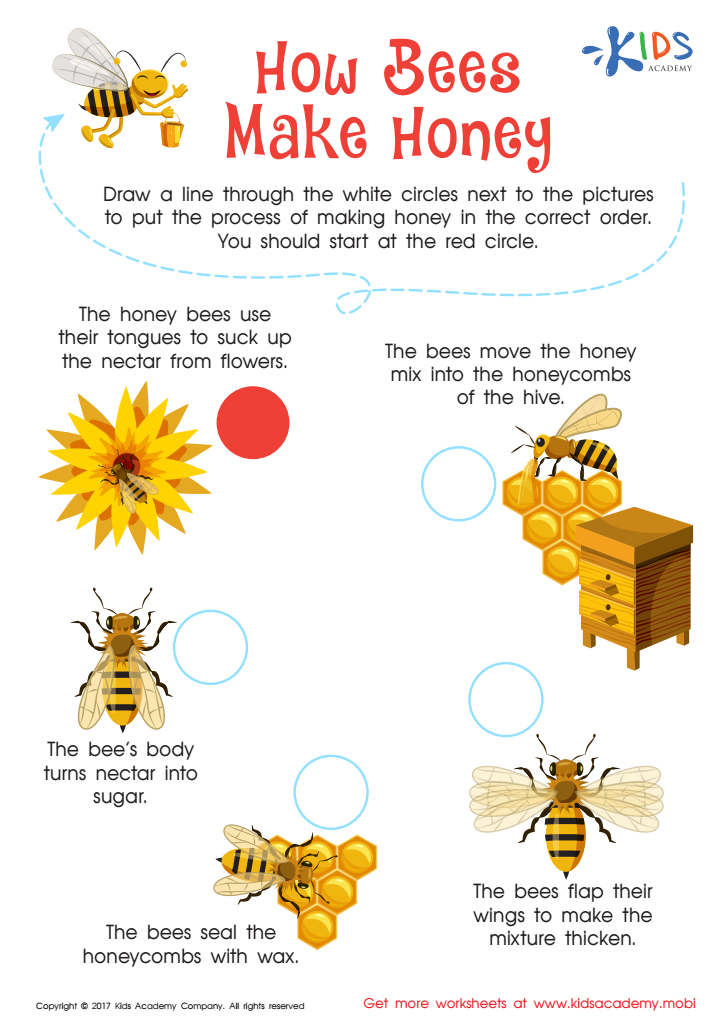
Honey Bee Worksheet
 Assign to My Students








Easy Life Science worksheets for 9-Year-Olds serve as a fundamental tool in nurturing curiosity and understanding about the living world. At this tender age, children are naturally inquisitive, eager to learn about the organisms they share the planet with, how their bodies work, and the environment around them. Easy Life Science worksheets are specifically designed to cater to the learning capabilities of 9-year-olds, ensuring that the content is not only educational but also engaging.
These worksheets provide a structured yet flexible learning approach, allowing young learners to explore various life science topics at their own pace. They are crafted to simplify complex concepts, making it easier for children to grasp foundational life science principles. This early exposure to life sciences piques interest in the natural world, laying down the groundwork for a lifelong passion for science.
Moreover, these worksheets offer a variety of activities, including experiments, observation tasks, and critical thinking exercises. Such activities enhance observational skills, encourage scientific thinking, and promote hands-on learning. Easy Life Science worksheets for 9-Year-Olds not only support academic growth but also instill a sense of wonder and responsibility towards living organisms and the environment. In essence, they are an invaluable resource in shaping the next generation of scientists, ecologists, and informed citizens.