Extra Challenge Letter Recognition Worksheets for Ages 3-6
13 filtered results
Difficulty Level
Grade
Age
-
From - To
Subject
Activity
Standards
Discover our Extra Challenge Letter Recognition Worksheets for Ages 3-6! Designed to enhance early literacy skills, these worksheets offer engaging and interactive activities that make learning the alphabet fun. Each worksheet presents unique challenges, from identifying uppercase and lowercase letters to matching letters with corresponding images. Tailored for young learners, our materials assist in building confidence and mastery of letter recognition. These worksheets can be utilized in classrooms or at home, making them perfect for parents and educators alike. Encourage your child’s learning journey and watch them shine as they explore the world of letters with our thoughtfully crafted resources!
Favorites
With answer key
Interactive
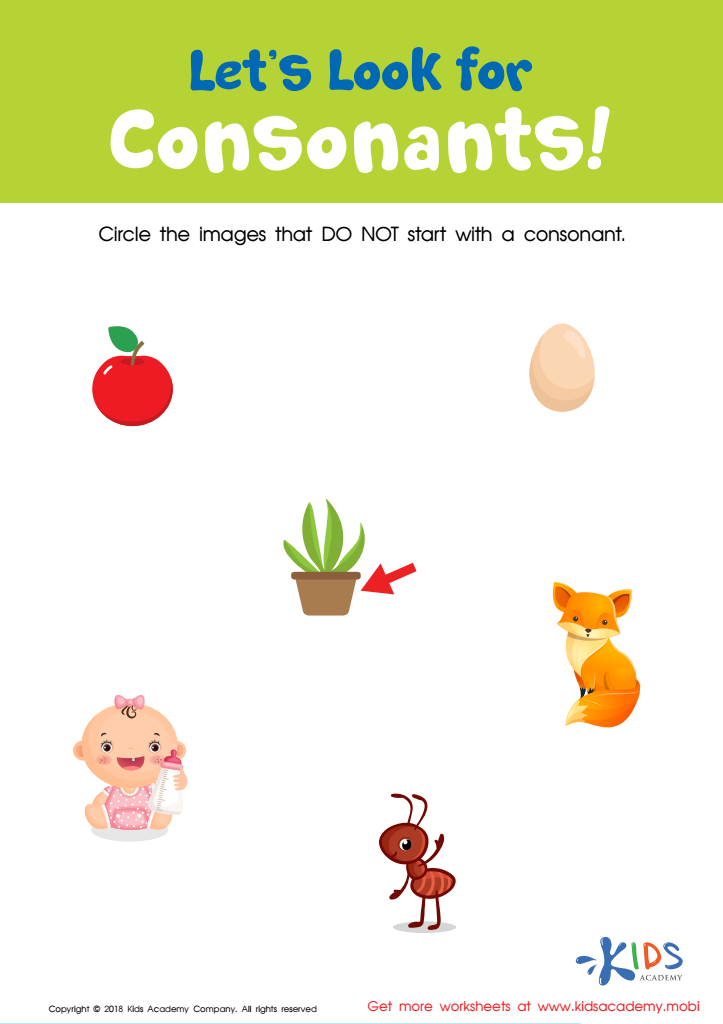
Let's Look for Consonants Worksheet
Help kids learn consonants and words that start with them. Ask them to recite the alphabet, then explain consonants are all letters but the 5 vowels. Use the worksheet to ask them to circle items without a consonant. Emphasize that's 21 consonants.
 Assign to My Students
Let's Look for Consonants Worksheet
Worksheet
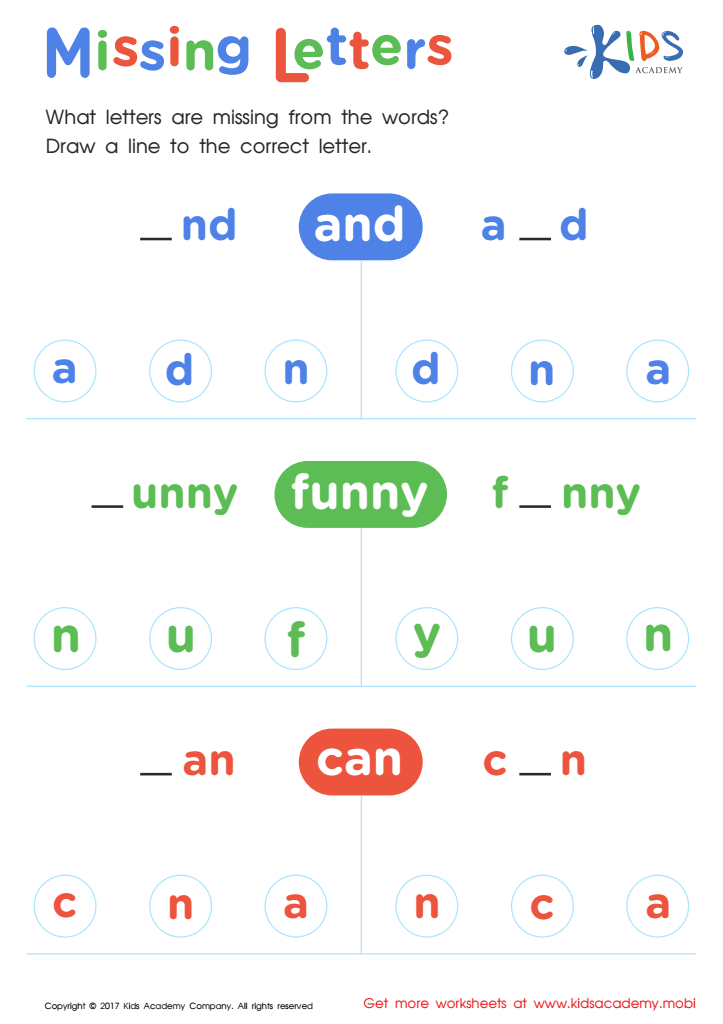
Missing Letters Worksheet
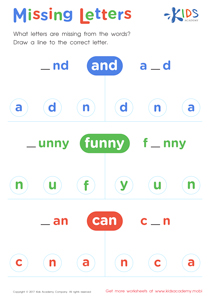
Review sight words with this fun matching worksheet from Kids Academy! Look at the sight words in the middle, read them aloud and find the missing letter on each side for each word. Draw a line to the correct letter to complete the sheet!
Missing Letters Worksheet
Worksheet
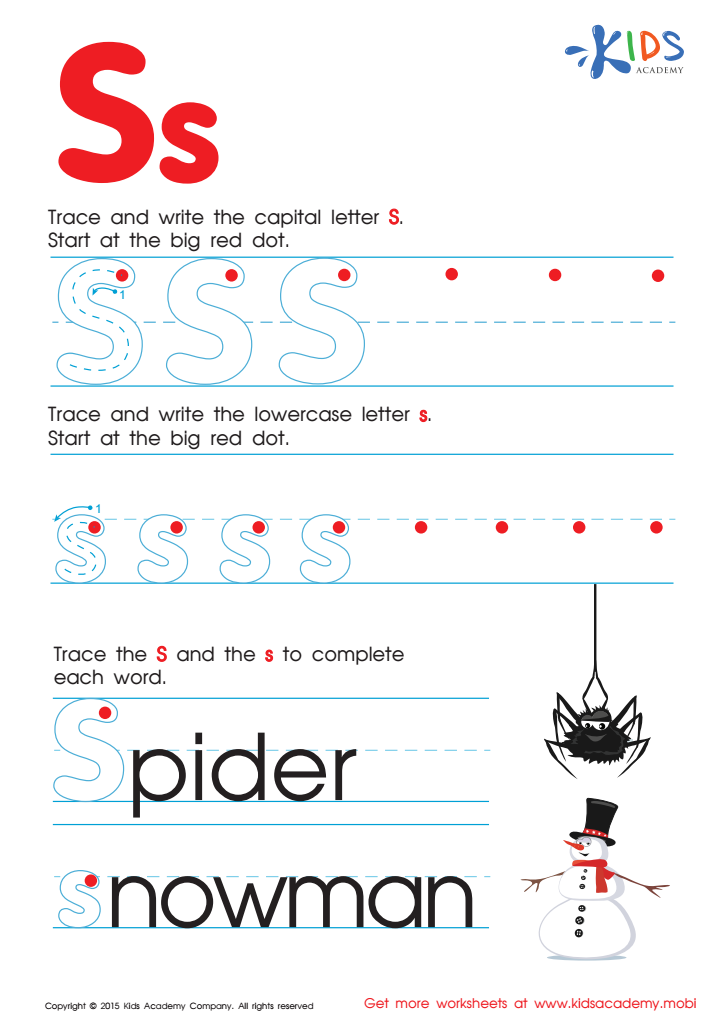
Letter S Tracing Page
Trace and write the capital and lowercase "S" on this ABC worksheet for kindergarten. Start with the big red dot and be careful. When you finish, help the spider and snowman in the pictures restore their words with the capital and lowercase letters. Continue learning the alphabet with Kids Academy.
Letter S Tracing Page
Worksheet
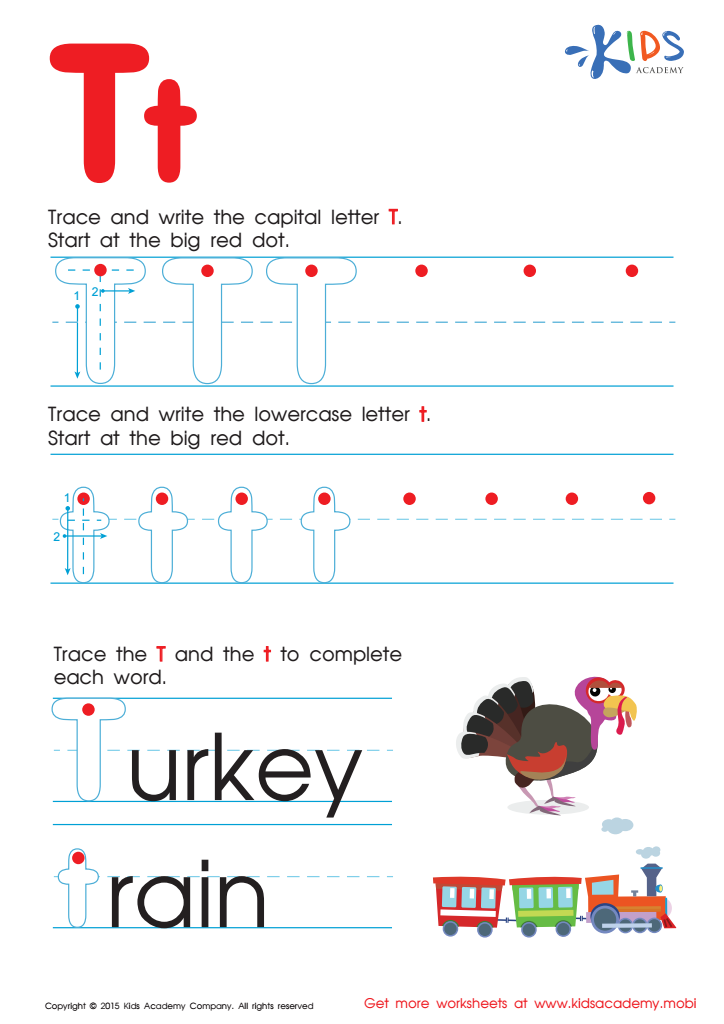
Letter T Tracing Page
Trace letters, complete words, draw pictures and see your kids having fun!
Kids Academy offers alphabet tracing worksheets to learn to write letters. Start with the big red dot, trace the letter, then write it. Practice uppercase and lowercase. Have fun completing words with a Turkey or a rain-train and draw pictures. Get more printable worksheets to make learning enjoyable.
Letter T Tracing Page
Worksheet
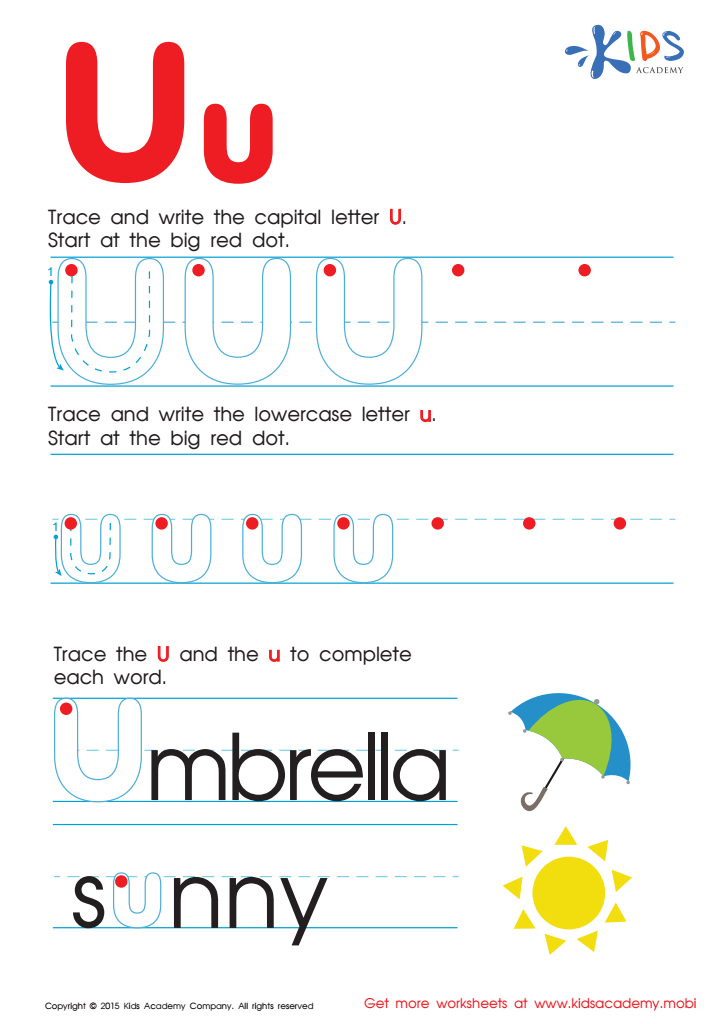
Letter U Tracing Page
Ready to trace and write the letter "U"? Use our worksheet and practice tracing both uppercase and lowercase letters. Complete the words "umbrella" and "sunny" with a capital "U". Check our full collection of alphabet printables for more activities.
Letter U Tracing Page
Worksheet
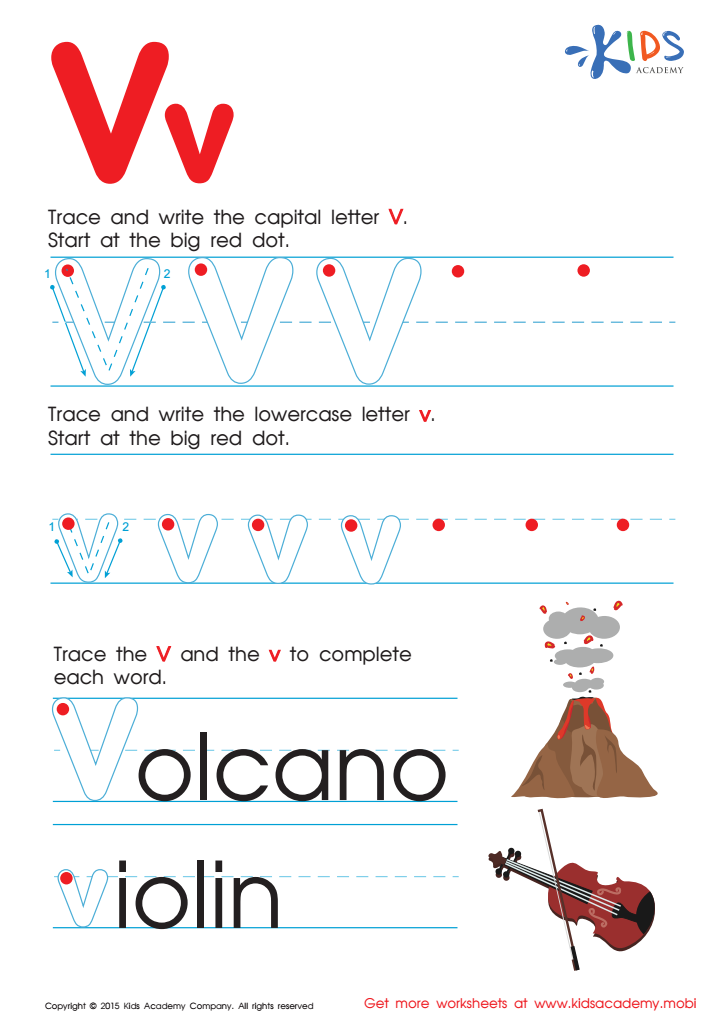
Letter V Tracing Page
Trace the uppercase and lowercase letter "V" with our kindergarten tracing worksheet. Begin at the red dot and follow the lines. Write it several times. Complete the words "Volcano" and "violin". Get more alphabet activities at Kids Academy.
Letter V Tracing Page
Worksheet
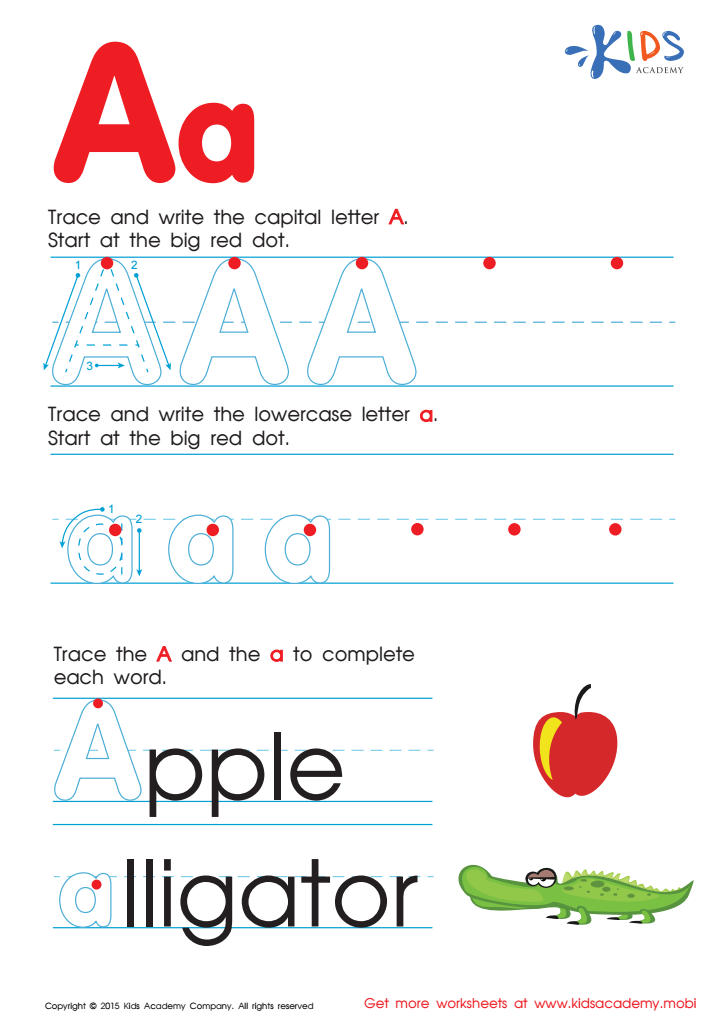
Letter A Tracing Page
Trace and write the letter "A"! Start with the big red dot, then do the capital and lowercase versions. Then write it again with two words - apple and alligator. Download more tracing worksheets at Kids Academy.
Letter A Tracing Page
Worksheet
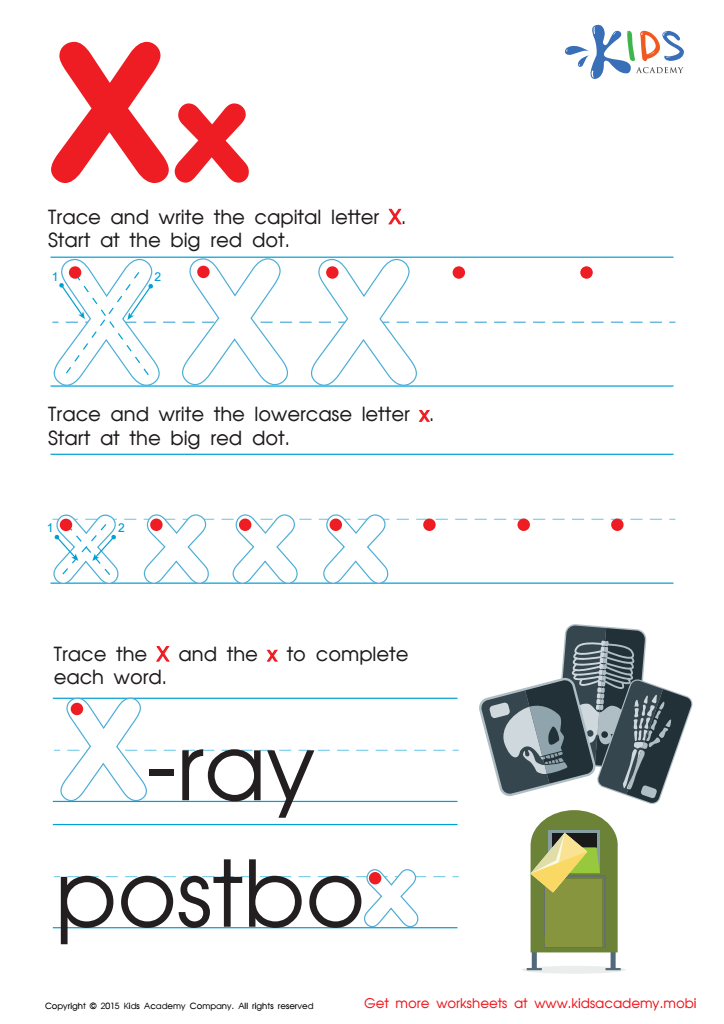
Letter X Tracing Page
Trace the uppercase letter "X" to learn, then write it yourself and practice. Then do the same with the lowercase "x" before completing the words "X-ray" and "postbox". Enjoy our alphabet printables!
Letter X Tracing Page
Worksheet
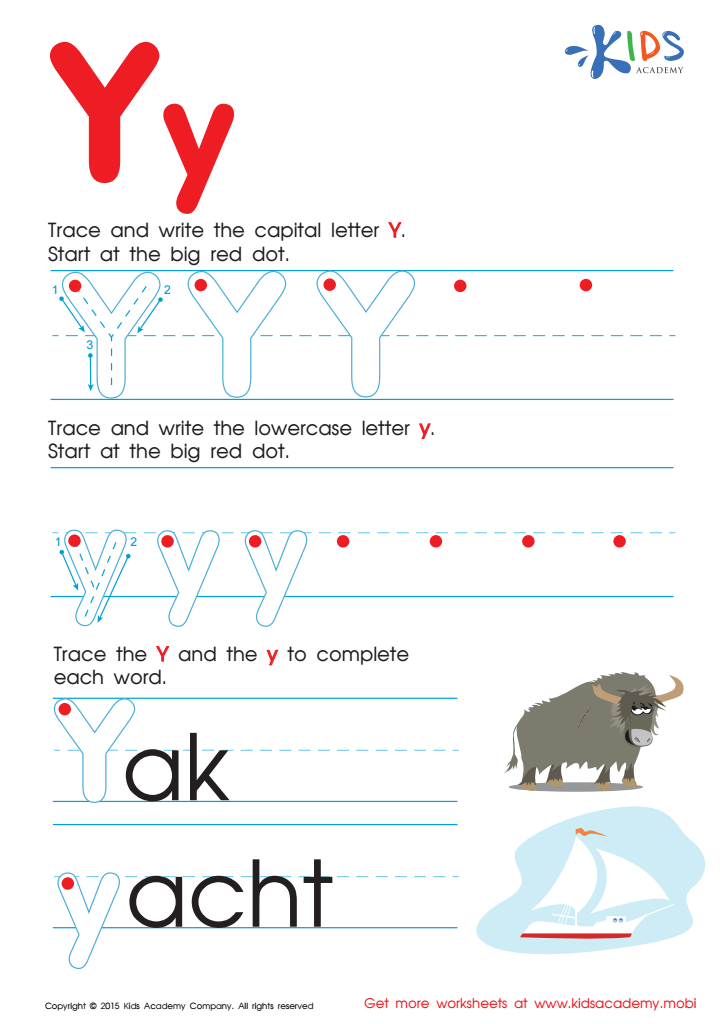
Letter Y Tracing Page
Trace the capital letter "Y" on the red dot, then trace and write the lowercase letter. Complete the words to help the Yak walk and the yacht swim. More worksheets at Kids Academy.
Letter Y Tracing Page
Worksheet
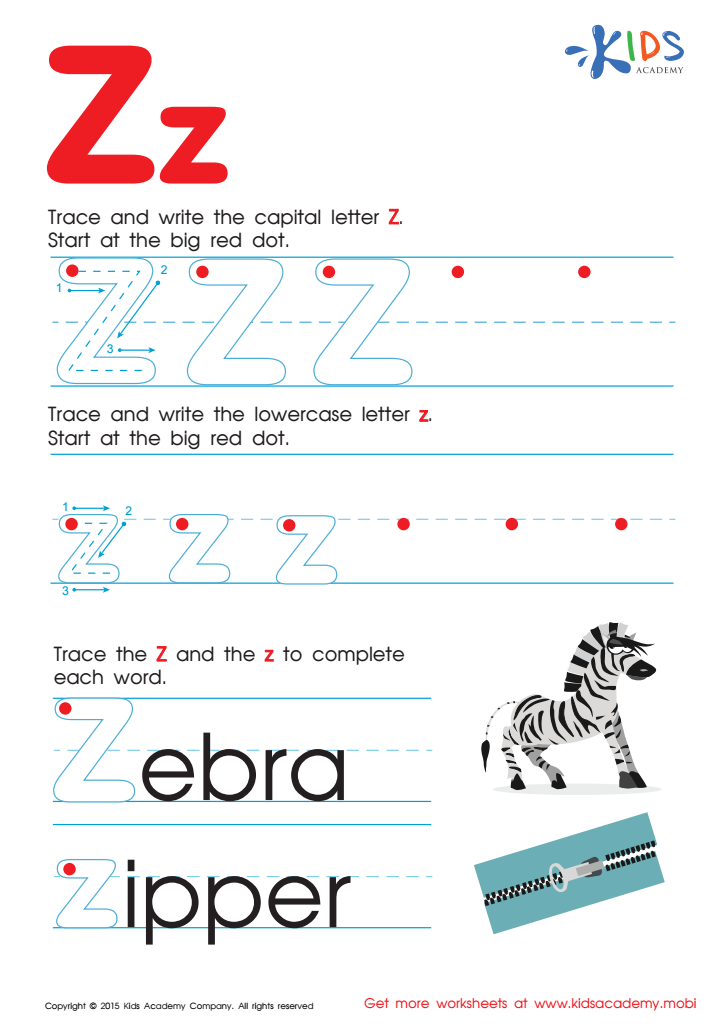
Letter Z Tracing Page
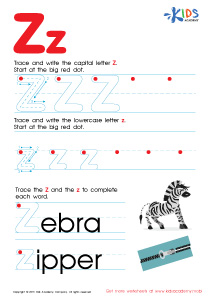
Trace and write capital "Z" and lowercase "z". Complete words "zebra" and "zipper". Be attentive and have fun! (80 words)
Letter Z Tracing Page
Worksheet
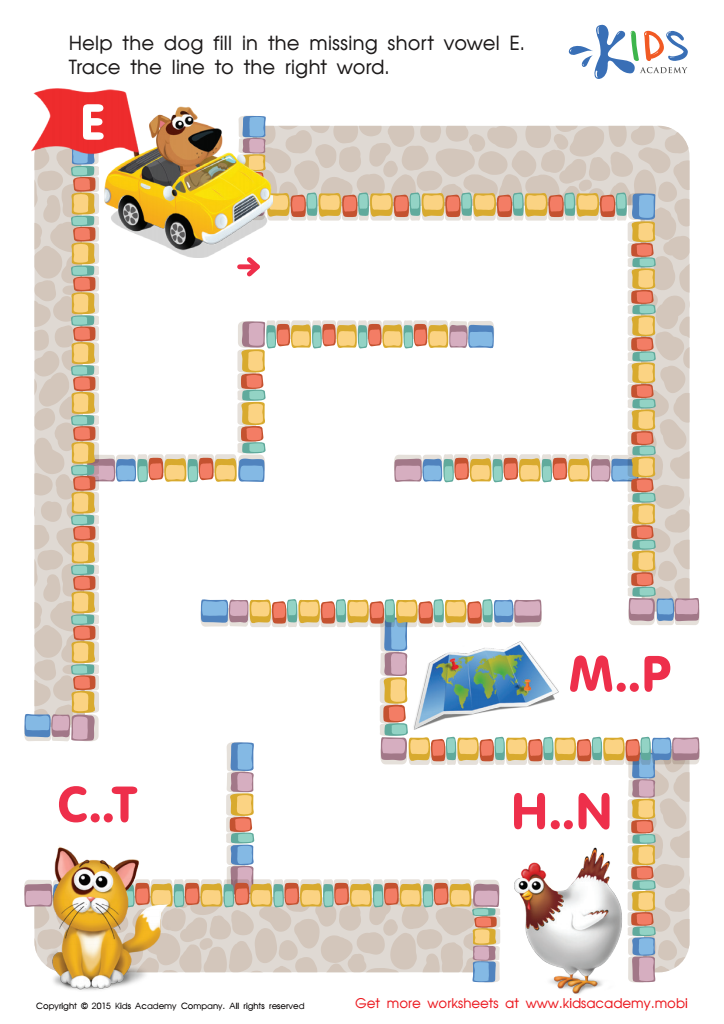
Short Vowel Sound E Worksheet
This free printable phonics worksheet helps kids learn the short vowel sound E. Kids need to help the dog complete the word “hen” by finding their way through a maze. It teaches kids to see the connection between letters and sounds and also strengthens their writing and spelling skills. Fun and educational, this phonics worksheet is great for kids. Want more? Check out here.
Short Vowel Sound E Worksheet
Worksheet
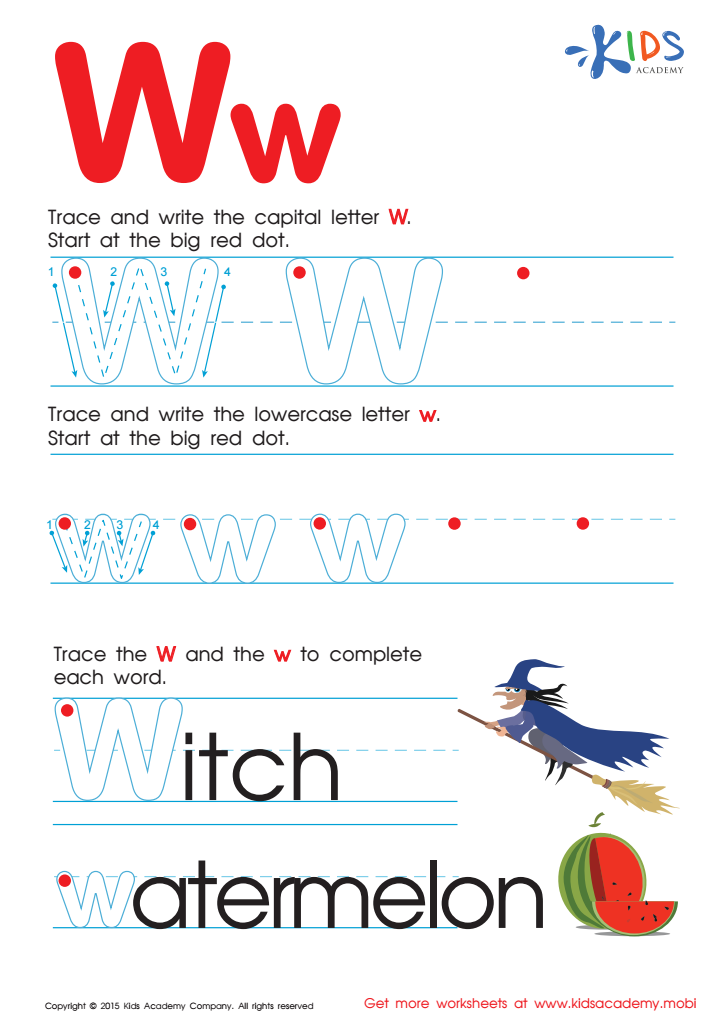
Letter W Tracing Page
Trace and write the capital and lowercase letter W with this free letter tracing worksheet by Kids Academy. Complete the words "Witch" (capital) and "watermelon" (lowercase). Check out our other kindergarten alphabet worksheets!
Letter W Tracing Page
Worksheet
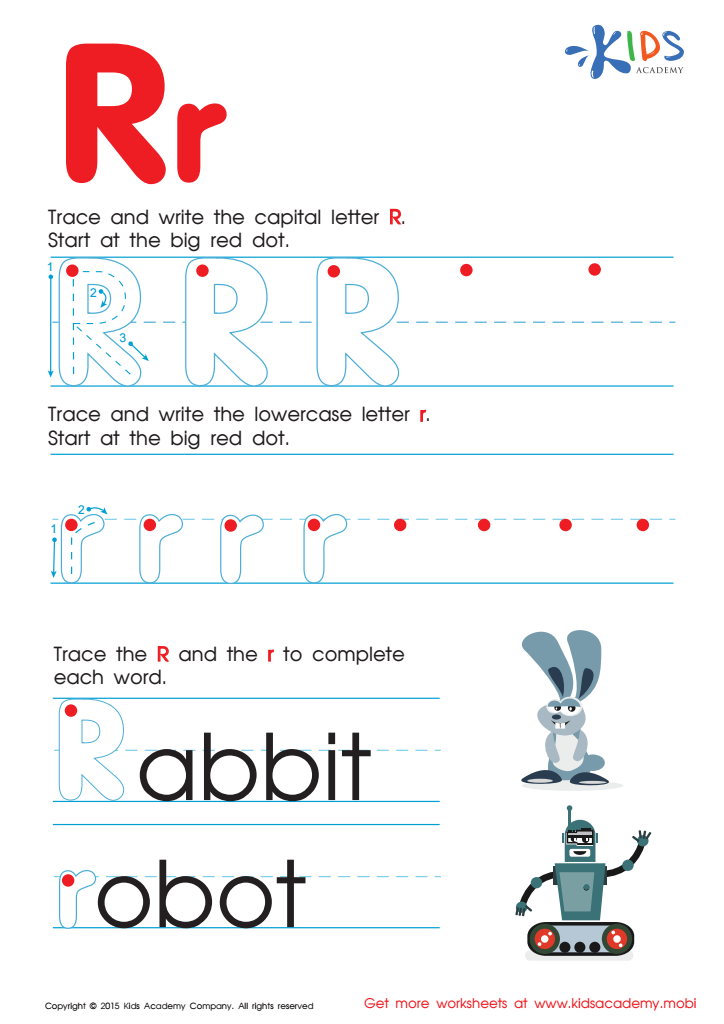
Letter R Tracing Page
Trace and write the letter "R" with this worksheet for kindergarten. Start with the uppercase, then move on to the lowercase. Write the letters several times for practice. Then help complete the words for the rabbit and robot, spelling carefully. More ABC worksheets can be found at Kids Academy.
Letter R Tracing Page
Worksheet
Join Kids Academy for Free
Who is primarily going to use this learning content?








Extra challenge letter recognition activities for children aged 3-6 are essential for fostering early literacy skills that lay the foundation for future learning. Understanding letter recognition serves as a crucial stepping stone in phonemic awareness and reading development. When children can identify and differentiate letters, they are better equipped to connect sounds to written language, facilitating their ability to read and write.
Parents and teachers should prioritize these activities because they nurture a child's cognitive development and boost self-esteem. Engaging in letter recognition challenges can make learning fun and interactive, helping to sustain children's interest in literacy. Incorporating games, songs, or stories allows children to explore letters in an enjoyable way, leading to positive associations with reading.
Furthermore, early focus on letter recognition tasks can help identify any potential learning difficulties early on, permitting timely interventions. This proactive approach ensures that all children develop essential skills at their own pace, fostering a love for learning.
By caring about and implementing extra challenge letter recognition activities, parents and teachers can create a supportive environment that encourages curiosity and confidence, ultimately setting children on the path to becoming proficient readers and lifelong learners.