Extra Challenge Fractions of Shapes Worksheets for Ages 5-7
10 filtered results
-
From - To
Introduce young learners to the fascinating world of fractions with our “Extra Challenge Fractions of Shapes Worksheets for Ages 5-7.” Tailored specifically for early grade students, these worksheets nurture critical thinking and visual learning. Perfect for kids ready for a challenge, they combine colorful shapes and engaging tasks to make learning fun. Each worksheet is designed to help children understand fractions as they identify and shade parts of shapes. Boost mathematical confidence and foundational skills in an interactive, enjoyable way. Ideal for classroom use or at-home practice, these resources make mastering fractions a delightful journey for young minds.
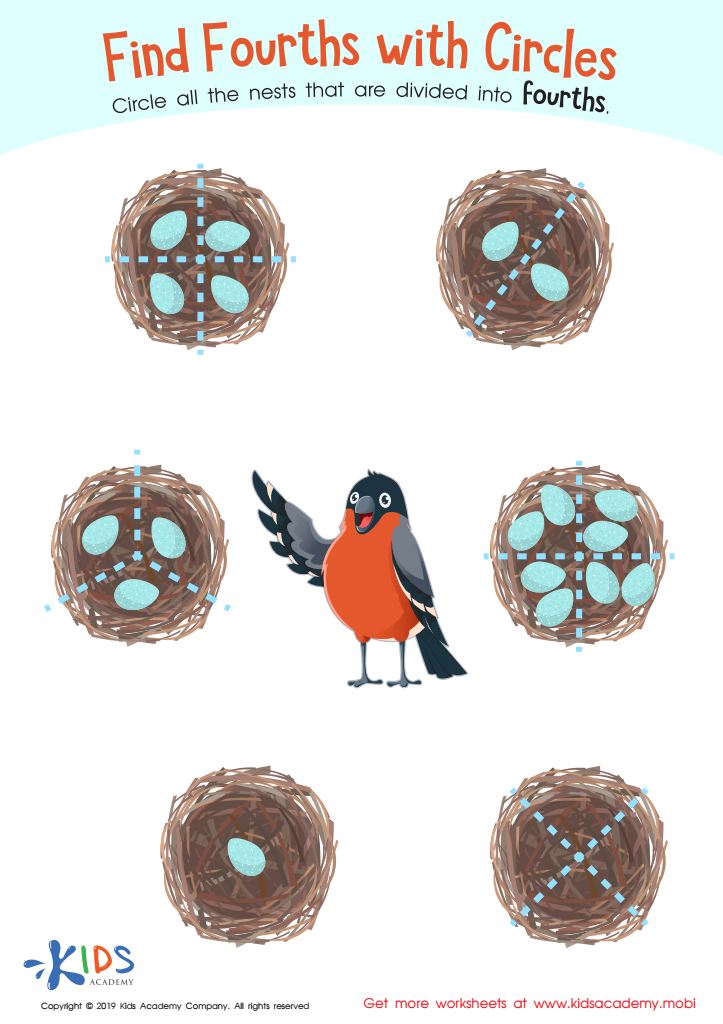
Find Fourths Circles Worksheet
 Assign to My Students
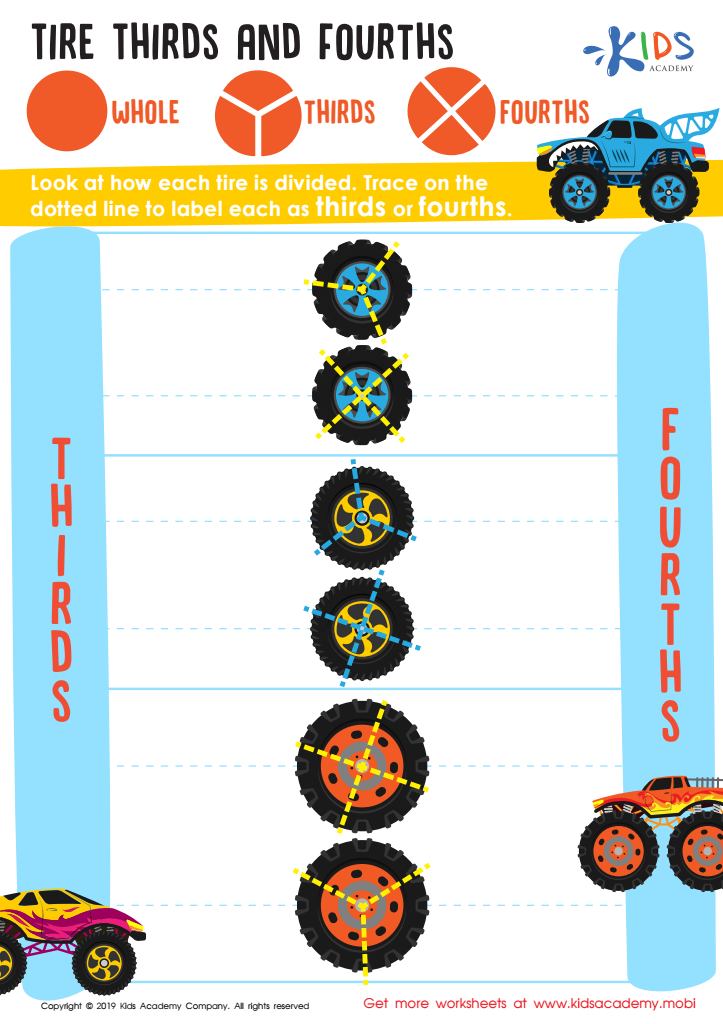
Tire Thirds and Fourths Worksheet
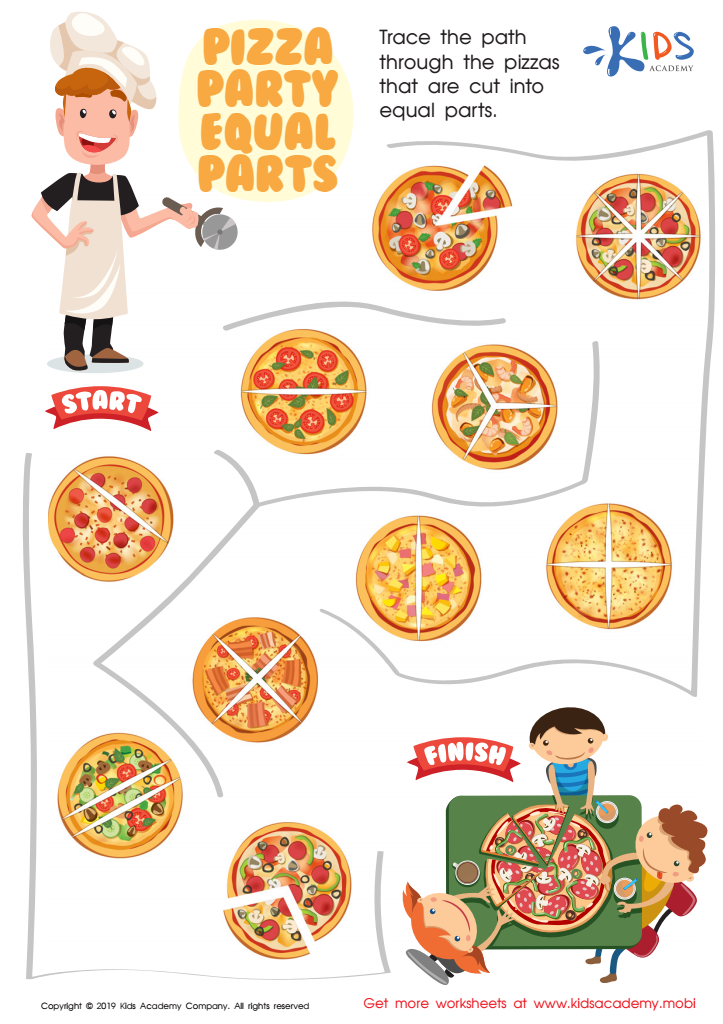
Pizza Party Equal Parts Worksheet
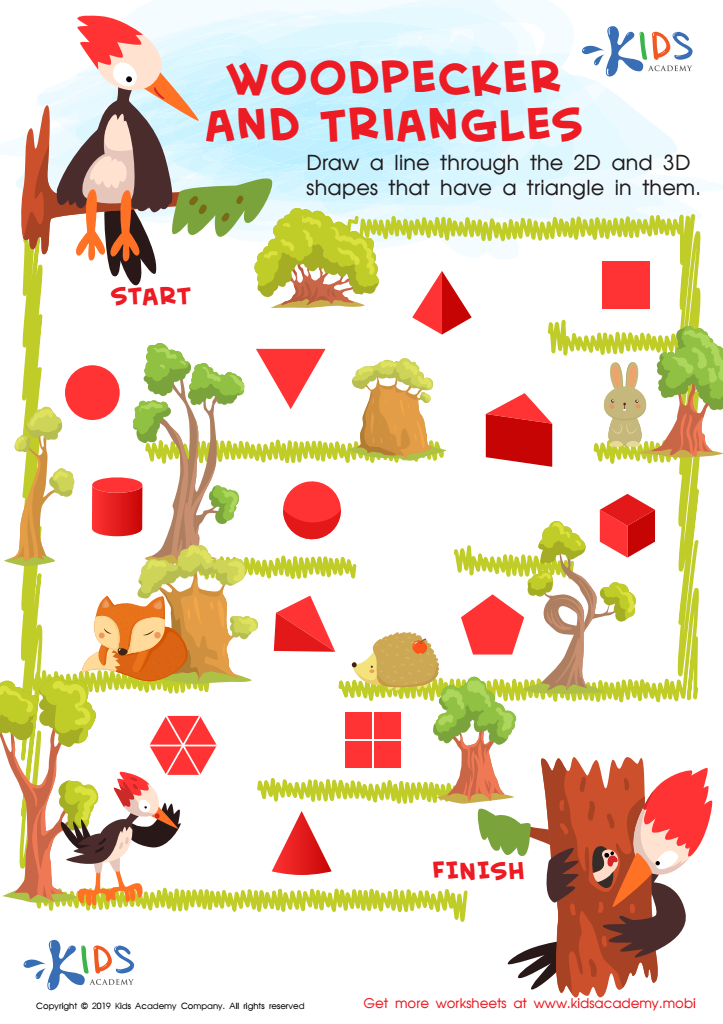
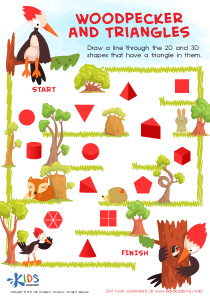
Woodpecker and Triangles Worksheet
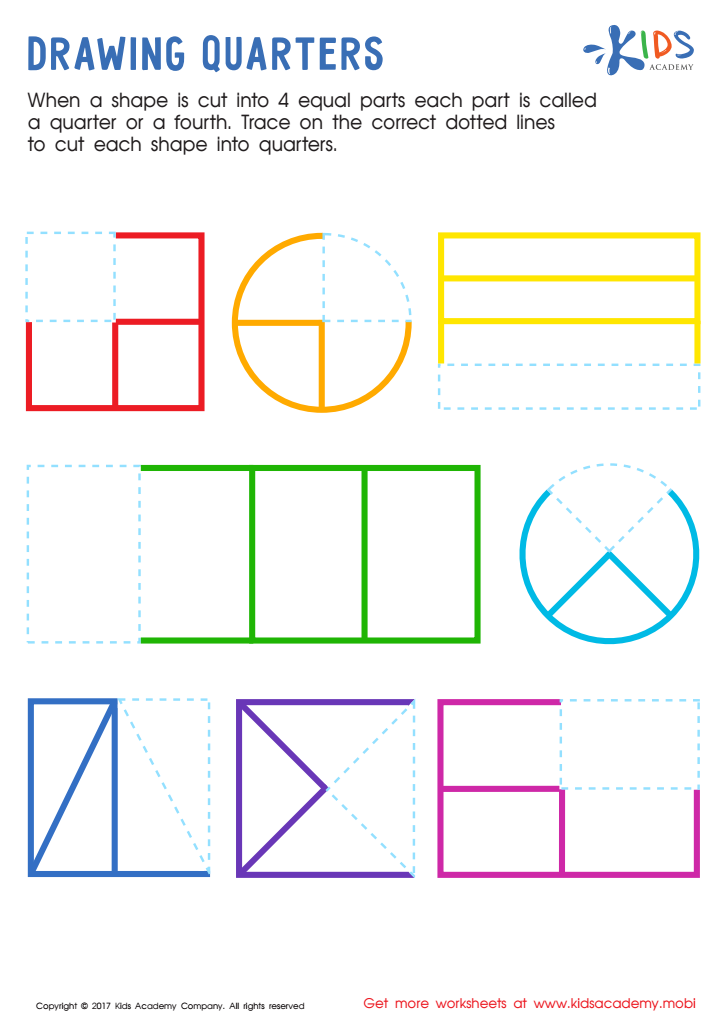
Drawing Quarters Worksheet
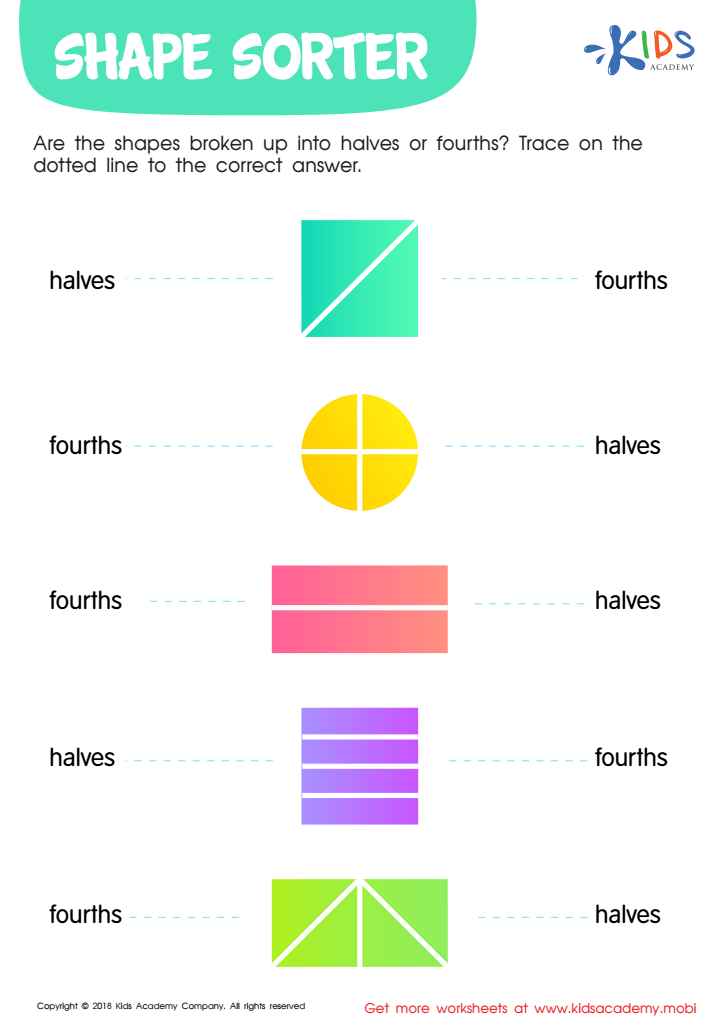
Shape Sorter Worksheet
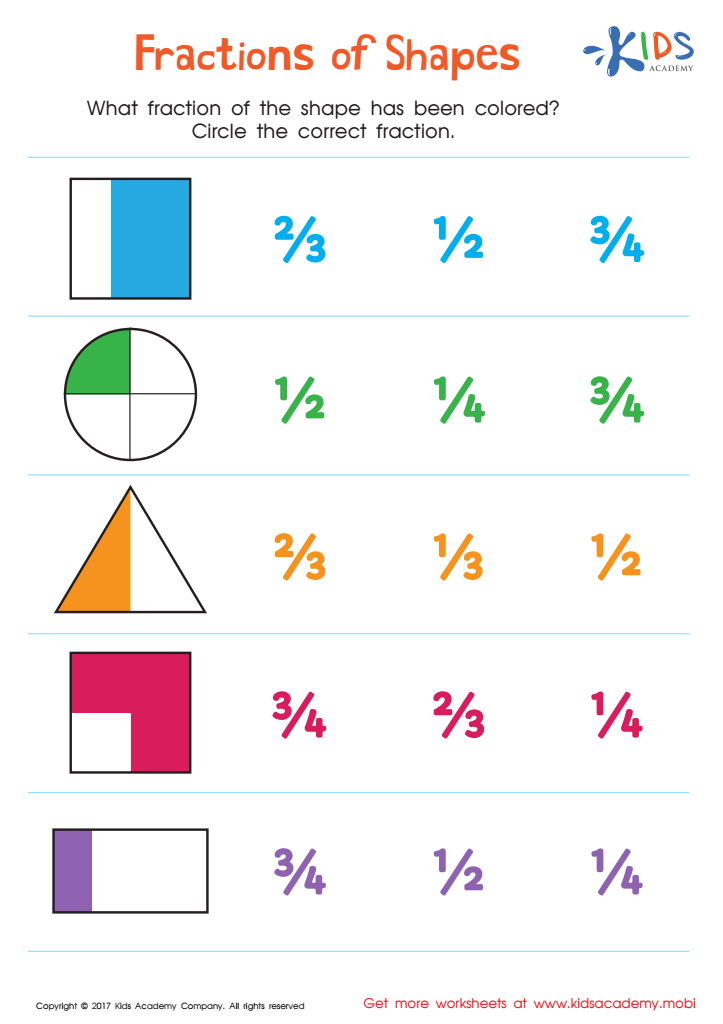
Fractions of Shapes: Math Concept Worksheet
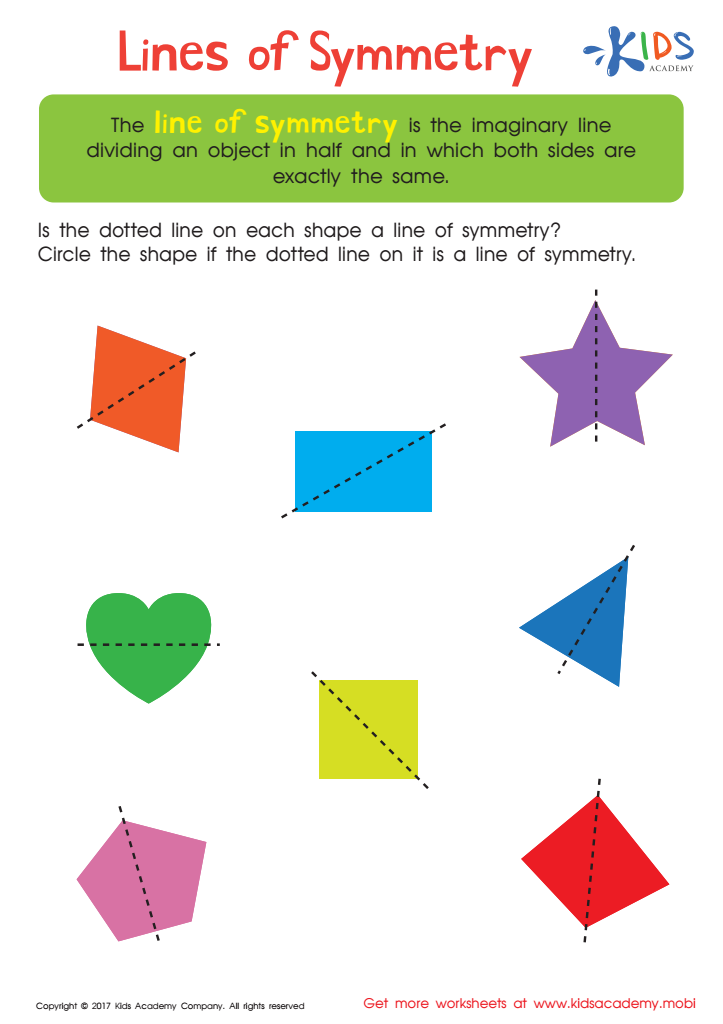
Lines of Symmetry Printable
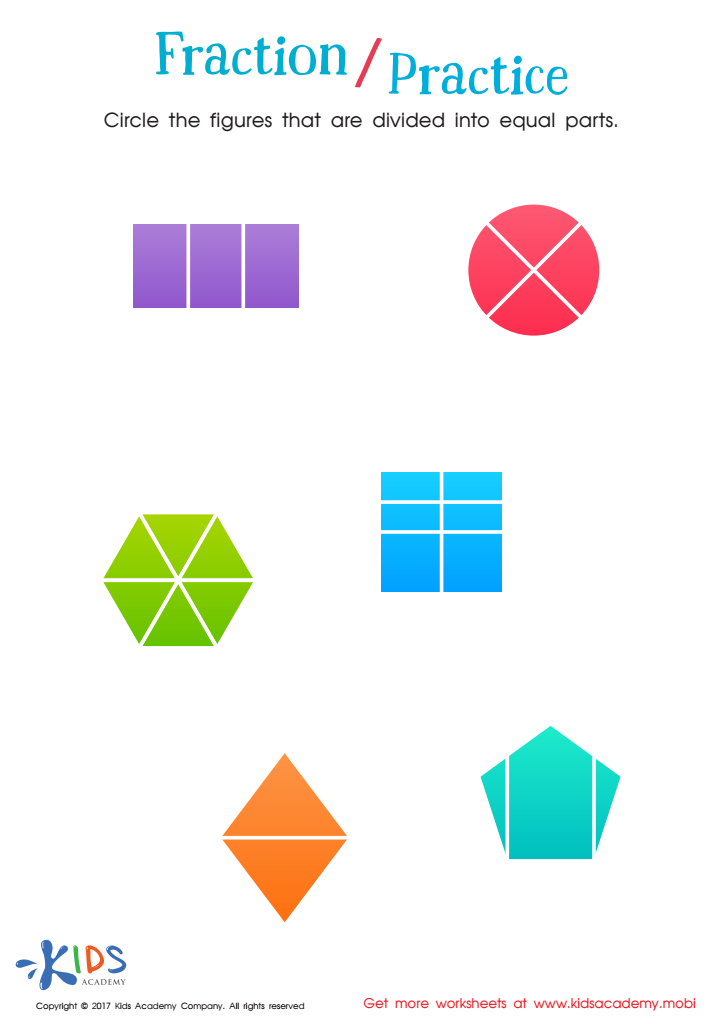
Fractions: Shapes Worksheet
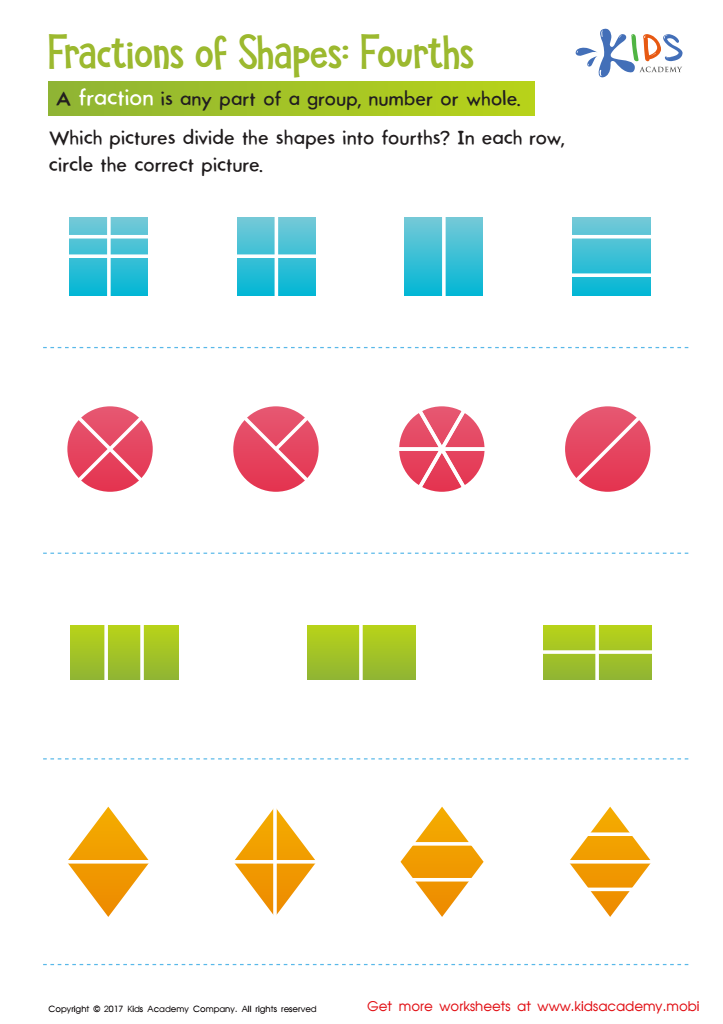
Fractions of Shapes Worksheet








Extra Challenge Fractions of Shapes activities are essential for young learners (ages 5-7) because they lay the groundwork for mathematical skills and critical thinking abilities. Introducing fractions at an early age using shapes captures children's attention and makes abstract concepts tangible. When students manipulate and visualize fractions through shapes, they not only understand the part-whole relationship but also develop spatial awareness.
These activities foster a strong number sense, foundational for future math learning. Mastery of fractions is crucial for advanced subjects that students will encounter later, such as ratios, percentages, and algebra. An early introduction also helps children relate fractions to everyday situations, like sharing or dividing objects, enhancing their practical understanding and making math relevant to their lives.
For teachers, using Extra Challenge Fractions of Shapes encourages engagement through interactive and enjoyable lessons. It allows for differentiated learning, meeting varying skill levels within the classroom. For parents, these activities offer enjoyable learning experiences at home, reinforcing classroom concepts and promoting a positive math culture. Investing time in these crucial early years builds confidence and a love for learning, ensuring children are well-equipped for more complex mathematical challenges in the future.