Extra Challenge Addition & Subtraction Worksheets for Ages 7-9 - Page 3
51 filtered results
-
From - To
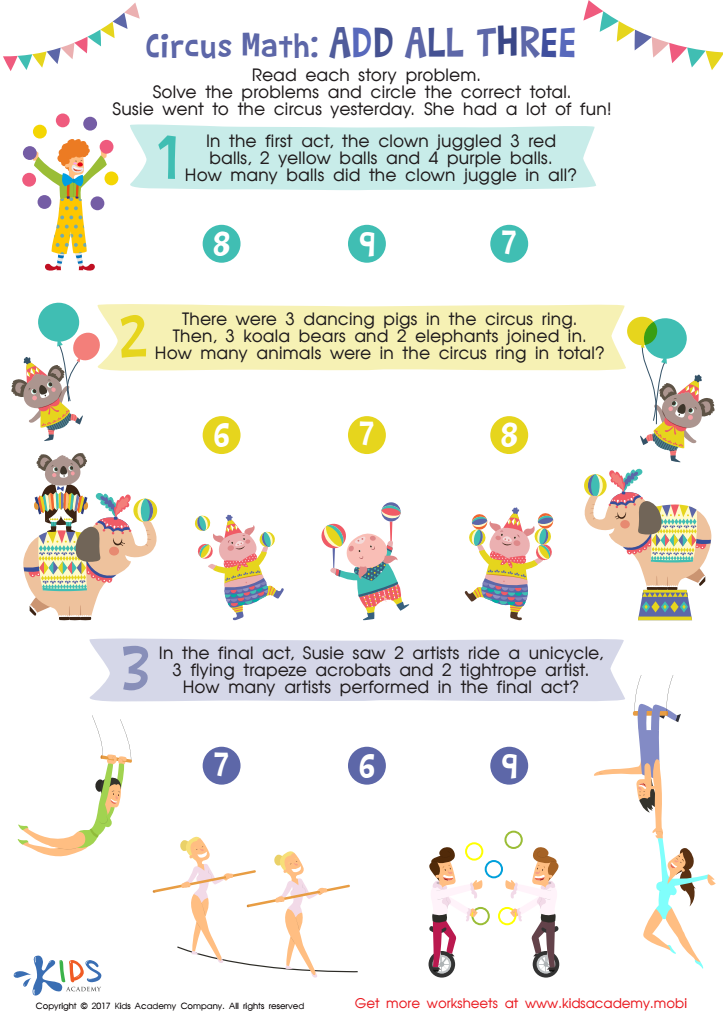
Circus Math Printable
 Assign to My Students
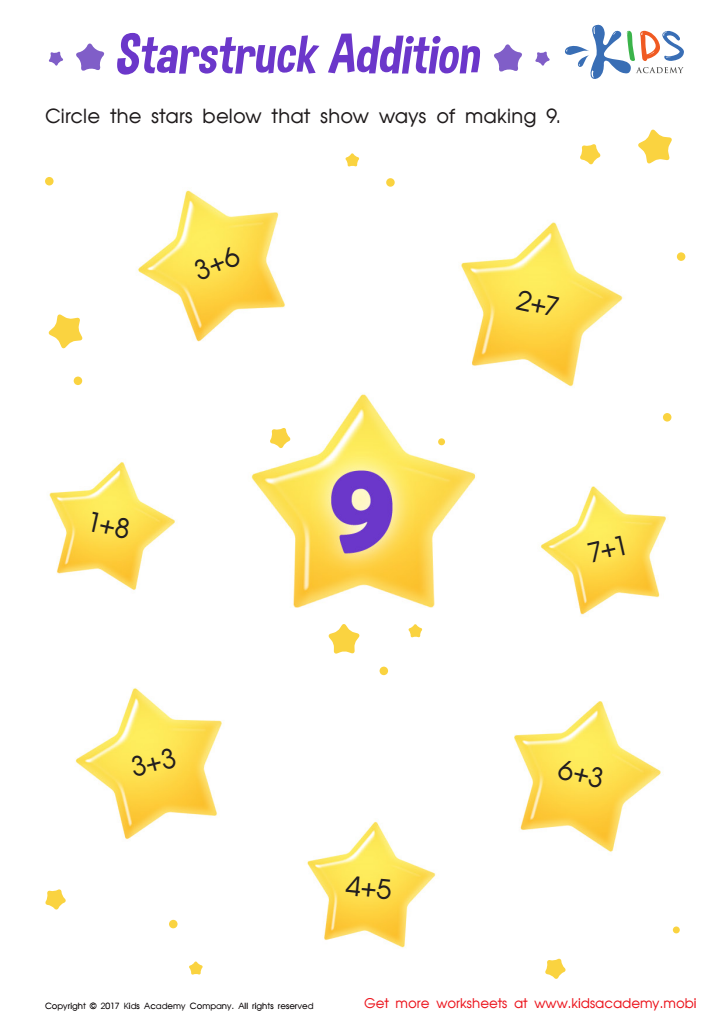
Starstruck Addition Printable








Parents and teachers play critical roles in children's early education, and emphasizing Extra Challenge Addition & Subtraction for ages 7-9 is pivotal for several reasons. At this developmental stage, children are not only learning basic arithmetic but are also cultivating critical thinking and problem-solving skills. Extra challenges push young learners to go beyond rote memorization and engage deeply with mathematical concepts.
By introducing more complex problems, these activities foster resilience and perseverance as children learn to tackle tougher questions and rethink their strategies. This step-by-step scaffolded learning ensures that foundational math skills, such as addition and subtraction, are solid, preparing them for more advanced math concepts in school.
Furthermore, challenging activities keep students engaged and reduce boredom, making learning more enjoyable. These invigorating tasks also craft a growth mindset; when children successfully solve difficult problems, their confidence boosts, instilling a sense of accomplishment. Confidence in math at an early age can shape their attitudes toward the subject in positive ways that persist throughout their academic careers.
For teachers, using these extra challenges in the classroom can diversify instruction and offer differentiated learning paths. It allows identify struggling students needing additional support and high achievers requiring more stimulation, thus tailoring teaching approaches more effectively.