Matching skills Matching Worksheets
6 filtered results
-
From - To
Unlock your child's potential with our engaging "Matching Skills Matching Worksheets"! Designed for early learners, these worksheets focus on boosting cognitive development through enjoyable exercises. Children will enhance their visual discrimination, pattern recognition, and logical thinking as they match pictures, shapes, and more. Perfect for preschool and kindergarten students, these activities make learning fun while reinforcing fundamental skills necessary for academic success. Suitable for classroom or at-home learning, our printable worksheets ensure interactive and effective skill-building. Discover a captivating way to foster foundational knowledge and prepare kids for a brighter educational journey!
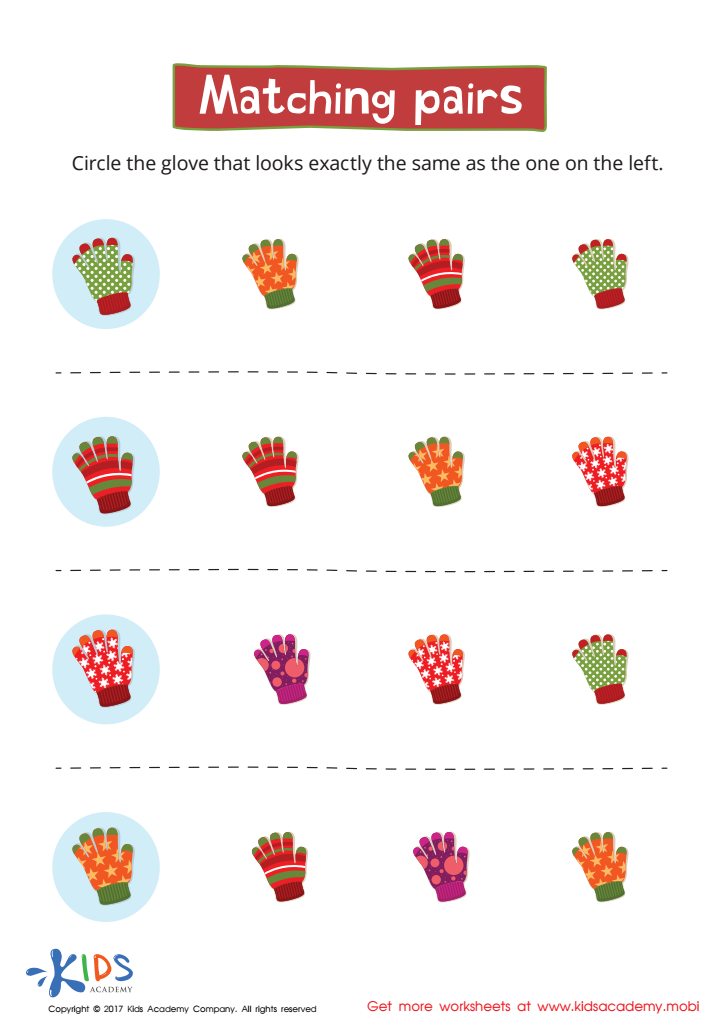
Matching: Matching Pairs Worksheet
 Assign to My Students
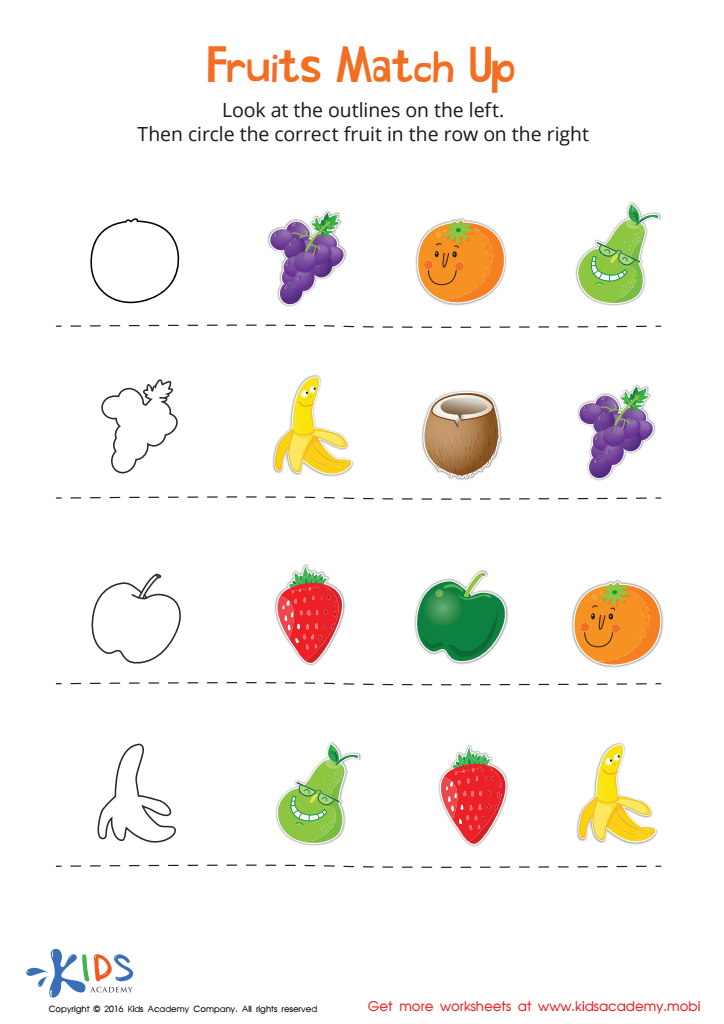
Fruits Match Up Worksheet
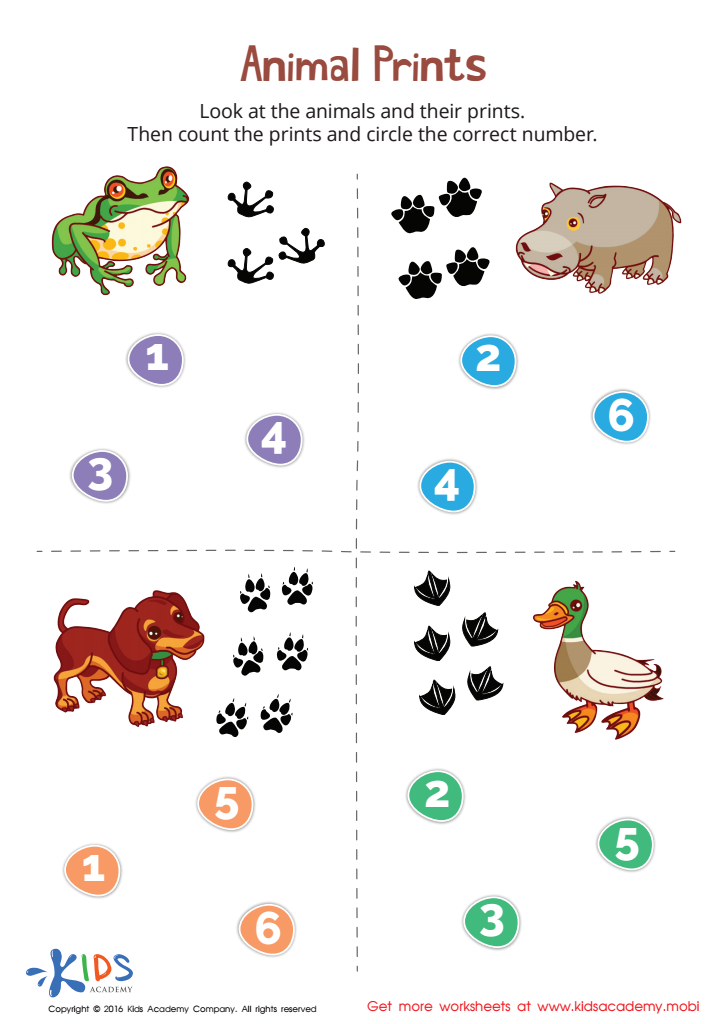
Animal Prints Match-Up Worksheet
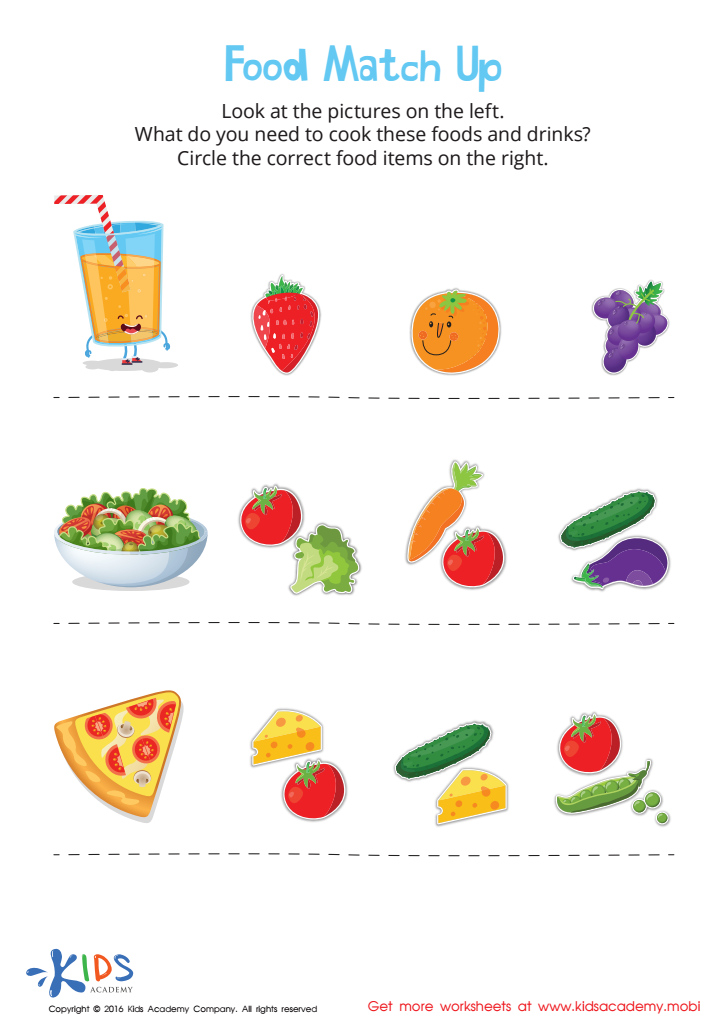
Food Match Up Worksheet

Shapes Worksheet








Matching skills are crucial in early childhood education because they lay the foundation for cognitive, social-emotional, and academic development. When children engage in activities that involve matching, such as pairing similar objects, shapes, colors, or patterns, they enhance their visual discrimination and memory skills. These activities sharpen their ability to recognize similarities and differences, which is essential for reading and mathematical proficiency.
Moreover, matching promotes problem-solving and fine motor skills. As children experiment with putting corresponding items together, they learn to think logically and develop patience and determination. Fine motor skills, which are crucial for writing, are also honed as they manipulate small objects to match pairs or sequences.
Social-emotionally, success in matching tasks fosters a sense of accomplishment and boosts self-esteem. It helps children develop self-regulation as they follow rules and focus on the task at hand. Additionally, cooperative matching games teach teamwork and communication skills, which are vital for interpersonal relationships.
For these reasons, parents and teachers should emphasize matching activities in early education. By doing so, they are not just teaching children a simple skill, but equipping them with essential tools for lifelong learning and social interaction. Engaging in these activities prepares children for more complex tasks, ensuring a smoother transition into higher levels of education.








