Normal Division Worksheets for Ages 3-4
6 filtered results
-
From - To
Welcome to our "Normal Division Worksheets for Ages 3-4," designed to introduce young learners to the fundamentals of division in a fun and engaging way! These worksheets provide simple, age-appropriate problems that encourage number recognition and basic grouping skills. With colorful illustrations and interactive formats, children will enjoy solving basic division concepts through hands-on activities. Perfect for parents and educators, our resources promote early math skills, building a strong foundation for future learning. Help your little ones develop confidence and enthusiasm for math while they explore division at their own pace! Download and start your educational journey today!
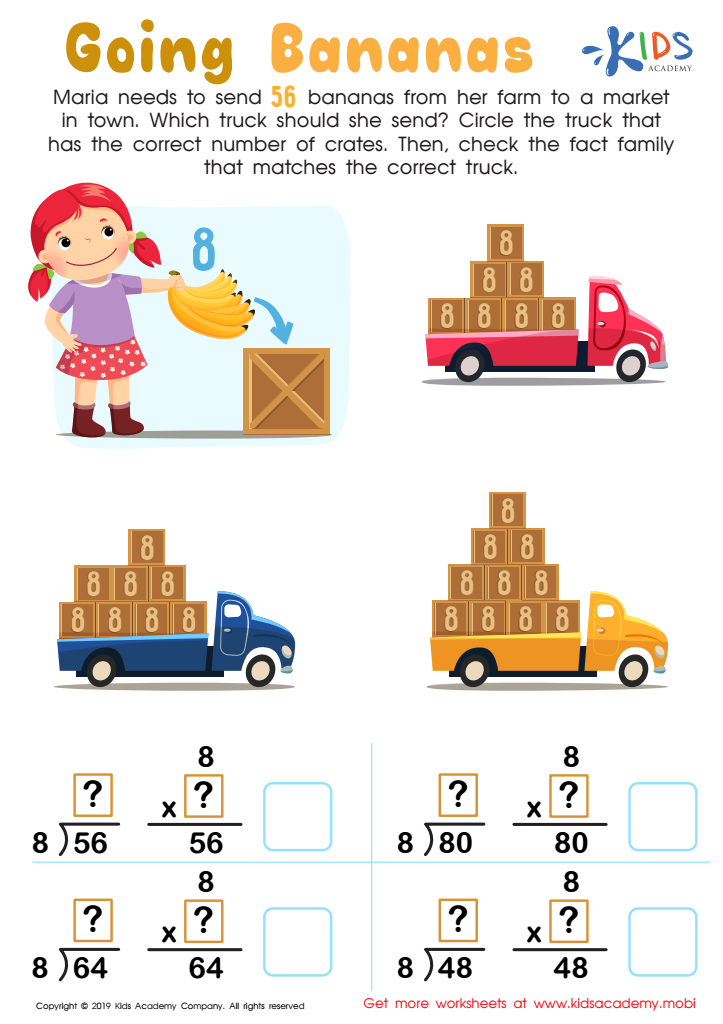
Going Bananas Worksheet
 Assign to My Students
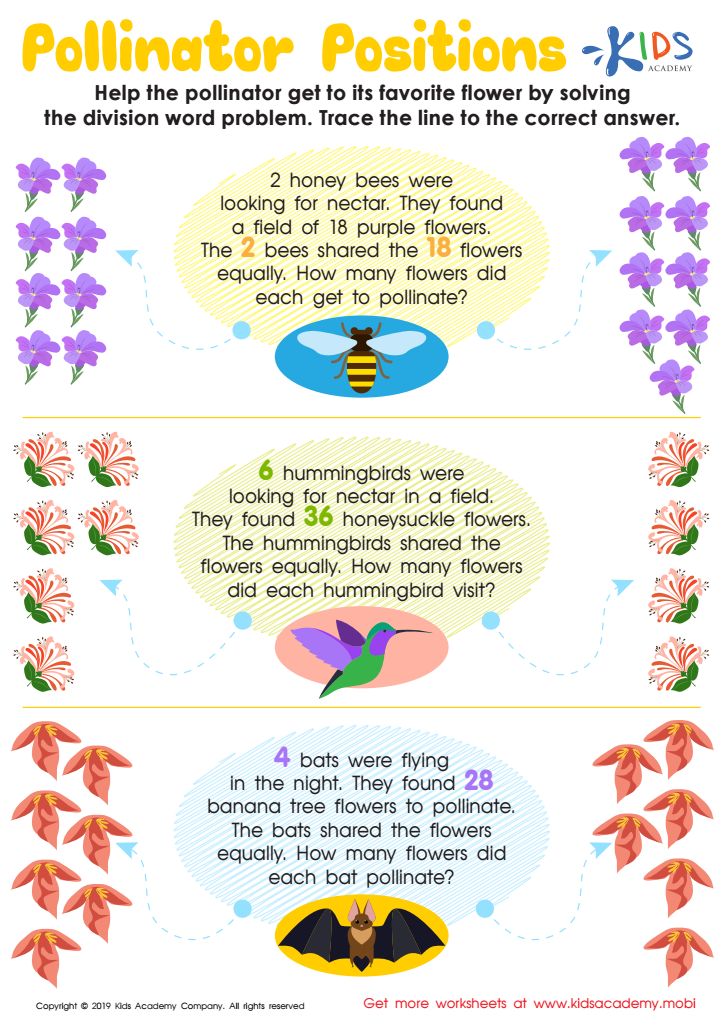
Pollinator Positions Worksheet
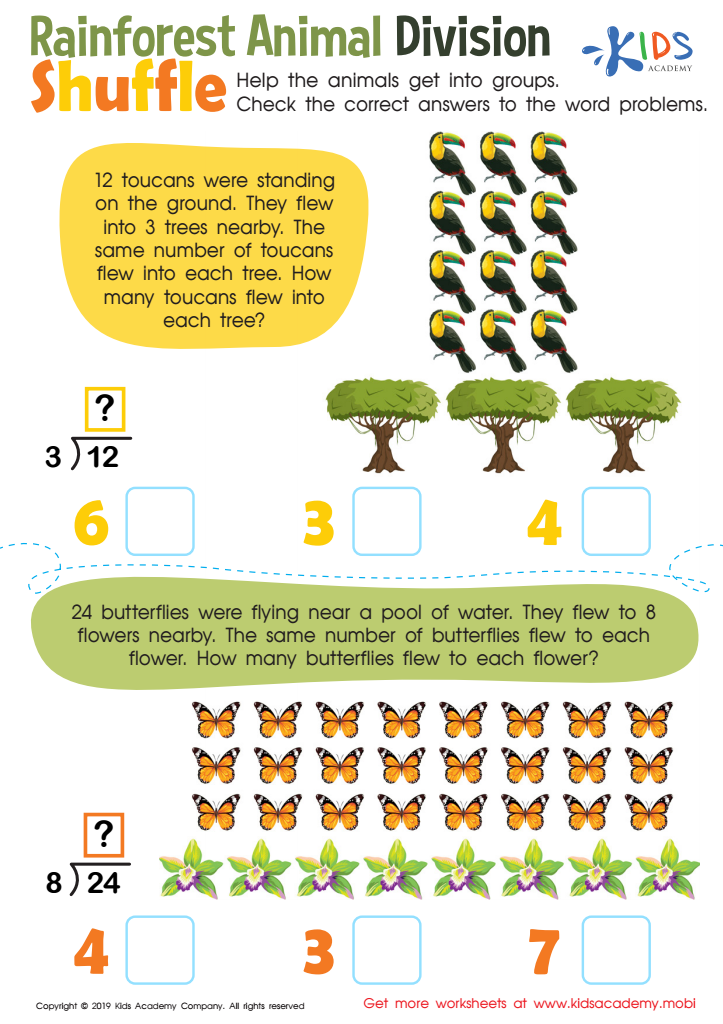
Rainforest Animal Division Worksheet
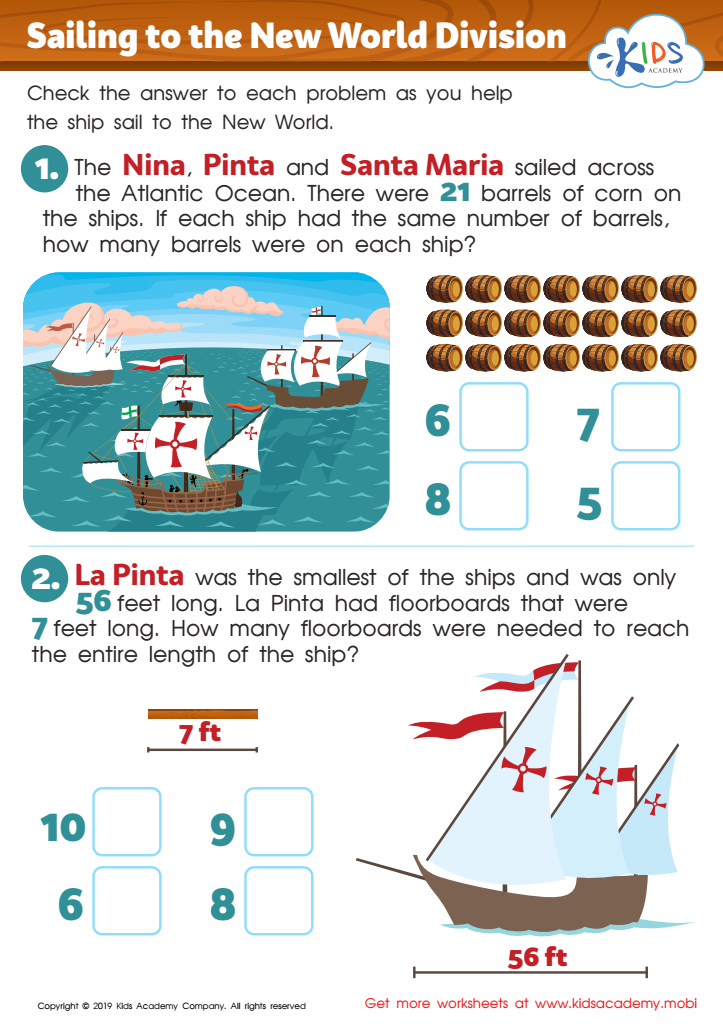
Sailing to the New World Division Worksheet
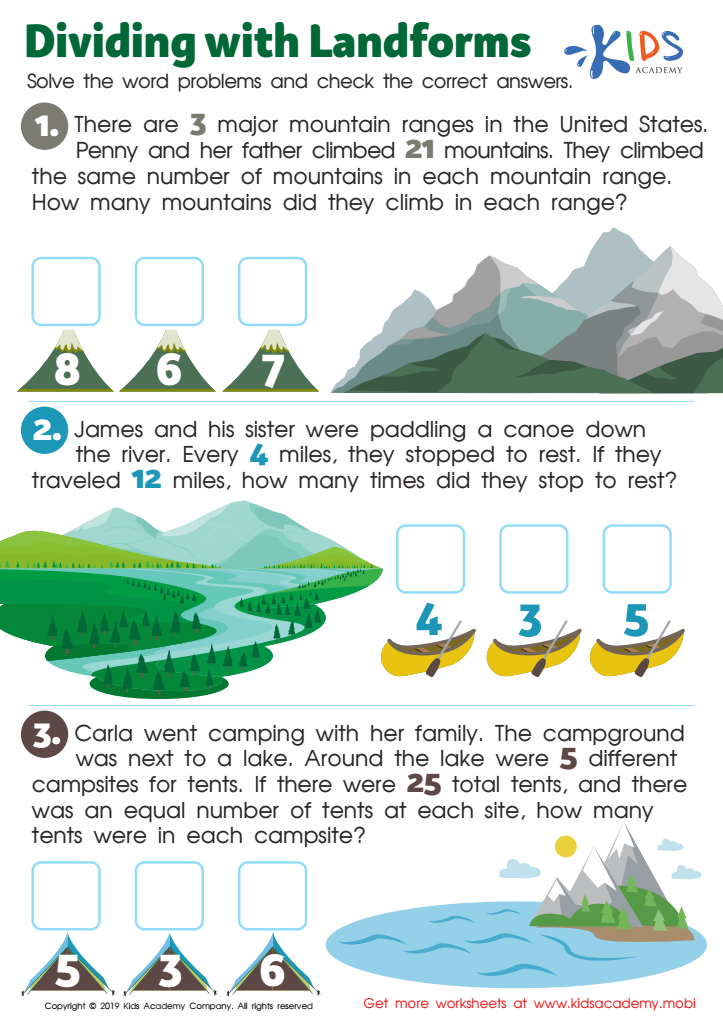
Dividing with Landforms
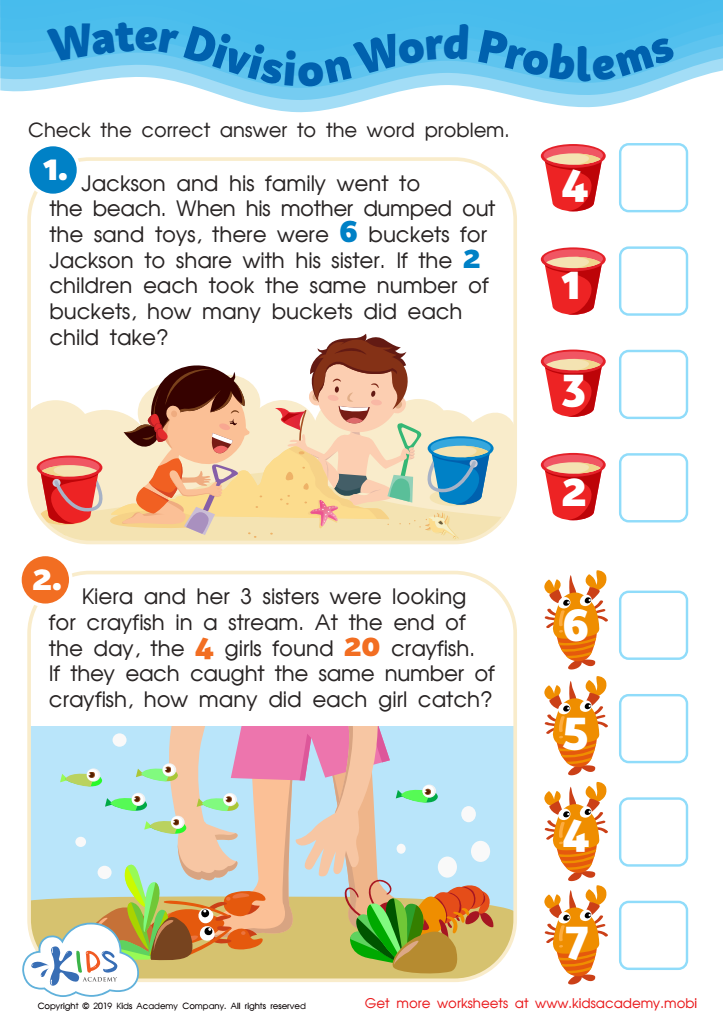
Water Division Word Problems Worksheet








Parents and teachers should care about Normal Division for ages 3-4 because it lays the foundation for early numeracy skills that are crucial for a child’s cognitive development. At this age, children are naturally curious and eager to learn, making it an optimal time to introduce basic mathematical concepts, including division as sharing or grouping.
Understanding Normal Division, often framed as sharing items evenly among friends or groups, helps children grasp the idea of fairness and quantity. This introduces them to critical thinking and problem-solving skills, encouraging them to think about distribution and relationships between numbers. Mastering these concepts at an early age fosters a positive attitude toward math, reducing anxiety and building confidence as they progress in their education.
Furthermore, engaging children with interactive, hands-on activities related to Normal Division supports their kinesthetic learning style—common at this developmental stage. Parents and teachers can create memorable experiences through games, stories, and real-life scenarios, making math meaningful and relatable.
In essence, introducing Normal Division to young children nurtures their mathematical foundation, promotes social skills through group activities, and cultivates essential problem-solving abilities that will benefit them in academic and everyday contexts.








