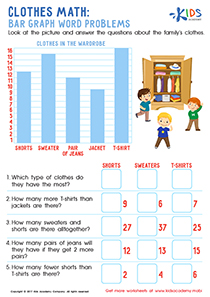
Normal Two-step Word Problems Worksheets for Ages 3-4
13 filtered results
-
From - To
Introducing our Educational Interactive Printables: Normal Two-step Word Problems Worksheets, expertly crafted for children aged 3-4 years. Engage your little ones with fun, thought-provoking activities designed to develop their problem-solving skills. These worksheets combine colorful visuals and engaging tasks that require children to think through two sequential steps to arrive at the solution. Ideal for early learners, our printables foster critical thinking and foundational math skills in a playful and interactive way. Perfect for both classroom and home use, these worksheets will make learning an exciting adventure for your preschooler. Start building a strong educational foundation today!
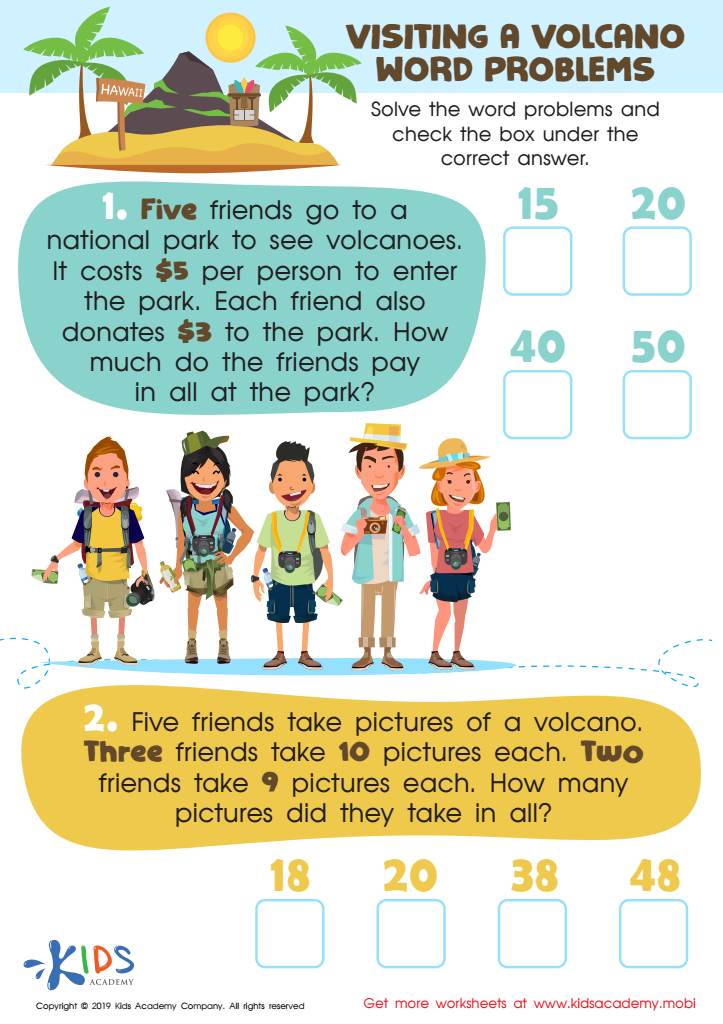
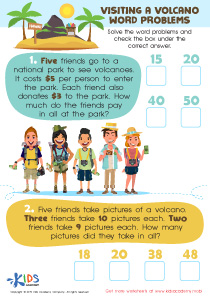
Visiting a Volcano Word Problems Worksheet
 Assign to My Students
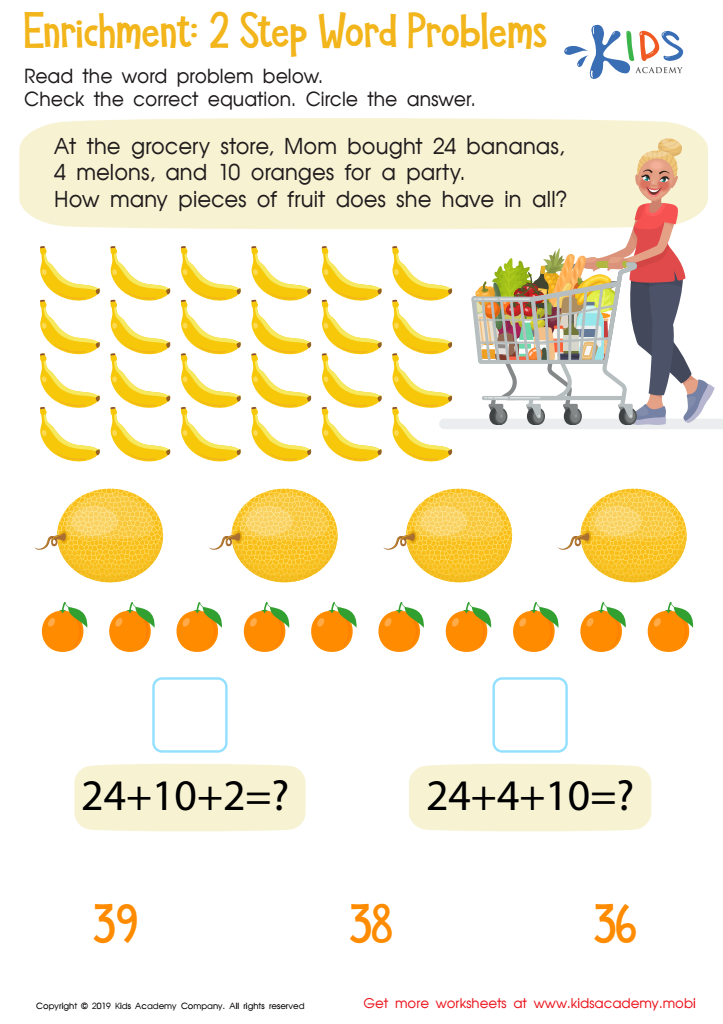
Enrichment -2 Step Word Problems Worksheet
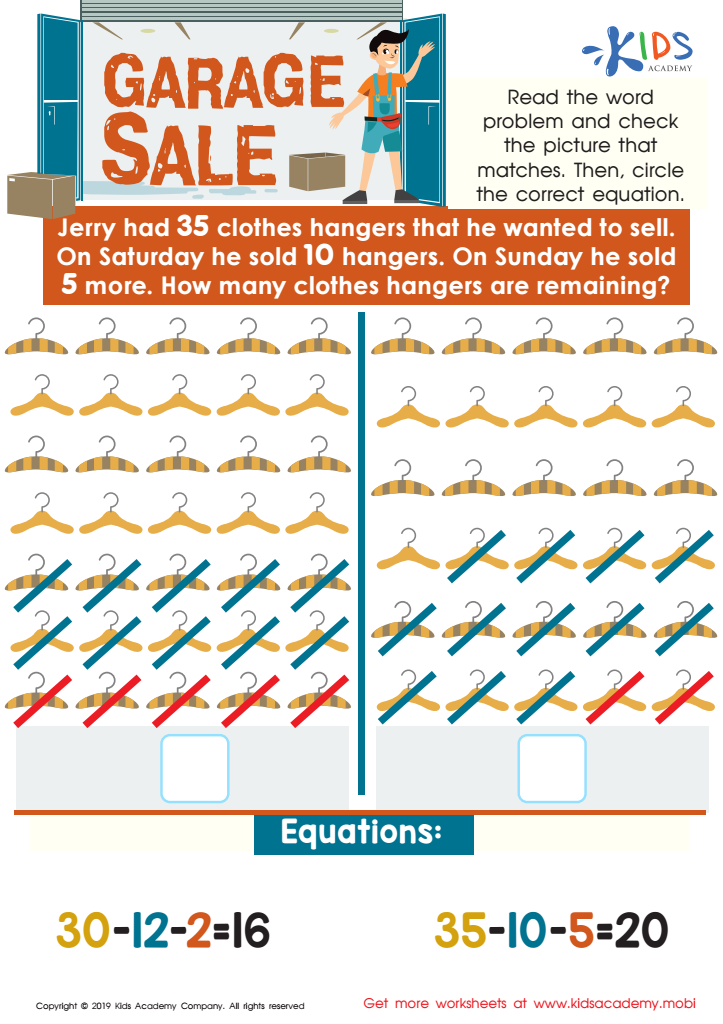
Garage Sale Worksheet
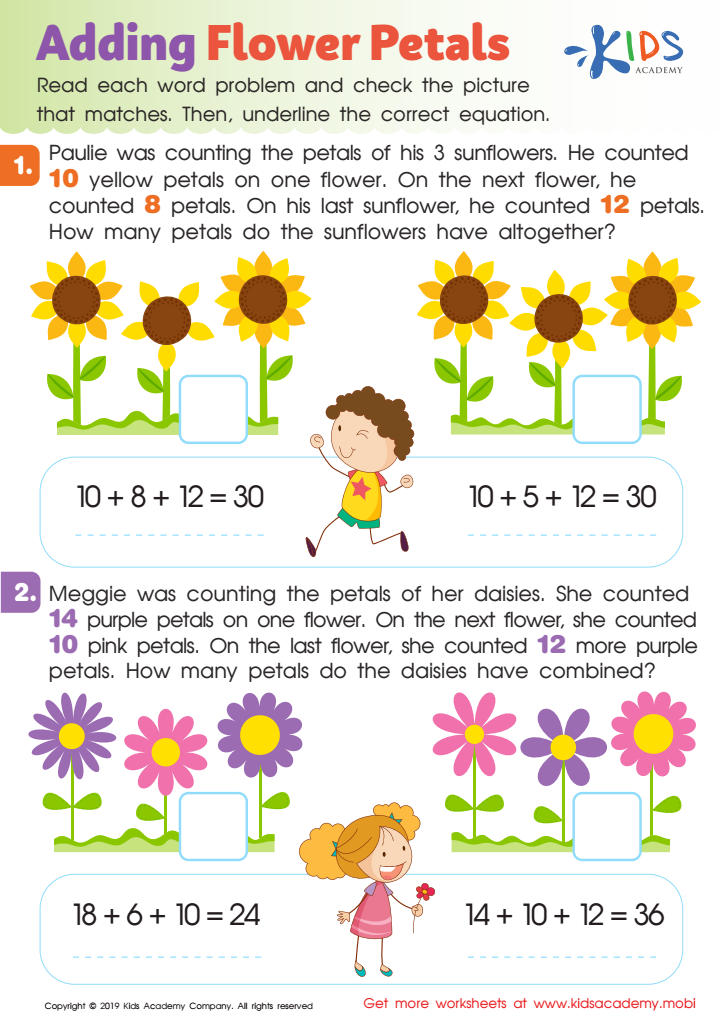
Adding Flower Petals Worksheet
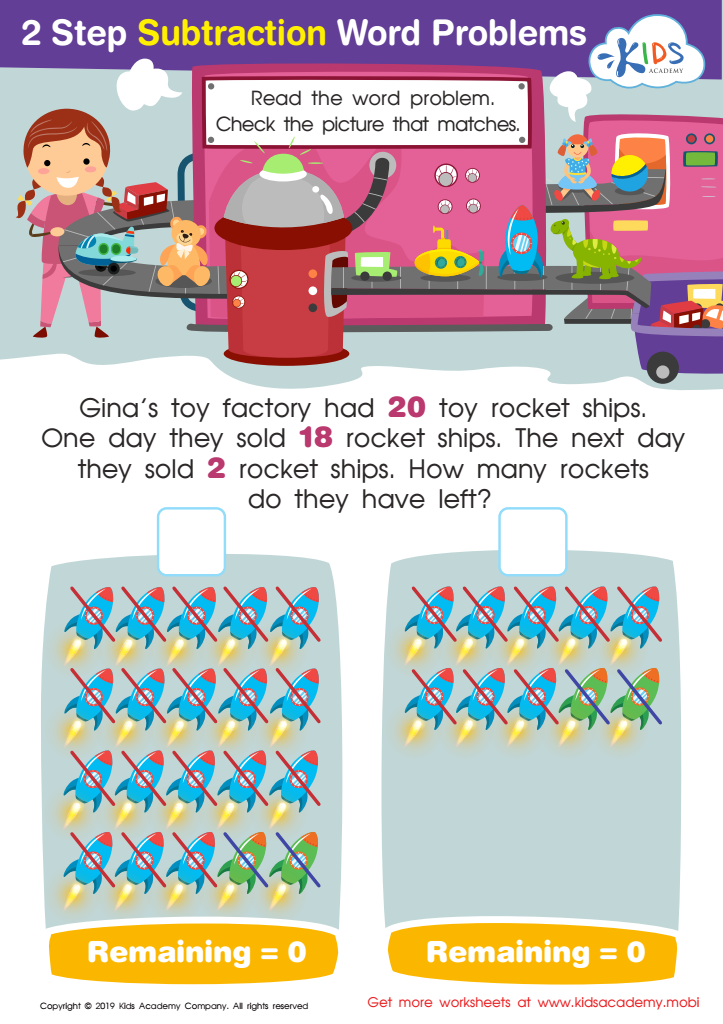
Step Subtraction Word Problems Worksheet
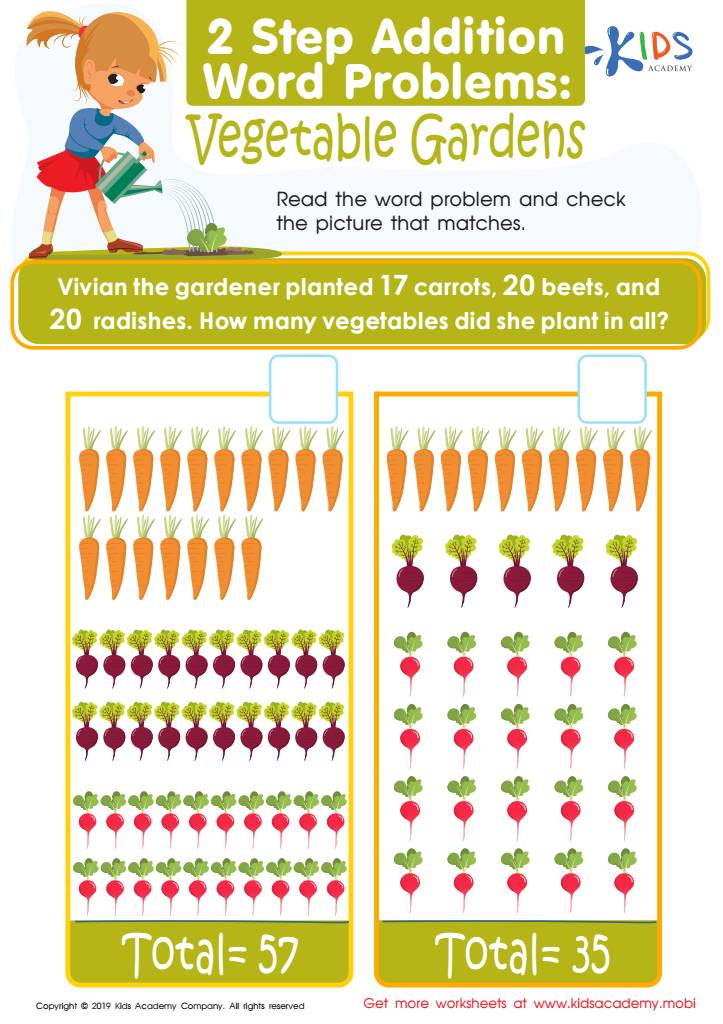
Vegetable Gardens Worksheet
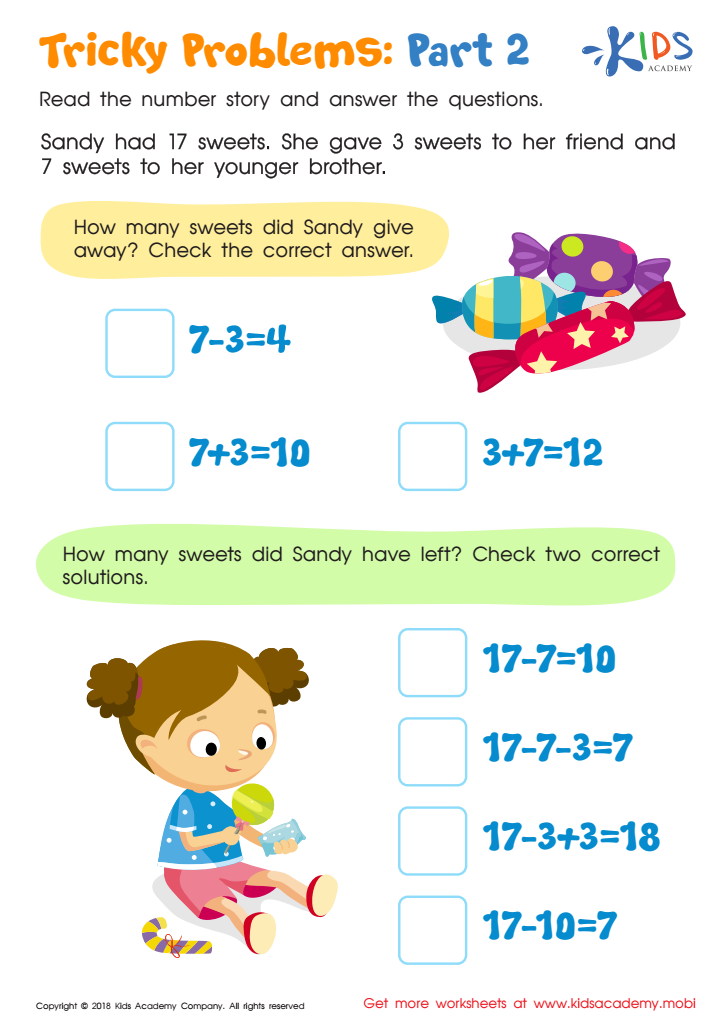
Tricky Problems Worksheet: Part 2
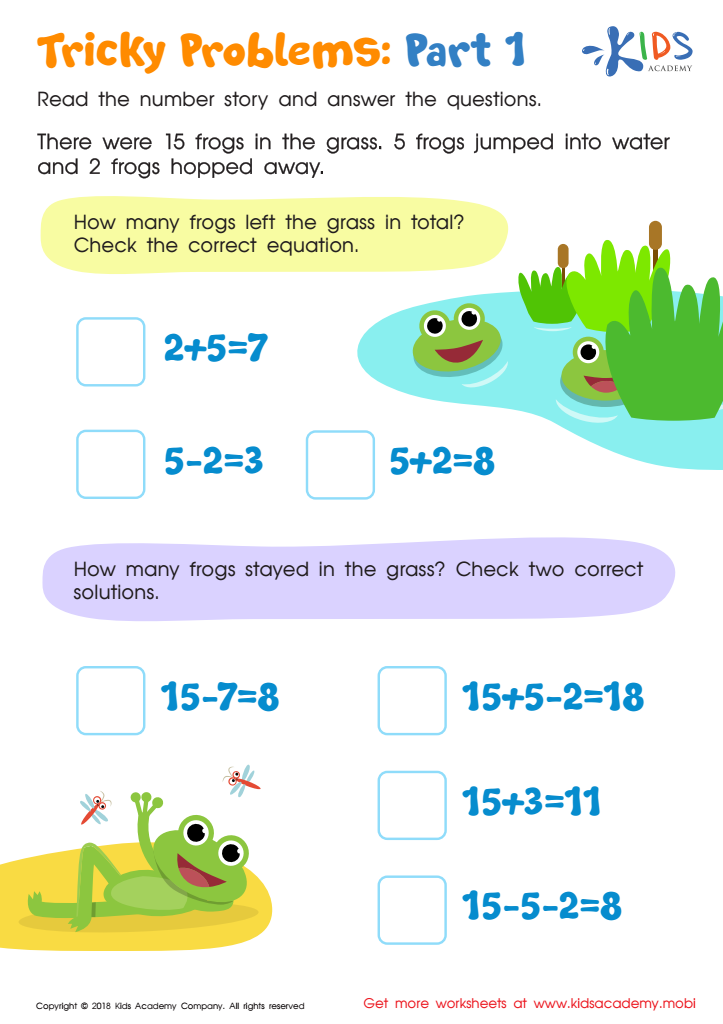
Tricky Problems Worksheet: Part 1
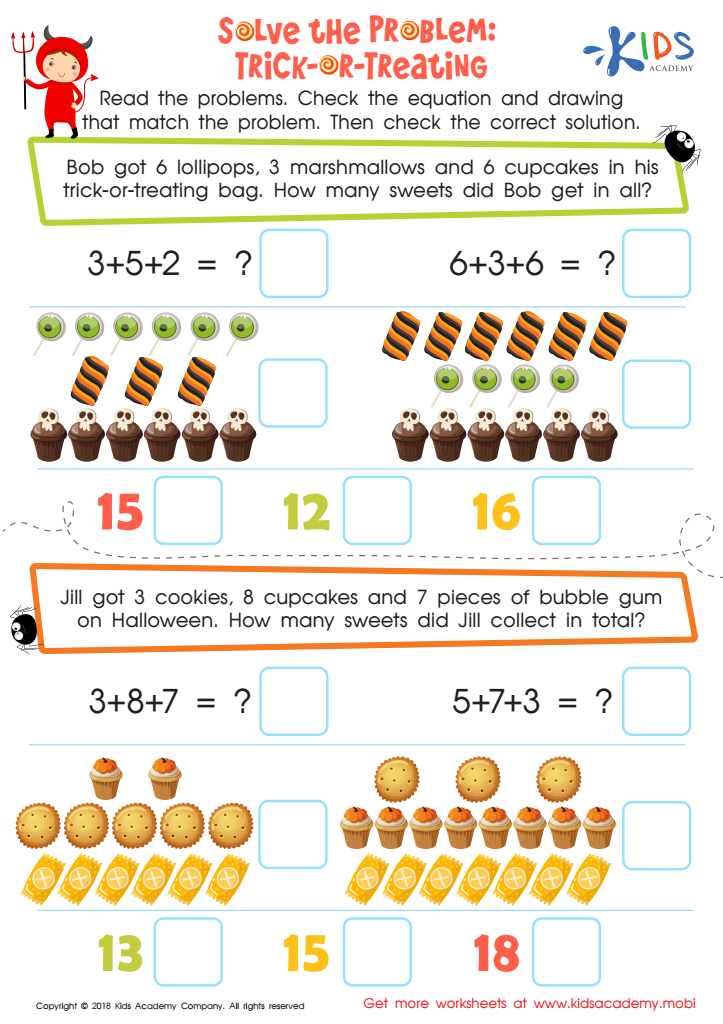
Solve the Problem: Trick–or–treating Worksheet
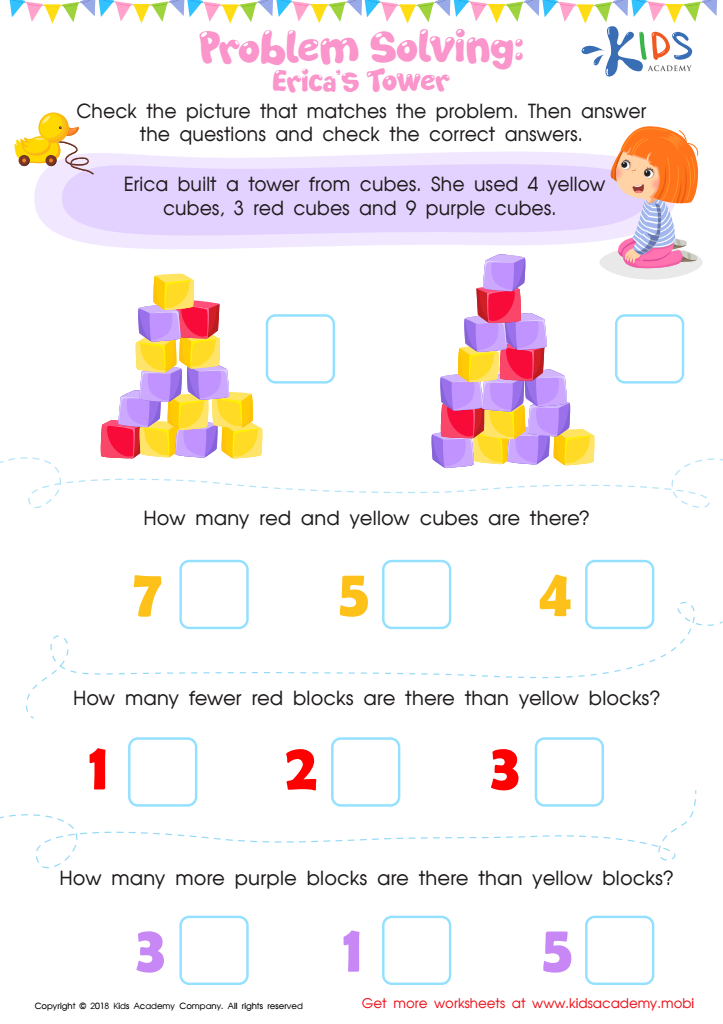
Problem Solving: Erica's Tower Worksheet
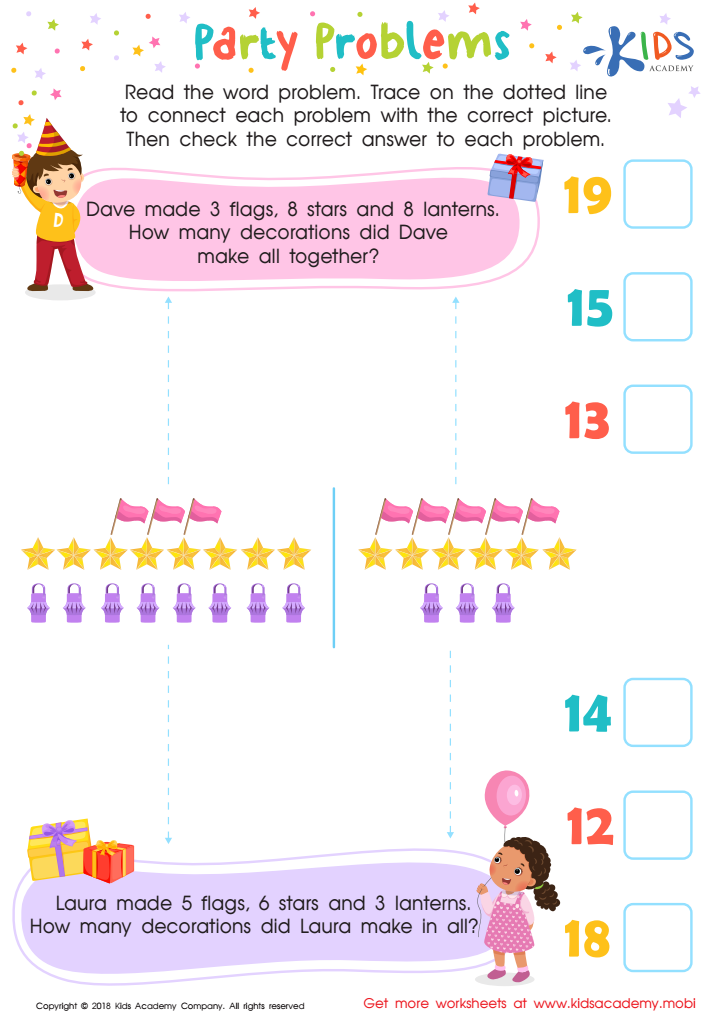
Party Problems Worksheet
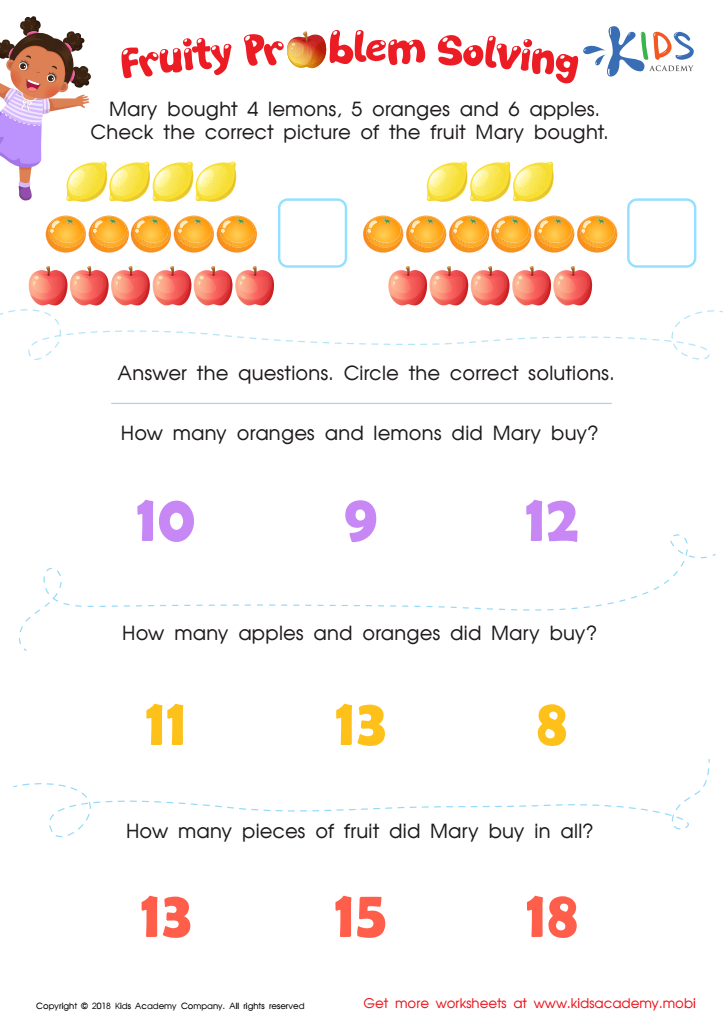
Fruity Problem Solving Worksheet
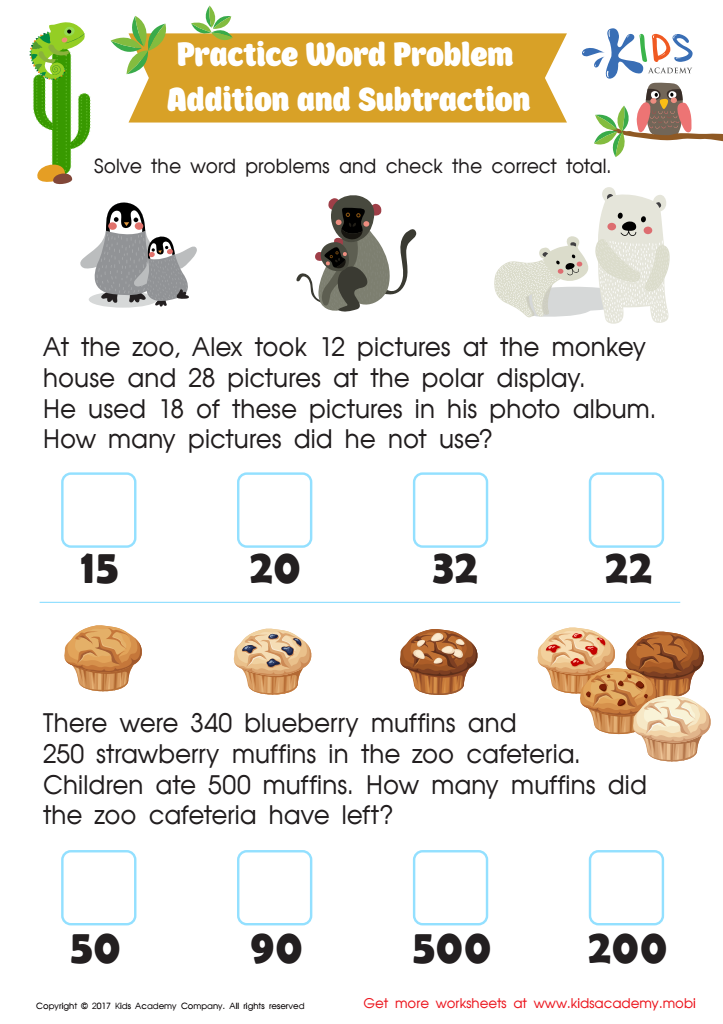
Addition and Subtraction: Word Problems Worksheet



The Value of Educational Downloadable Worksheets on Two-Step Word Problems for Young Children
When it comes to early childhood education, nurturing a child’s cognitive development is crucial. Educational downloadable worksheets, particularly those focused on two-step word problems, play a vital role in this developmental phase. These resources are exceptionally useful for children aged 3-4 years, as they lay down the foundation for critical thinking and problem-solving skills that are essential throughout their schooling and beyond.
Developing Sequential Thinking
At ages 3 to 4, children are at a critical stage of cognitive development. They are beginning to understand the concept of sequence and order, which are fundamental aspects of logic and reasoning. Two-step word problems require a child to follow a sequence where one part of the problem leads to another. By engaging with these problems, young learners develop an understanding of process and outcome, which is a precursor to complex reasoning skills.
Enhancing Comprehension and Application
Educational downloadable worksheets on two-step word problems are crafted to enhance comprehension skills. At such a young age, children are just beginning to develop their language and numeracy skills. These worksheets use simple, relatable scenarios that require applying these skills to solve problems. For instance, a worksheet might describe a situation where "Sally has 2 red balloons and gets 3 more blue balloons. How many balloons does she have now?" This encourages children to make sense of the problem contextually and promotes an early application of math in real-life situations.
Building Confidence and Independence
Confidence and independence in learning are critical. Educational downloadable worksheets are designed to be clear and engaging, allowing children to approach problems at their own pace, which is crucial for their age. This self-paced exploration encourages children to solve problems independently, bolstering their confidence. As they successfully work through each problem, their self-assurance in their ability to tackle challenges grows, setting a positive trajectory for future learning experiences.
Convenience and Flexibility
One of the significant advantages of educational downloadable worksheets is their accessibility. Parents and educators can access a wealth of resources online that can be used in various learning environments—be it at home, in preschool, or on the move. This flexibility ensures that children can continue learning outside traditional classroom settings, making every opportunity a learning opportunity.
Interactive and Engaging Learning
Children aged 3-4 years have a naturally short attention span. Educational worksheets are designed to be visually appealing and interactive, which is crucial in maintaining their interest and engagement. Two-step word problems in particular, stimulate curiosity because they tell a story and require a resolution. Each worksheet can include colorful illustrations and characters that children can relate to, making the learning process fun and engaging. By turning abstract concepts into visually stimulating scenarios, these worksheets help young learners grasp complex ideas more easily.
Encouraging Parent-Child Interaction
Another significant benefit of educational downloadable worksheets is that they provide an excellent opportunity for parents to get involved in their child's early education. Working together on two-step word problems can enhance the parent-child bond and give parents a better understanding of their child’s developmental progress and learning style. This active involvement is crucial as it reinforces learning at home, provides children with confidence in their problem-solving abilities, and offers parents a practical framework to support their child's educational journey.
Adaptability to Individual Learning Styles
Children are diverse in their learning styles and paces. Educational downloadable worksheets can be used in a tailored manner to suit individual needs. For children who might find certain concepts challenging, these worksheets can be repeated as needed without pressure, providing ample practice at their own comfort level. Conversely, for more advanced children, parents or educators can choose more complex worksheets to keep them challenged and engaged.
Preparation for Future Academic Demands
Starting with two-step word problems at a young age prepares children for the types of analytical thinking they will encounter in primary school and beyond. The skills developed through these worksheets are foundational to more advanced mathematical concepts and problem-solving scenarios they will face in the future. This early preparation can ease the transition to more structured and rigorous academic environments, making children more adept at handling various types of questions and problems.
Conclusion
In conclusion, educational downloadable worksheets focusing on two-step word problems are not just about teaching children basic math skills. They are about cultivating early cognitive skills, critical thinking, and problem-solving abilities that are essential for lifelong learning. For children aged 3-4 years, these tools are invaluable in providing a fun, engaging, and effective learning experience that lays the groundwork for future academic success and beyond. Engaging young minds through these carefully designed worksheets helps unlock their potential, fostering an early love for learning that is crucial during these formative years.