Explore the Wonders of Space with Fun and Educational Worksheets for Kids Ages 3-4 | Kids Academy
4 filtered results
-
From - To
Discover the wonders of the cosmos with our Normal Space worksheets, specially crafted for ages 3-4! These engaging worksheets are designed to ignite curiosity and introduce young learners to the captivating world of space. Through a series of fun, age-appropriate activities, children will explore basic space concepts, shapes, and colors. Each worksheet is tailored to enhance fine motor skills, observation, and critical thinking. Whether it's identifying planets, tracing constellations, or coloring rockets, our Normal Space for Ages 3-4 collection offers a unique educational journey. Embark on this space adventure and foster a lifelong love of learning and exploration!
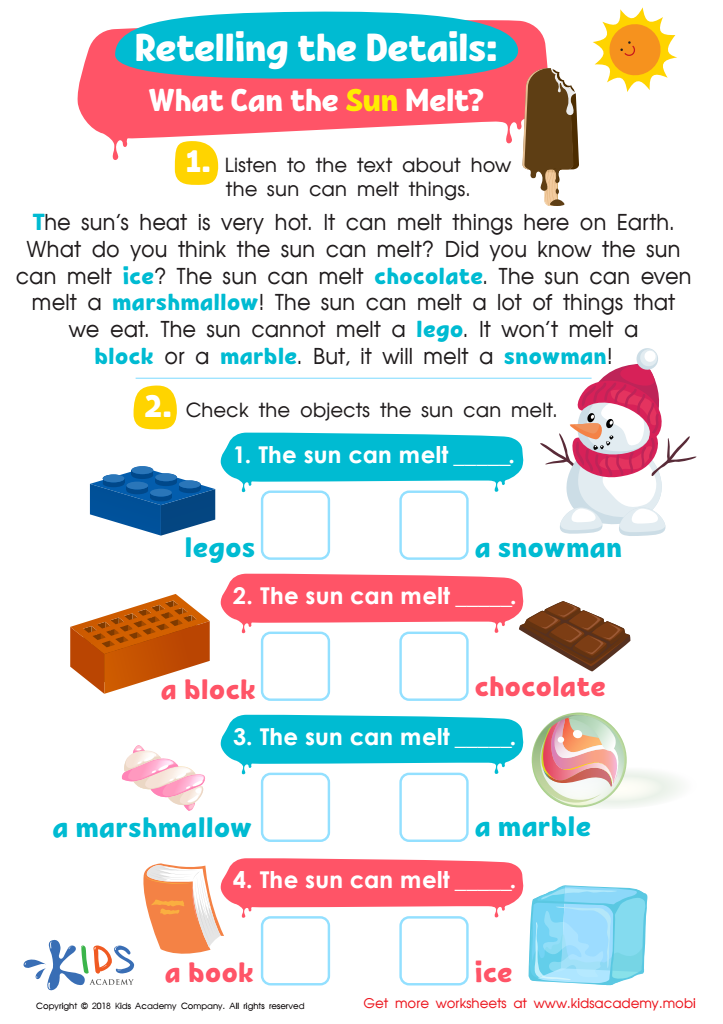
Retelling the Details: What Can the Sun Melt? Worksheet
 Assign to My Students
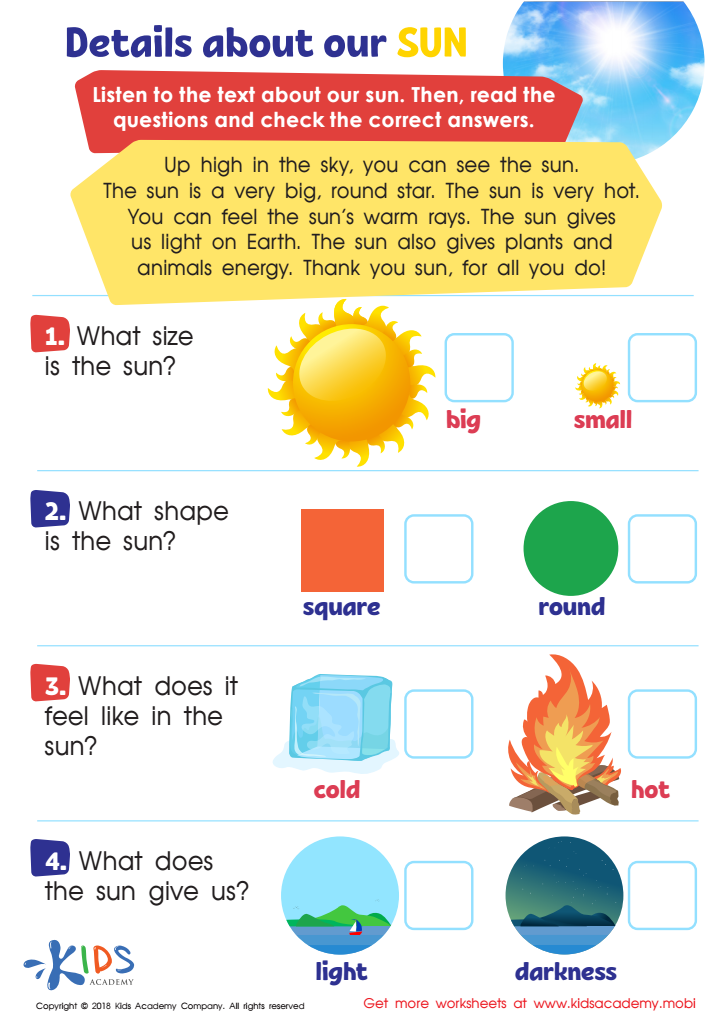
Details About Our Sun Worksheet
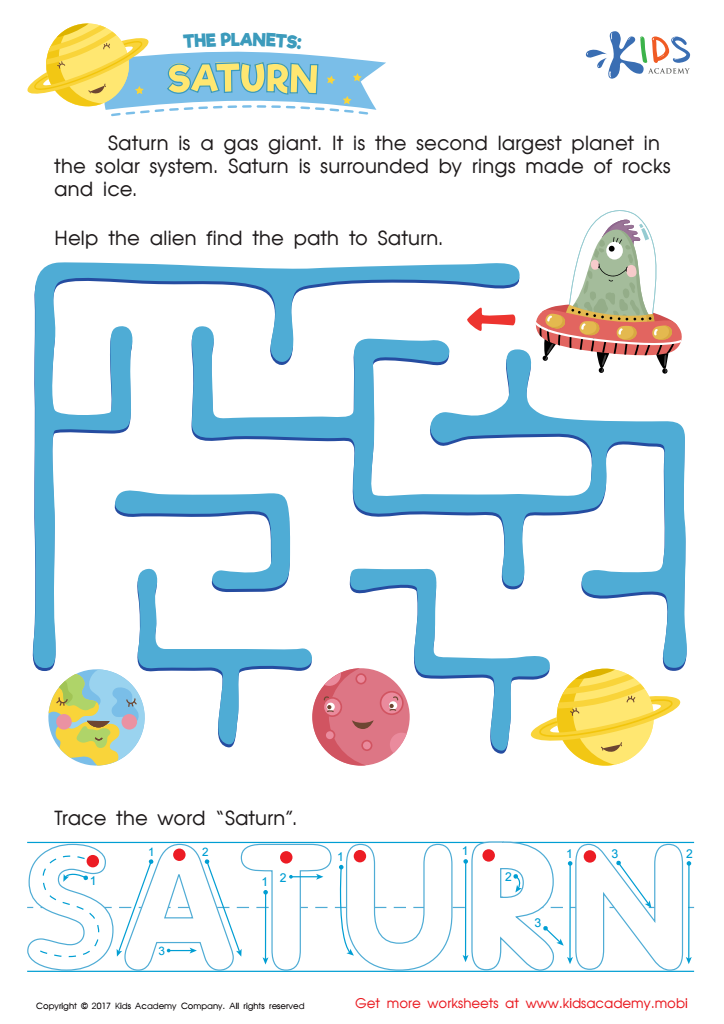
The Planets: Saturn Printable
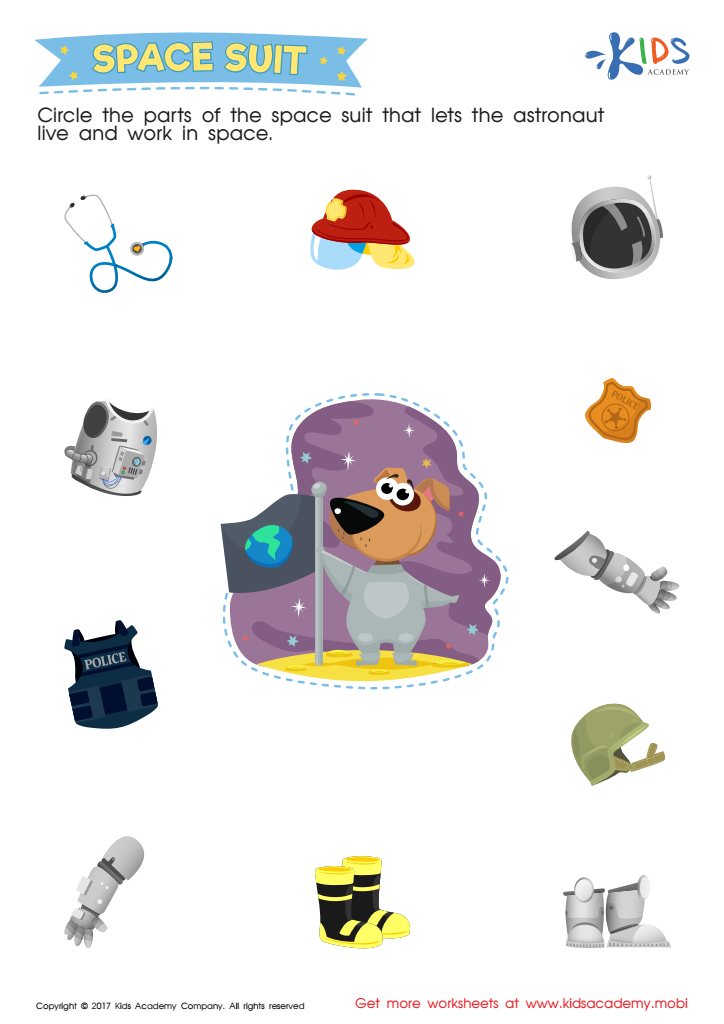






Normal Space worksheets designed specifically for Ages 3-4 are an invaluable resource for early childhood education. At this critical stage of development, children are naturally curious and eager to learn about the world around them, including the mysteries of outer space. These worksheets serve as a powerful educational tool, introducing young learners to basic concepts of the universe in an engaging and age-appropriate manner.
By incorporating Normal Space worksheets into their learning routine, children aged 3-4 can begin to develop an understanding of space, including the planets, stars, and the concept of the Earth's place in the universe. This early exposure not only nurtures their curiosity but also lays the foundational stones for scientific thinking and inquiry.
Moreover, these worksheets are designed with the developmental needs of 3 to 4-year-olds in mind, featuring activities that are just the right level of challenging to stimulate their cognitive skills without overwhelming them. Activities such as matching planets, identifying celestial bodies, and simple counting exercises related to space objects, promote critical thinking, problem-solving skills, and even basic math skills.
In summary, Normal Space worksheets for Ages 3-4 are a fun, educational way to introduce young children to the wonders of the universe, sparking a lifelong interest in learning and potentially inspiring the next generation of astronomers, scientists, and explorers.