Normal Ending Sounds Worksheets for Ages 3-6
4 filtered results
-
From - To
Explore our engaging Normal Ending Sounds Worksheets designed for children aged 3-6! These fun and educational resources help early learners develop essential phonemic awareness skills by focusing on the sounds that end words. Each worksheet is crafted to be interactive and visually appealing, making learning enjoyable for young minds. Kids will practice identifying and writing normal ending sounds through vibrant illustrations and guided activities. Perfect for teachers and parents, these worksheets support literacy development and foster a love for reading. Download our Normal Ending Sounds Worksheets today and watch your child's confidence soar as they master this foundational skill!
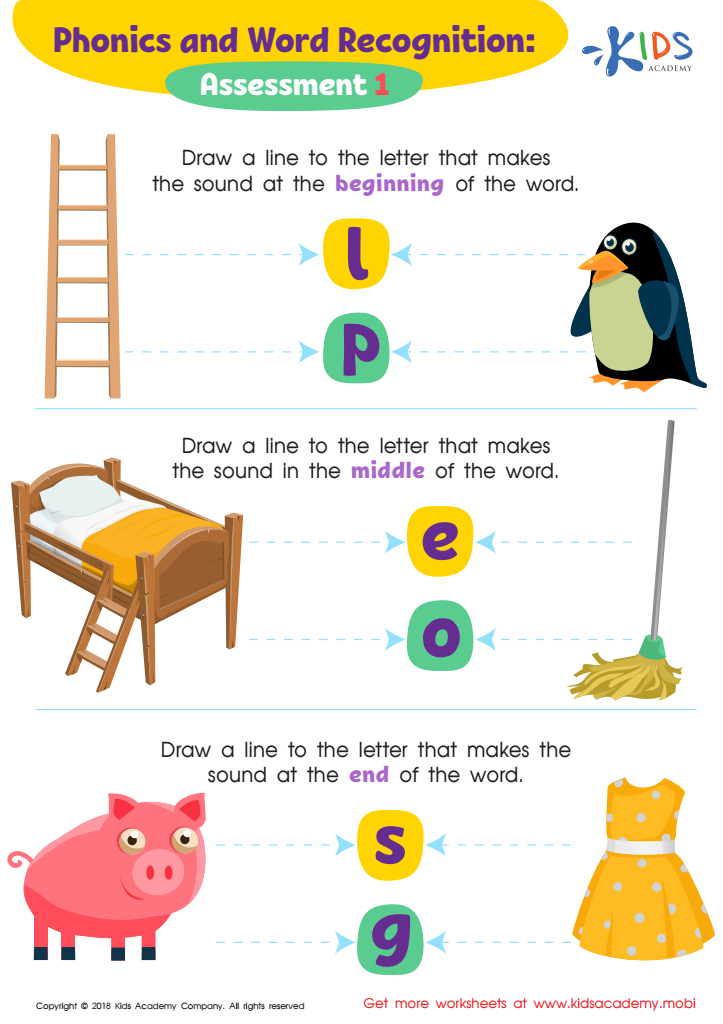
Phonics and Word Recognition: Assessment 1 ELA Worksheet
 Assign to My Students
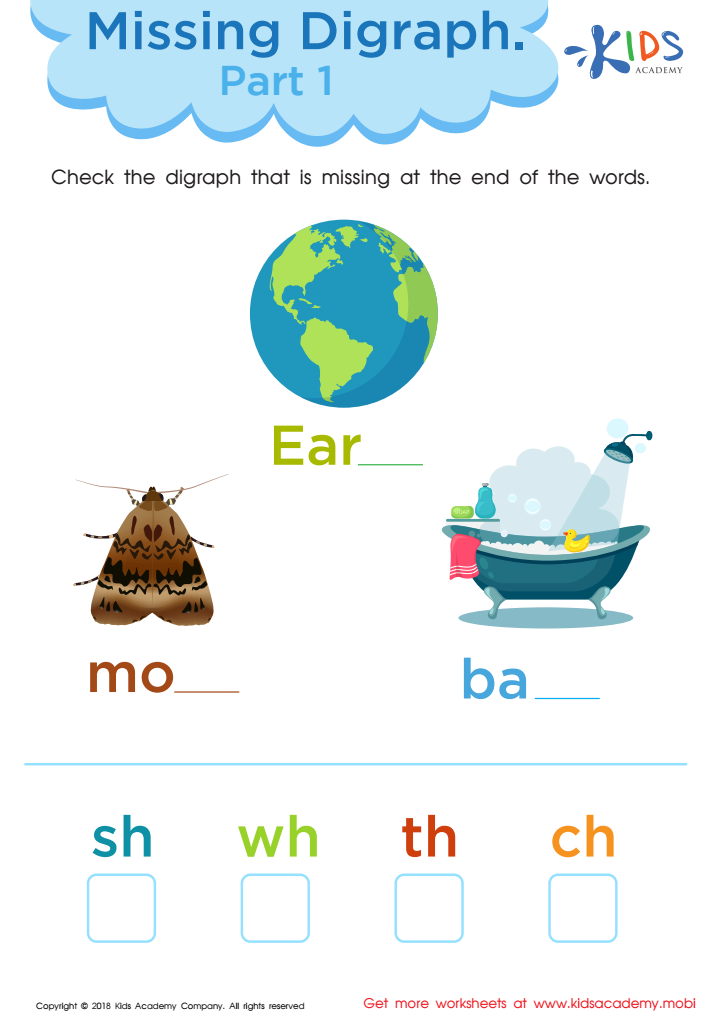
Missing Digraph: Part 1 Worksheet
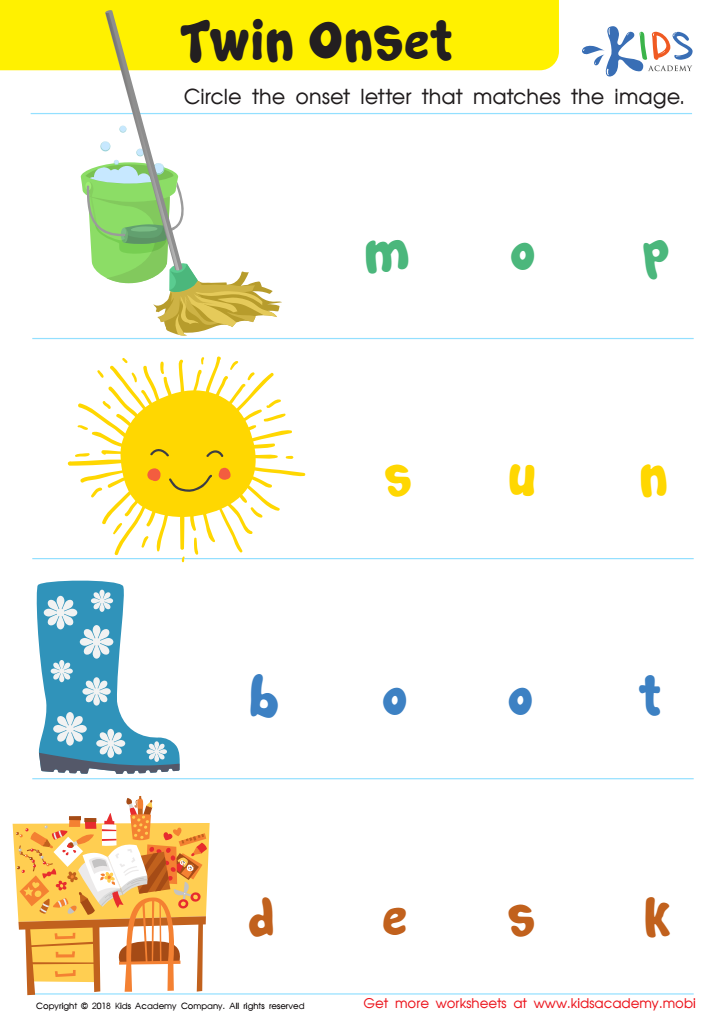
Twin Onset Worksheet
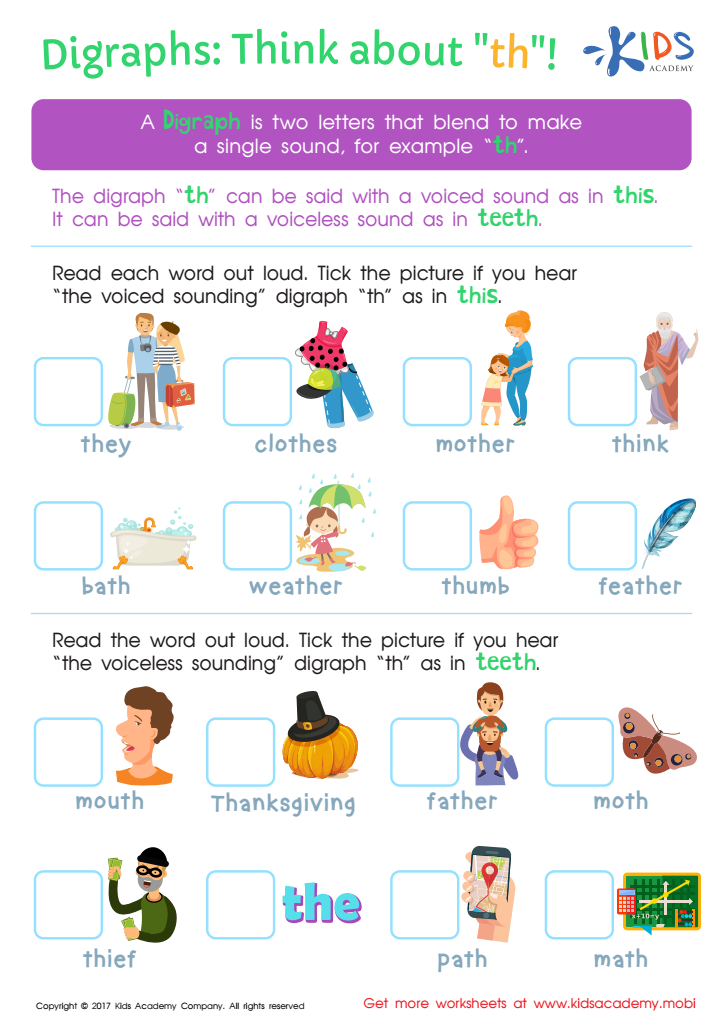
Digraphs: Think About "th" Worksheet






Normal ending sounds are crucial for children aged 3-6 as they significantly contribute to early language development and literacy skills. At this stage, children are beginning to build their phonemic awareness, which is the ability to hear, identify, and manipulate sounds in words. By focusing on ending sounds, parents and teachers enhance children's listening skills and help them recognize patterns in language.
Understanding ending sounds can also aid in vocabulary development and facilitate more effective reading and writing in the future. As children learn to identify how words sound — not just how they look — they become more proficient at decoding new words when reading. This skill is foundational for comprehension and overall academic success.
Moreover, incorporating activities like rhyming, songs, and playful word games around ending sounds makes learning fun and engaging. These experiences not only foster a love of language but also reinforce cognitive skills such as memory and critical thinking. Hence, parents and teachers play an essential role in guiding this developmental phase, ensuring that children gain the essential skills needed to navigate the complexities of language more effectively as they move into later stages of education.







