Filters

33 filtered results

Clear all filters
Favorites
With answer key
Interactive

33 filtered results

Difficulty Level

Grade


Check out this FREE Trial Lesson on Reading Non-Fiction for age 3-6!

Key Details in a Text

Favorites
With answer key
Interactive
  • 3-6
  • Interactive
  • Reading Non-Fiction
  • Normal
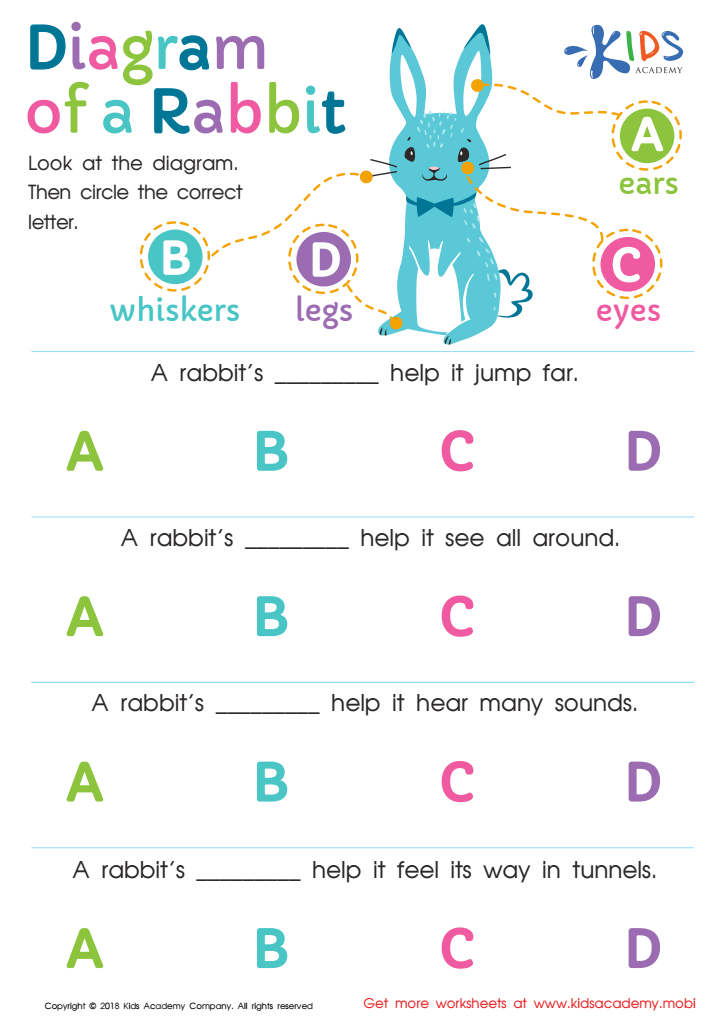
Diagram of a Rabbit Worksheet

Diagram of a Rabbit Worksheet

Reading skills are essential for success in all subjects, from science and math to fiction. This worksheet helps kids learn to interpret diagrams by studying the rabbit illustration and then selecting the correct answer for each sentence. It's a fun way to build reading and comprehension skills!
Diagram of a Rabbit Worksheet
Worksheet
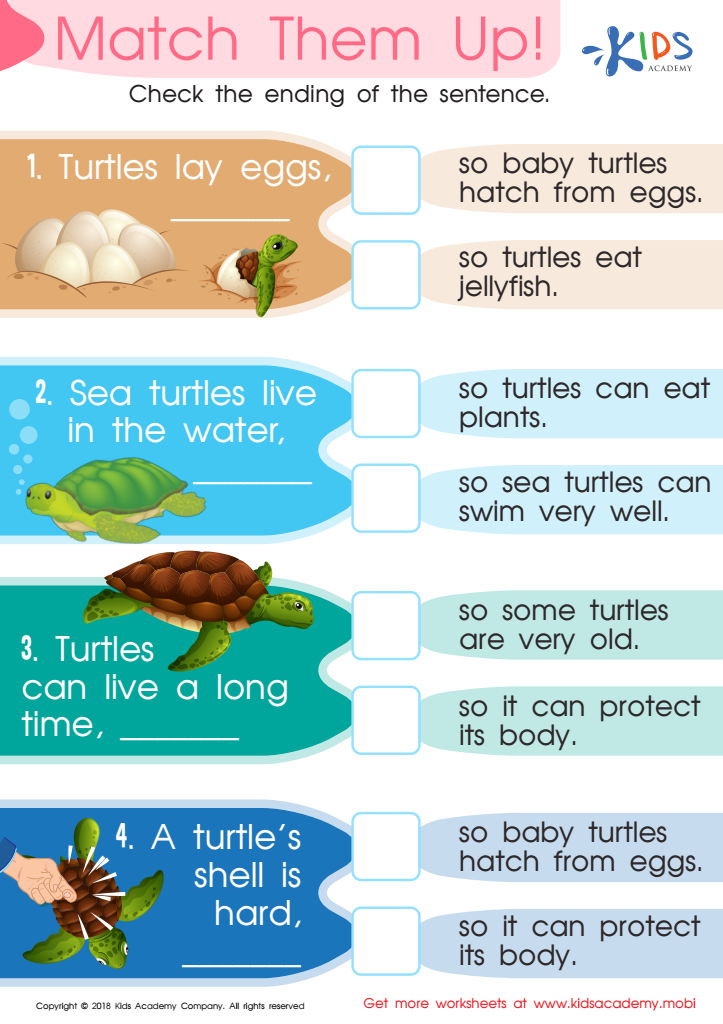
Match Them Up Worksheet

Match Them Up Worksheet

Reading offers a wealth of knowledge, but young readers may struggle to remember info from informational texts. Help your child practice comprehension with this fun turtle-related worksheet. Just read the sentence starters and select the correct ending from the options given. Check the box to indicate the right statement!
Match Them Up Worksheet
Worksheet
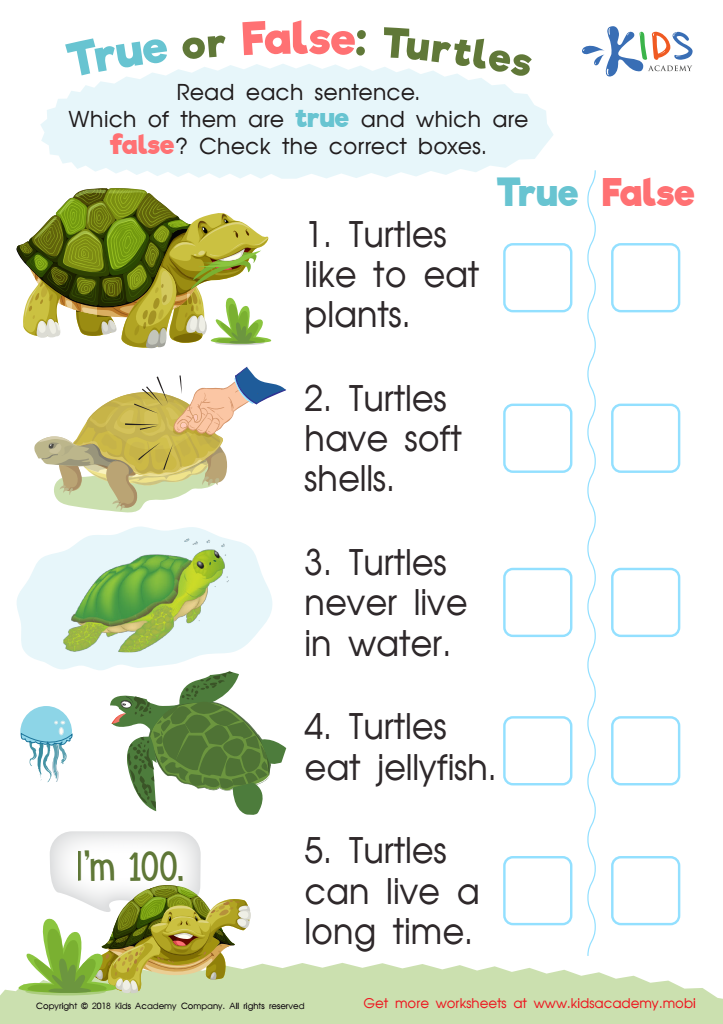
True or False: Turtles Worksheet

True or False: Turtles Worksheet

Print this free downloadable worksheet to strengthen your child's reading comprehension. Assist them to read each sentence and recall facts about turtles. Check true or false for each statement to verify their knowledge. Perfect for early learners!
True or False: Turtles Worksheet
Worksheet
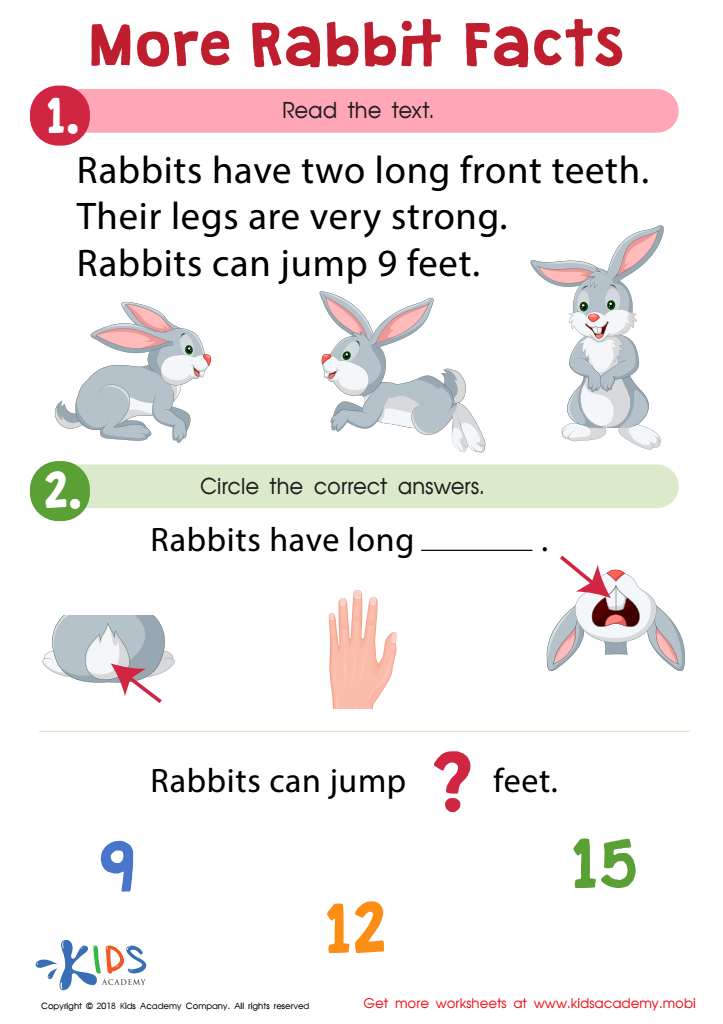
More Rabbit Facts Worksheet

More Rabbit Facts Worksheet

Improve your child's reading comprehension skills with this fun worksheet! Read the paragraph at the top of the page, view the pictures and circle the correct answers indicating what was learned. Develop a better understanding of rabbits while learning how to recall important information from texts.
More Rabbit Facts Worksheet
Worksheet
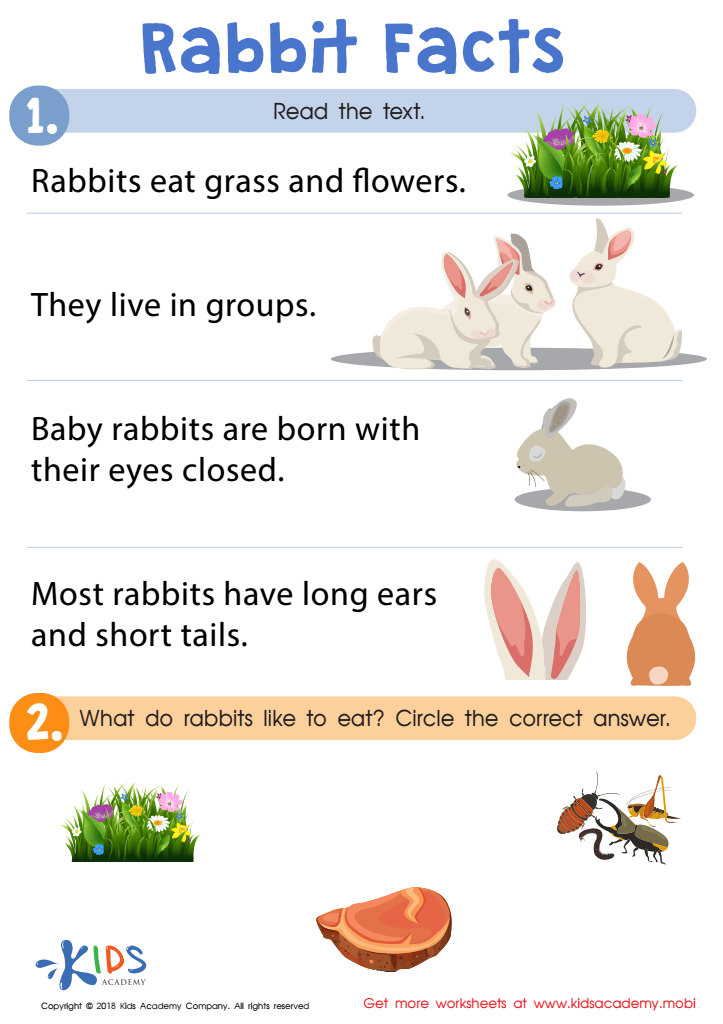
Rabbit Facts Worksheet
Rabbit Facts Worksheet

Informational texts offer great learning opportunities. Kids Academy's reading worksheet helps children read and recall important details from a text about bunnies. Kids will love it! Simply read the rabbit facts and circle the correct pictures to answer the questions.
Rabbit Facts Worksheet
Worksheet
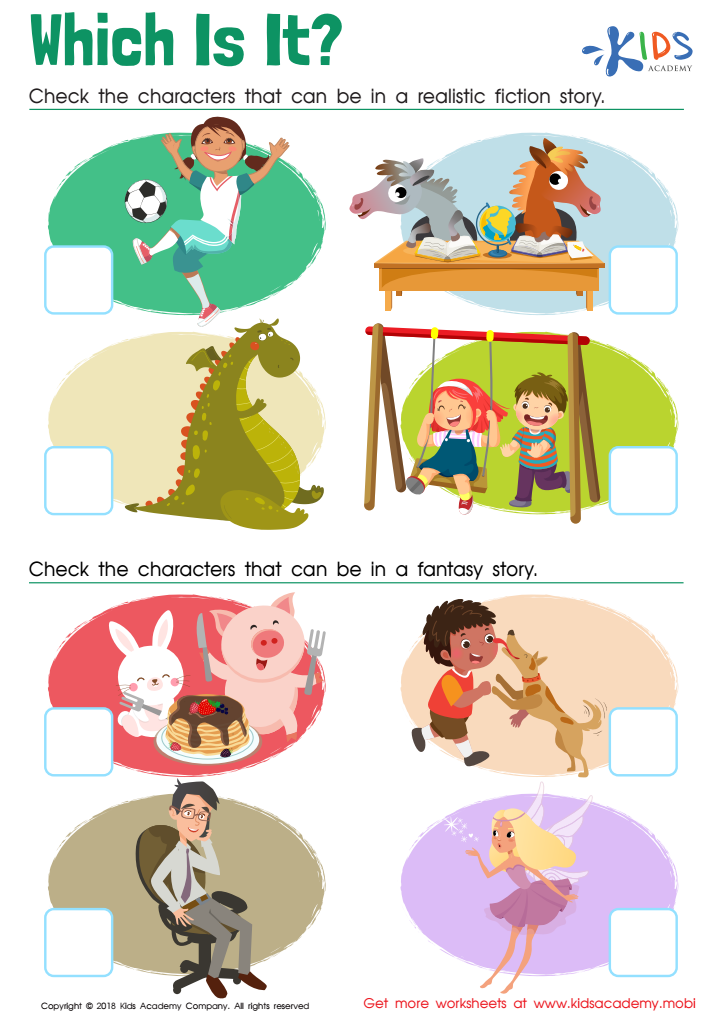
Which Is It? Worksheet

Which Is It? Worksheet

This colorful worksheet helps young readers identify elements of fact and fiction using fun picture clues. They can check off characters who exist in realistic fiction stories, which makes learning the difference between the two genres fun and engaging.
Which Is It? Worksheet
Worksheet
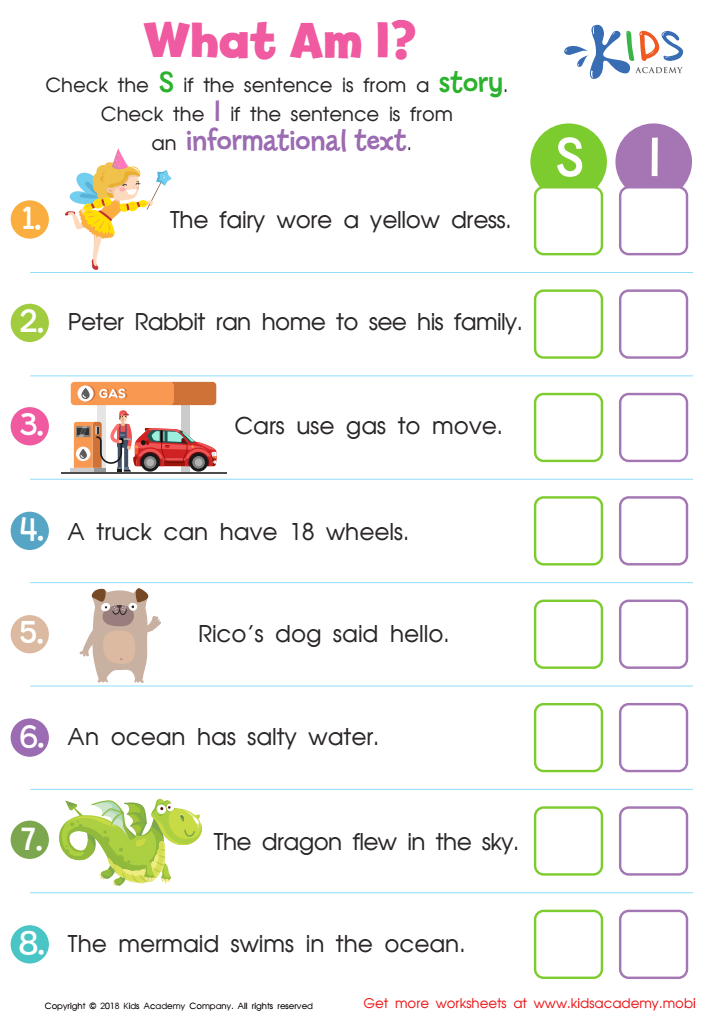
What Am I? Worksheet

What Am I? Worksheet

This worksheet assesses students' ability to differentiate between stories and texts they read for facts. Students learn to distinguish between reading for pleasure and reading for information. It includes statements from both a story and an informational text, and students must decide what type of text it is.
What Am I? Worksheet
Worksheet
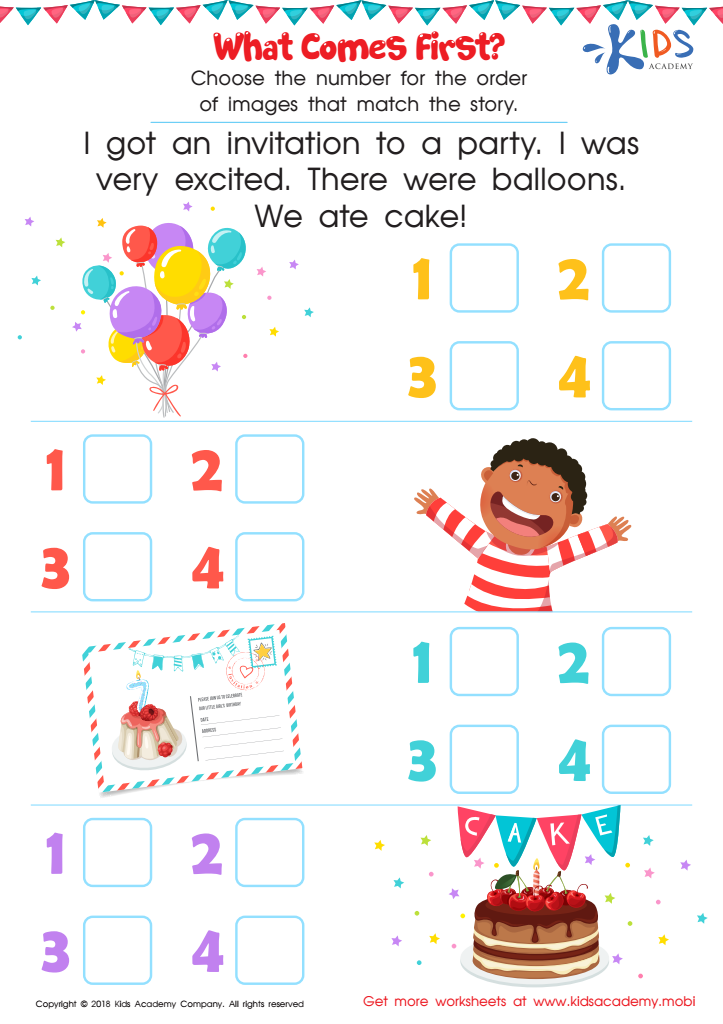
What Comes First Worksheet

What Comes First Worksheet

Before you start, ask your child what they see in the picture. Read the story aloud together, then show them the images in order, numbered 1-5. Ask them to choose the numbers that match the story. Have fun and enjoy this party worksheet with your little one! (80 words)
What Comes First Worksheet
Worksheet
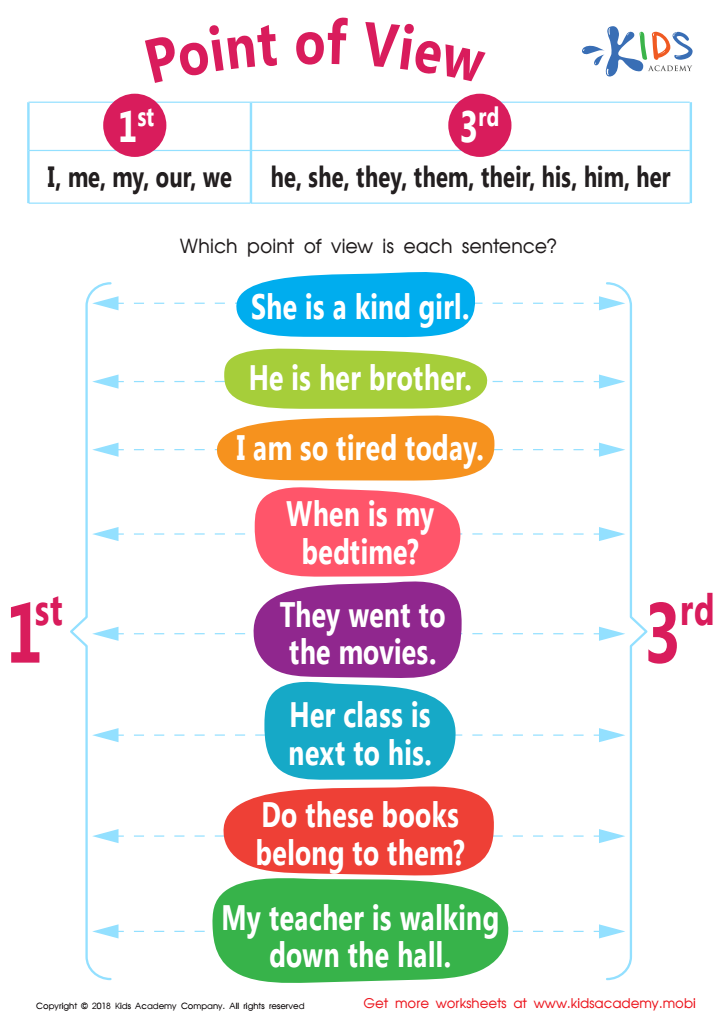
Point of View Worksheet


Point of View Worksheet

This printable worksheet helps kids understand Point of View by providing 1st and 3rd person choices. It's a fun way to practice differentiating between the two viewpoints and improve their reading comprehension. Match the sentences to 1st or 3rd person to strengthen understanding and enjoy the task!
Point of View Worksheet
Worksheet


Normal Reading Non-Fiction for ages 3-6 plays a pivotal role in early childhood education and development. During these formative years, children are eager to learn about the world around them, and well-crafted non-fiction texts cater to this curiosity. By introducing young learners to factual information, these books foster a love for reading while expanding their vocabulary and comprehension skills.

Parents and teachers should recognize that non-fiction helps children build a foundation for critical thinking. Unlike storybooks, non-fiction presents real-life information, encouraging kids to ask questions, explore concepts, and engage with the material on a deeper level. This type of reading can introduce them to diverse subjects, such as animals, nature, and community, cultivating an interest in science and social studies.

Additionally, normal reading non-fiction promotes literacy skills by providing context, clarity, and structure unique to factual writing. It aids in developing empathy and global awareness, exposing children to ideas and cultures different from their own. Ultimately, the inclusion of high-quality, age-appropriate non-fiction literature equips young learners with the knowledge and skills necessary for lifelong learning, making it an essential element in a balanced early reading program. Engaging with this genre empowers both parents and teachers to nurture inquisitive, informed young minds.