Normal Silent Vowels Worksheets for Ages 3-8
5 filtered results
Difficulty Level
Grade
Age
-
From - To
Subject
Activity
Standards
Introduce your child to the intriguing world of silent vowels with our engaging worksheets designed for ages 3-8! These worksheets provide an excellent opportunity for young learners to explore the concept of silent vowels while enhancing their phonics skills. Each activity is crafted to be fun and interactive, making learning enjoyable and effective. Kids will practice identifying and using silent vowels in various words, all while boosting their reading and writing confidence. Perfect for homeschooling or classroom use, these worksheets support early literacy development and help your child build a strong foundation in language arts. Download and enjoy learning today!
Favorites
With answer key
Interactive
Silent Letter Maze Worksheet
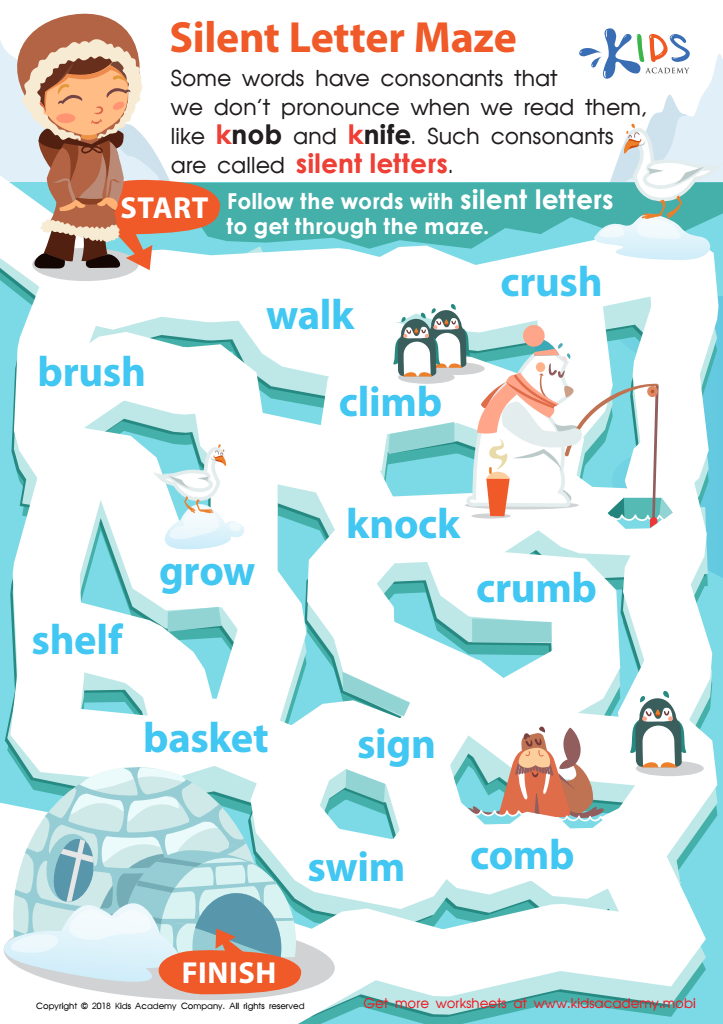
Learning to read can be tricky, especially with words with irregular pronunciations. Explain to your child that some words have consonants we do not pronounce when reading. Ask them for examples like 'knife' and 'knob'. These consonants are called silent letters. Download this pdf to practice words with silent letters and complete the maze.
 Assign to My Students
Silent Letter Maze Worksheet
Worksheet
Is It Silent? Worksheet
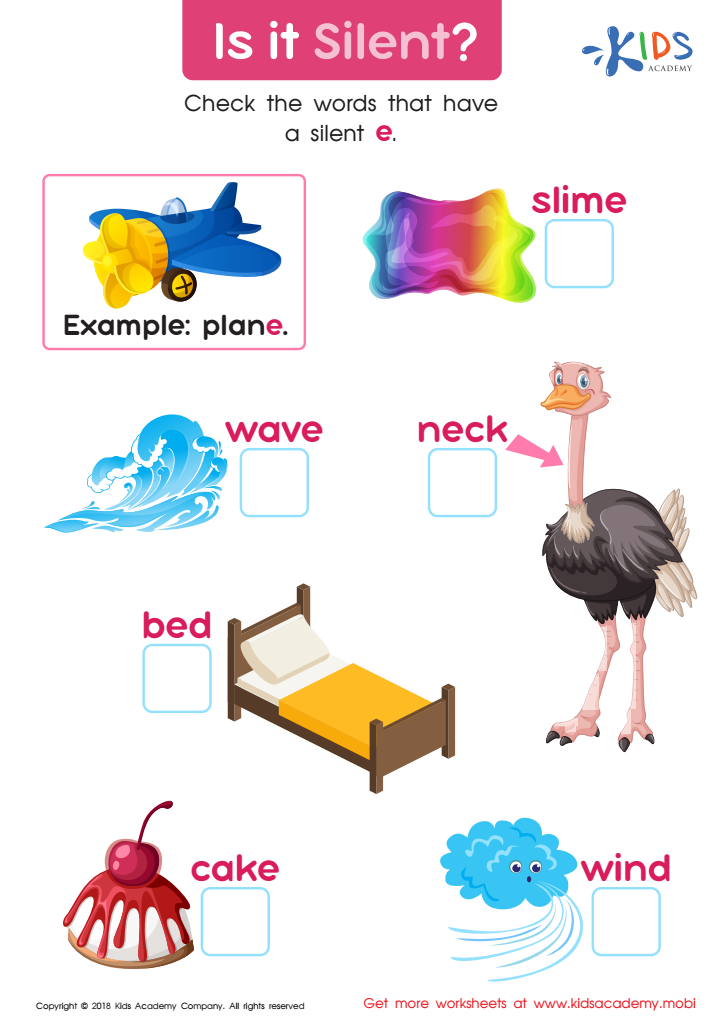
Phonetics can be tricky, like the sound of /e/ in 'egg' vs. the silent /e/ at the end of 'slime'. Ask your students to give more examples. Read out the words in this worksheet with your kids and ask them to identify the silent /e/ ones.
Is It Silent? Worksheet
Worksheet
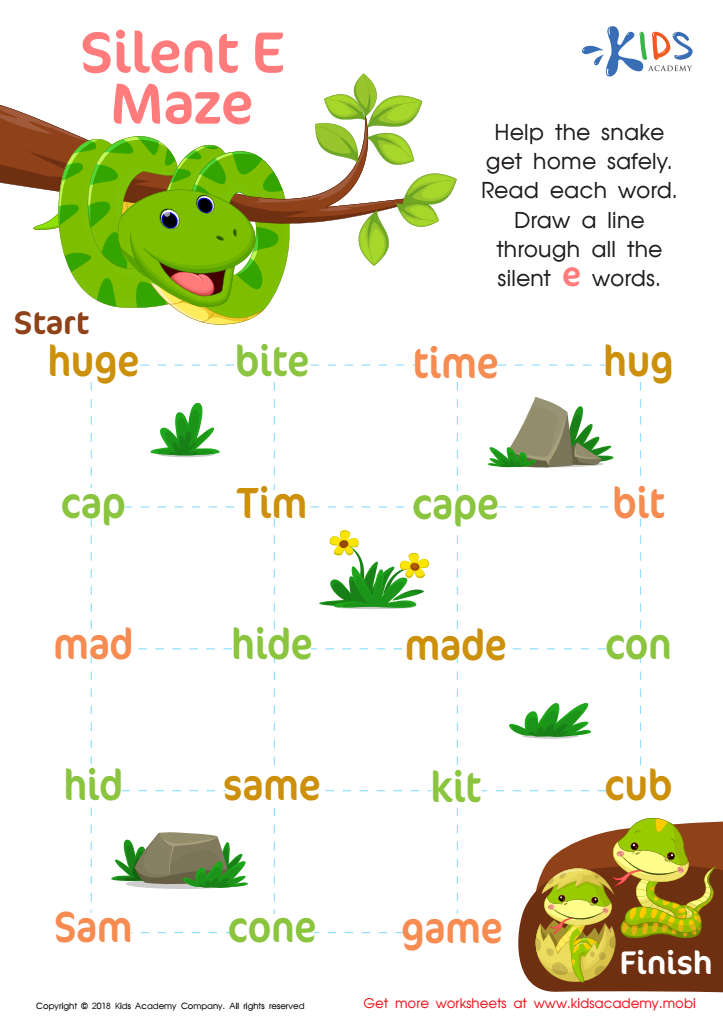
Silent E Maze Worksheet
Kids love mazes! This fun printable worksheet lets them help a mama snake get home to her babies, using Silent E words. They'll practice fine motor skills, while they draw lines through words that have Silent E and words with closed syllables that don't. It's a great way to help them recognize Silent E words!
Silent E Maze Worksheet
Worksheet
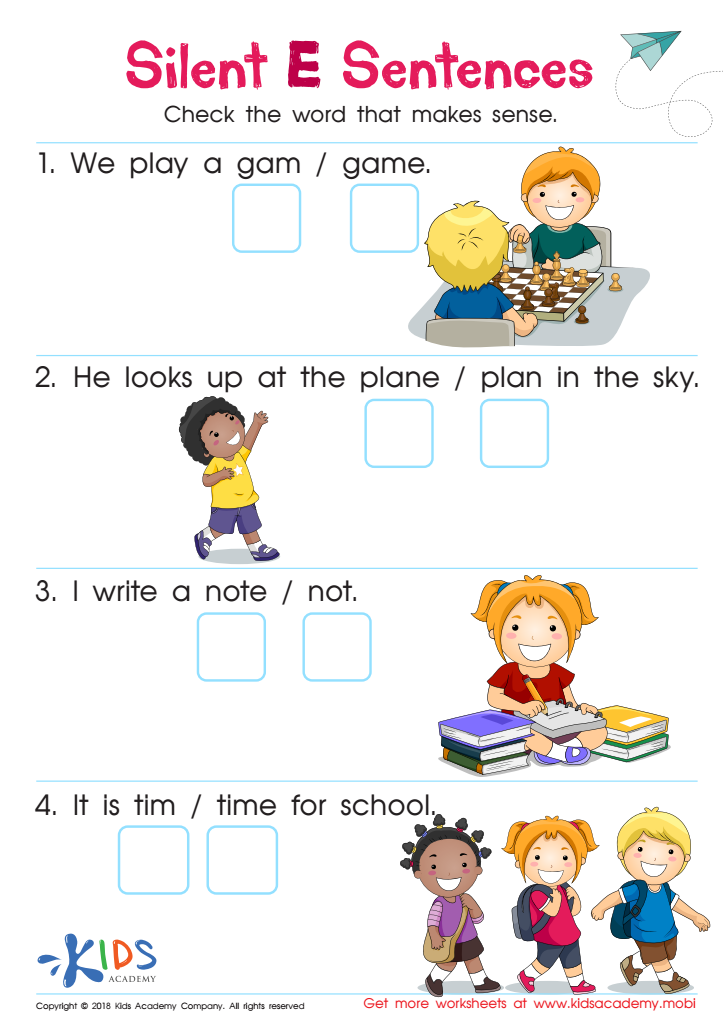
Silent E Sentences Worksheet
Young readers can find learning Silent E tricky, so this helpful worksheet can help! It teaches them to distinguish words that look the same but for the Silent E and choose the right word for sentence blanks. Kids can mark the correct answer and become familiar with closed syllables and words that require the E.
Silent E Sentences Worksheet
Worksheet
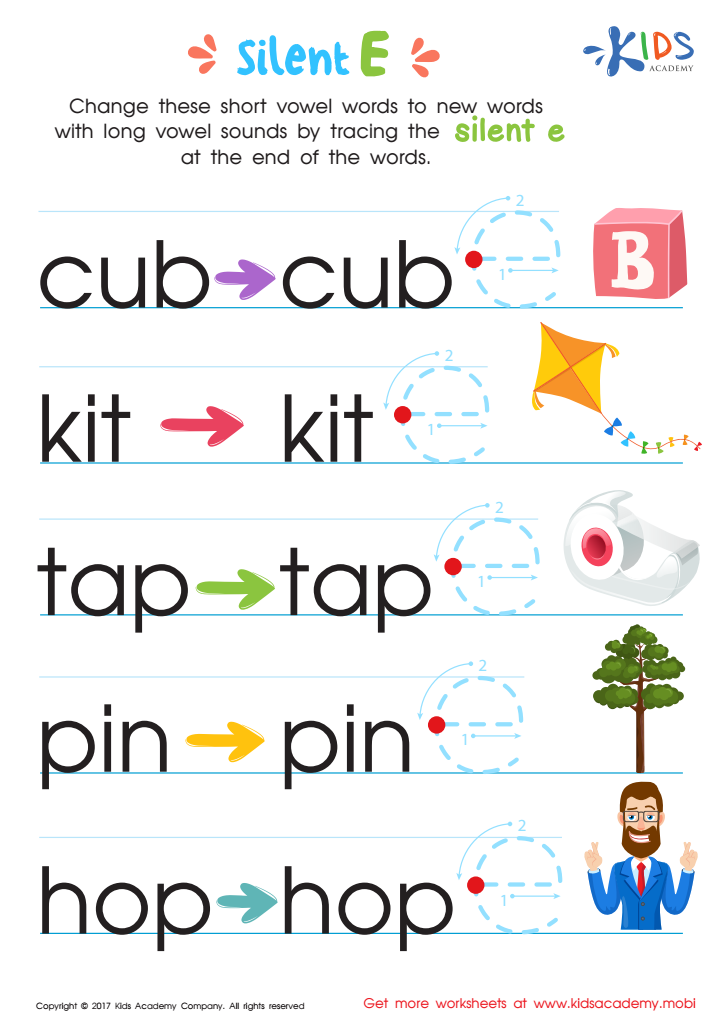
Silent E Words Worksheet
The letter e is amazing - it changes words without making a sound! Boost spelling and phonics with this Silent e worksheet from Kids Academy - fun and colorful!
Silent E Words Worksheet
Worksheet
Join Kids Academy for Free
Who is primarily going to use this learning content?


Normal Silent Vowels, often known as "silent letters," play a significant role in early literacy development for children ages 3-8. Understanding silent vowels helps young learners grasp the complexities of language and phonetic structures. For parents and teachers, fostering awareness of these elements can enhance reading fluency and build stronger spelling skills.
At this age, children are tasked with mastering foundational vocabulary, and silent vowels are common in many high-frequency words they will encounter. Recognizing words like "house," "knife," and "comb" enables children to read more confidently and develop a richer vocabulary. Moreover, as they learn the nuances of pronunciation and spelling, they also sharpen their critical thinking skills.
Encouraging children to explore and identify silent vowels in everyday texts, games, or stories aids in vocabulary retention and comprehension. Practicing these skills not only empowers kids in their literacy journey but also nurtures a lifelong love for reading. Parents and teachers should integrate fun and engaging activities around silent vowels to create a positive learning environment, spark curiosity, and draw connections between sounds and their corresponding letters. Ultimately, recognizing and understanding silent vowels paves the way for overall academic success in young learners.