Explore Fun and Educational Physical Science Worksheets for Kids Ages 4-6 | Kids Academy - Page 2

Filters

42 filtered results

Clear all filters
Favorites
With answer key
Interactive

42 filtered results

Difficulty Level

Grade


Check out this FREE Trial Lesson on Physical Science for age 4-6!

What Makes Sound?

Favorites
With answer key
Interactive
  • 4-6
  • Interactive
  • Physical Science
  • Normal
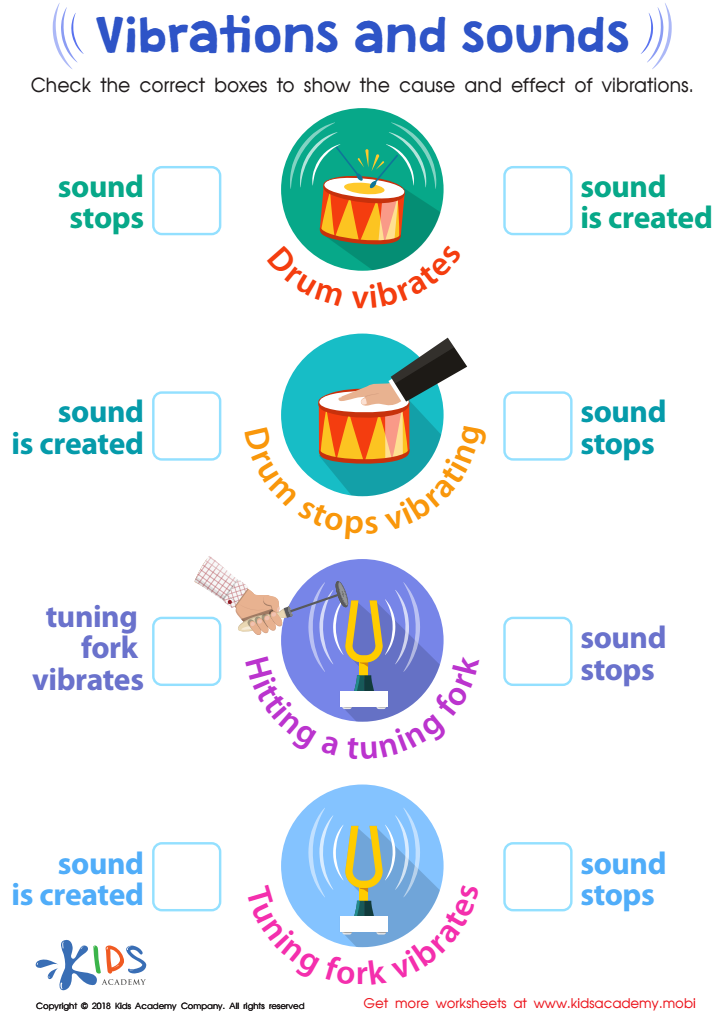
Vibrations and Sounds Worksheet

Vibrations and Sounds Worksheet

Many objects, creatures, and things make sounds. People talk, animals bark, hiss or meow, and things make sounds too. Ask your students to name others that produce sounds and why they do, such as when a drum is hit with a stick. Get them to learn about vibrations and cause/effect in this fun worksheet and check the answers.
Vibrations and Sounds Worksheet
Worksheet
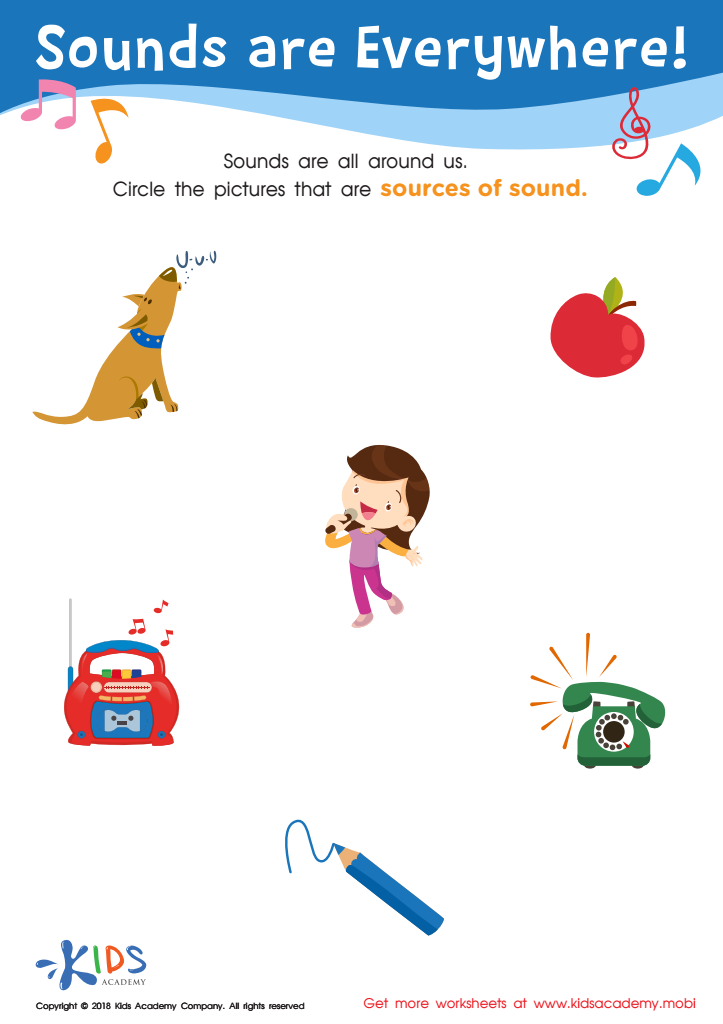
Sounds Are Everywhere! Worksheet

Sounds Are Everywhere! Worksheet

Ask your students to recall objects that make sound. Then, help them identify the sources of sound in the pictures of this worksheet.
Sounds Are Everywhere! Worksheet
Worksheet
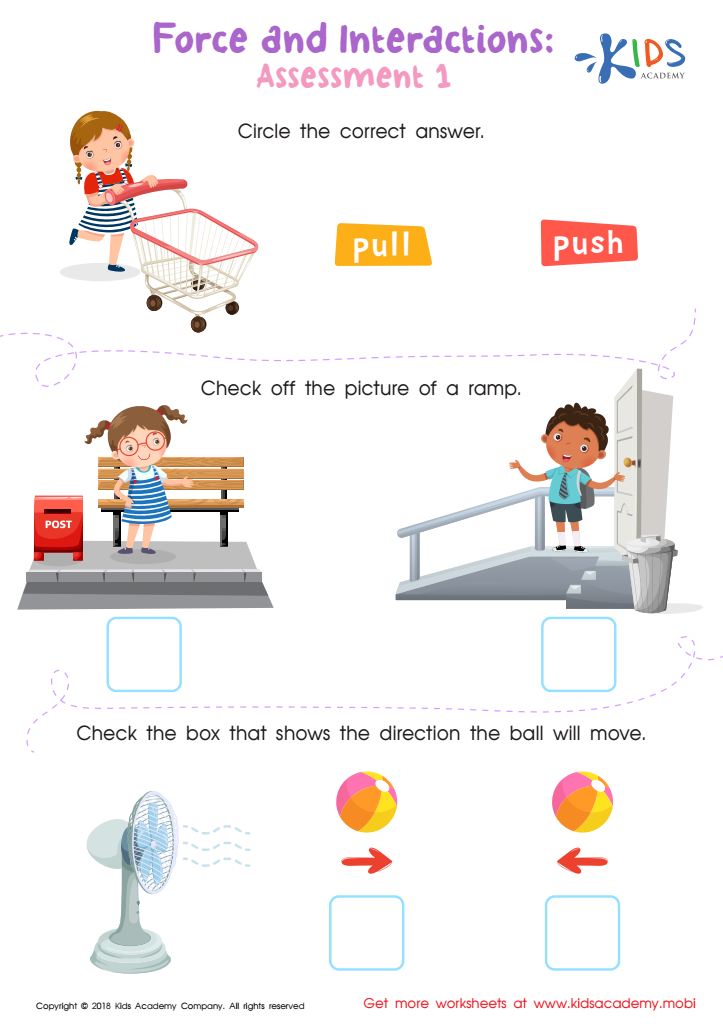
Force and Interactions: Assessment 1 Worksheet

Force and Interactions: Assessment 1 Worksheet

Test your students' knowledge of pushing, pulling, ramps and wind with this worksheet. The first task requires them to identify push or pull pictures. The second asks them to identify a ramp and the third to explain which direction a ball will move when exposed to wind.
Force and Interactions: Assessment 1 Worksheet
Worksheet
Force and Interactions: Review 2 Worksheet

Force and Interactions: Review 2 Worksheet

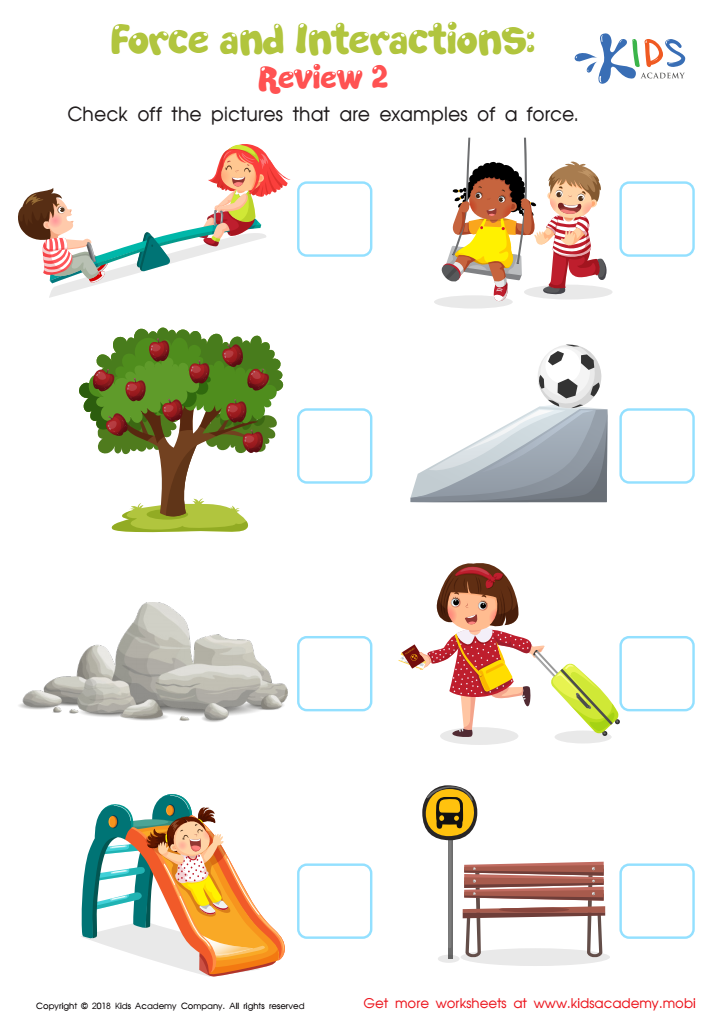
Your child can identify force examples by checking the pictures. There are 8 images of kids engaging in activities and objects in motion. Get them to name the activities and objects, or if they know, explain force and interaction.
Force and Interactions: Review 2 Worksheet
Worksheet
Force and Interactions: Review 1 Worksheet

Force and Interactions: Review 1 Worksheet

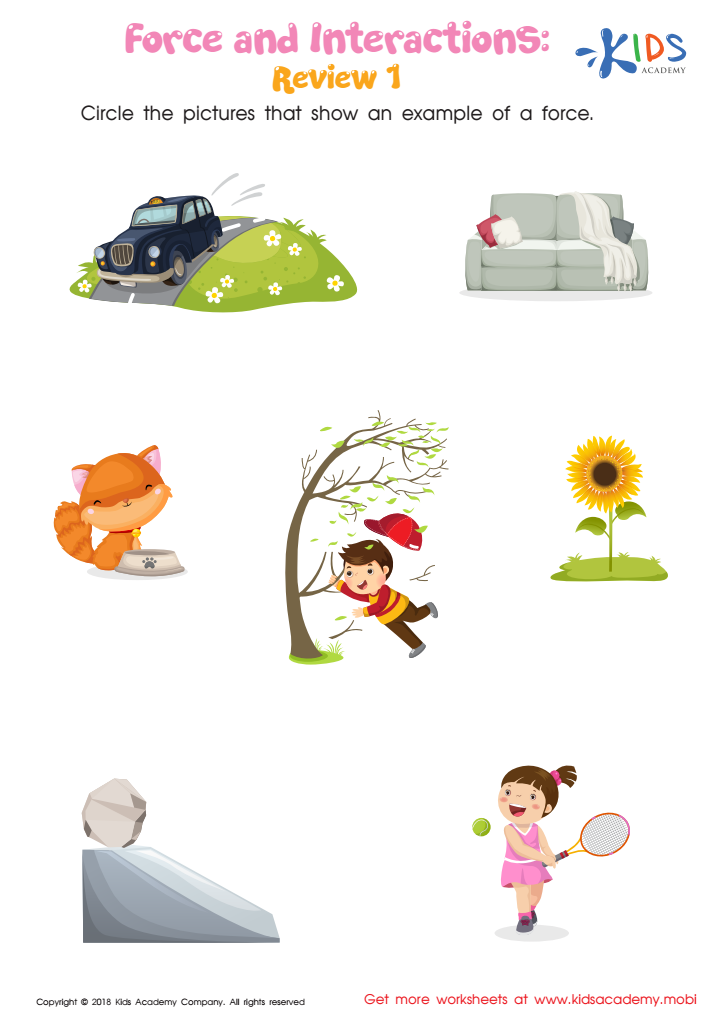
See how well your child can identify the different forces. Explain to your child that force is what causes objects to move, such as wind blowing a branch or an object going down a ramp. Ask them to circle images that show a force and assess how well they can identify them.
Force and Interactions: Review 1 Worksheet
Worksheet
Ramps Worksheet
Ramps Worksheet

Ramps Worksheet

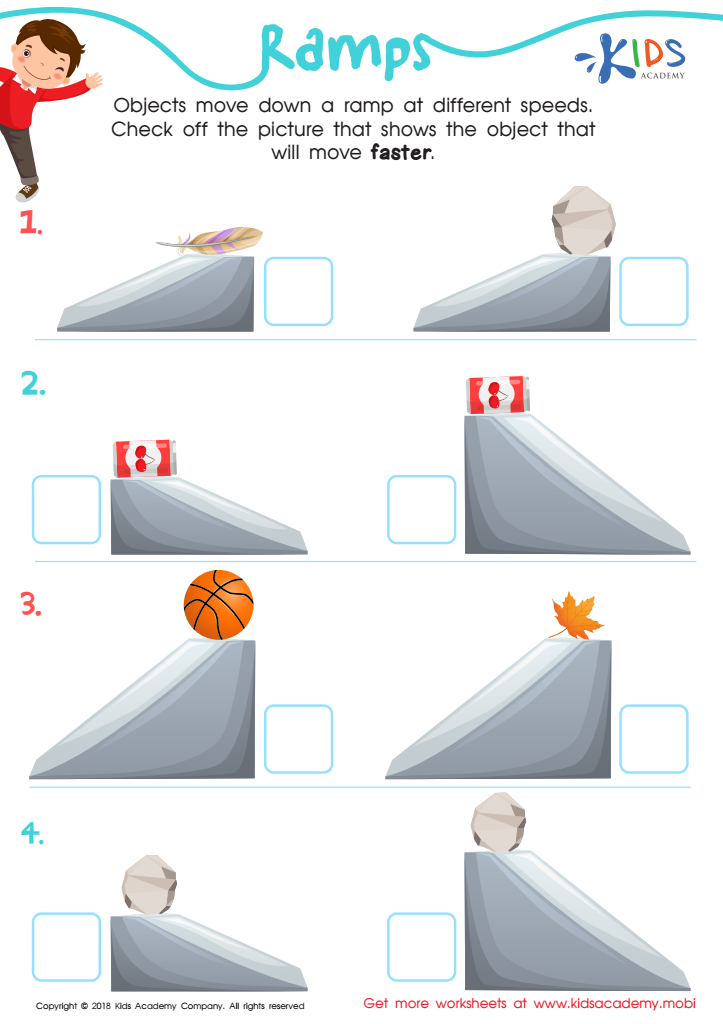
If your child has seen a ramp, they'll find this worksheet easy. A ramp is sloped for objects to move quickly downwards. The printout has images of objects on different ramps. Ask your child to identify which object will move faster.
Ramps Worksheet
Worksheet
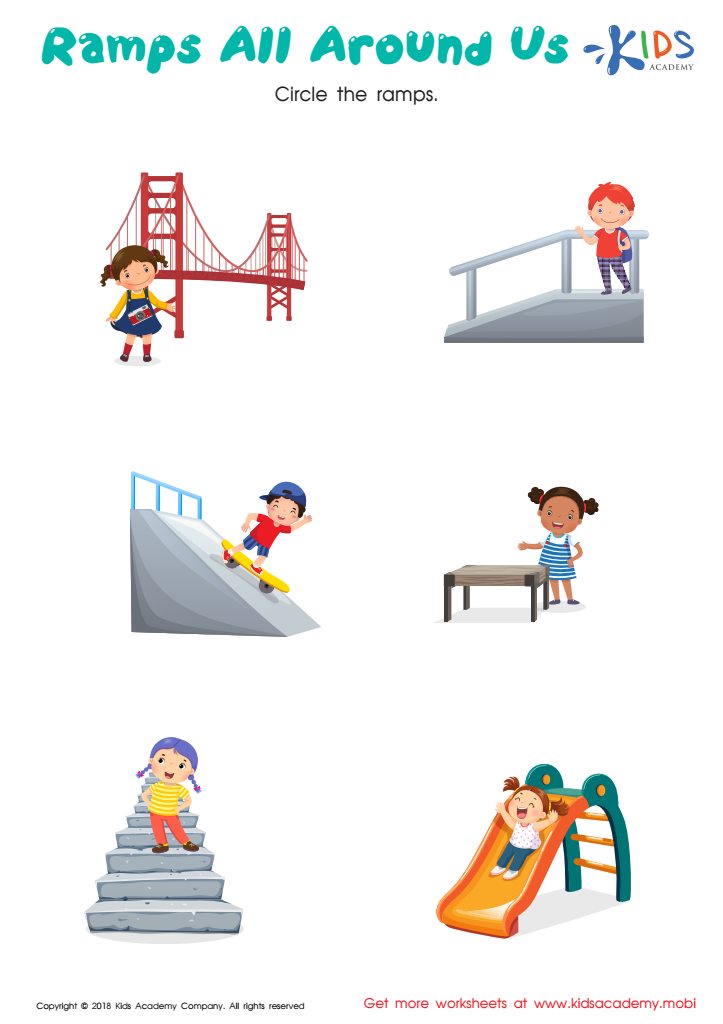
Ramps All Around us Worksheet

Ramps All Around us Worksheet

Ask your kids if they know what ramps are, then have them give you examples of places they've seen them. This worksheet has pictures of ramps - have your child identify and circle them.
Ramps All Around us Worksheet
Worksheet
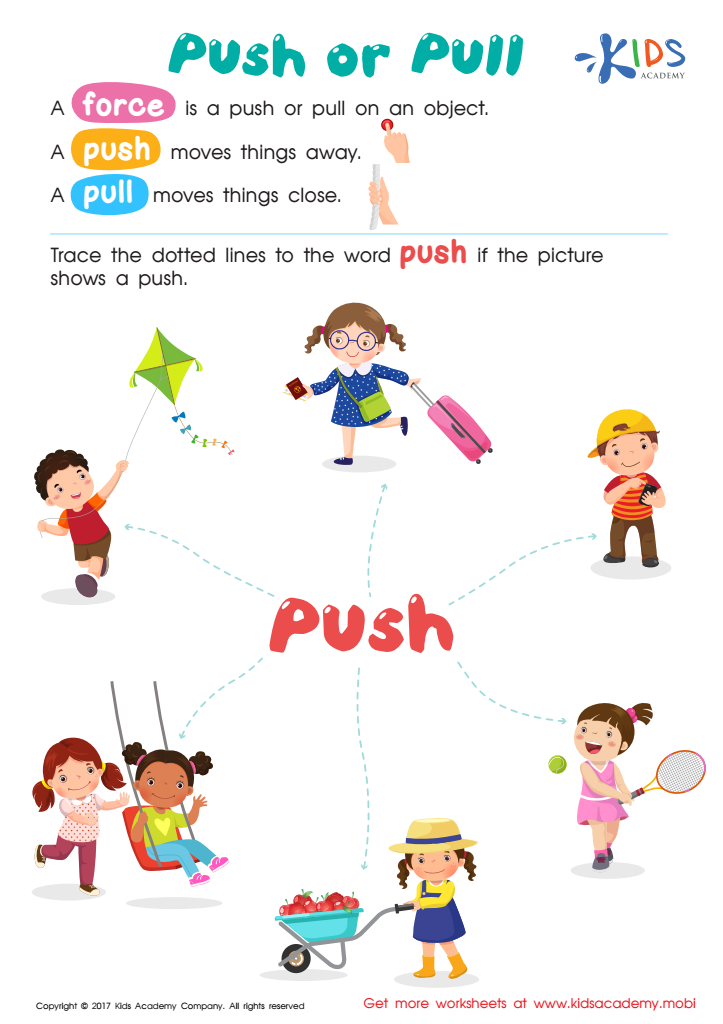
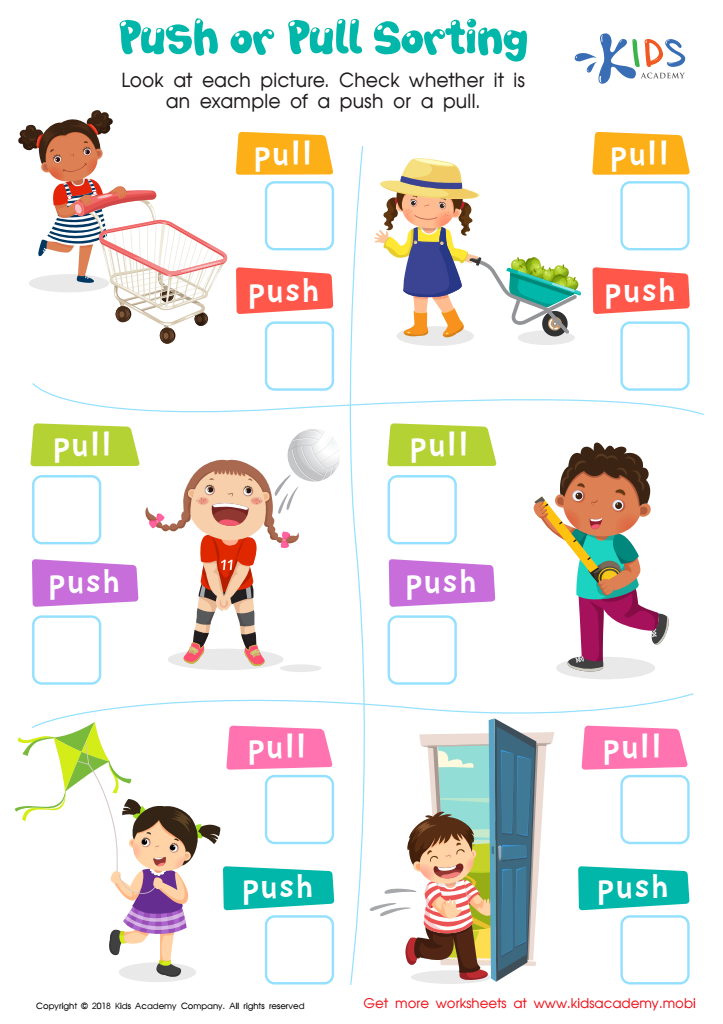
Push or Pull Sorting Worksheet

Push or Pull Sorting Worksheet

Show your child the pictures in this worksheet. Ask them to tell you what each child is doing. Then, ask them to identify whether it's an example of pushing or pulling. Ask if they know what these terms mean and if they can provide examples.
Push or Pull Sorting Worksheet
Worksheet
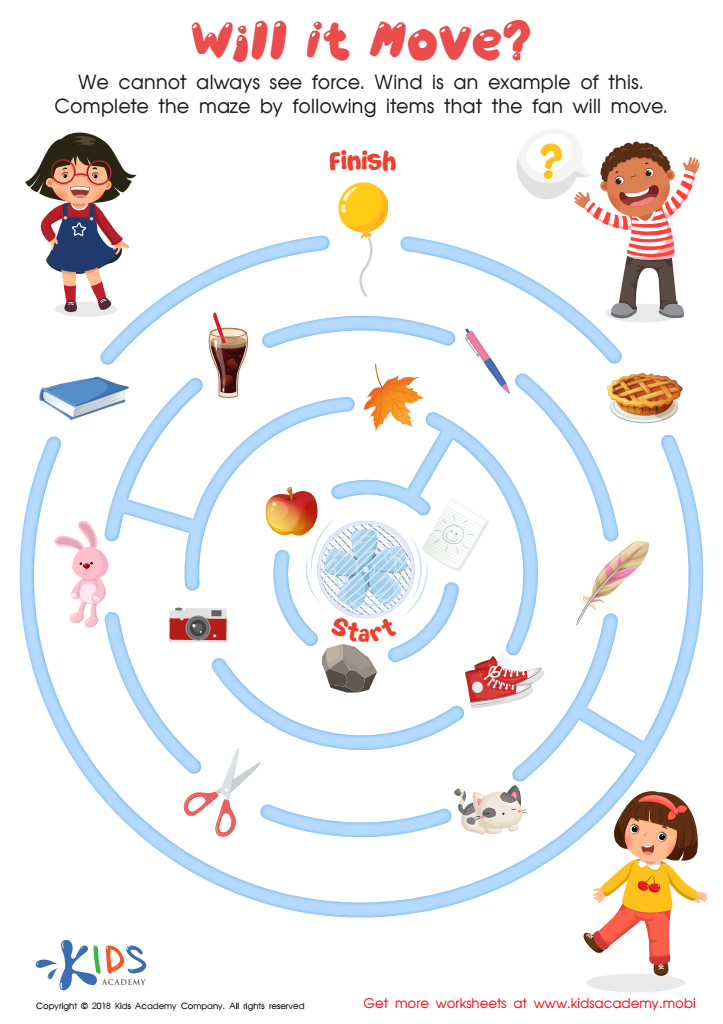
Will it Move? Worksheet

Will it Move? Worksheet

Does your child know about force? If yes/no, this worksheet can help. Force is invisible - like wind - but it moves objects. Ask your child to complete the maze, following the path of items moved by the wind. 80 words.
Will it Move? Worksheet
Worksheet
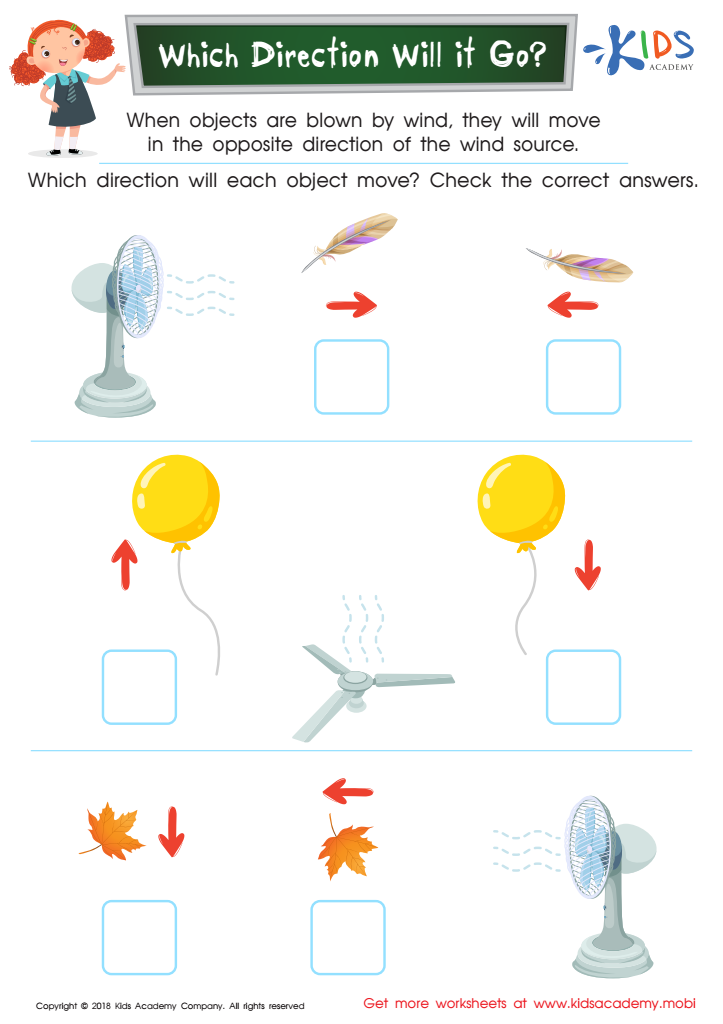
Which Direction Will it Go? Worksheet

Which Direction Will it Go? Worksheet

Explain to your students: when objects are blown by wind, they will move in the opposite direction. In the worksheet, there are pictures of wind sources and objects being blown by the wind. Ask your child to identify and check the direction each object will move.
Which Direction Will it Go? Worksheet
Worksheet
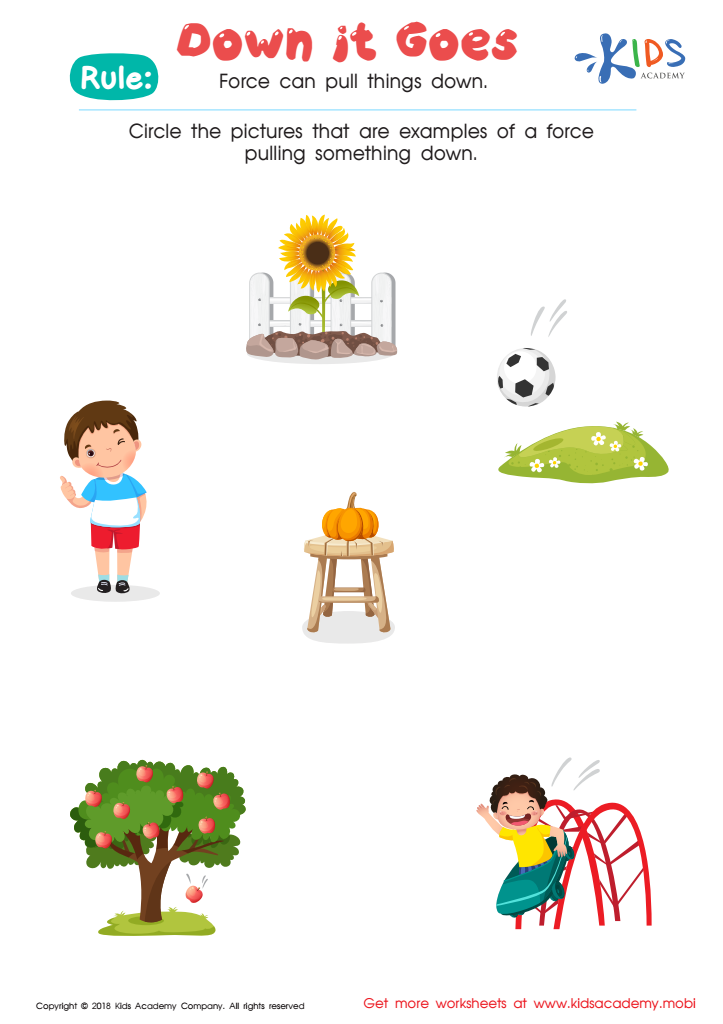
Down it Goes Worksheet

Down it Goes Worksheet

Explain gravity to your child using this fun worksheet. Ask them to give examples of things pulled down with force, then instruct them to circle the pictures that show this. It's a great way to help them understand the concept of gravity.
Down it Goes Worksheet
Worksheet
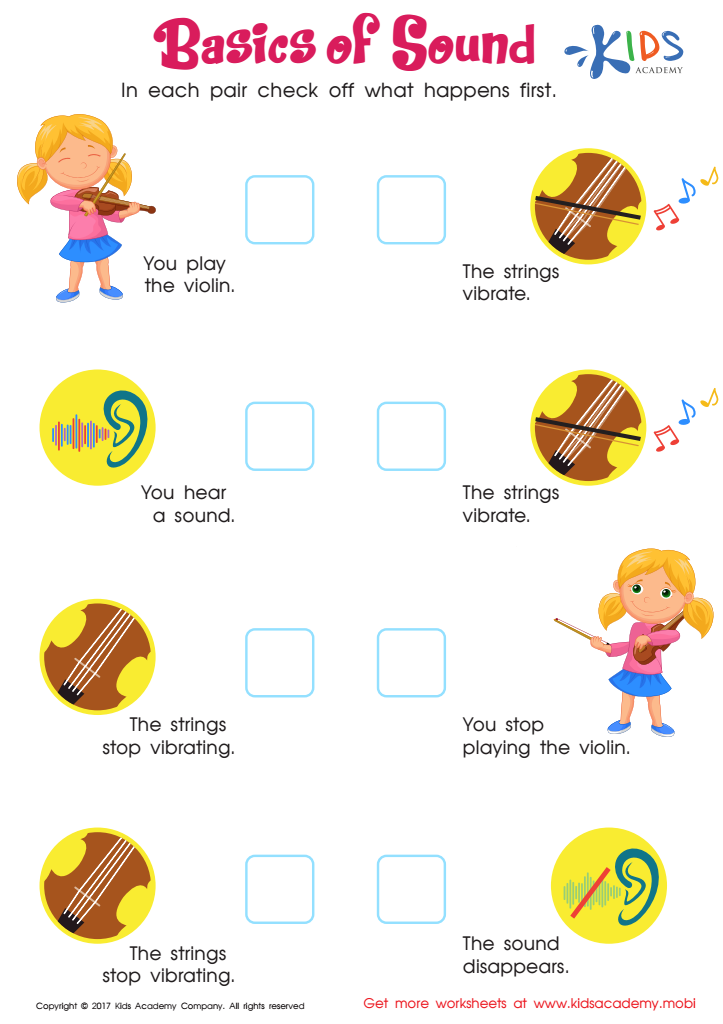
Basics Of Sound Worksheet

Basics Of Sound Worksheet

Sound is the result of vibrations. As a violinist creates music on her instrument, we can observe how the vibrations start and stop, producing a pleasing sound. This worksheet helps kids understand the basics of physical science behind sound.
Basics Of Sound Worksheet
Worksheet
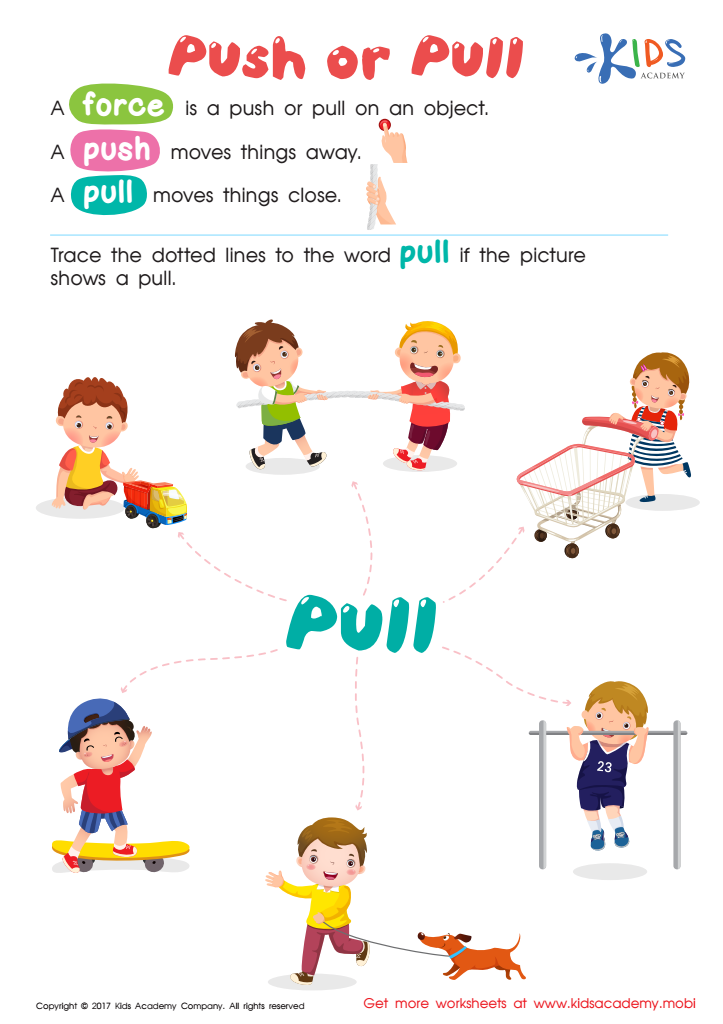
1st grade worksheet: Push or Pull

Push or Pull Worksheet

and which involve pulling! With this fun worksheet, your child will learn about force and its simple application in everyday activities. Get them started with Push or Pull! (80 words)
Push or Pull Worksheet
Worksheet
Worksheet: Push or Pull

Pull or Push Worksheet

With this fun worksheet, they'll explore physics by sorting objects into categories according to their mode of motion. It's a great way to get them interested in science.
Pull or Push Worksheet
Worksheet
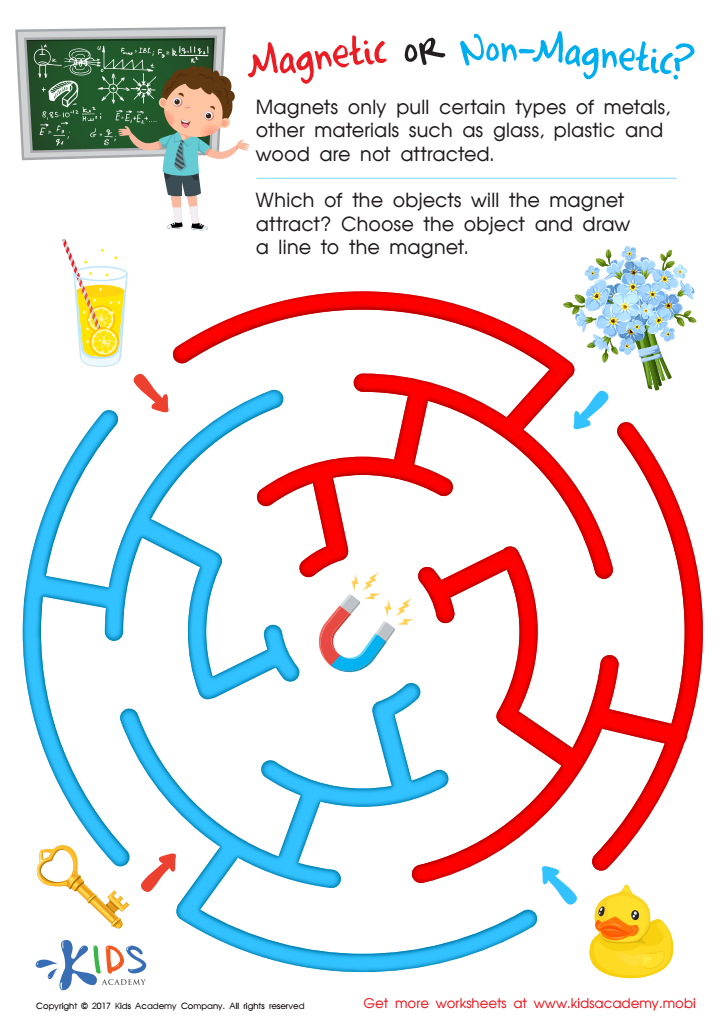
Worksheet: Magnetic or Non-Magnetic

Magnetic or Non–Magnetic Worksheet

Introduce your child to magnetism with this fun maze! Read the summary to explain the concept, then help them find the magnetic object as they navigate the maze. It's a great way to learn and have fun!
Magnetic or Non–Magnetic Worksheet
Worksheet
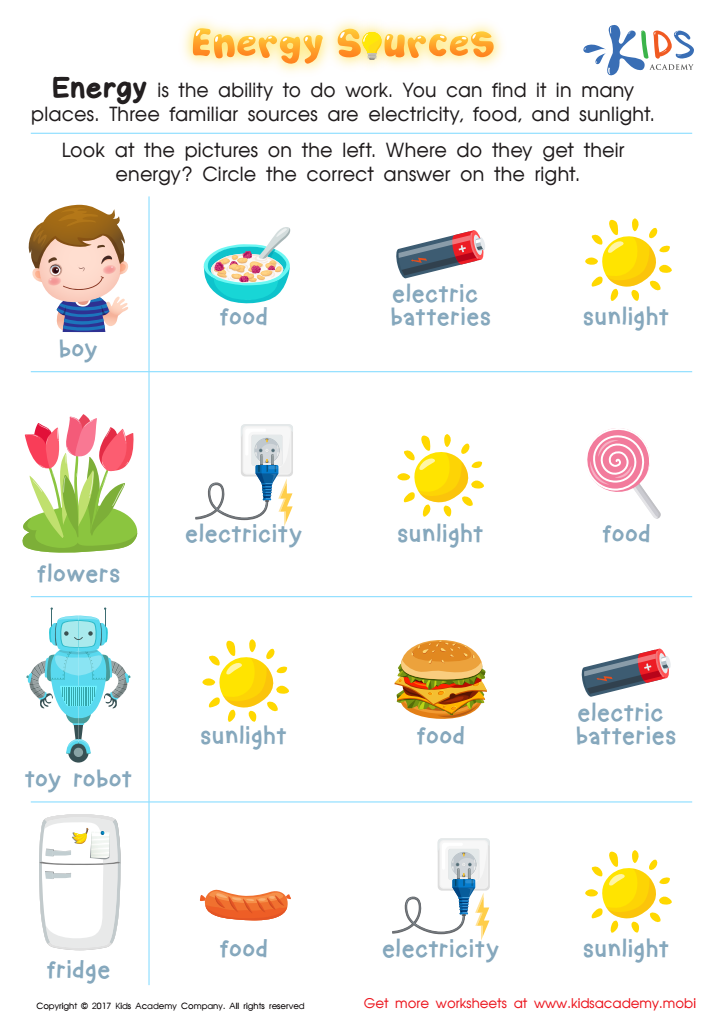
Energy sources worksheet PDF

Energy Sources Printable

Introduce energy sources with this worksheet PDF — explore the sun, batteries, and more! Get your mini scientist excited about energy and power up their learning.
Energy Sources Printable
Worksheet
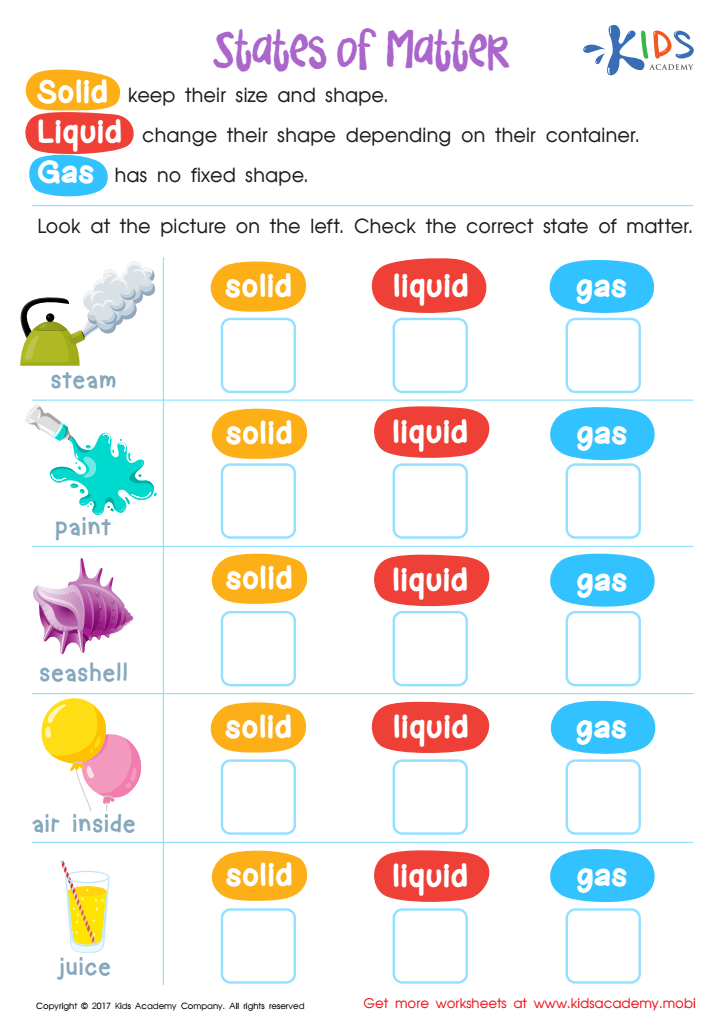
Worksheet: States of Matter

Physical Science: States of Matter Worksheet
Kids must identify a substance as solid, liquid, or gas to master physical science. Help them understand elements in the world with this engaging worksheet!
Physical Science: States of Matter Worksheet
Worksheet
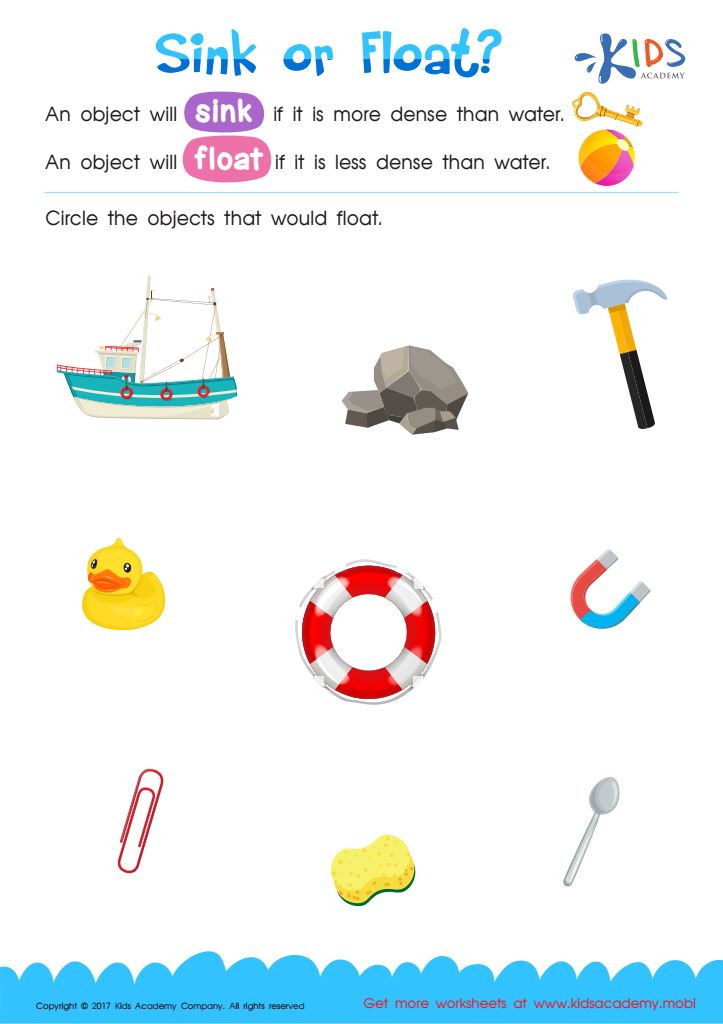
Worksheet: Sink or Float

Sink or Float Printable

They'll learn why some things stay on the surface and others sink to the bottom. (80 words)
Sink or Float Printable
Worksheet


Normal Physical Science worksheets for Ages 4-6 serve as a foundational tool in the early stages of a child's education. These worksheets are not just pages filled with activities; they are a crucial stepping stone towards understanding the world around us through the lens of physical science. At such a tender age, children are naturally curious, eager to learn about their environment, from the air they breathe to the ground they walk on. Normal Physical Science worksheets cater precisely to this age group's needs, introducing concepts in a manner that is both engaging and age-appropriate.

One of the key benefits of these worksheets is that they lay the groundwork for scientific thinking. Children learn to observe, predict, and conclude in structured formats that guide their thought processes. Moreover, these worksheets are designed to stimulate interest in science from an early age, nurturing a passion that could last a lifetime. They incorporate a variety of activities that balance education with fun, ensuring that learning about physical science becomes an enjoyable experience.

Furthermore, Normal Physical Science worksheets for Ages 4-6 help in developing critical thinking and problem-solving skills. Through exercises that encourage experimentation and exploration, children begin to understand cause and effect, a fundamental scientific principle. In a nutshell, these worksheets are invaluable tools that not only introduce young learners to the fascinating world of physical science but also aid in the holistic development of their intellectual capabilities.