Normal Vowels and Consonants Worksheets for Ages 4-7 - Page 2
25 filtered results
-
From - To
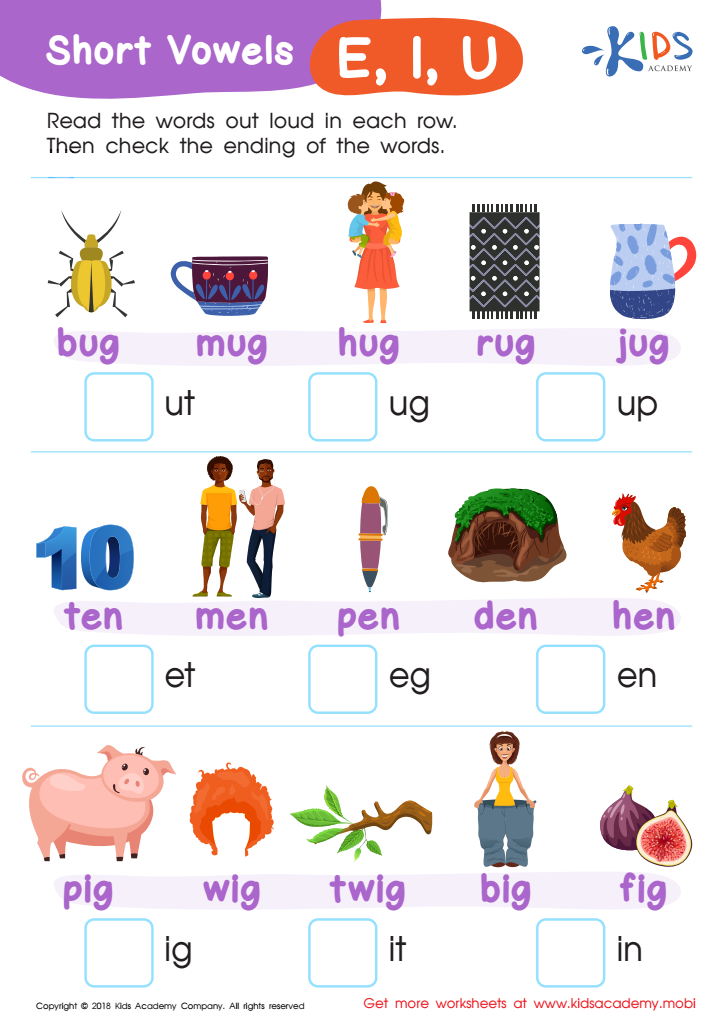
Short Vowels /e/, /i/, and /u/ Worksheet
 Assign to My Students



Parents and teachers should care about normal vowels and consonants for children ages 4-7 because early literacy skills form the foundation for successful reading and writing. Understanding vowels and consonants is crucial for phonemic awareness, the ability to hear and manipulate sounds in words. This awareness helps young learners decode words, which is essential for reading fluency later on.
By mastering the basic sounds of vowels and consonants, children can begin to break words down into manageable parts, making it easier to spell and read new words. This skill not only enhances their vocabulary but also boosts their confidence in language arts. Furthermore, engaging in activities that focus on these sounds can promote cognitive development and critical thinking, fostering an overall love for learning.
Prompting young children to recognize the difference and roles of vowels and consonants can lead to better literacy outcomes and spark their interest in stories and written language. Parents and teachers can effectively support this growth by integrating fun and interactive phonics activities into their daily routines. When children solidify these foundational skills early on, it paves the way for clearer communication, academic success, and a lifelong appreciation for reading.