Normal Vowels and Consonants Worksheets for Ages 4-8 - Page 2
26 filtered results
-
From - To
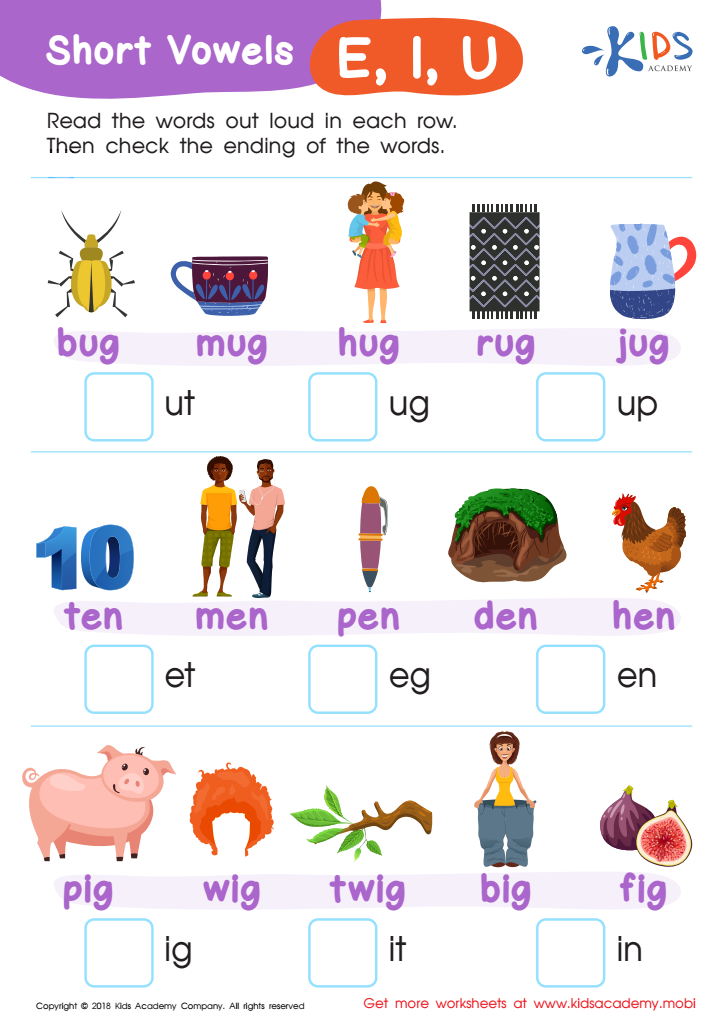
Short Vowels /e/, /i/, and /u/ Worksheet
 Assign to My Students
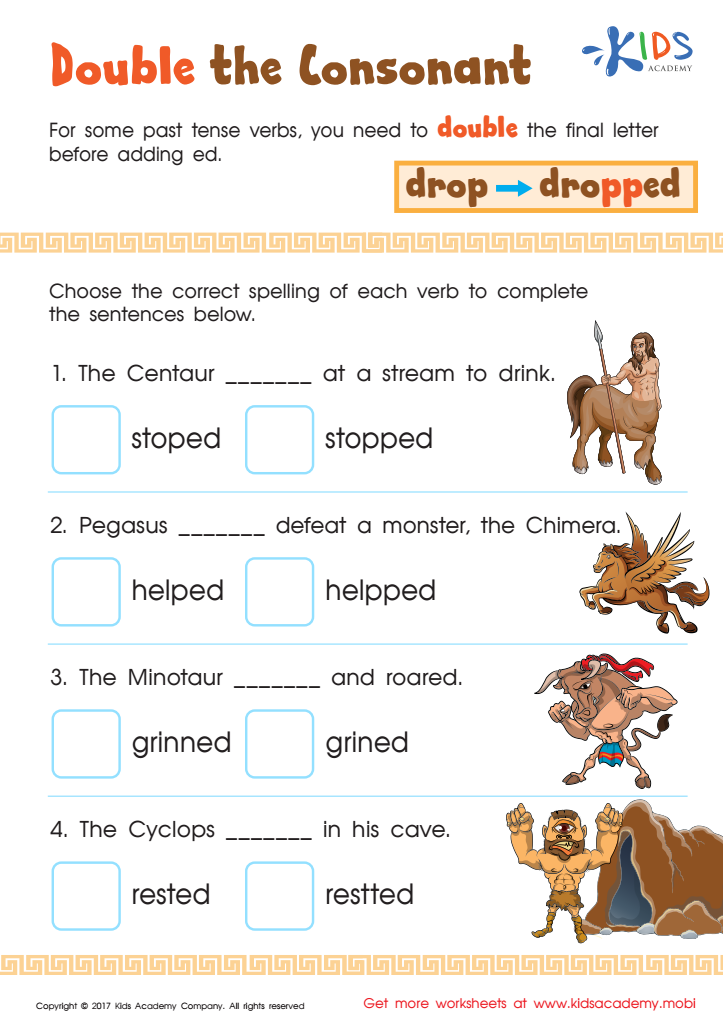
Double Consonant Spelling Worksheet



Normal vowels and consonants are fundamental components of language development in children aged 4-8. Understanding these sounds is crucial for several reasons.
Firstly, phonemic awareness—recognizing and manipulating sounds in words—forms the foundation for literacy skills. Children who grasp normal vowels and consonants are better equipped to decode words, which enhances their reading abilities. This skill not only facilitates reading fluency but also boosts comprehension, enabling children to engage with texts meaningfully.
Secondly, a strong grasp of vowel and consonant sounds can improve spelling skills. As children learn to identify and use these sounds, they become more proficient in constructing words accurately, which builds their confidence in writing.
Furthermore, these sounds play a key role in verbal communication. When children learn to articulate vowels and consonants properly, they become clearer speakers, which is vital for effective interaction in both academic and social settings.
Overall, prioritizing the understanding of normal vowels and consonants enriches a child’s literacy journey, laying a solid groundwork for their educational trajectory and fostering a lifelong love for learning. Parents and teachers can harness this crucial stage in development to cultivate essential language skills that will serve children throughout their lives.