Normal Fractions of Shapes Worksheets for Ages 4-8
5 filtered results
-
From - To
Discover our engaging "Normal Fractions of Shapes Worksheets" designed for children aged 4-8! These captivating worksheets are perfect for young learners to explore and understand fractions through fun, interactive activities. Children will identify and shade fractions of various shapes, reinforcing their math skills in a visually appealing way. With diverse shapes and varying levels of difficulty, our worksheets cater to every child’s learning pace. Ideal for both classroom use and at-home practice, these resources will boost confidence in math while fostering a love for learning. Check out our collection to make math enjoyable and interactive for your little ones!
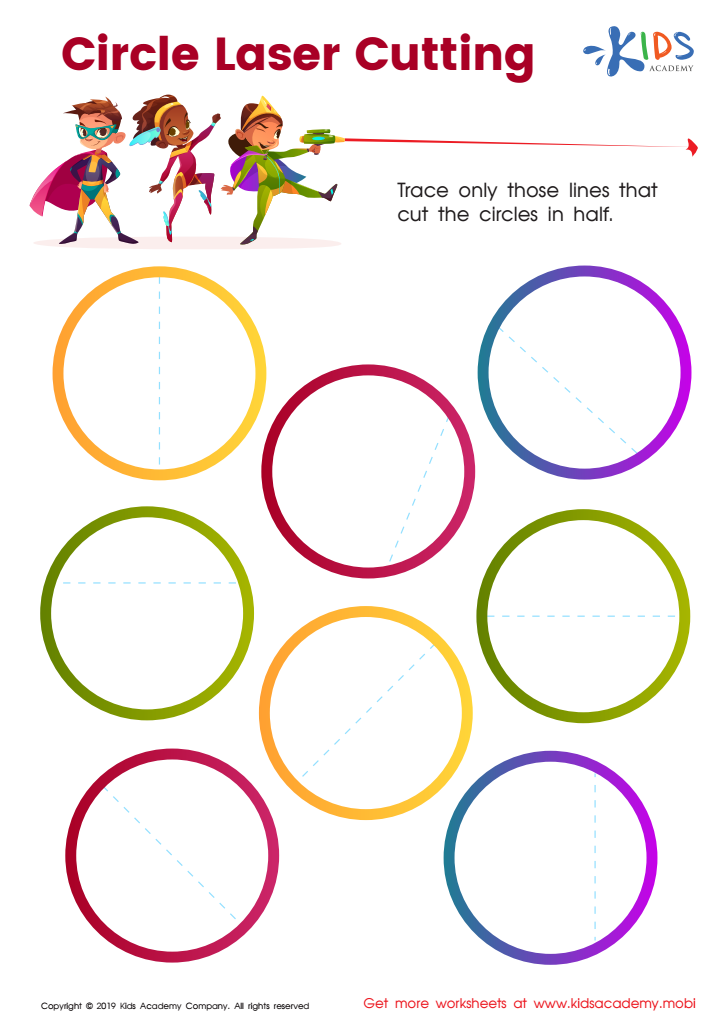
Circle Laser Cutting Worksheet
 Assign to My Students
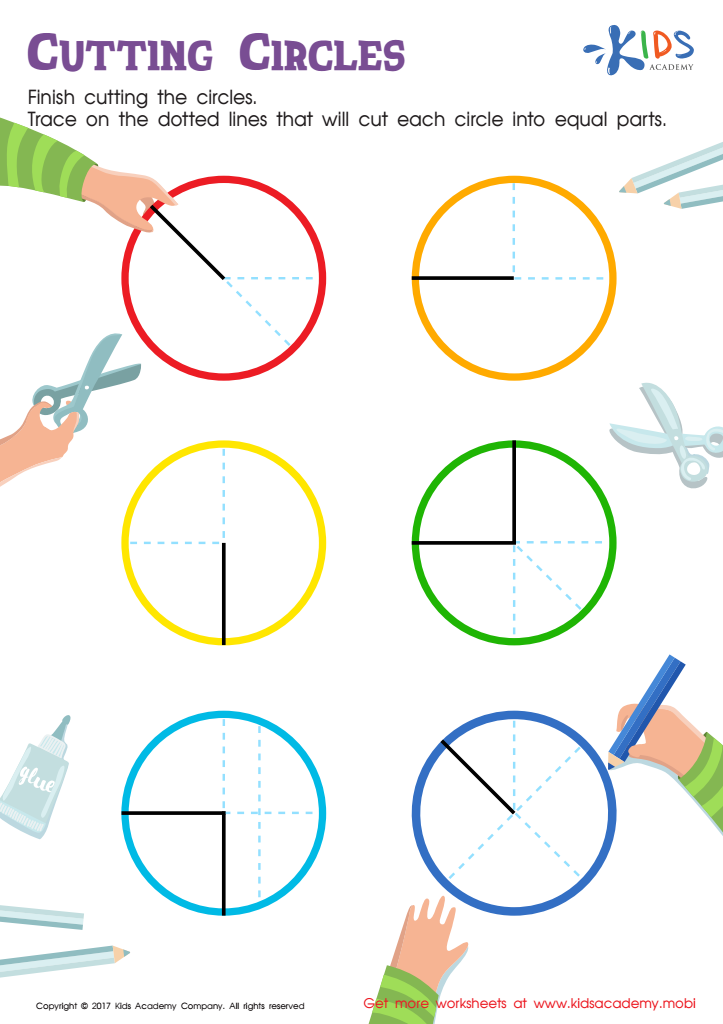
Cutting Circles Worksheet
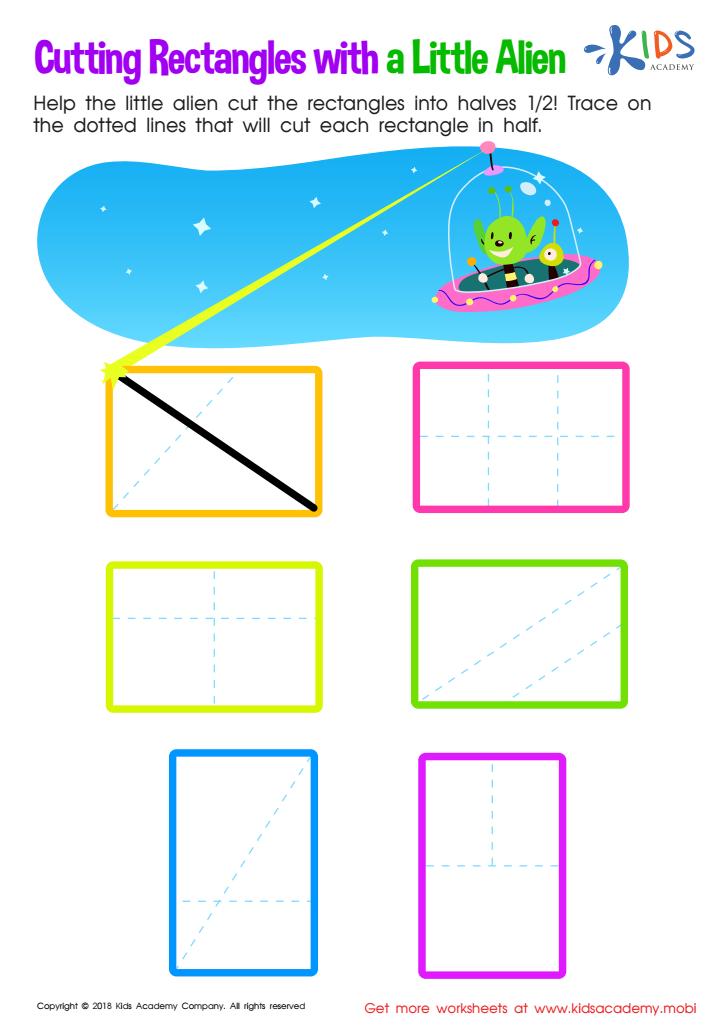
Cutting Rectangles with Alien Worksheet
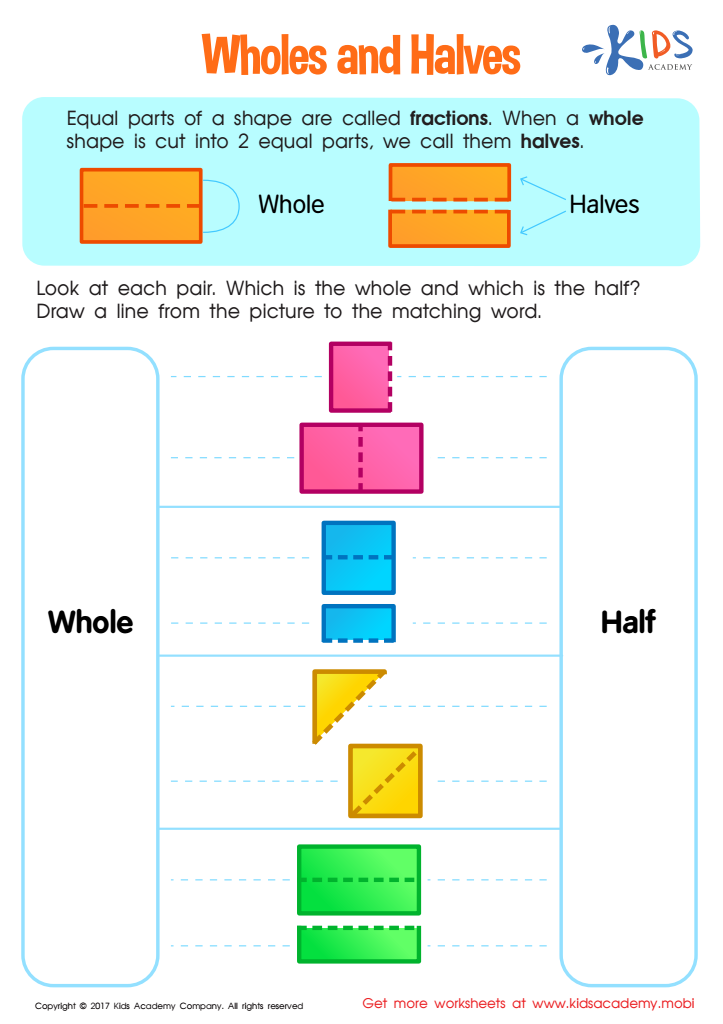
Wholes and Halves Worksheet
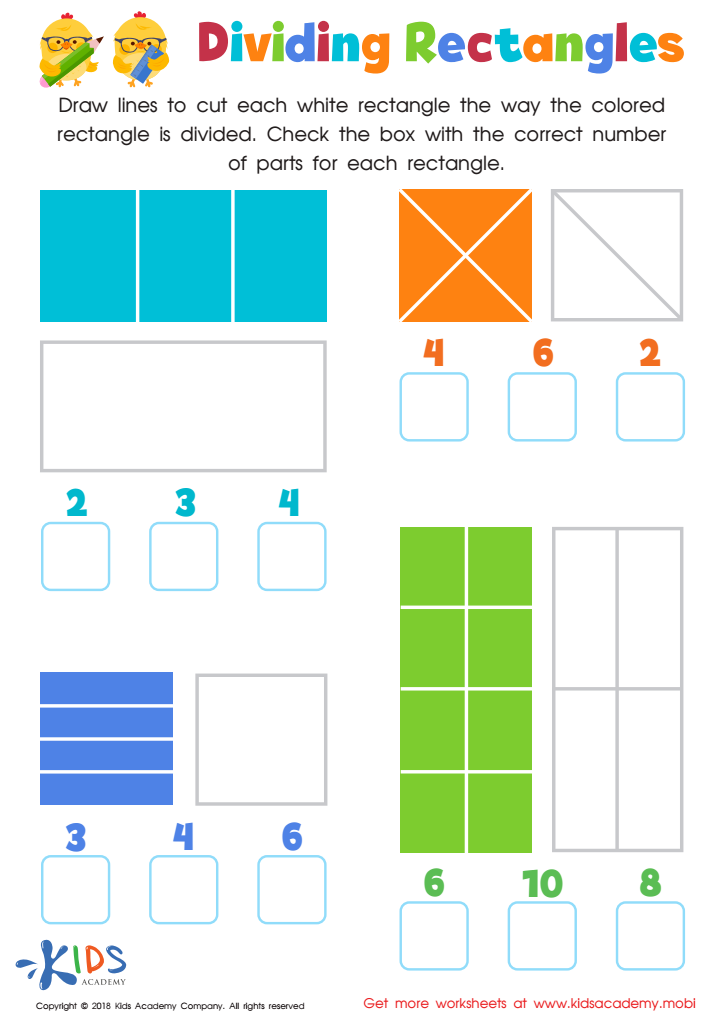
Dividing Rectangles Worksheet








Understanding normal fractions of shapes is crucial for children ages 4-8 as it lays the foundation for their mathematical education. At this age, children are beginning to explore basic concepts of numbers and relationships, and introducing fractions through shapes fosters a strong grasp of the idea of parts relative to a whole.
Engaging with fractions visually using shapes, such as circles, squares, or rectangles, allows young learners to see and understand how different parts make up a complete object. This not only enhances their spatial awareness but also promotes critical thinking skills. Moreover, it connects to real-world experiences, such as sharing food or dividing objects, making math more relatable and accessible.
Parents and teachers should care about this type of learning because it builds confidence in mathematical reasoning and problem-solving abilities. It also encourages collaboration and communication as students might work together to solve shape-related problems. By nurturing these skills early on, we set the stage for future success in more complex mathematical concepts. Ultimately, understanding normal fractions of shapes contributes positively to a child's overall cognitive development and prepares them for more advanced learning in mathematics.