Normal Silent Vowels Worksheets for Ages 5-6
3 filtered results
-
From - To
Discover our engaging Normal Silent Vowels Worksheets, specially designed for ages 5-6! These interactive activities help young learners identify and practice silent vowels in a fun and accessible way. Each worksheet is crafted to enhance reading and phonics skills, ensuring that children grasp the concept of silent letters through colorful illustrations and simple exercises. Perfect for use at home or in the classroom, these worksheets promote confidence in young readers and support their literacy development. Explore our collection to transform learning into an enjoyable adventure for your little ones! Ideal for early grade teachers and parents alike.
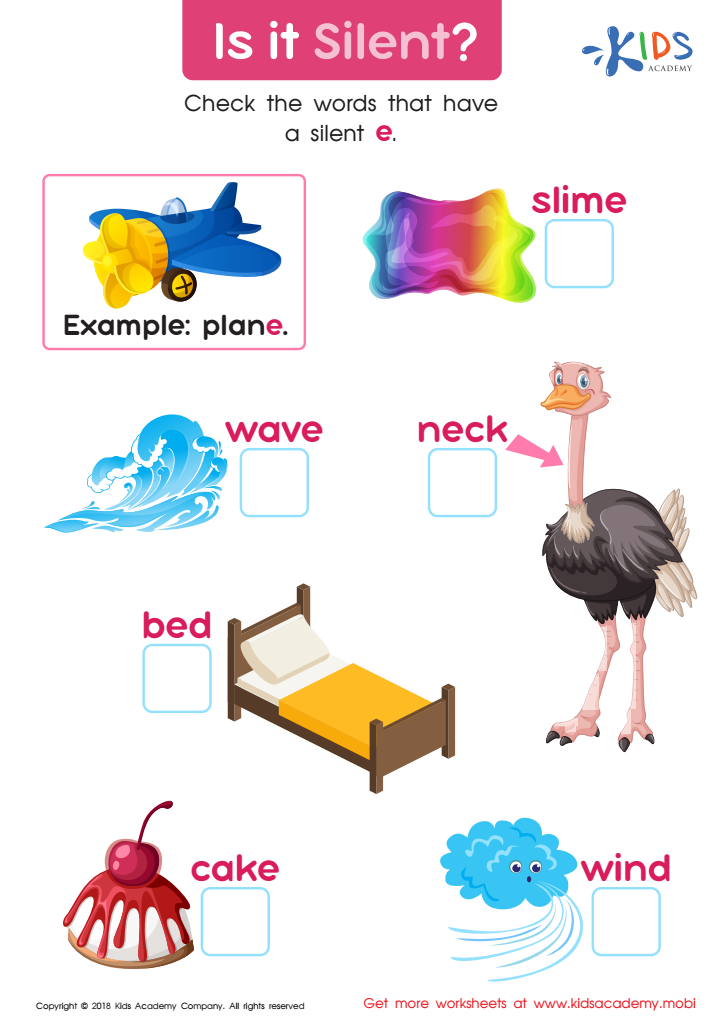
Is It Silent? Worksheet
 Assign to My Students
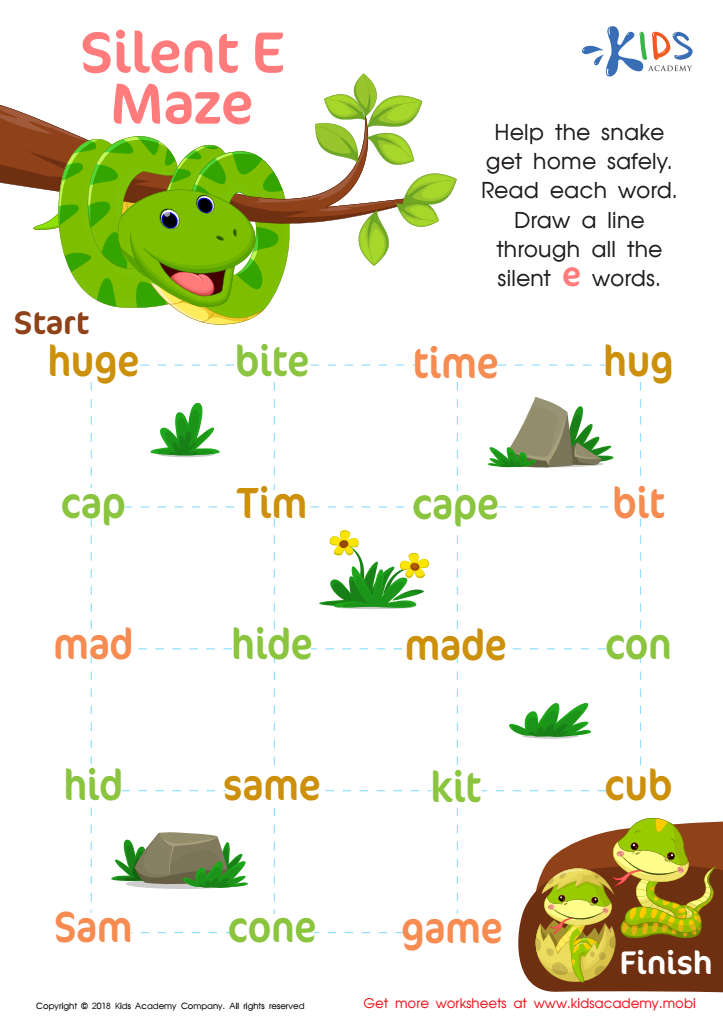
Silent E Maze Worksheet
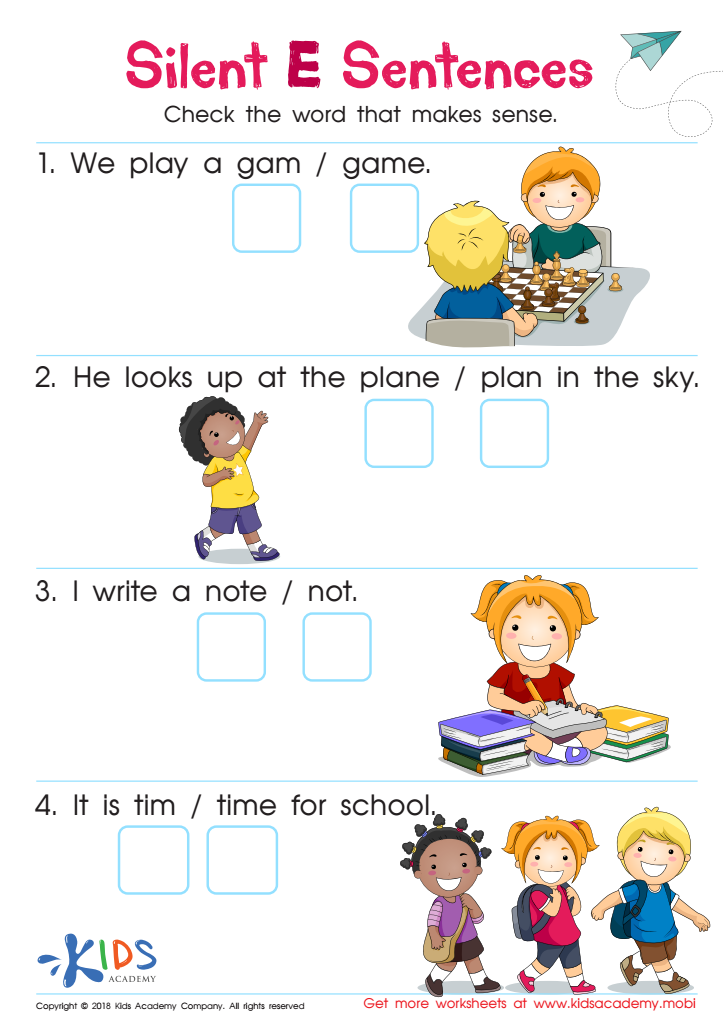
Silent E Sentences Worksheet


Parents and teachers should care about Normal Silent Vowels for ages 5-6 because understanding these concepts enhances early literacy skills. Silent vowels, such as the "e" in "cake," provide essential clues to pronunciation and spelling. Helping young learners recognize the role of silent vowels not only improves their reading fluency but lightens the cognitive load when recognizing familiar words.
These vowels often impact word meanings, providing context that can clarify comprehension. For instance, knowing that "kid" and "kide" represent different concepts enables children to grasp language nuances early on. Furthermore, familiarity with these sounds gives children confidence as they engage with more complex texts.
Additionally, teaching silent vowels encourages critical thinking. As children identify patterns and exceptions, they become more adept at decoding new words. This exploration supports both phonemic awareness and vocabulary development.
Ultimately, incorporating silent vowels into early education strengthens word recognition and comprehension, paving the way for successful readers. Engaging activities that highlight silent vowels make learning fun, ensuring children develop a love for reading and a solid language foundation that will support their future academic endeavors. Community support in this area significantly contributes to their long-term learning journey.