Filters

7 filtered results

Clear all filters
Favorites
With answer key
Interactive

7 filtered results

Difficulty Level

Grade


Subject

    Boost your young learners’ phonics skills with our Normal Two Letter Phonics Worksheets, specially designed for ages 5-6. These engaging worksheets help children recognize and pronounce common two-letter combinations, laying a strong foundation for reading and writing. Featuring a variety of fun activities, from matching to coloring, our worksheets make learning phonics enjoyable and effective. Perfect for classrooms or at-home practice, these resources are aligned with educational standards to ensure comprehensive skill development. Equip your child with the essential phonics tools they need for literacy success. Explore our collection and start building phonics proficiency today!

    Check out this FREE Trial Lesson on Two Letter Phonics for age 5-6!

    Digraphs

    Favorites
    With answer key
    Interactive
    • 5-6
    • Interactive
    • Two Letter Phonics
    • Normal
    Missing Digraph: Part 2 Worksheet
    Missing Digraph: Part 2 Worksheet

    Missing Digraph: Part 2 Worksheet

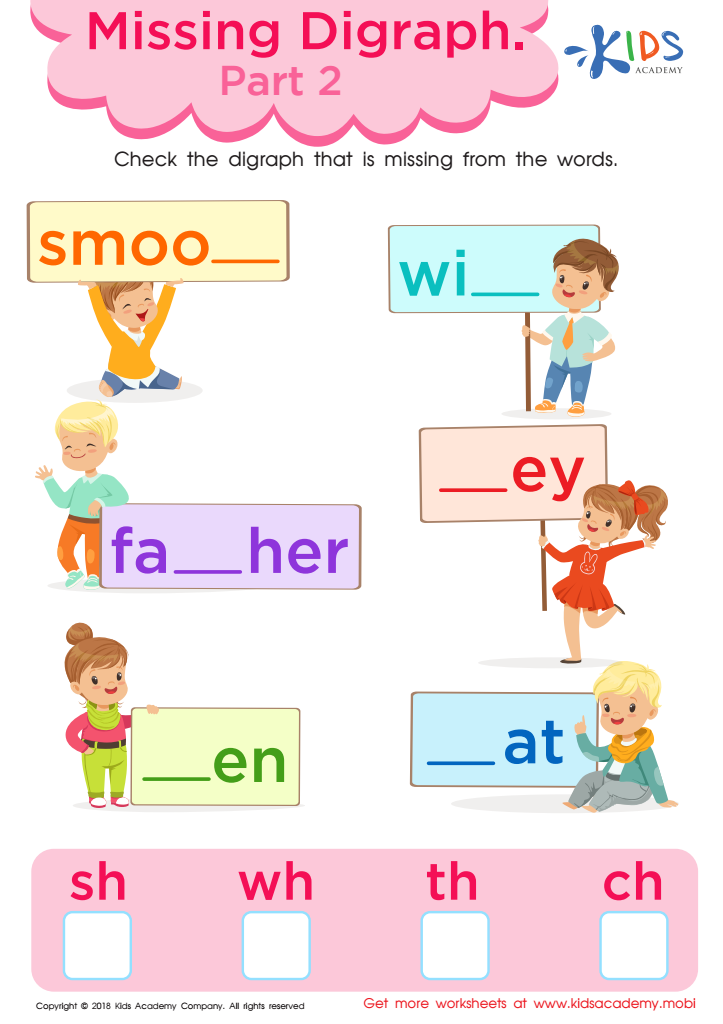
    Practice the "th" digraph with this fun worksheet from Kids Academy! See how it appears at the beginning, middle, or end of words and help learners fill in the blanks. Check if they got it right by finding the th digraph at the bottom!
    Missing Digraph: Part 2 Worksheet
    Worksheet
    Review the Blends Worksheet
    Review the Blends Worksheet

    Review the Blends Worksheet

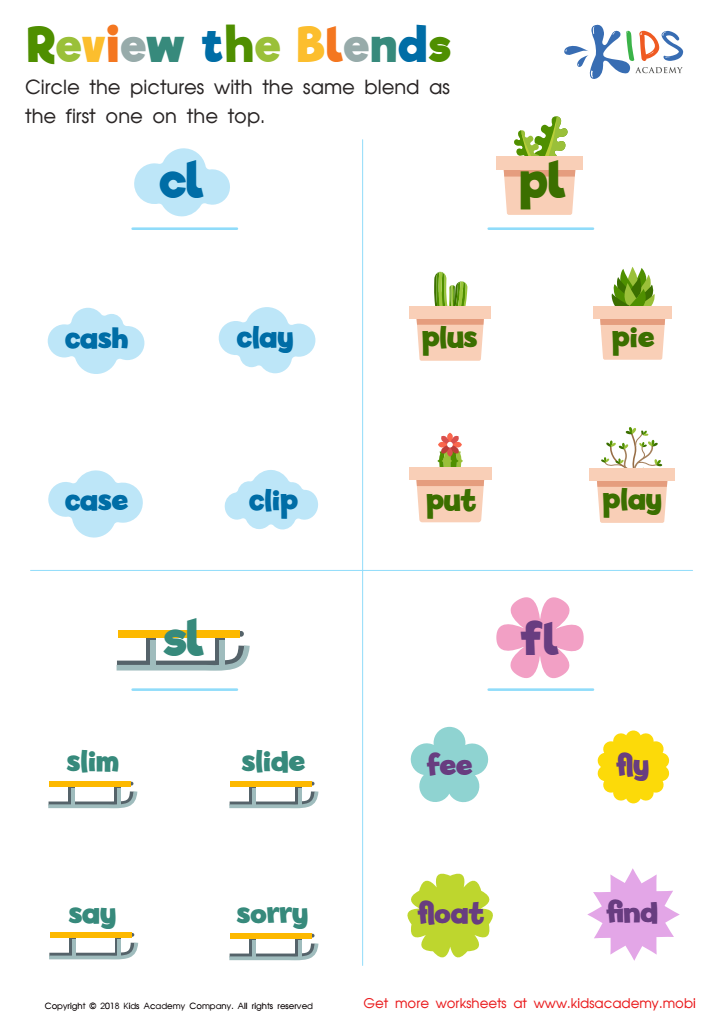
    Consonant blends are two or three consonants that make a sound when pronounced together. L-blends like cl, bl, sl, fl and 3-letter blends like str, slp are common. This phonics worksheet helps early readers identify words containing two letter L-blends. Students must circle the words then read them aloud.
    Review the Blends Worksheet
    Worksheet
    Feed the Whale Worksheet
    Feed the Whale Worksheet

    Feed the Whale Worksheet

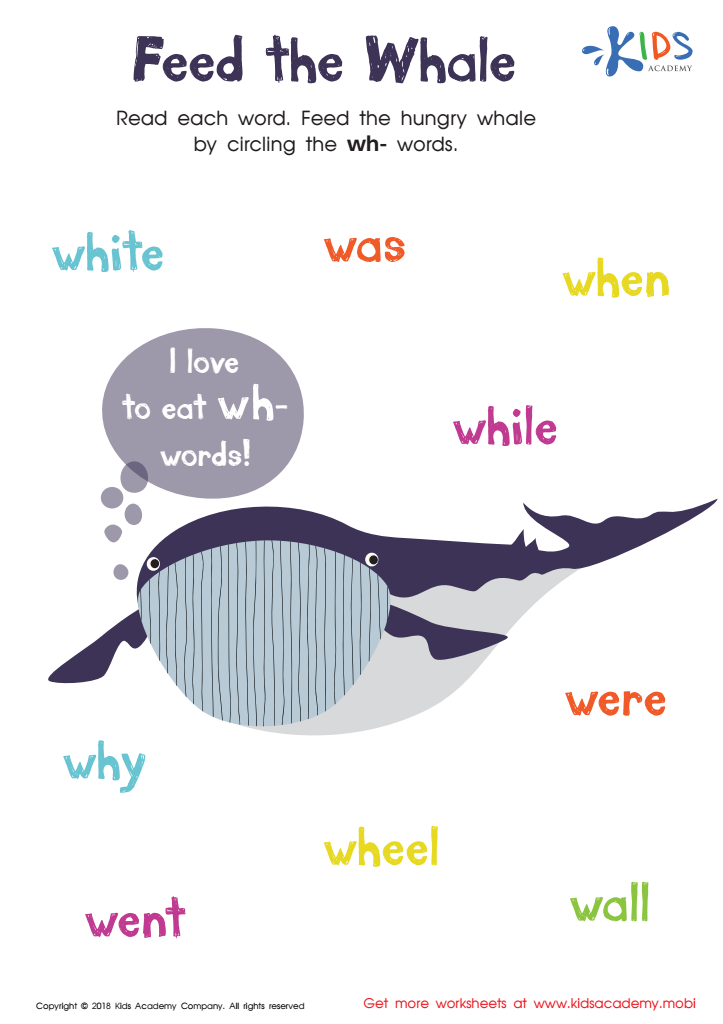
    Help your early reader build beginning consonant and blend recognition with this fun whale worksheet! They'll feed the whale wh- words, circle sight words, and build fine motor skills—all while discriminating between differently colored words.
    Feed the Whale Worksheet
    Worksheet
    Digraph Th Printable Worksheet
    Digraph Th Printable Worksheet

    Digraphs: Think About "th" Worksheet
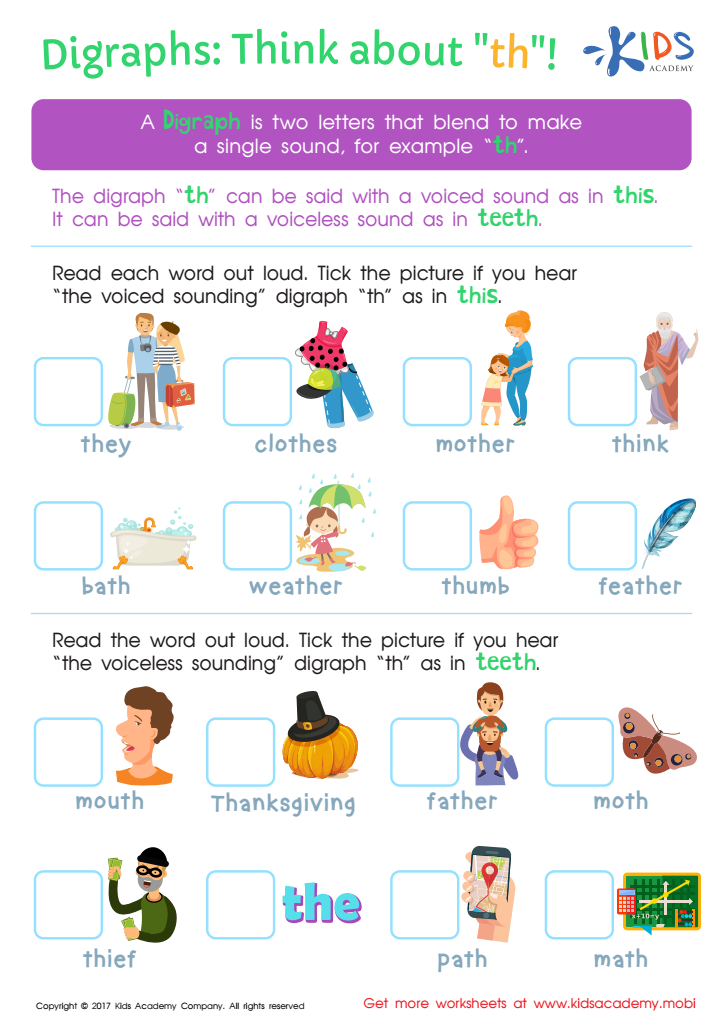
    Help your child master phonics with this illustrated digraph Th printable worksheet. It will help recognize "Th" words, differentiate voiced and voiceless sounds and understand key concepts. Use similar words while they work to reap its full benefits!
    Digraphs: Think About "th" Worksheet
    Worksheet
    Consonant Blend Dr and Tr Printable Worksheet
    Consonant Blend Dr and Tr Printable Worksheet

    Consonant Blends: "Dr" and "Tr" Printable
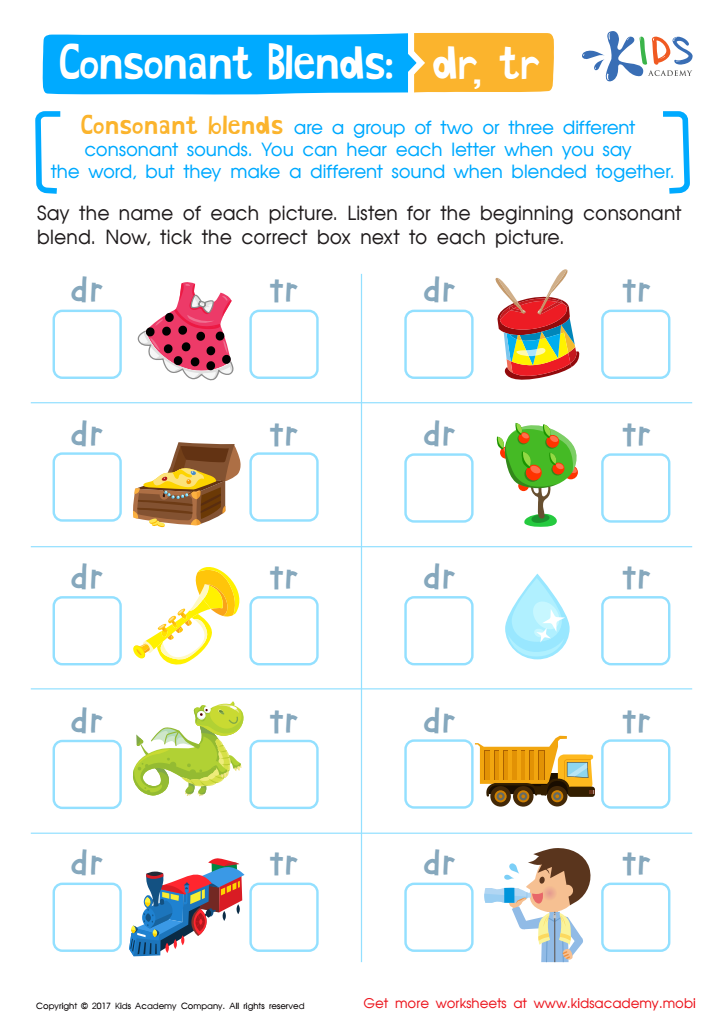
    Pictures of the words provide a visual cue, and sound-outs help with auditory cues.
    Consonant Blends: "Dr" and "Tr" Printable
    Worksheet
    Consonant Blends Pl, Cl, and Sl Printable Worksheet
    Consonant Blends Pl, Cl, and Sl Printable Worksheet

    L Blends: "Pl", "Cl" and "Sl" Printable
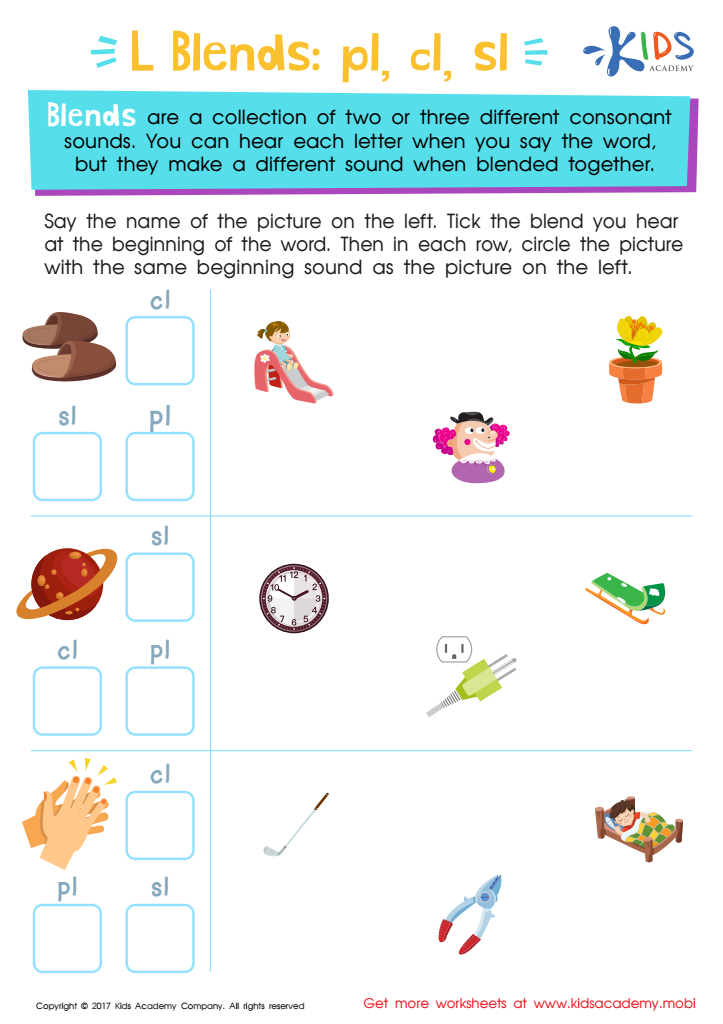
    This printable worksheet will help your child recognize and identify the Pl, Cl, and Sl consonant blends, sound them out, and identify them in print. Improve your child's reading and writing skills with fun and colorful phonics practice!
    L Blends: "Pl", "Cl" and "Sl" Printable
    Worksheet
    Consonant Blend Fl, Bl, and Gl Printable Worksheet
    Consonant Blend Fl, Bl, and Gl Printable Worksheet

    Blending Consonants: "Fl", "Bl" and "Gl" Printable

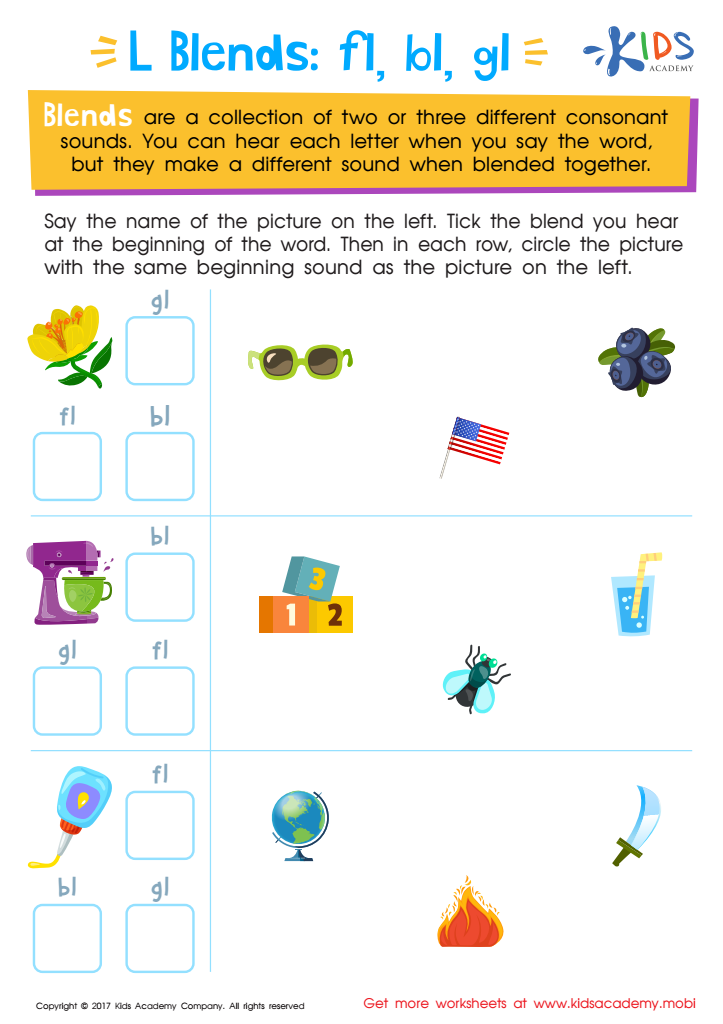
    Help your child master consonant blends Fl, Bl, and Gl with this printable worksheet. Find words associated with the pictures and learn to better understand the difference between consonant blends. Vibrant images motivate and aid in learning. Download now for improved phonics success!
    Blending Consonants: "Fl", "Bl" and "Gl" Printable

    Worksheet


    Normal Two Letter Phonics are key components in early literacy development for children aged 5-6. At this stage, kids are transitioning from recognizing letters to blending sounds to form words, a crucial step for fluent reading. By focusing on two-letter phonics like "at," "it," "on," or "is," children learn how sounds connect, enhancing their ability to decode new words.

    Practicing two-letter phonics strengthens a child's phonemic awareness – the understanding that words are made up of individual sounds. This foundational skill is predictive of reading success and is essential for developing reading fluency and comprehension.

    Moreover, mastering two-letter phonics builds confidence. Children feel accomplished when they quickly recognize and pronounce these simple combinations, laying the groundwork for tackling longer, more complex words. This boost in self-esteem can foster a positive attitude towards learning and reading, encouraging children to engage more deeply with educational activities.

    Teachers and parents play a vital role in this process by providing a supportive environment that emphasizes consistent practice and positive reinforcement. Fun activities, games, and reading exercises involving two-letter phonics can make learning enjoyable and effective, setting young learners on a path to academic success and a lifelong love of reading.