Normal Consonants Worksheets for Ages 5-8 - Page 2
26 filtered results
-
From - To
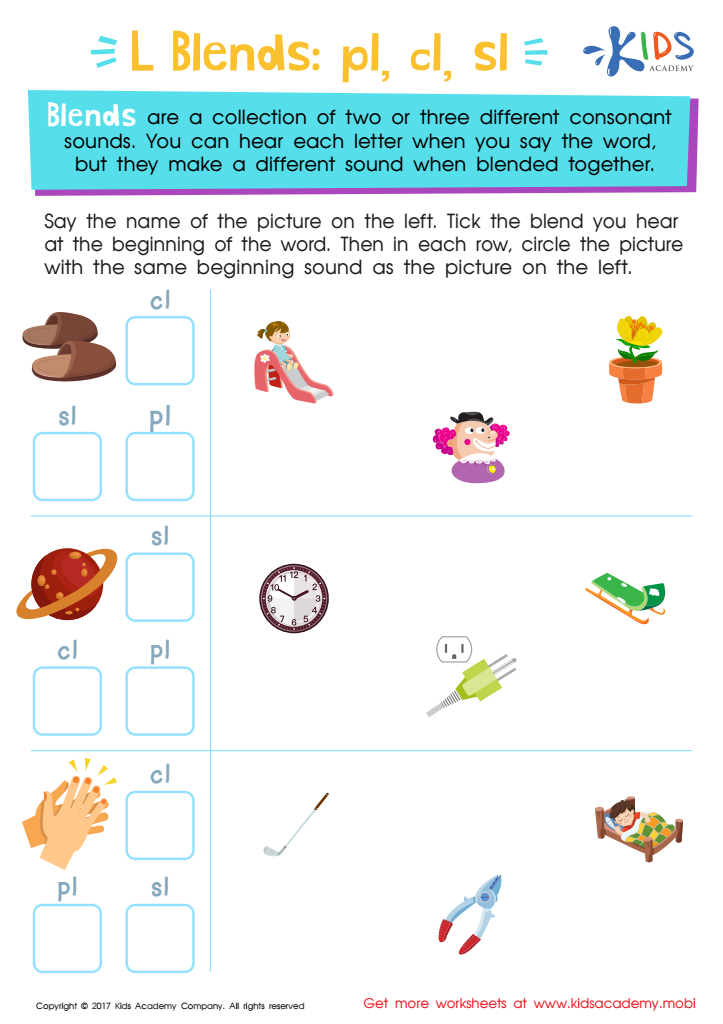
L Blends: "Pl", "Cl" and "Sl" Printable
 Assign to My Students
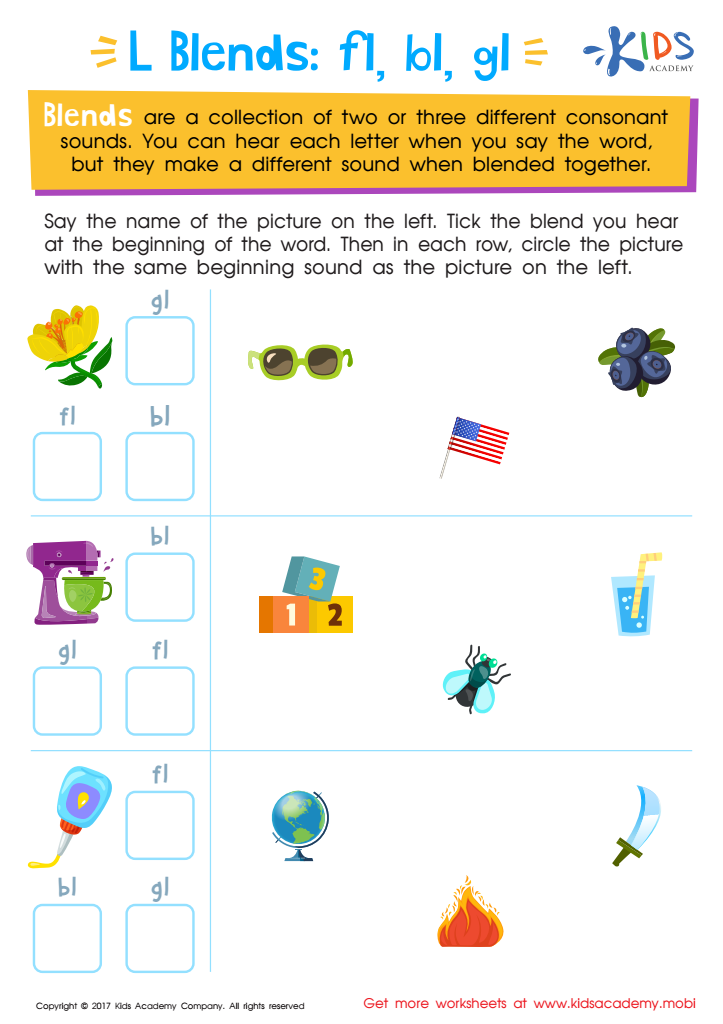
Blending Consonants: "Fl", "Bl" and "Gl" Printable



Parents and teachers should prioritize the understanding and use of normal consonants in children aged 5-8 because these foundational language skills are critical for proper speech development, literacy acquisition, and overall academic success. During these formative years, children are rapidly expanding their vocabularies and refining their pronunciation. Mastery of normal consonants enables clear communication, reducing misunderstandings and boosting confidence in social interactions which, in turn, fosters better classroom participation.
Proper articulation of consonants also lays the groundwork for reading and writing proficiency. Children use phonetic skills to decode words, and an awareness of consonant sounds is essential for effective spelling and word recognition. Addressing consonant pronunciation early on can help identify and mitigate potential speech or learning disorders, allowing for timely interventions that may prevent future academic struggles.
Moreover, a strong grasp of consonant sounds can enhance listening skills as children learn to distinguish subtle differences between words. This auditory discrimination supports not only language comprehension but also concentrates attention during instructional time.
In summary, focusing on normal consonants in early childhood education can substantially impact a child's speech clarity, reading and writing abilities, and overall confidence, equipping them with the necessary tools for long-term learning success.






