Normal Animals Worksheets for Ages 5-8 - Page 3
49 filtered results
-
From - To
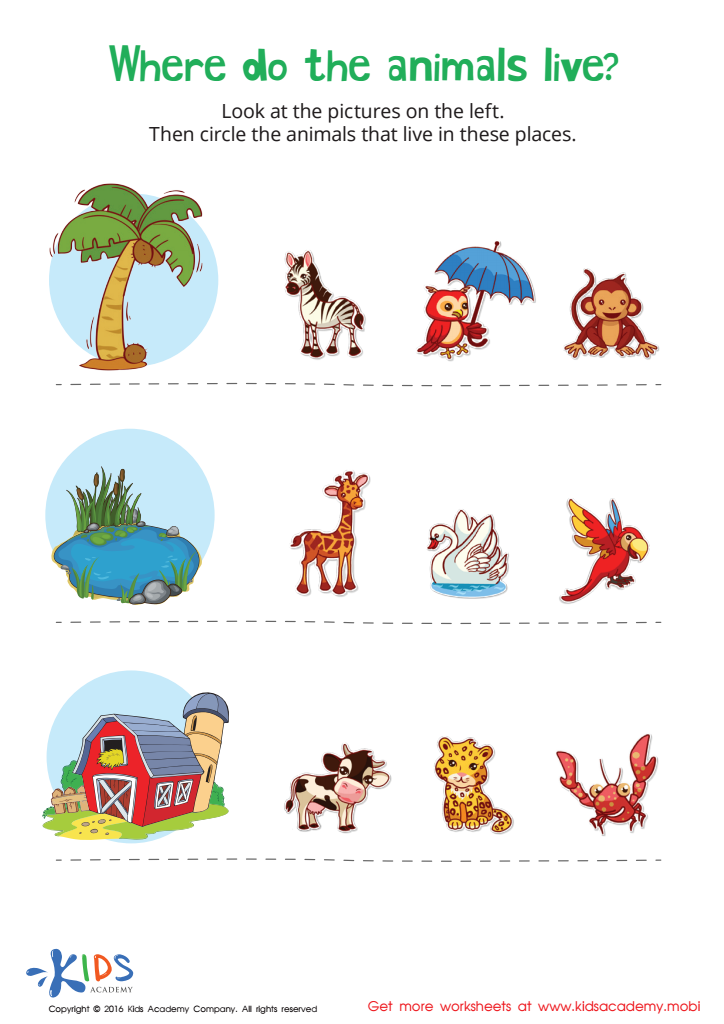
Where Animals Live Worksheet
 Assign to My Students








Parents and teachers should care about normal animals for ages 5-8 because introducing children to the natural world fosters curiosity, empathy, and a sense of responsibility. At this young age, children are highly receptive to learning about animals, which can enhance their understanding of biology, ecology, and conservation. By familiarizing them with normal animals—common species they may encounter in everyday life—children develop a sense of connection to the environment.
Learning about animals promotes concepts of biodiversity and the critical roles these creatures play in ecosystems. Understanding that animals have feelings and needs could help cultivate compassion and encourage kindness in young minds. Additionally, engaging with animal stories and educational activities can improve literacy and critical thinking skills, making learning enjoyable and interactive.
Moreover, knowledge about ordinary animals encourages outdoor exploration, which boosts physical activity and fosters a love for nature. Teaching children about animals also provides opportunities to discuss their habitats, diets, and behaviors, reinforcing important science concepts that underpin environmental studies.
Ultimately, when parents and teachers care about educating young learners about normal animals, they contribute to shaping a society that values wildlife and works toward a sustainable future. Encouraging curiosity about the animal kingdom enriches children’s lives and supports a broader understanding of the world around them.








