Normal Numbers 11–20 Worksheets for Ages 6-7
4 filtered results
Difficulty Level
Grade
Age
-
From - To
Subject
Activity
Standards
Introduce your child to a fun learning experience with our "Normal Numbers 11–20 Worksheets" designed specifically for ages 6-7. These engaging worksheets from Kids Academy enhance math skills by offering a blend of activities, including counting, writing, and recognizing numbers from 11 to 20. As your child explores numeric patterns and sequences, they’ll build a solid foundation in elementary math. Ideal for both classroom use and at-home practice, these worksheets support early learners by making number learning delightful and productive. Download today to help your child advance confidently in their math journey!
Favorites
With answer key
Interactive
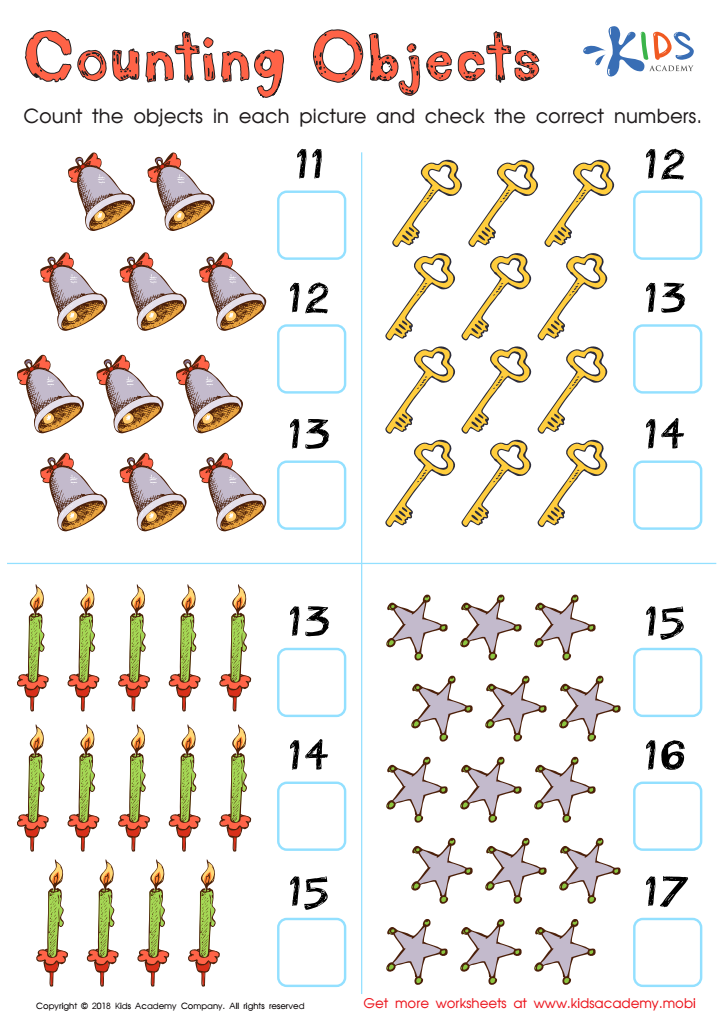
Counting Numbers Worksheet For Kindergarten
This worksheet is a great way to get your child practicing foundational math skills. With bright pictures to count, counting numbers just got a lot more fun! Get them ready for future math success and help them hone their early math skills.
 Assign to My Students
Counting Numbers Worksheet For Kindergarten
Worksheet
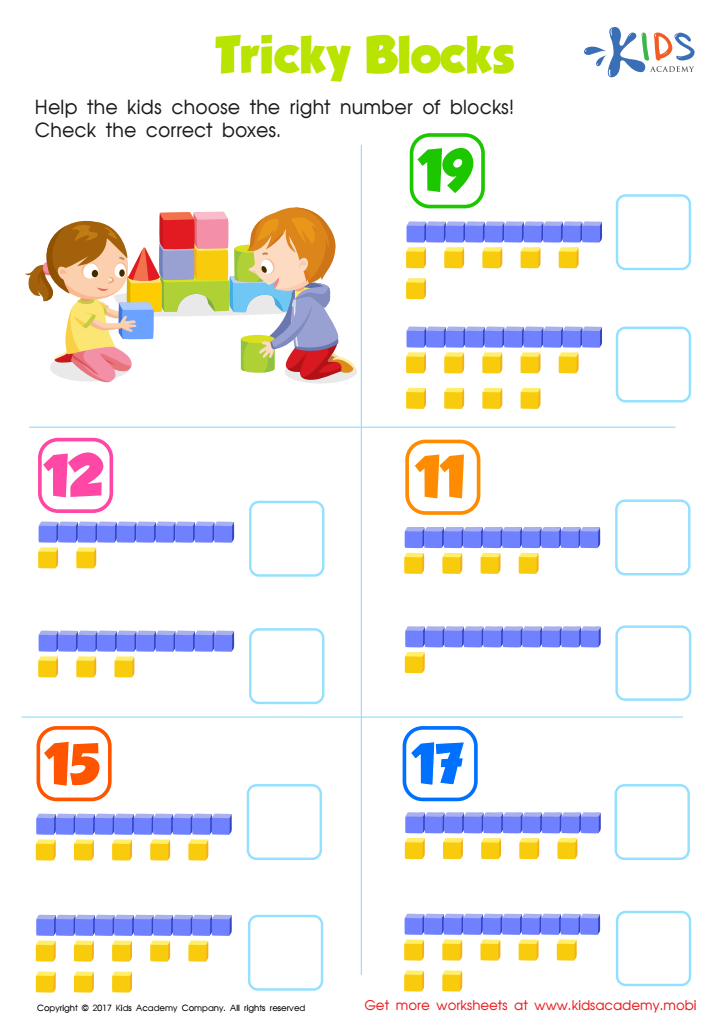
Tricky Blocks Worksheet
Help your child count with this printable worksheet. You'll be able to explain the technicalities of each answer as you work together to count the boxes and choose the correct number in the spaces provided. This will help your child better understand the concept and will go faster than if they do it alone.
Tricky Blocks Worksheet
Worksheet
Tens and Ones Worksheet
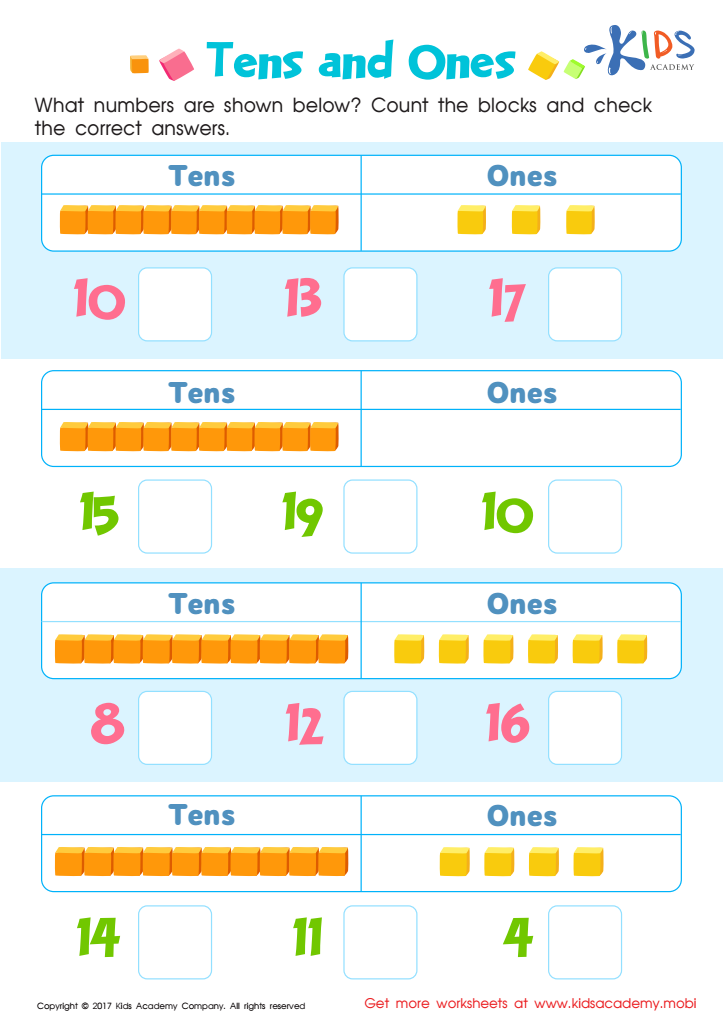
Help your child make math fun with this worksheet! Count the blocks on both sides and enter the total in the box below the figures. This will help them overcome any math-related anxieties they might have and let them enjoy the learning process.
Tens and Ones Worksheet
Worksheet
Place Value: Friendly Elves Worksheet
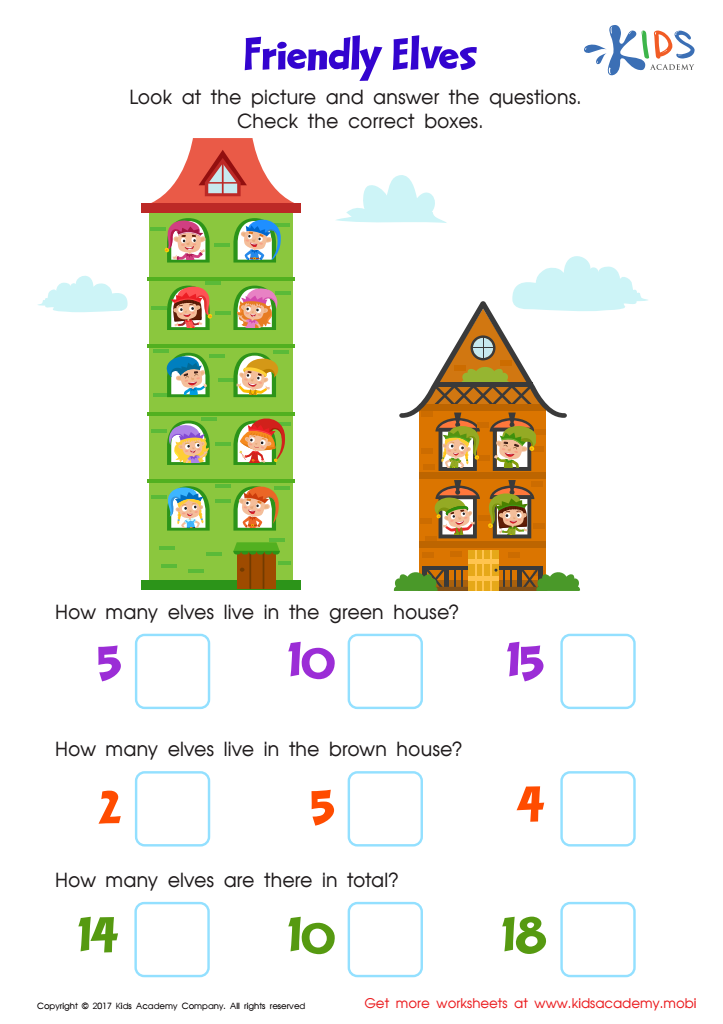
This fun worksheet teaches kids to count elves, answer questions about houses, and practice math! Look at the picture and count the elves in each house. How many are in the green and brown house? Tick the correct answer boxes. Perfect for young learners!
Place Value: Friendly Elves Worksheet
Worksheet
Join Kids Academy for Free
Who is primarily going to use this learning content?



Understanding the numbers 11-20 is crucial for children aged 6-7 as this stage forms the foundation for more advanced mathematical skills. These numbers bridge the gap between the simplicity of the numbers 1-10 and the complexity of numbers beyond 10, introducing children to the structure of our base-10 number system.
Firstly, grasping 11-20 helps children to comprehend teen numbers, wherein they understand that these represent ten units plus additional units (e.g., 14 is 10 plus 4). This understanding is fundamental for place value, which is the cornerstone of all arithmetic operations, including addition, subtraction, multiplication, and division.
Secondly, recognizing and working with numbers 11-20 enhances counting skills and prepares children for skip counting, which aids in understanding times tables later on. For example, practicing counting, both forwards and backwards, within this range helps children see patterns and sequences that are essential for number sense.
Moreover, familiarity with the teen numbers lays the groundwork for number operations within a broader context, allowing children to seamlessly transition to calculations involving larger numbers.
Finally, competence in working with 11-20 can also boost children’s confidence and enjoyment in mathematics, making them more eager to tackle future mathematical challenges. For these reasons, it is reiterated that both parents and teachers prioritize and regularly practice these numbers with children.