Normal Vowel Diphthongs Worksheets for Ages 7-9 - Page 2
25 filtered results
-
From - To
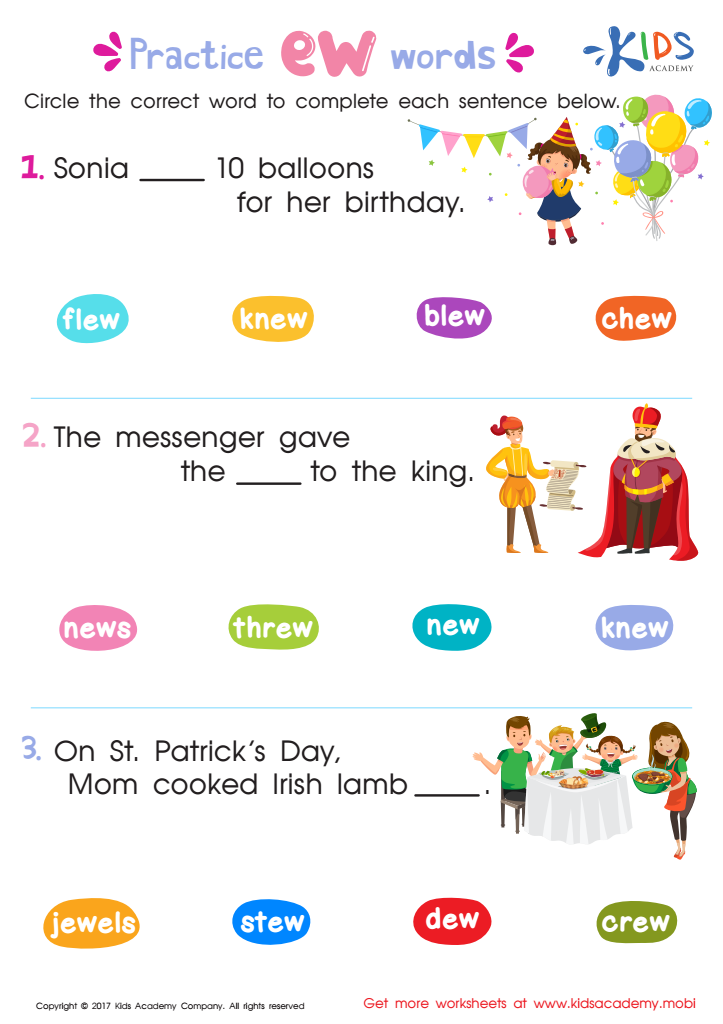
EW Words Worksheet
 Assign to My Students


Normal vowel diphthongs are crucial for children aged 7-9 as they form the foundation of effective reading and writing skills. At this stage, students are transitioning from learning basic phonics to more complex language structures. Understanding diphthongs—where two vowel sounds blend within a single syllable—helps children pronounce and decode unfamiliar words, enhancing their reading fluency and comprehension.
Parents and teachers should care about diphthongs because they significantly impact vocabulary development. As children encounter diverse texts, their ability to recognize and produce diphthongs aids them in grasping meanings and contrasts between words. This knowledge equips them to express themselves more precisely in speaking and writing.
Moreover, mastering diphthongs fosters confidence in language use, encouraging reluctant readers and writers to engage more actively. As proficiency increases, children develop a love for language, which can lead to improved academic performance.
Ultimately, investing in teaching children about normal vowel diphthongs not only improves their current literacy skills but also sets the stage for effective communication and critical thinking as they progress in their educational journey. Engaging with these phonetic complexities at a young age can nurture a lifelong appreciation and mastery of language.