Comparison Skills Preschool Worksheets
4 filtered results
-
From - To
Boost your child's cognitive development with our "Comparison Skills Preschool Worksheets"! Designed for young learners, these engaging worksheets focus on honing essential comparison skills such as identifying similarities and differences, comparing sizes and quantities, and mastering basic math concepts. Fun and interactive activities encourage critical thinking and problem-solving abilities. Perfect for preschoolers, our high-quality, printable worksheets make learning enjoyable and effective. Ideal for both classroom use and at-home practice, these tools help build a strong foundation for future academic success. Explore our collection today and equip your child with the skills they need to thrive!
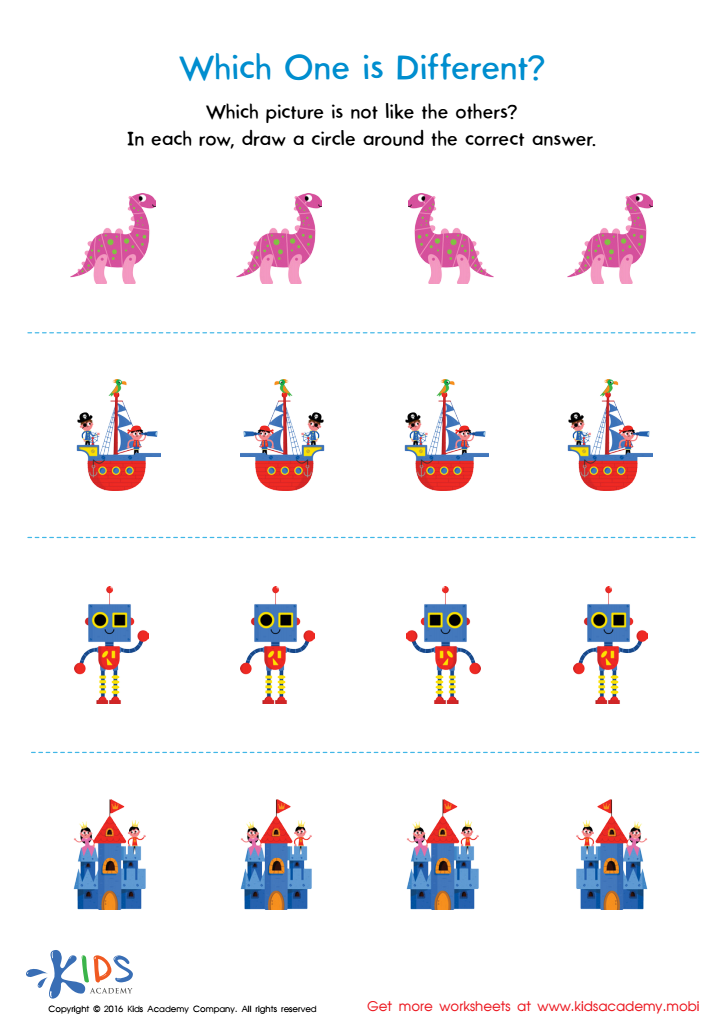
Which One Is Different Worksheet
 Assign to My Students
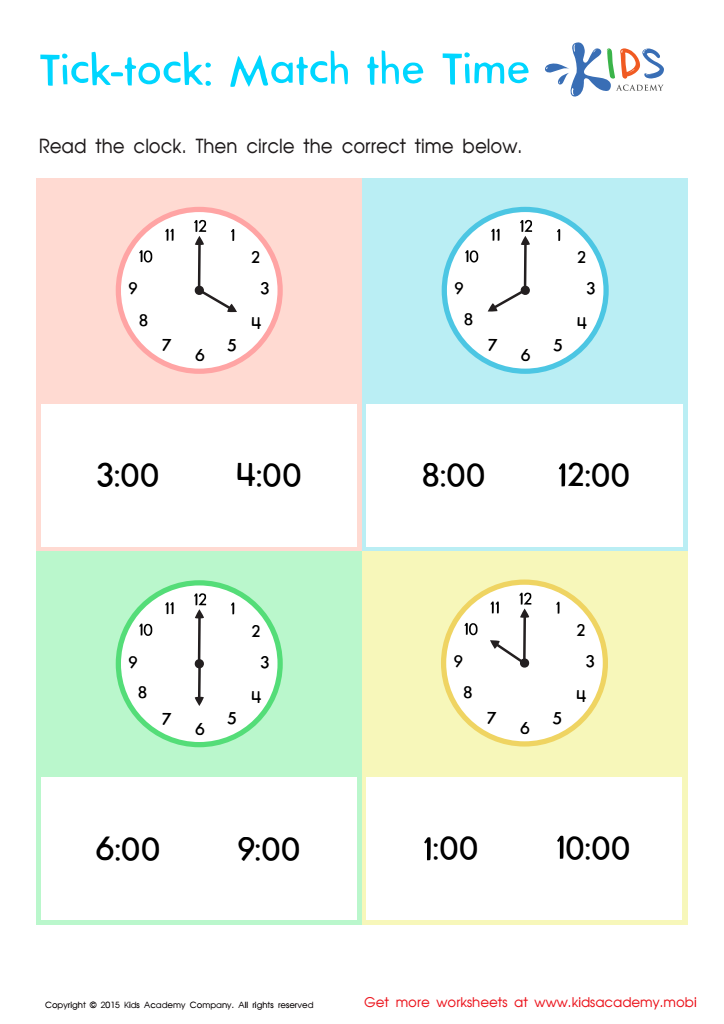
Telling The Time Worksheet: Part 4
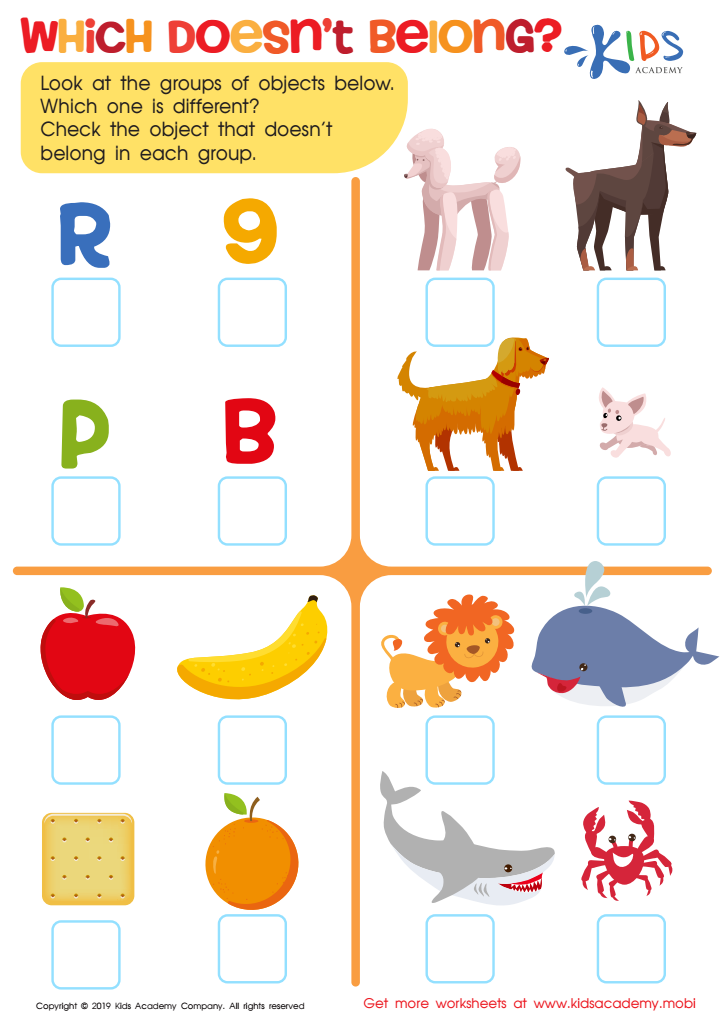
Which Doesn't Belong? Worksheet
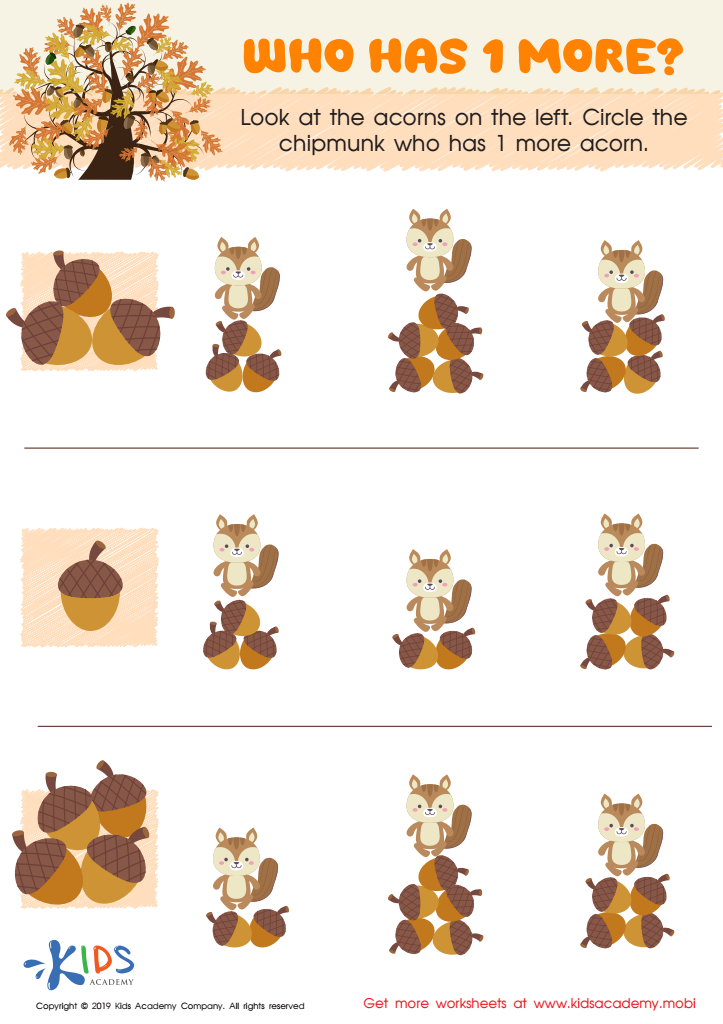
Who Has 1 More? Worksheet





Parents and teachers should care about fostering comparison skills in preschool-aged children because these fundamental abilities lay the groundwork for essential cognitive development and future academic success. When children engage in comparison activities, they learn to identify differences and similarities among objects, ideas, and experiences, which enhances their critical thinking and problem-solving abilities. This foundational skill helps children understand and organize their world, developing logical reasoning and categorization skills.
From a math standpoint, comparison skills are crucial for understanding concepts such as size, quantity, and numeracy. For example, discerning that three apples are fewer than five builds the basis for more complex arithmetic tasks later on. In language development, comparing and contrasting stories, pictures, or words enriches vocabulary and comprehension, promoting literacy skills.
Furthermore, nurturing comparison skills in a supportive environment instills confidence and adaptability. Children become more adept at making informed decisions, understanding relationships between concepts, and navigating everyday challenges. Emphasizing these skills in preschool also encourages curiosity, observational attention, and a love for learning – traits that are beneficial throughout life.
Overall, integrating and prioritizing comparison skills within early education prepares children for a smoother transition to more advanced academic subjects and cultivates lifelong capabilities essential for informed and adaptive thinking.