Improving analytical skills Preschool Worksheets
4 filtered results
Difficulty Level
Grade
Age
-
From - To
Subject
Activity
Standards
Welcome to our "Improving Analytical Skills" Preschool Worksheets page! Here, you’ll find a variety of engaging and fun printable resources designed specifically for preschoolers. Our worksheets aim to enhance critical thinking and problem-solving abilities through interactive activities. From pattern recognition to sorting exercises, these worksheets encourage young learners to explore connections and make thoughtful observations. Each activity is tailored to foster creativity and analytical reasoning in an enjoyable manner, ensuring that children build a strong foundation for future learning. Empower your little ones with the skills they need for academic success while having fun along the way!
Favorites
With answer key
Interactive
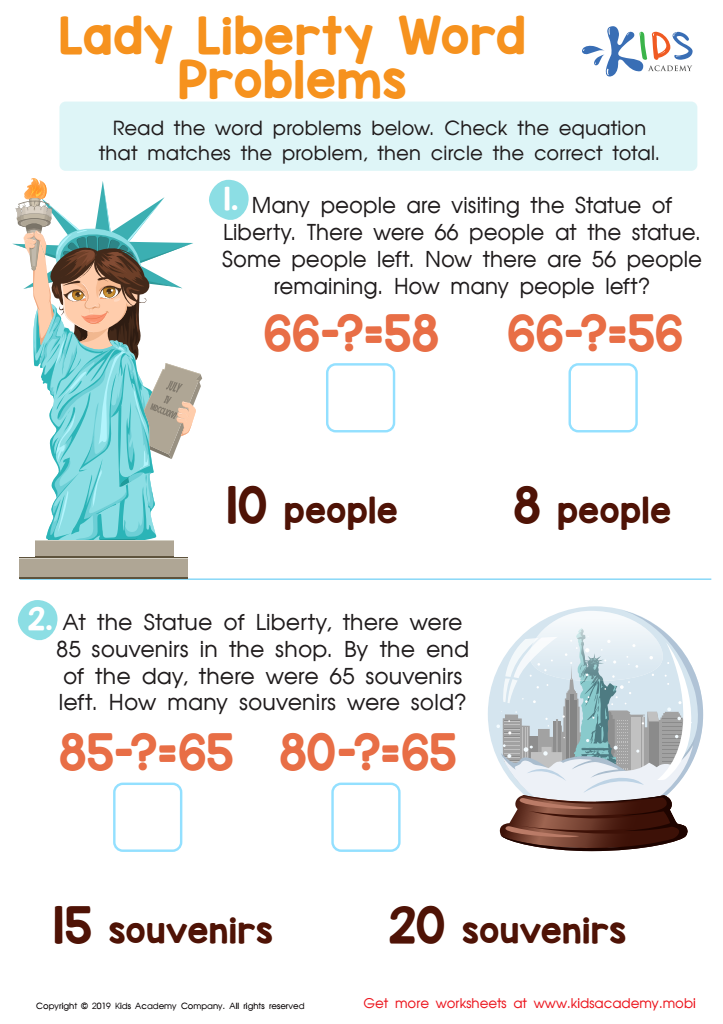
Lady Liberty Worksheet
Have your students ever been to the Statue of Liberty? Ask them to tell you where it is and what it looks like. Every day, the statue draws a crowd admiring its beauty, taking pics and learning more about it. Pose a word problem and help them check the answer. Circle the correct total. (80 words)
 Assign to My Students
Lady Liberty Worksheet
Worksheet
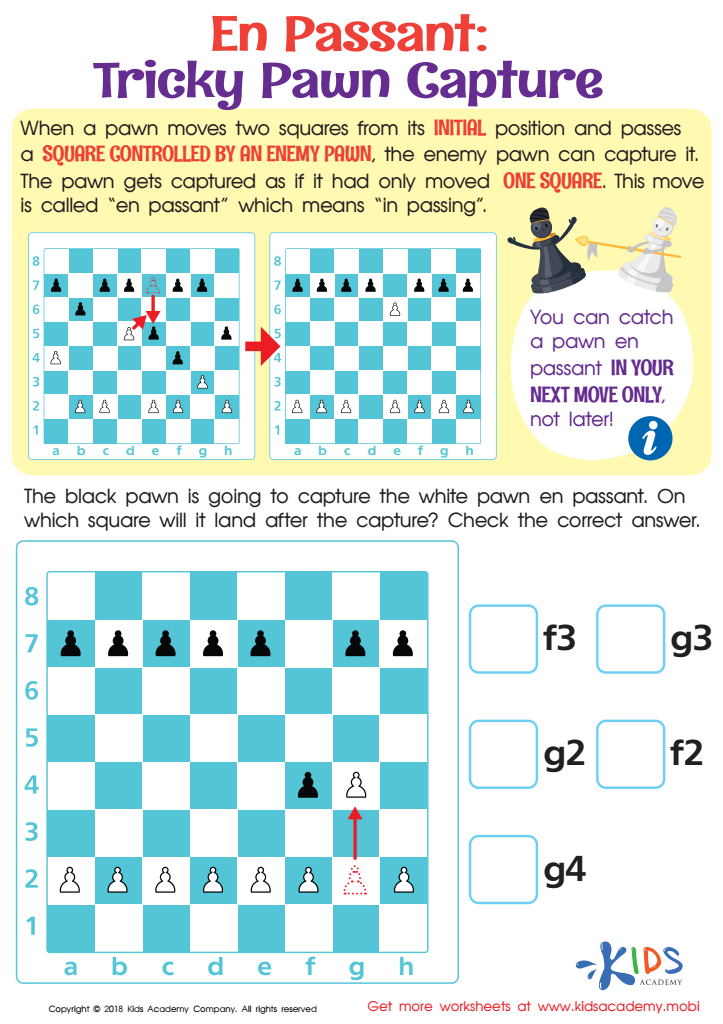
En Passant: Tricky Pawn Capture Worksheet
When a pawn moves two squares from its initial position and enters a square controlled by an enemy, the enemy can capture it as if it had moved one square. This move is called "en passant" (in passing). Ask your child which square the black pawn will land on after capturing the white pawn en passant using the provided chessboard.
En Passant: Tricky Pawn Capture Worksheet
Worksheet
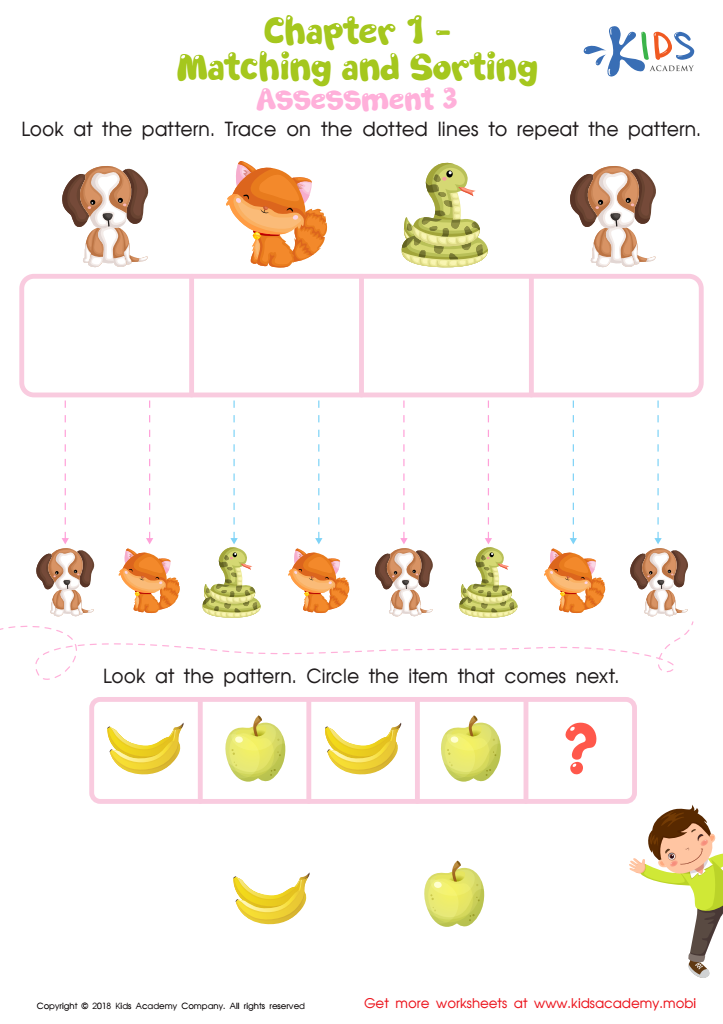
Matching and Sorting for Preschool: Assessment 3 Worksheet
This worksheet helps kids practice and improve pattern recognition and matching skills. Task one: Ask your child to trace the pattern on the dotted lines. Task two: Look at the arrangement of fruits and ask your child to circle the corresponding item in the pattern. With this exercise, your child will gain a better understanding of pattern recognition and matching.
Matching and Sorting for Preschool: Assessment 3 Worksheet
Worksheet
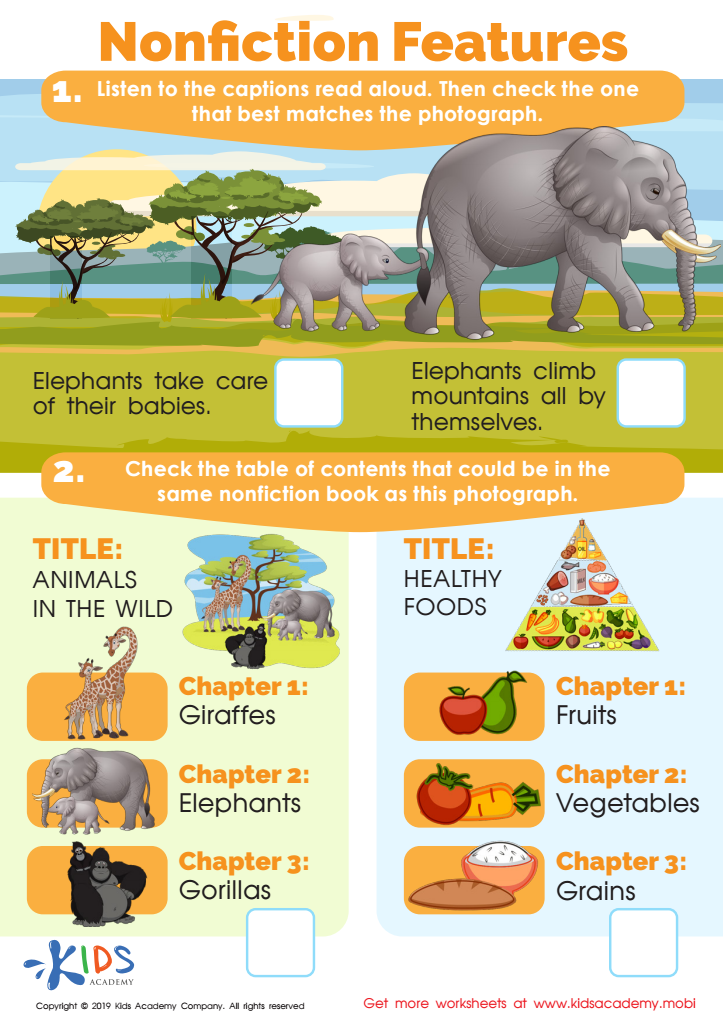
Nonfiction Features Worksheet
Fiction writing is made up of characters and events created by the author. Ask your students to match the captions to the picture. Help your preschoolers explore the contents of a non-fiction book that may have the same photo.
Nonfiction Features Worksheet
Worksheet
Join Kids Academy for Free
Who is primarily going to use this learning content?








Improving analytical skills in preschool is crucial for several reasons that resonate with both parents and teachers. Analytical skills encompass the ability to assess information, recognize patterns, and make informed decisions. At this early stage, children are naturally curious and eager to explore their surroundings. Nurturing their analytical skills not only enhances critical thinking but also lays a solid foundation for future academic success.
Firstly, developing these skills encourages children to ask questions and engage in problem-solving, fostering a love for learning. It helps them to understand various concepts and enhances cognitive development, making it easier to grasp complex ideas in later years. Additionally, analytical thinking promotes creativity, allowing kids to come up with innovative solutions during play and exploration.
Moreover, mastery of analytical skills improves communication abilities, as children learn to articulate their thoughts and reasoning. In today’s fast-paced, information-rich world, instilling these skills early prepares children to navigate challenges effectively and contributes to their confident decision-making as they grow.
By emphasizing analytical skills from preschool onward, parents and teachers work together to cultivate inquisitive, independent learners who are better equipped to thrive in academic settings and beyond. This investment in the early years can have lifelong benefits for children's overall development and future opportunities.