Cognitive Development Preschool 2D Shapes Worksheets
6 filtered results
-
From - To
Unlock your child's potential with our engaging Cognitive Development Preschool 2D Shapes Worksheets! Designed specifically for preschoolers, these worksheets foster essential cognitive skills while introducing the colorful world of 2D shapes. Children will enjoy fun activities that encourage shape recognition, matching, and visual discrimination, enhancing their critical thinking abilities. Each worksheet is crafted to support young minds in developing problem-solving skills and making connections through practice and play. Ideal for use at home or in the classroom, these resources provide a solid foundation for early math learning, ensuring your little ones are well-prepared for future academic success. Explore and learn today!
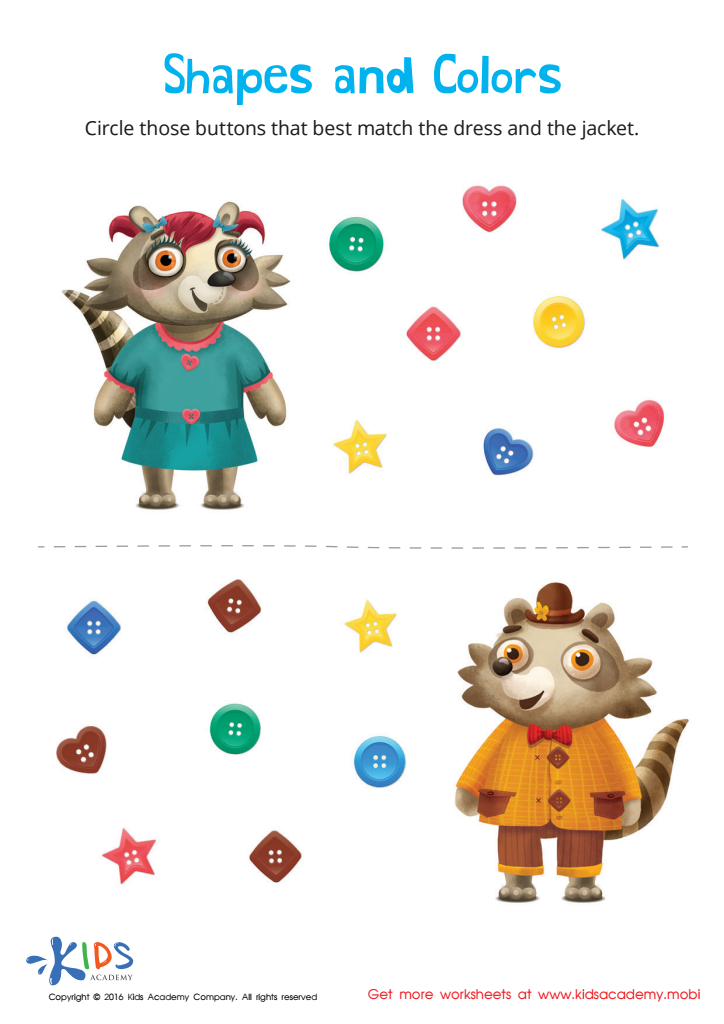
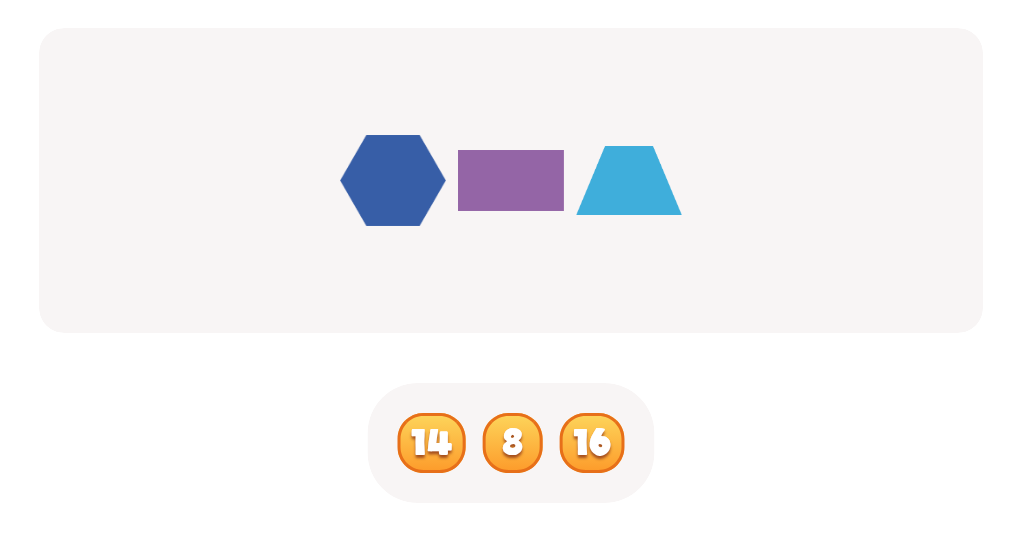
Matching: Shapes and Colors Worksheet
 Assign to My Students






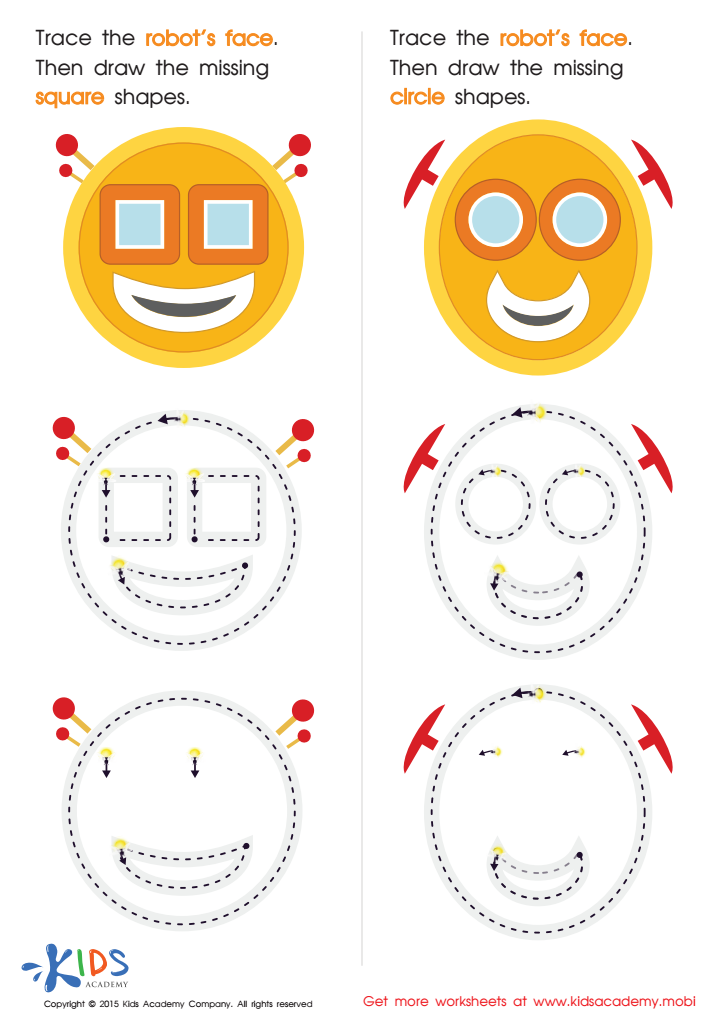
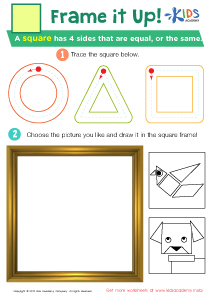
Practicing to Draw Circles And Squares Printable
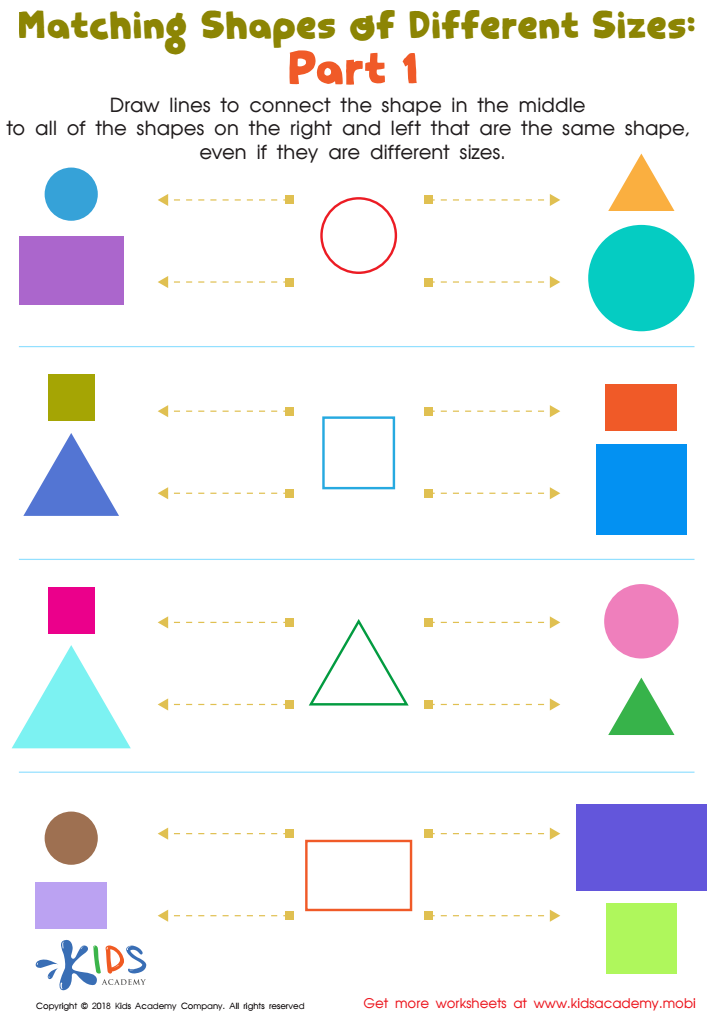
Geometry: part 1 Worksheet
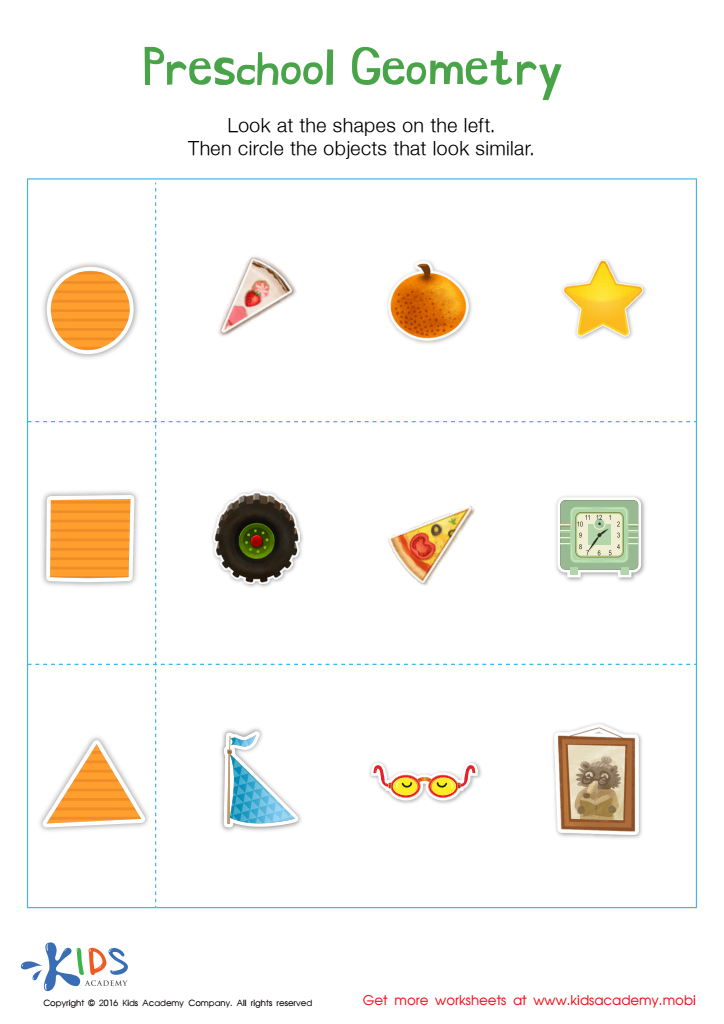
Preschool Geometry Match Up Worksheet

Learning to Draw Crescents And Triangles Worksheet
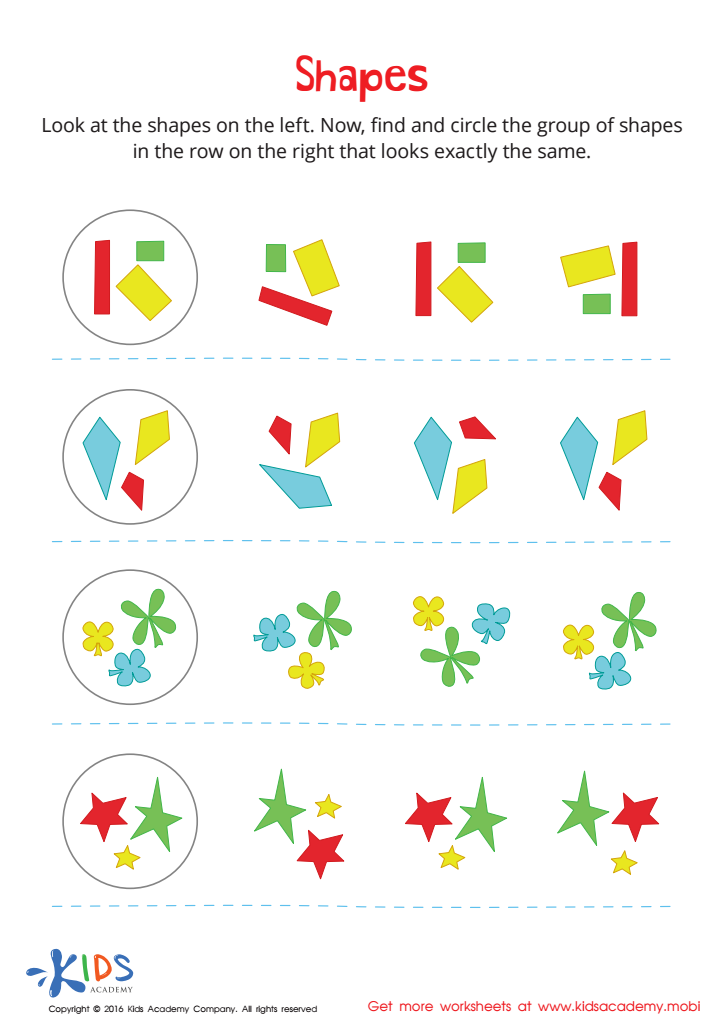
Shapes Worksheet





Parents and teachers should care about cognitive development, especially concerning preschoolers' understanding of 2D shapes, because this foundational knowledge is crucial for young children’s overall growth and future learning. Mastering 2D shapes, such as squares, circles, triangles, and rectangles, equips children with essential visual-spatial skills that enhance their ability to interact with the world around them. Recognizing and categorizing shapes supports critical thinking as children learn to identify similarities and differences, setting the stage for complex problem-solving capabilities later in life.
Moreover, cognitive development in preschoolers influences their mathematical understanding. Shapes play an integral role in geometry, which is a building block for mathematical reasoning. As children find and create shapes in their environment, they develop an awareness of mathematical concepts, measurement, and spatial relationships.
Additionally, a solid grasp of 2D shapes aids in literacy development, as many letters and numbers have shape characteristics. Engaging with shapes can foster creativity through art and design activities, boosting self-esteem as children express themselves. By focusing efforts on teaching shape recognition and properties, parents and teachers help children build a robust framework for future academic challenges and lifelong learning. Thus, nurturing shape skills in preschool can lead to holistic development.