Understanding Quantities Preschool Addition & Subtraction Worksheets
38 filtered results
-
From - To
Enhance your preschooler's math skills with "Understanding Quantities Preschool Addition & Subtraction Worksheets" from Kids Academy. Our expertly crafted worksheets introduce young learners to the basics of addition and subtraction while fostering a deep understanding of quantities and numbers. Through engaging and fun activities, children will develop critical thinking skills and numerical literacy that lays a strong foundation for future math success. Perfect for both classroom and at-home learning, these worksheets make math enjoyable and approachable for preschoolers. Help your child gain confidence in their arithmetic abilities with our carefully designed materials. Download now and watch your child’s math skills flourish!
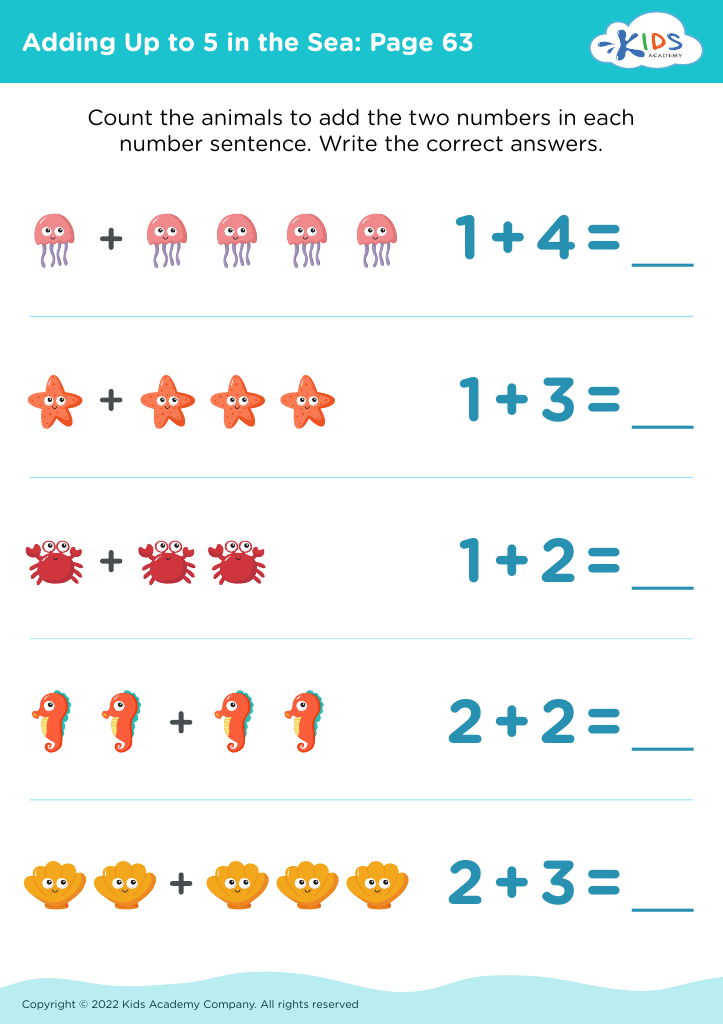
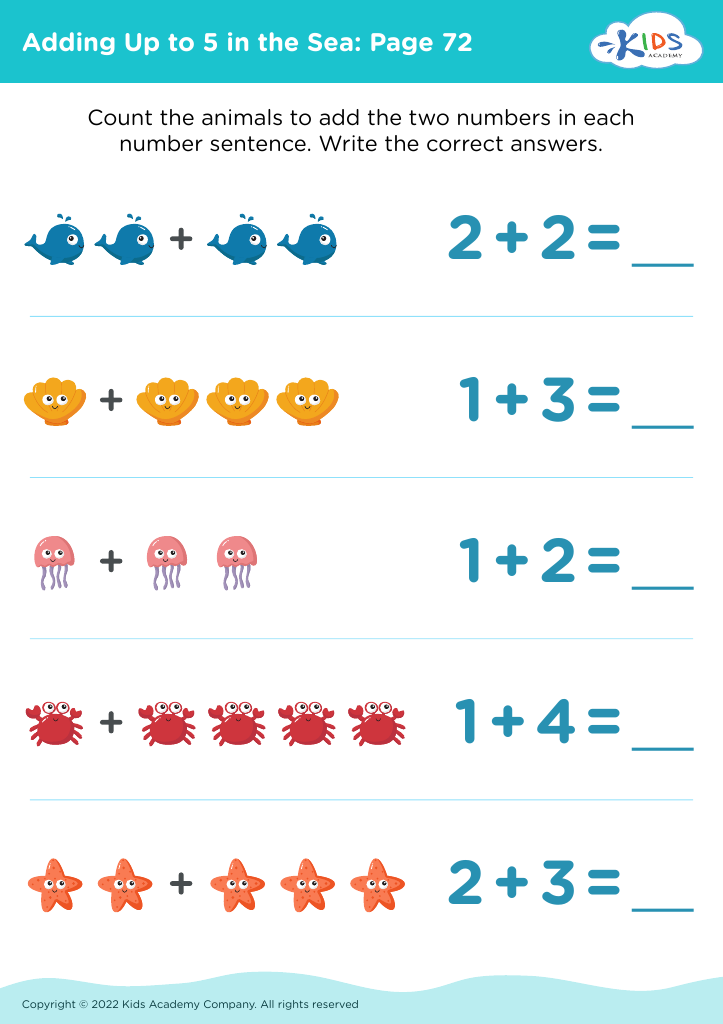
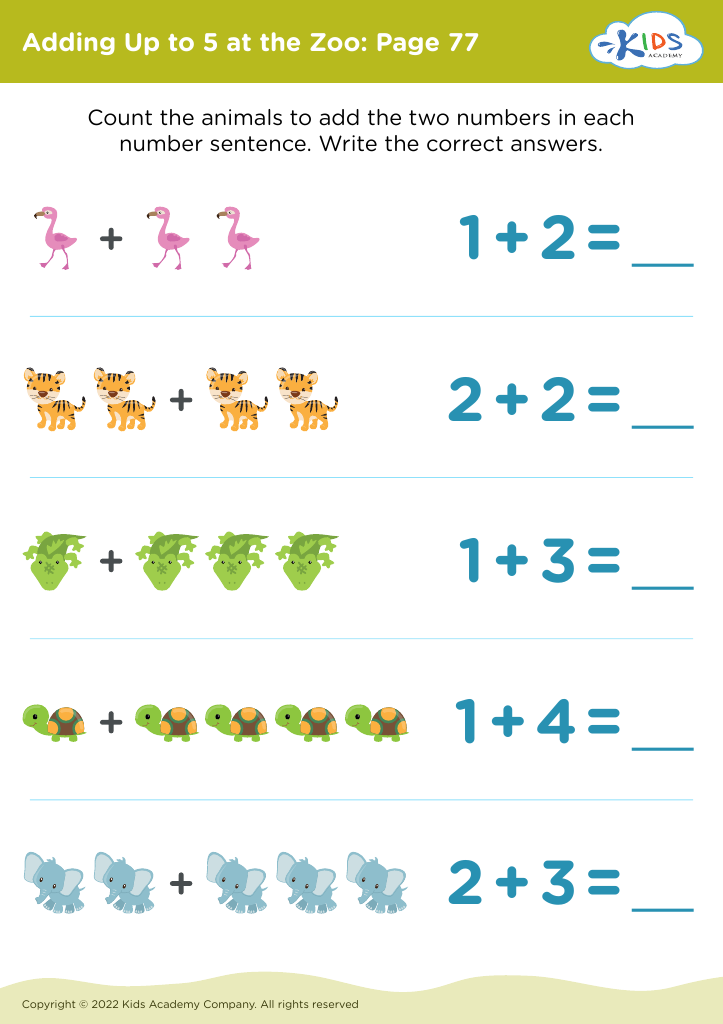
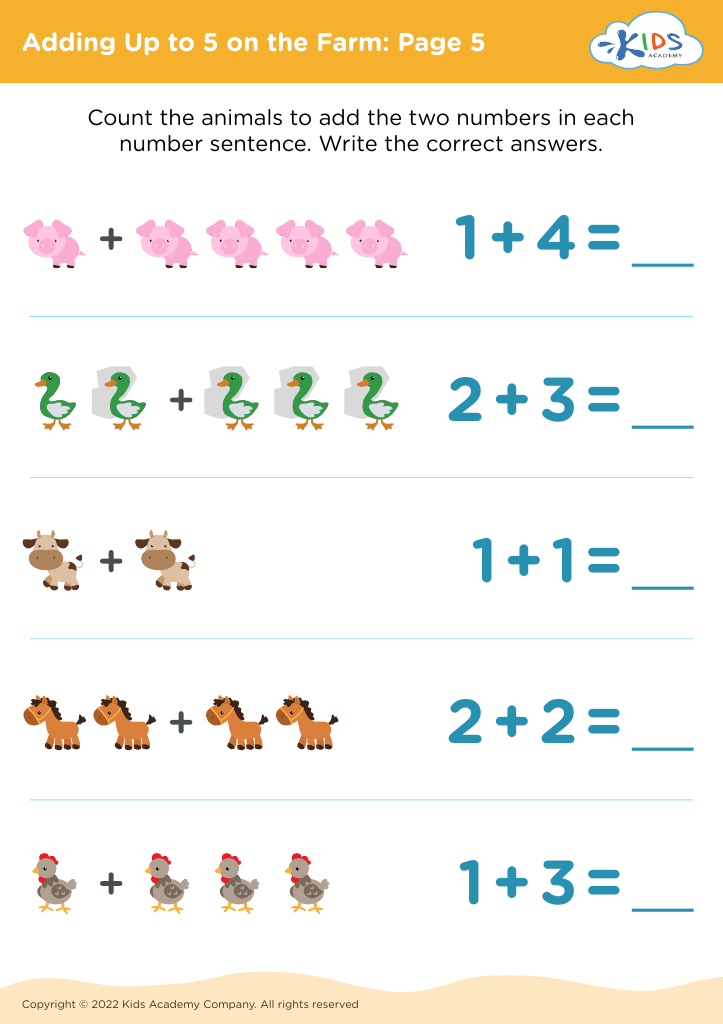
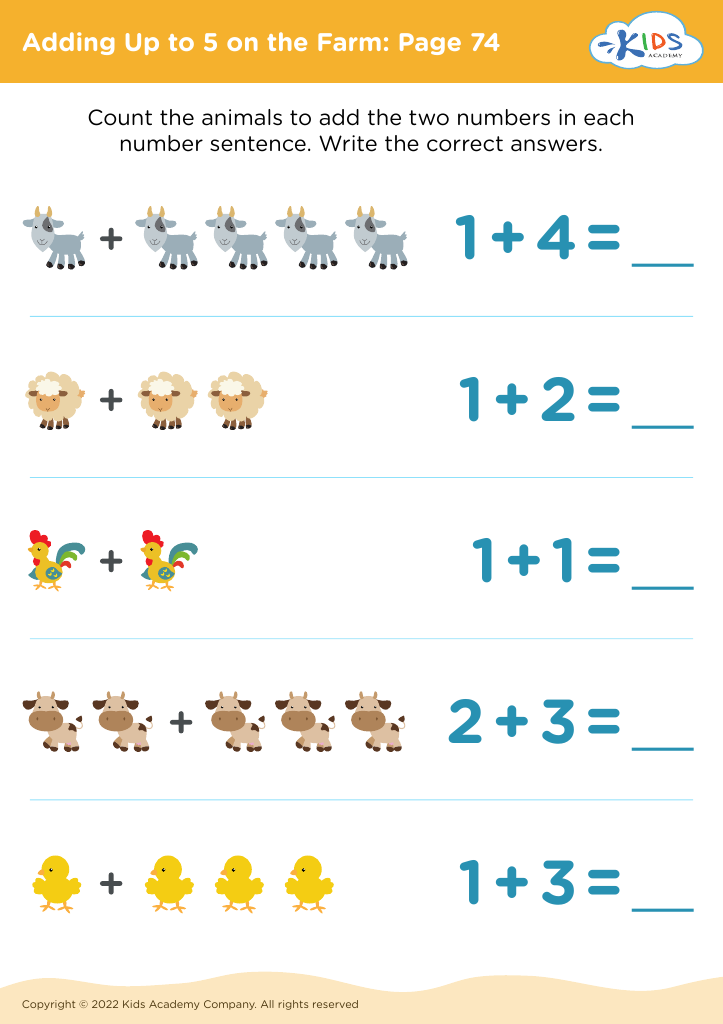
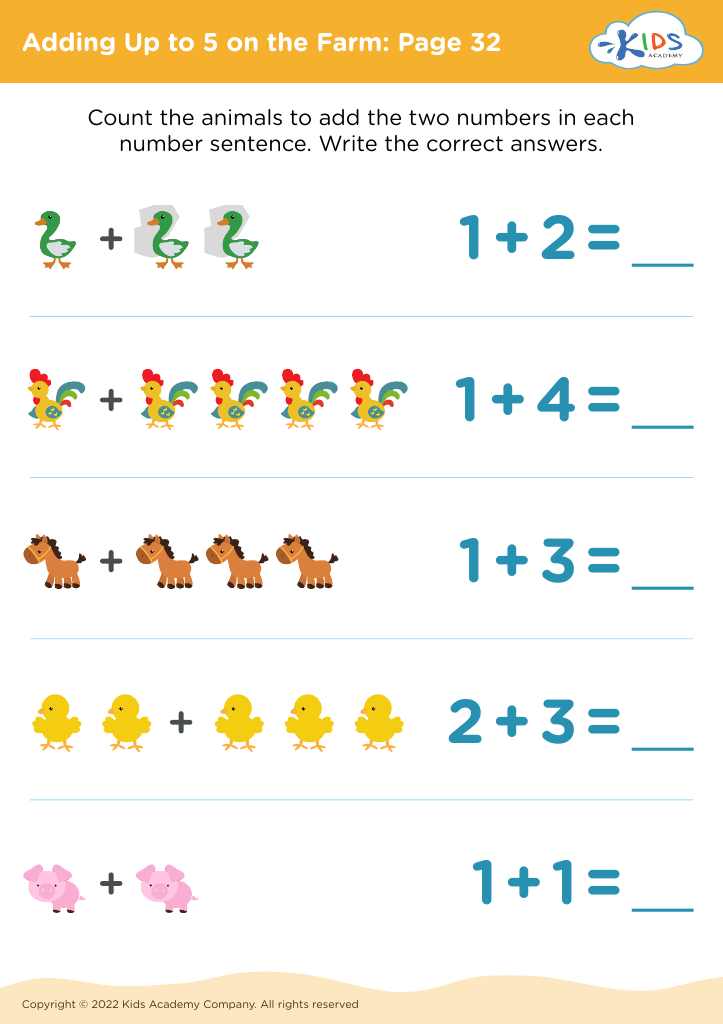
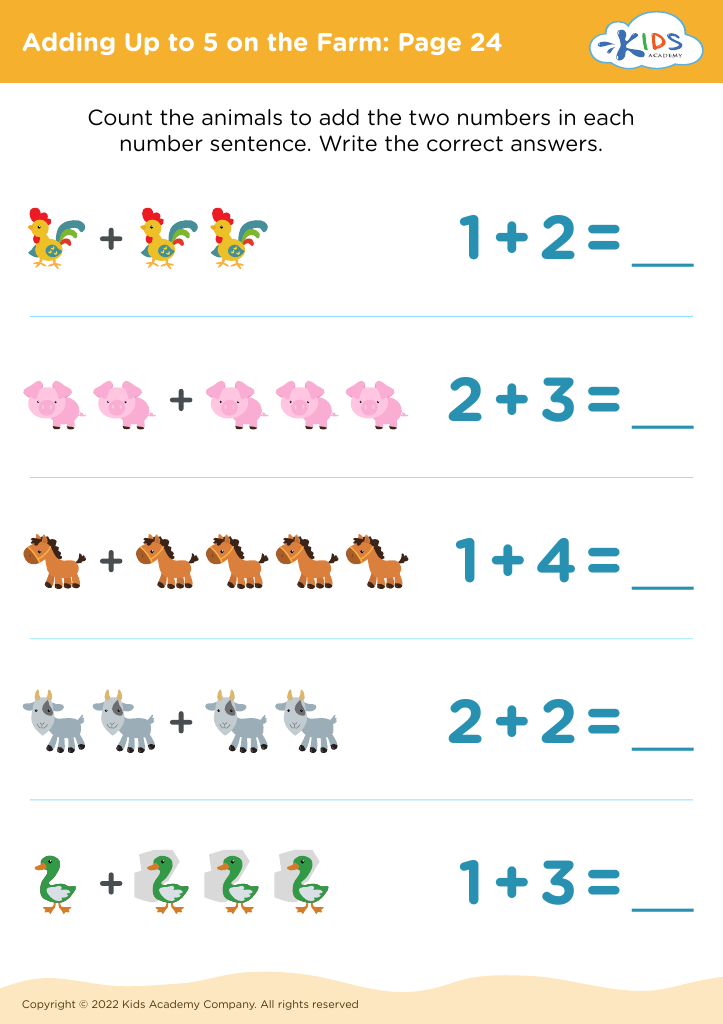
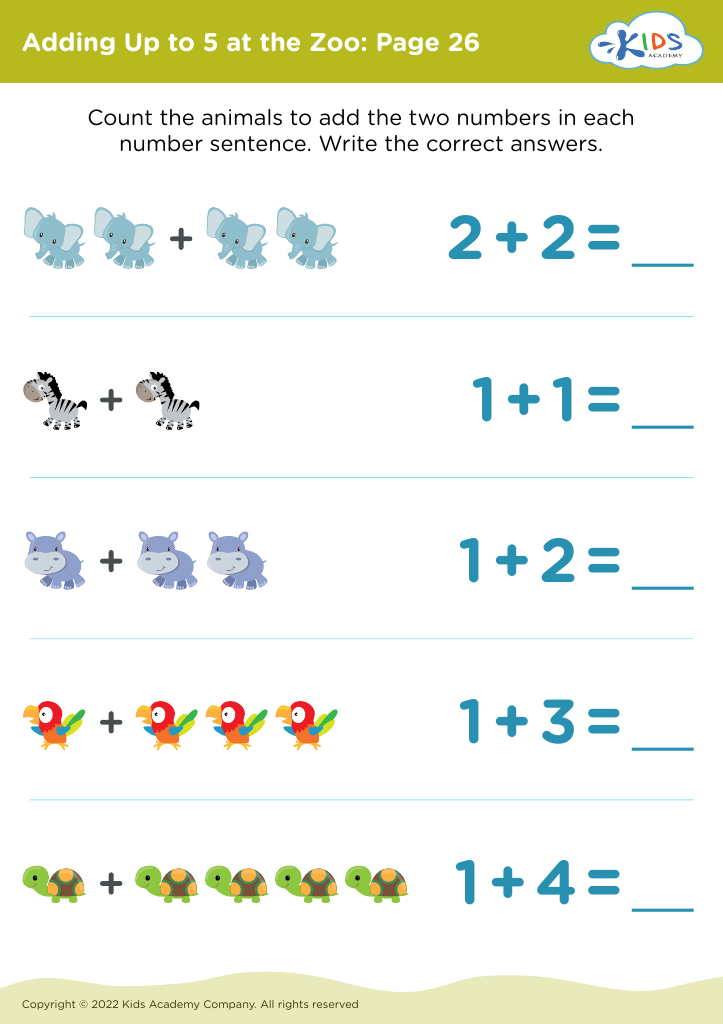
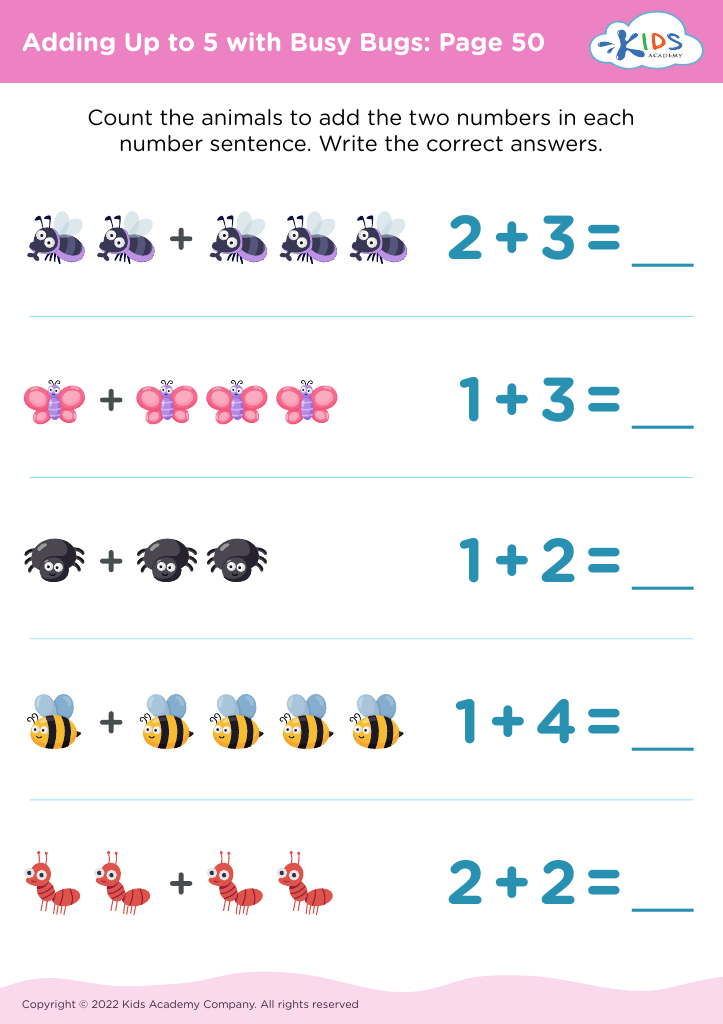
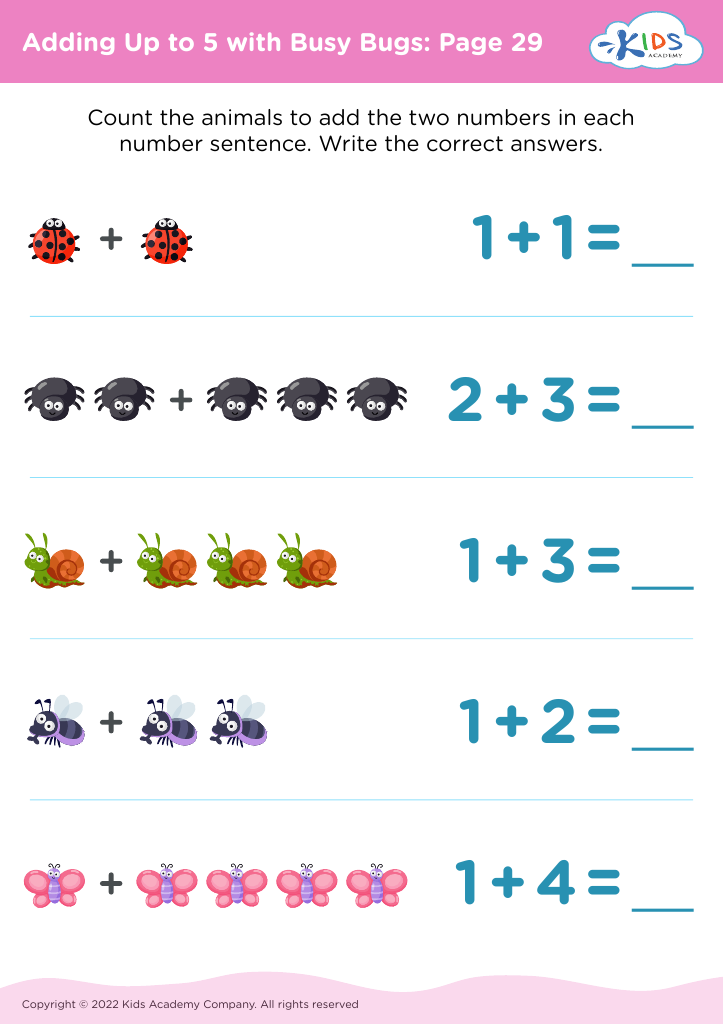
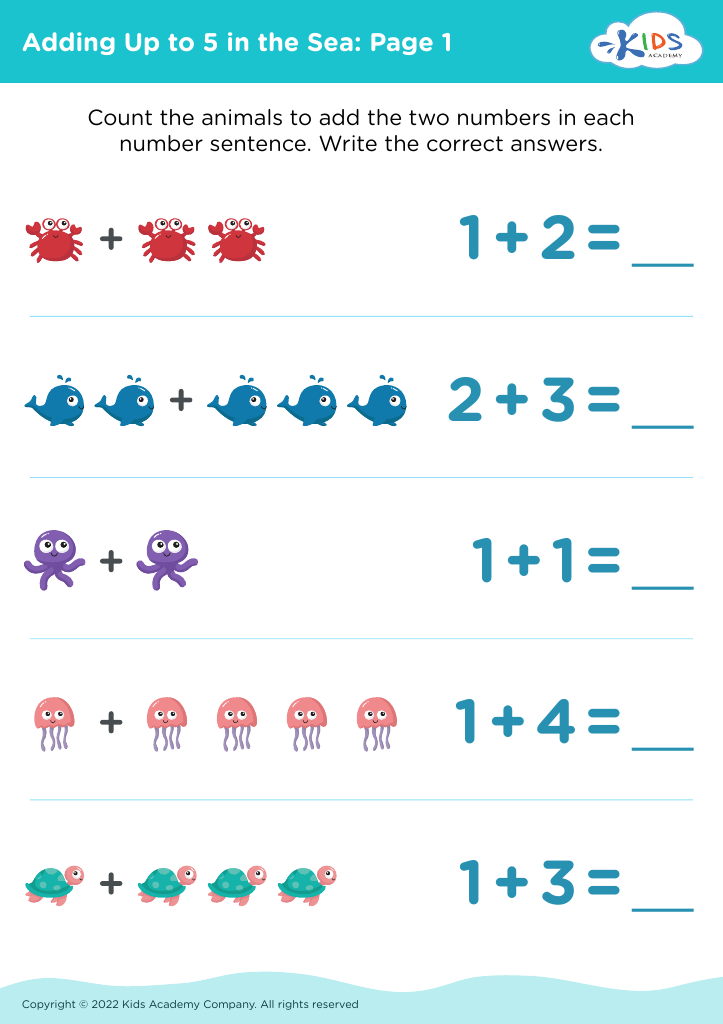
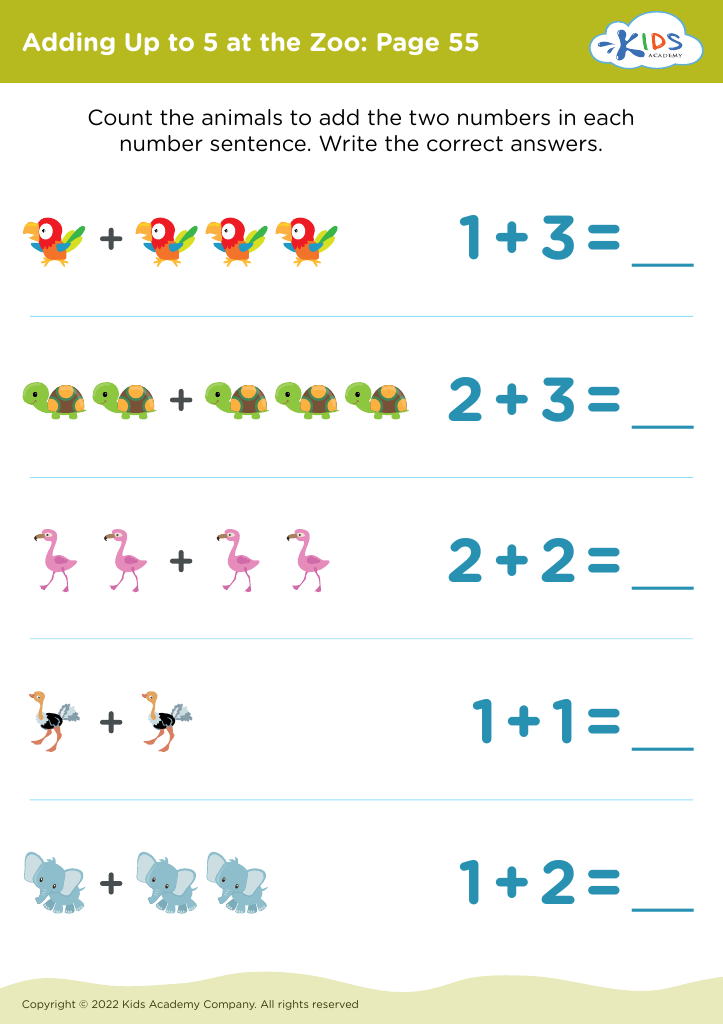
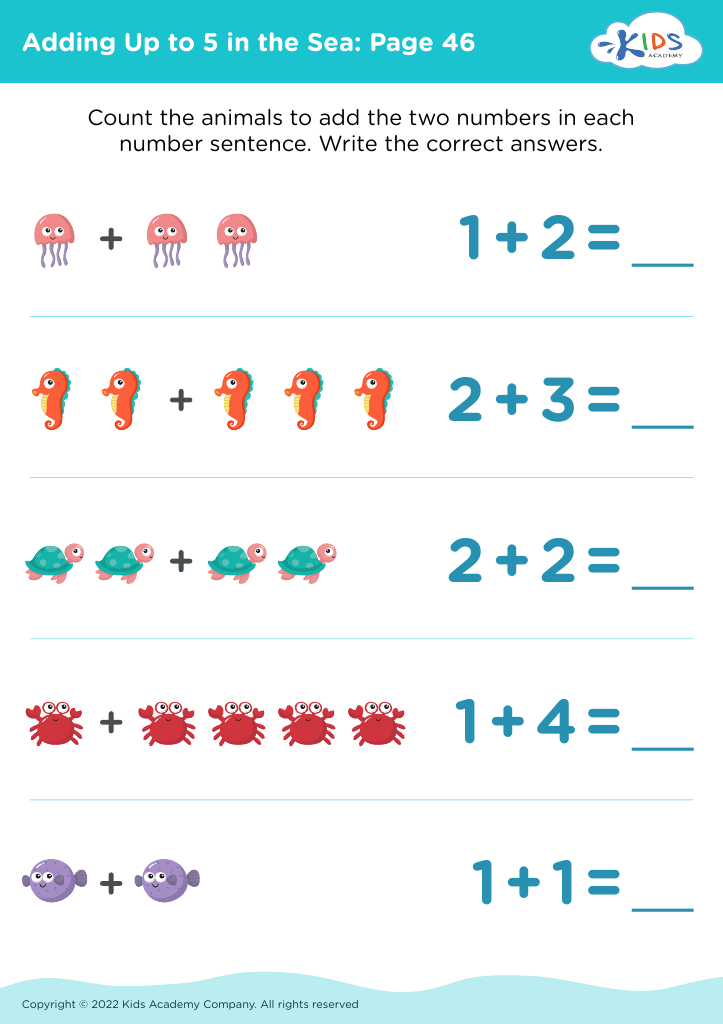
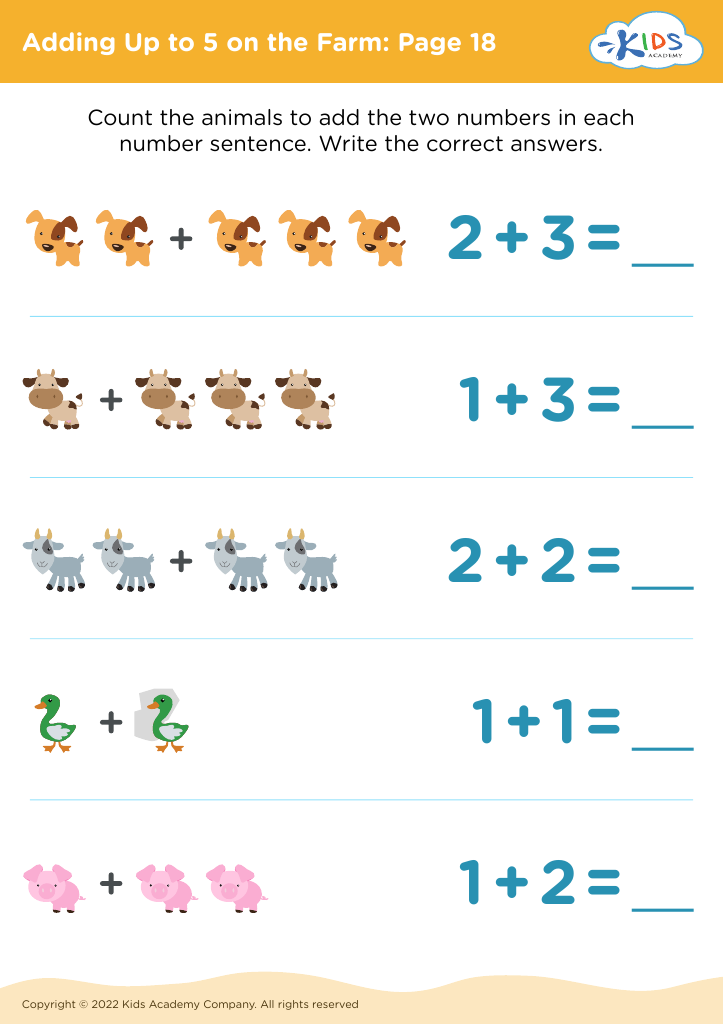
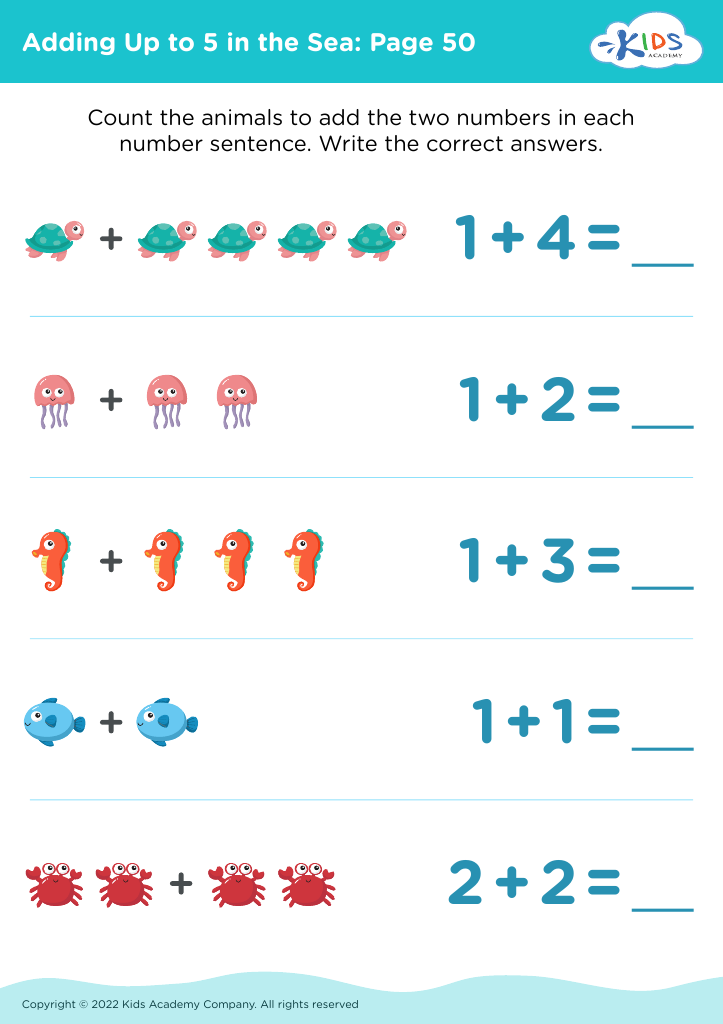
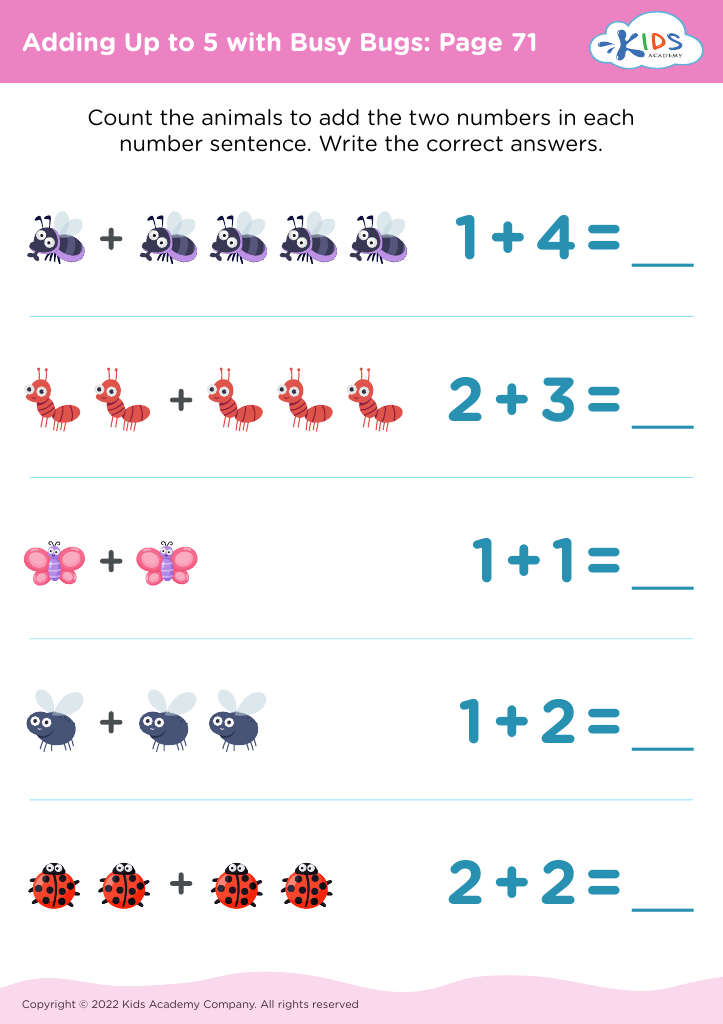
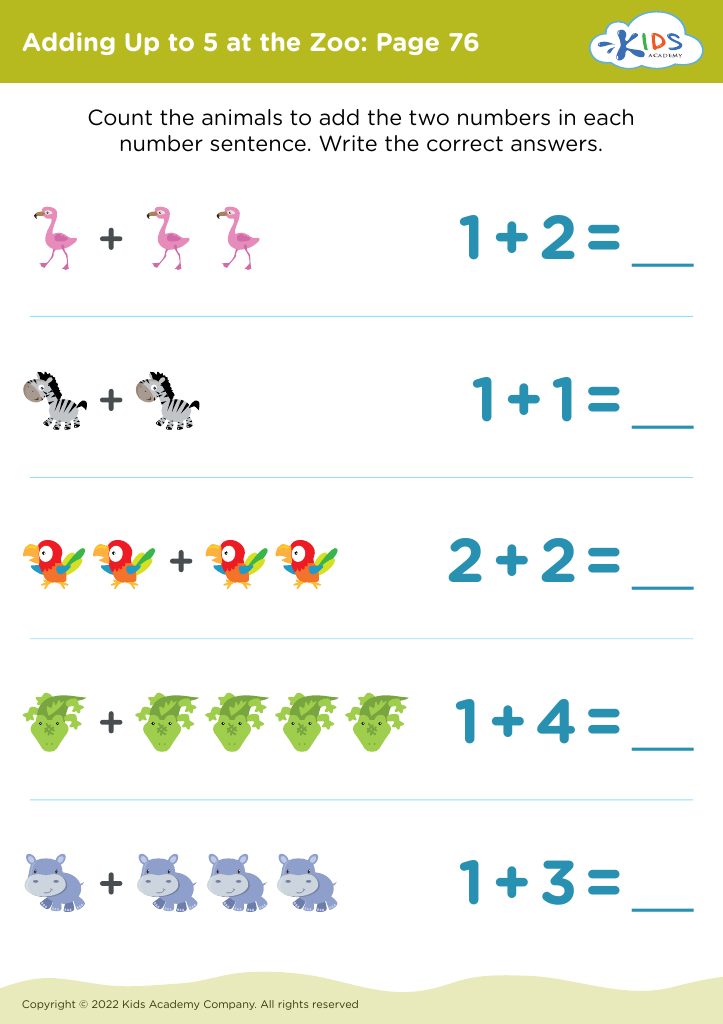
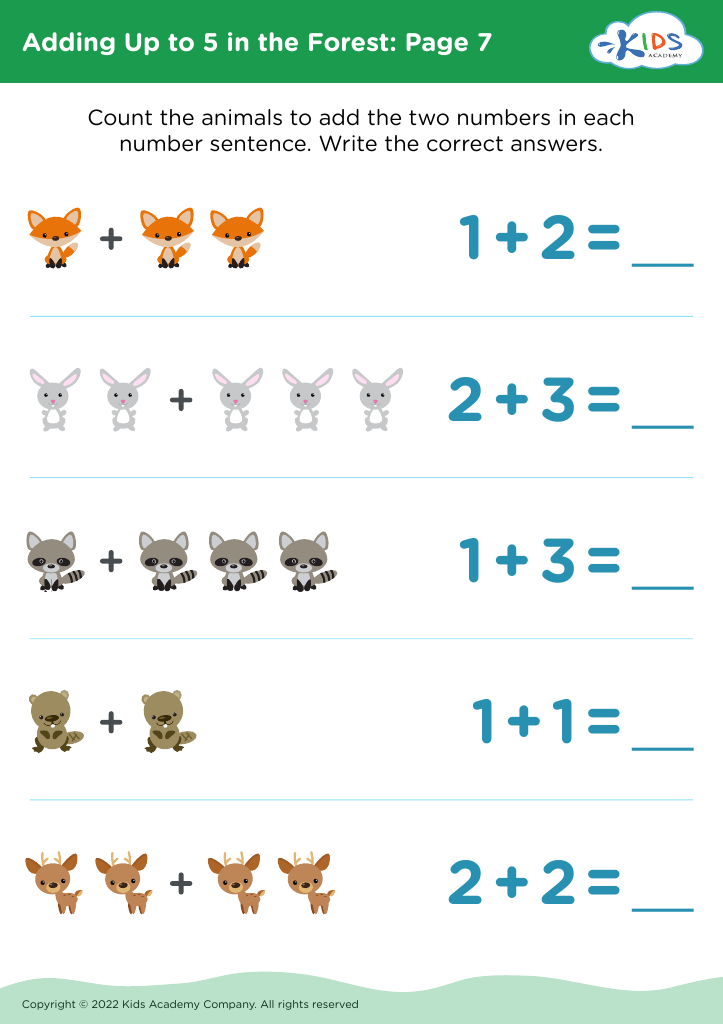
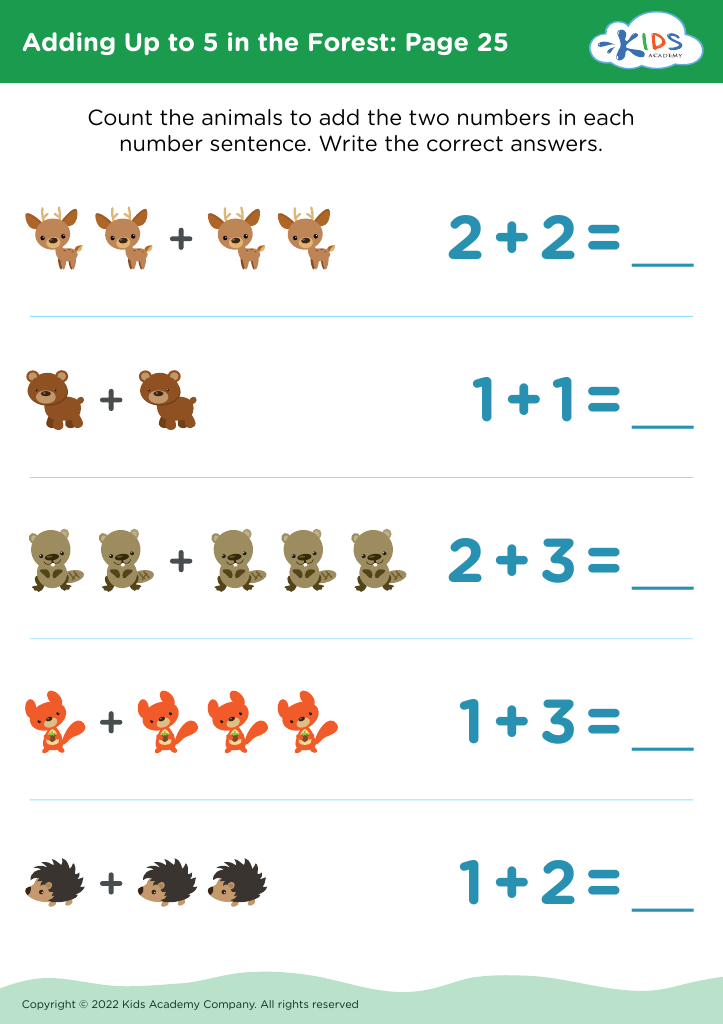
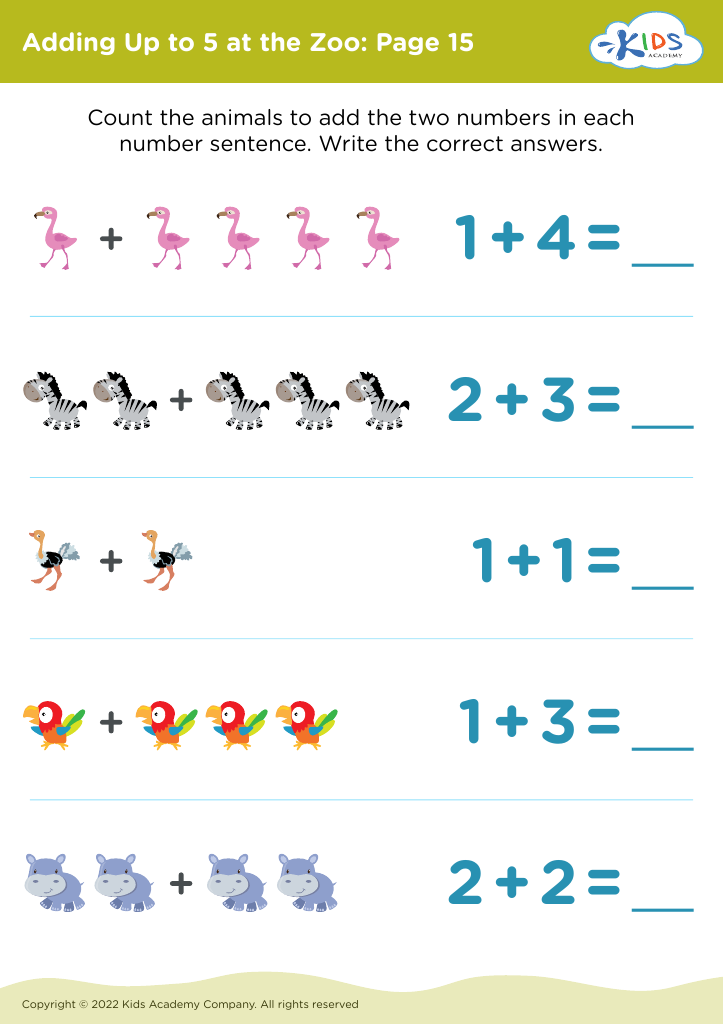
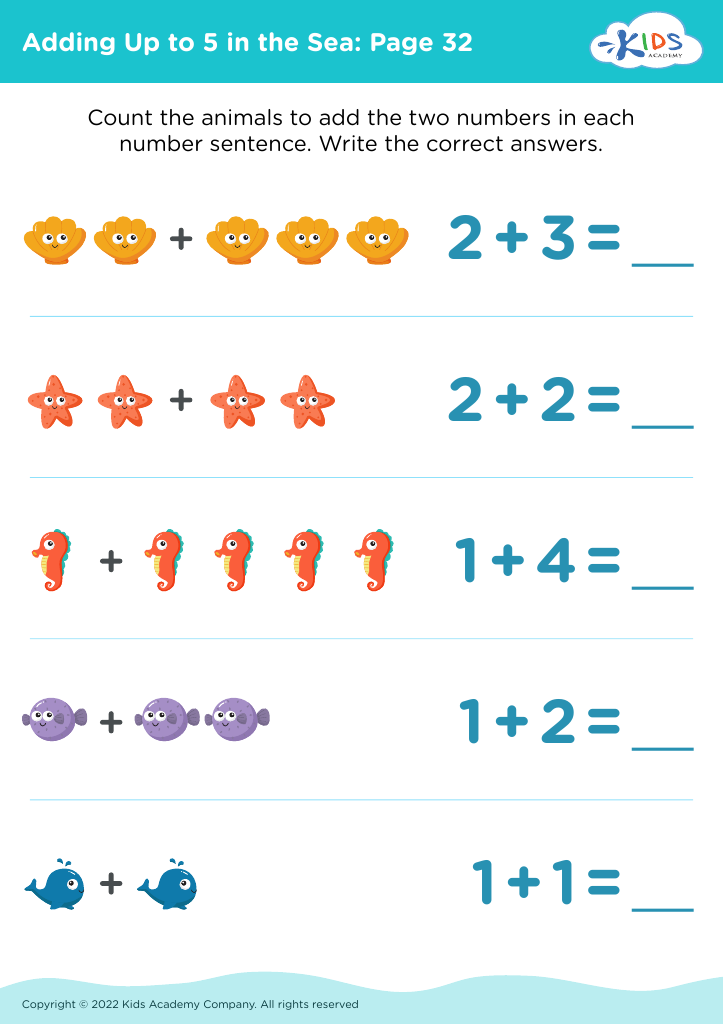
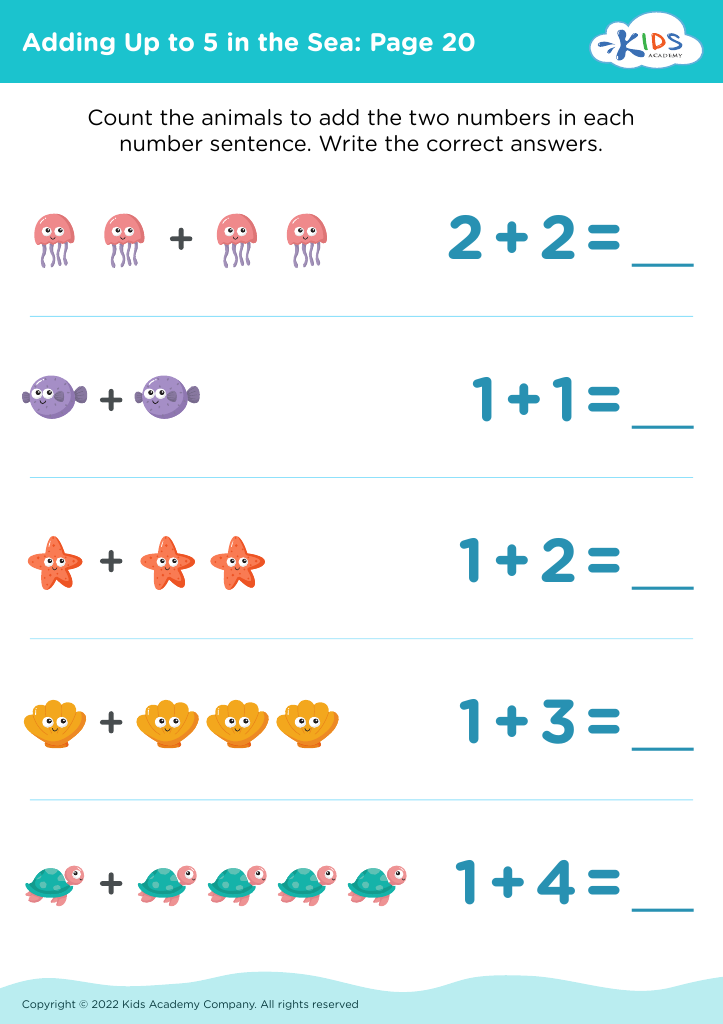
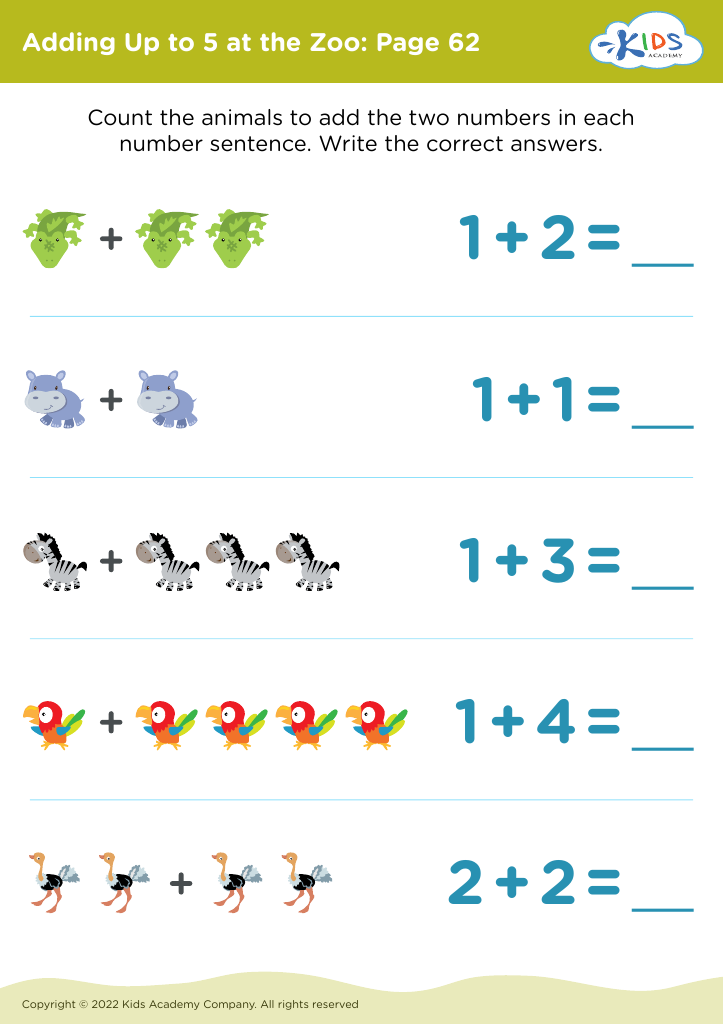
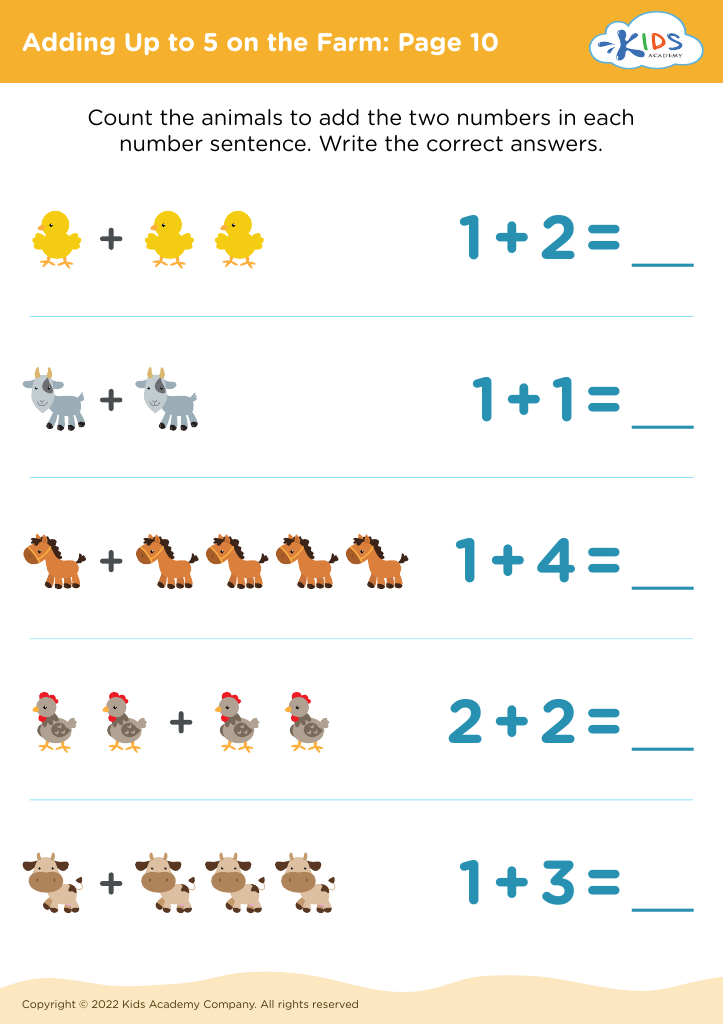








Understanding quantities and developing early math skills form the foundation for a child’s academic journey, and engaging preschoolers with addition and subtraction sets them on the path to mathematical success. Parents and teachers should prioritize these concepts because they play a crucial role in cognitive development. Recognizing quantities helps children make sense of the world around them, fostering skills like reasoning and problem-solving.
Moreover, early exposure to addition and subtraction builds a robust number sense, enabling kids to connect abstract concepts with real-life situations. For example, when a child realizes that combining two blocks with three blocks makes five, or that taking one block away from four leaves three, they are developing an intuitive grasp of numerical relationships. This fluency with numbers underpins future learning tasks, from advanced arithmetic to algebraic thinking.
Engaging in these activities also helps enhance children’s confidence in tackling mathematical challenges, dispelling anxiety towards math before it takes root. Fun, hands-on experiences such as using manipulatives or visual aids can make these abstract concepts tangible. Furthermore, fostering an early passion for math encourages positive attitudes communication, sparking curiosity and an intrinsic motivation for learning.
Therefore, laying down these critical numerical skills prompts intellectual growth and sets the stage for continued educational success, making it indispensable for both teachers and parents to understand and support early math learning.