Underwater animal identification Preschool Addition Worksheets
3 filtered results
-
From - To
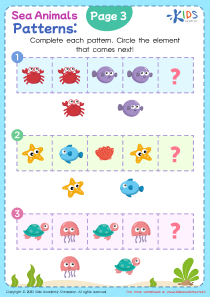
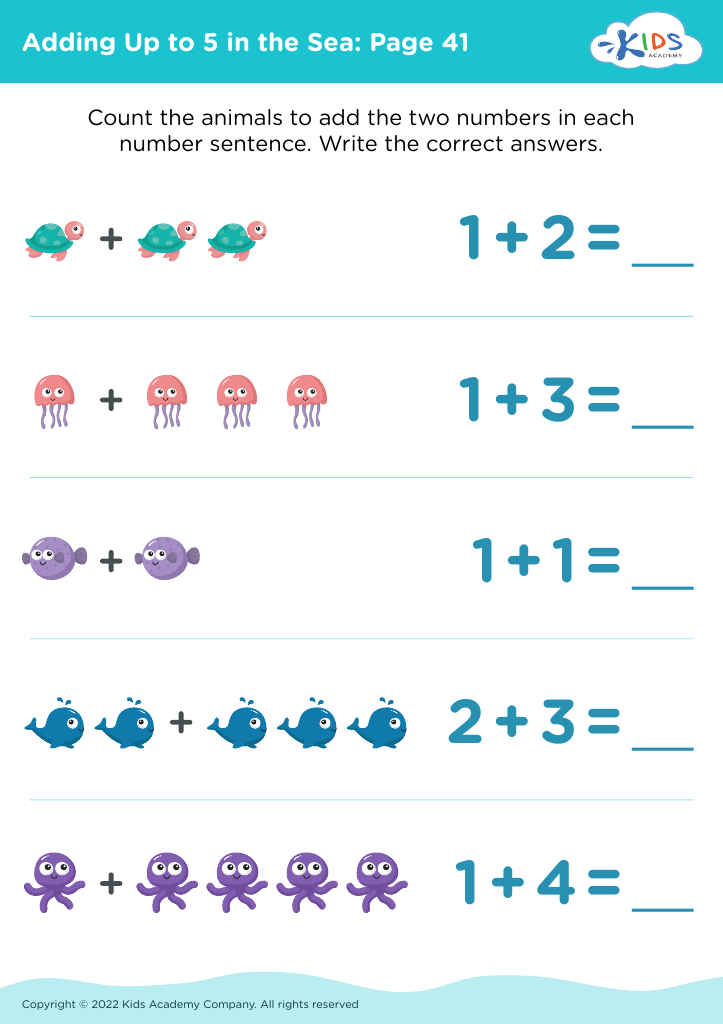
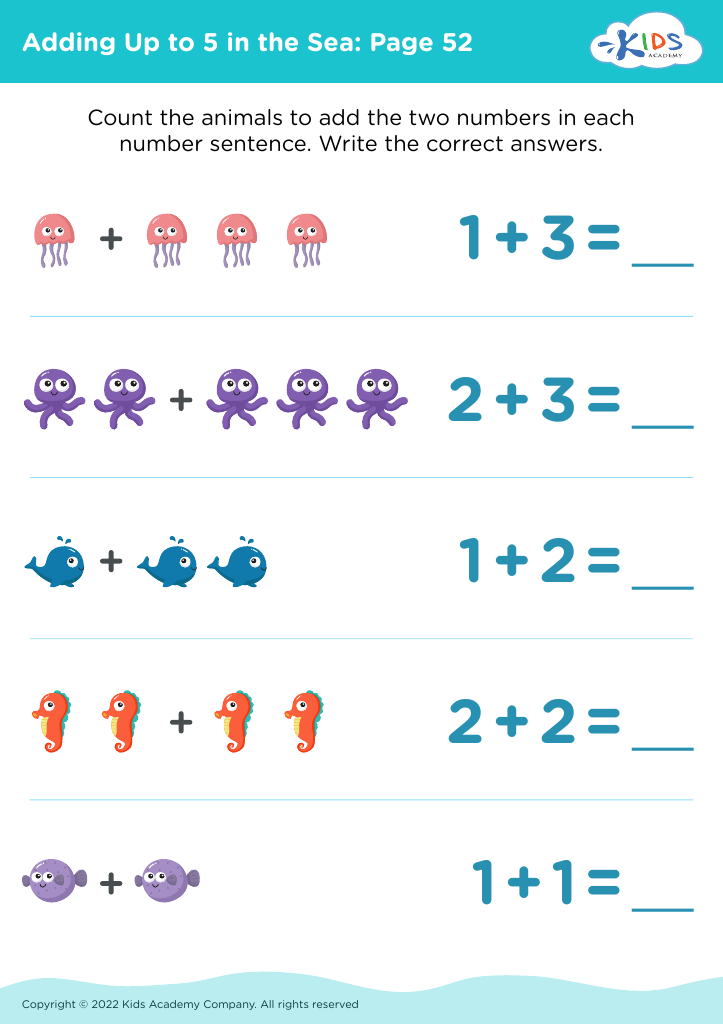
Dive into learning with our Underwater Animal Identification Preschool Addition Worksheets! These engaging, colorful worksheets are designed to help young learners combine their love for marine life with essential addition skills. With illustrations of delightful underwater creatures, children will recognize each animal while practicing simple addition problems. Perfect for preschoolers, these worksheets support early math development in a fun and interactive way. Enhance your child's cognitive skills, boost their confidence, and ignite their curiosity about the ocean's wonders all at once! Explore our collection and make math an exciting underwater adventure that captures your child's imagination while they learn.
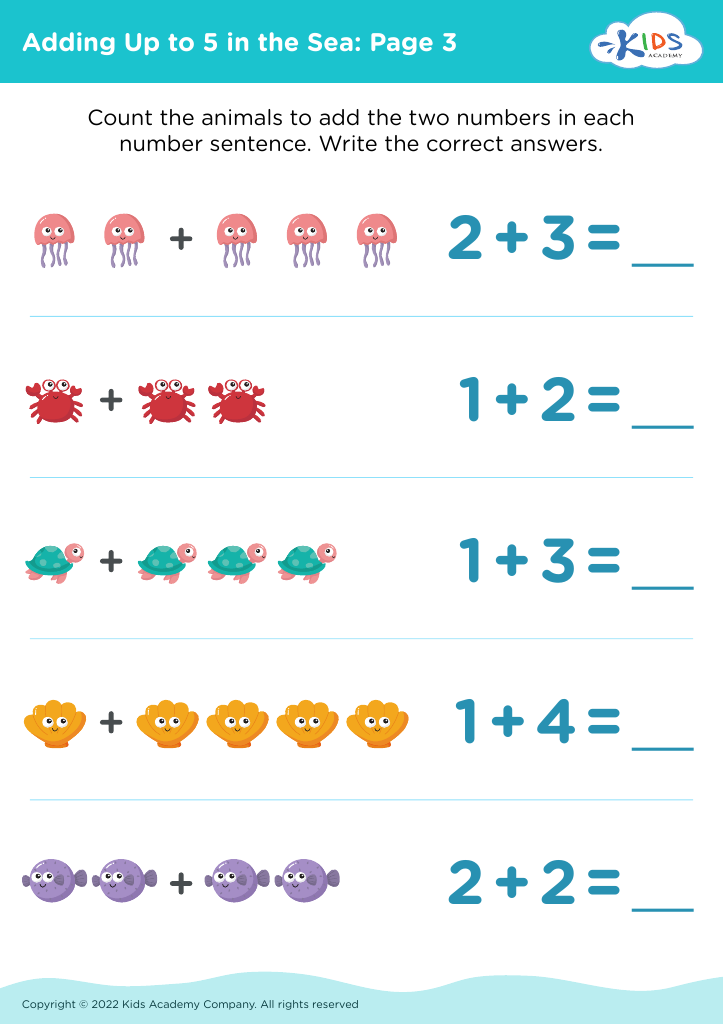








Parents and teachers should care about underwater animal identification in preschool for several compelling reasons. First, it introduces young children to the fascinating world of marine life, fostering a sense of curiosity and wonder about nature. Understanding different underwater animals can enhance a child's observational skills and boost their ability to classify and categorize information, essential components of cognitive development.
Moreover, engaging with underwater animals offers a fun and interactive way for children to build language skills as they learn to identify and describe various species. This activity can serve as an interdisciplinary bridge, connecting topics in science, literacy, and art, promoting holistic learning.
Additionally, through activities related to marine life, children develop a foundational understanding of ecology and the importance of ocean conservation. Recognizing the diversity of underwater animals can instill a sense of responsibility and stewardship for the environment from a young age.
Lastly, collaboration with parents during these learning experiences strengthens the family bond, as they engage in joint activities or discussions about what the child is learning. Therefore, focusing on underwater animal identification provides a rich and enriching educational experience that lays the groundwork for lifelong learning and environmental awareness.