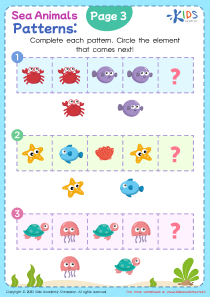
Visual learning enhancement Preschool Addition Worksheets
4 filtered results
-
From - To
Discover our Visual Learning Enhancement Preschool Addition Worksheets, designed to make learning math both fun and engaging for young learners! These worksheets utilize vibrant visuals and interactive elements to help preschoolers grasp fundamental addition concepts more effectively. By incorporating images, manipulatives, and colorful graphics, children can visually connect with numbers and develop stronger counting skills. Perfect for at-home learning or classroom use, our resources foster a love for math while enhancing students' cognitive and problem-solving abilities. Empower your preschooler to excel in addition while enjoying enjoyable exercises that make learning a delightful adventure! Start exploring our printable worksheets today!
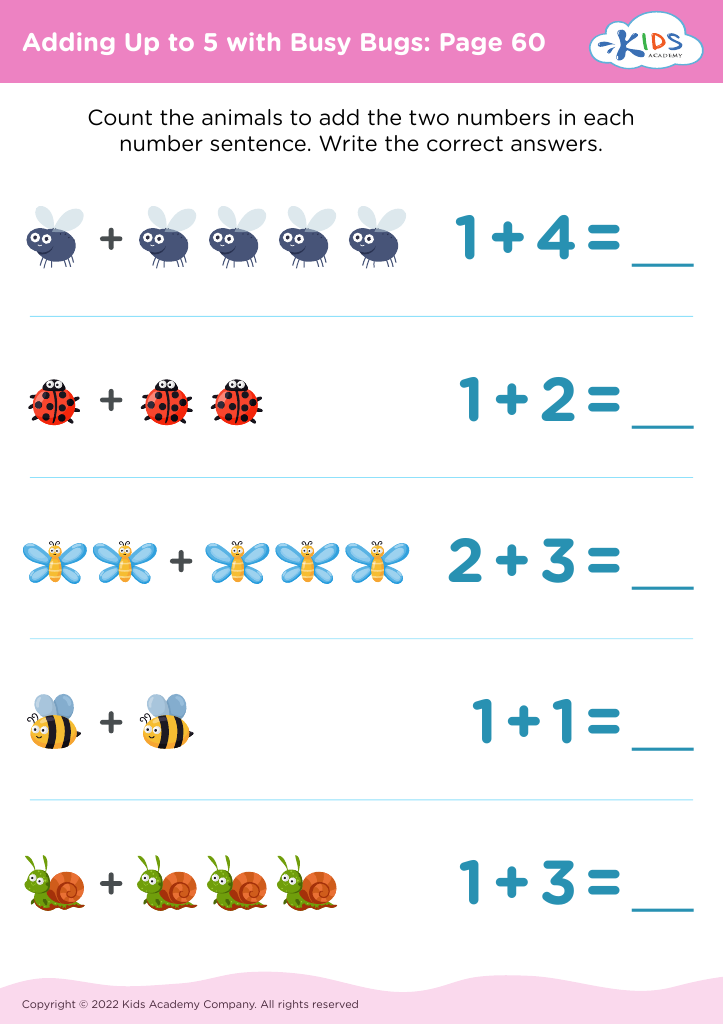
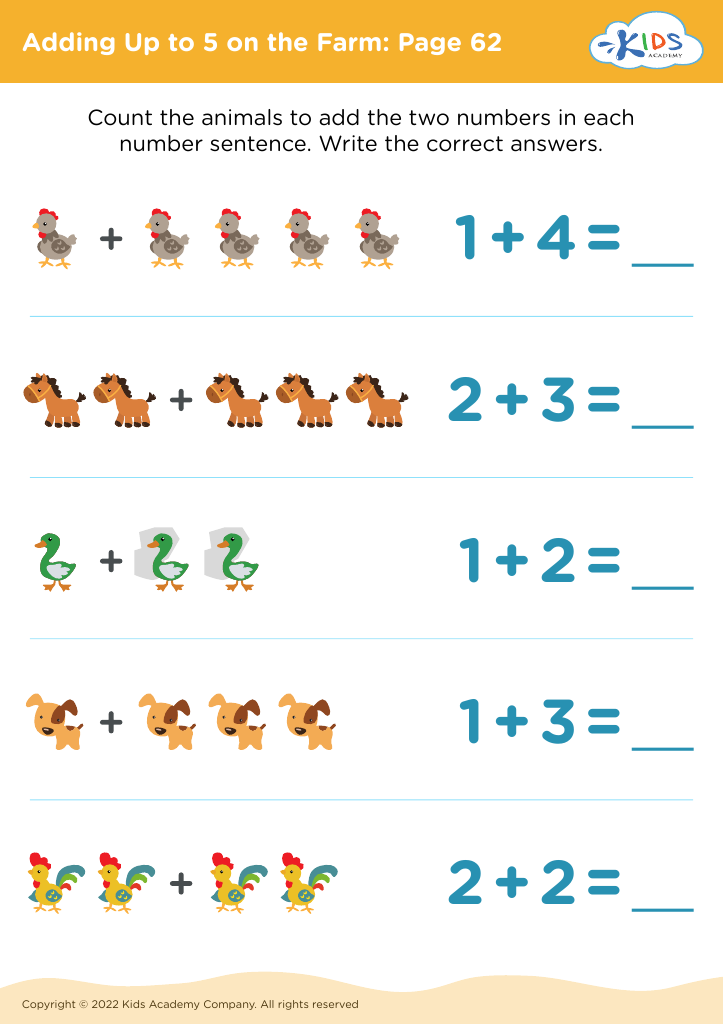
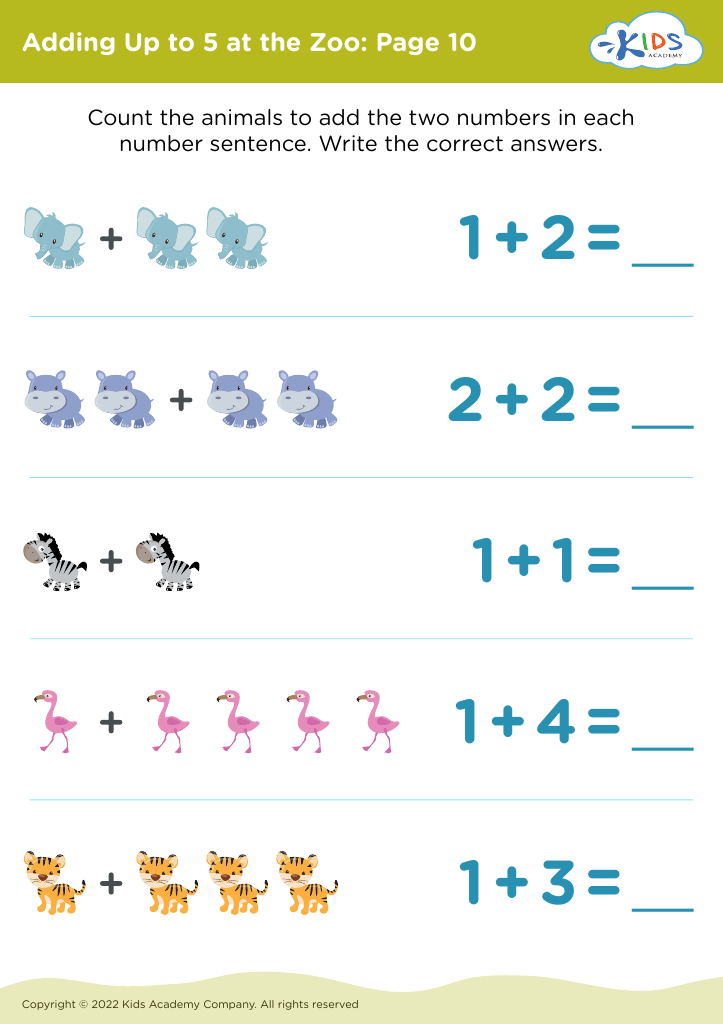
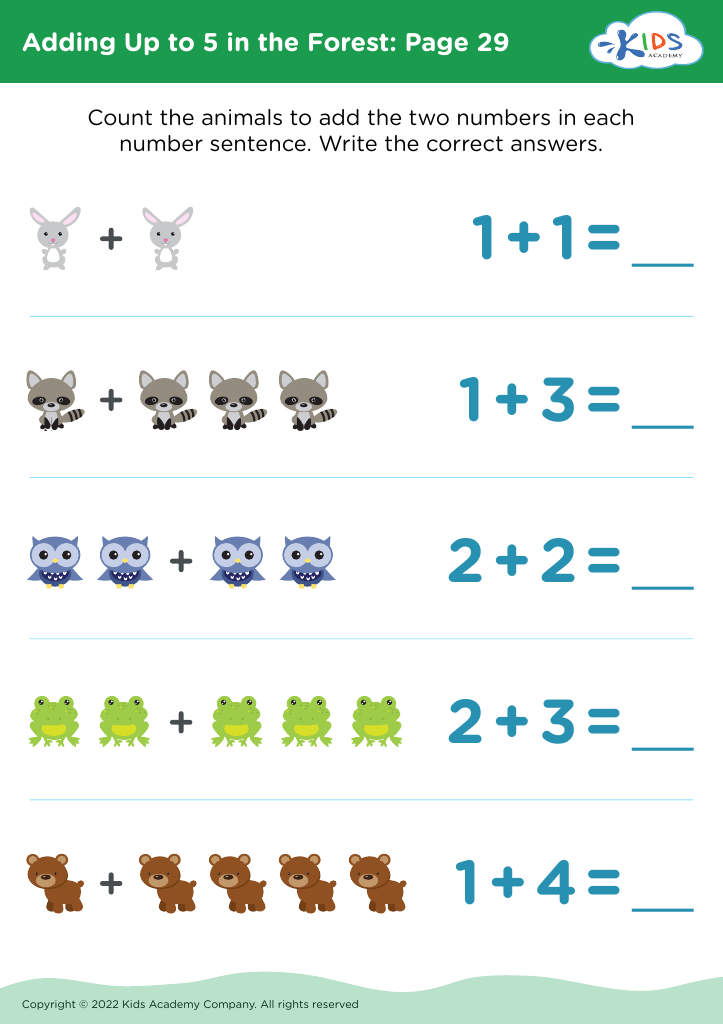








Visual learning enhancement in preschool addition is crucial for both parents and teachers because it capitalizes on children's natural inclination to learn through visual stimuli. Young children are inherently curious and often respond better to concrete, visual representations of concepts. This method aids in their understanding of addition by leveraging images, manipulatives, and visual aids, making abstract numbers more tangible.
By incorporating visual learning techniques, we can address different learning styles and promote cognitive development. For example, using objects like blocks or drawings can help children grasp the idea of counting and combine objects effectively, laying a firm foundation for mathematical skills. Additionally, visual learning fosters engagement and makes learning fun, essential in the crucial early years when attitudes toward learning are being formed.
Moreover, this approach significantly enhances retention. When concepts are represented visually, children are more likely to remember and understand them long-term. Consequently, parents and teachers who support visual learning methods not only enrich children's educational experiences but also equip them with essential skills for future academic endeavors. Ultimately, prioritizing Visual learning enhancement in preschool addition promotes a more inclusive and effective learning environment.