Basic Addition Skills Preschool Math Worksheets - Page 2
251 filtered results
-
From - To
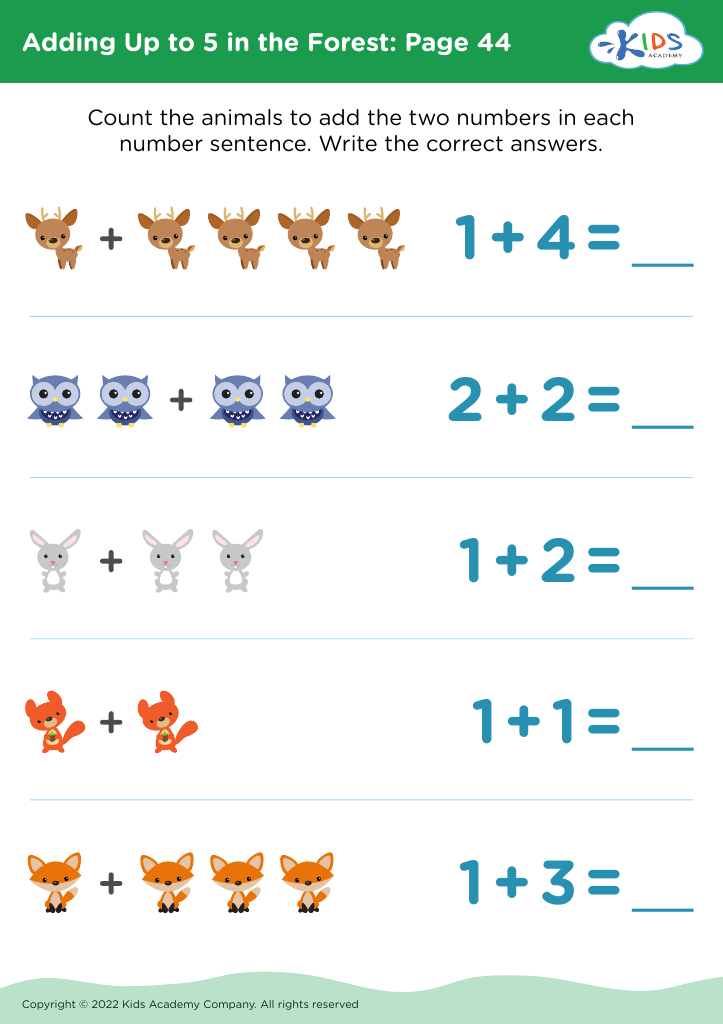
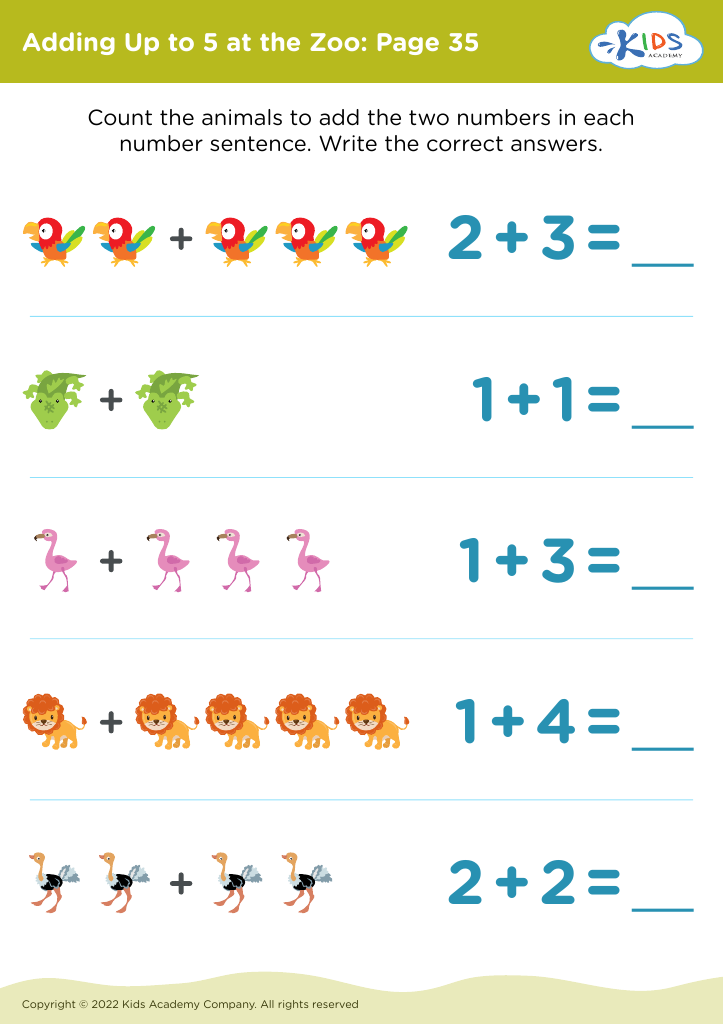
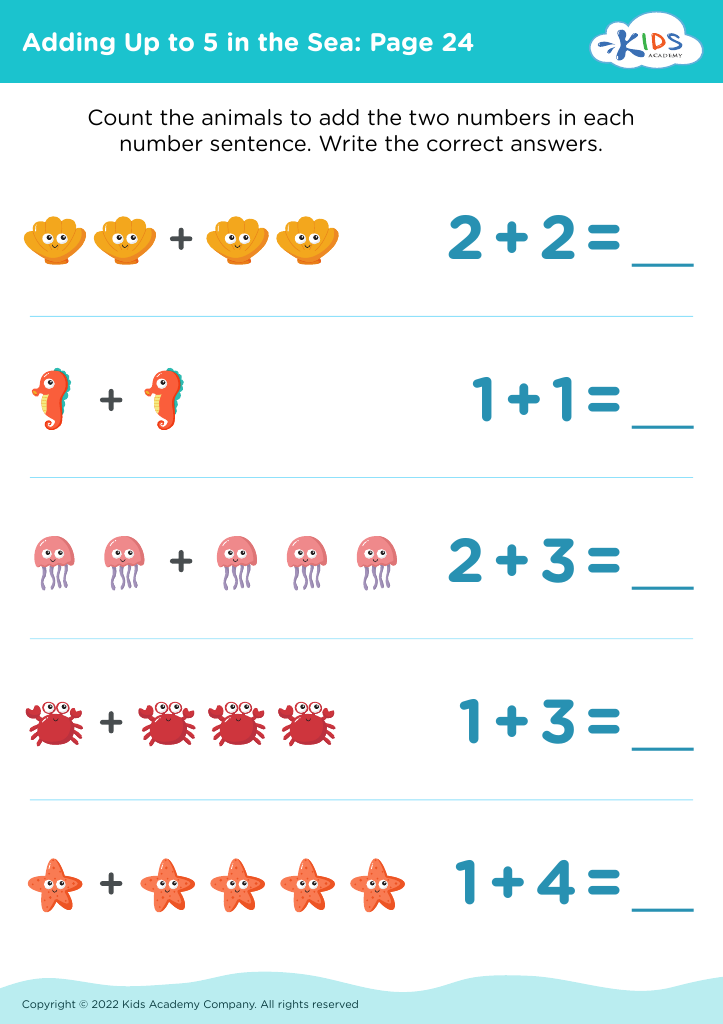
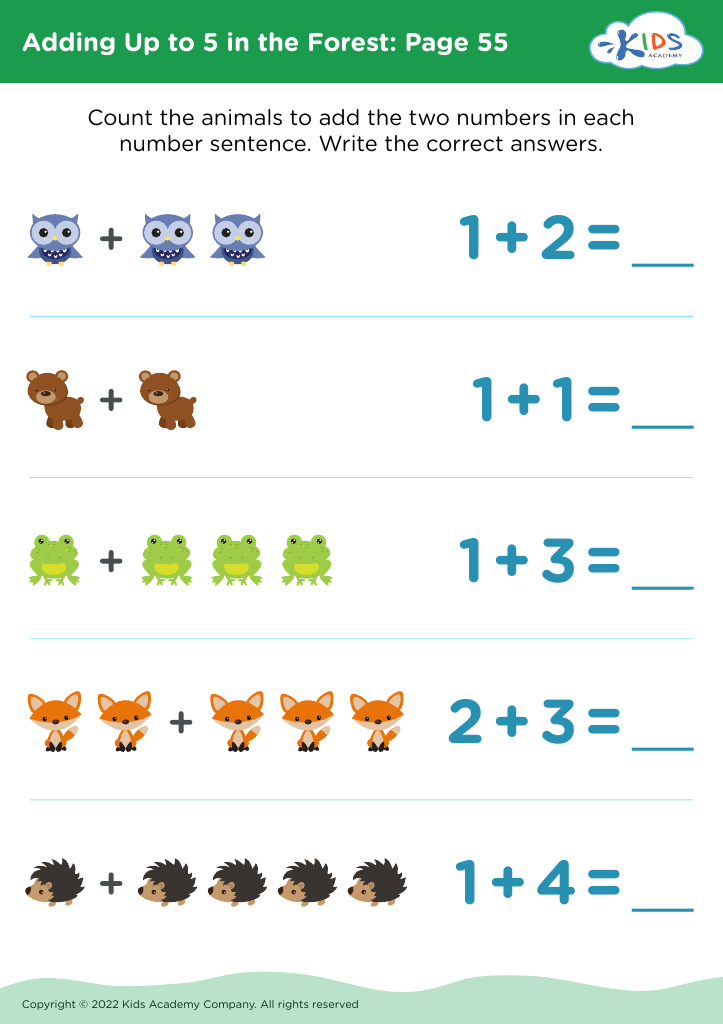
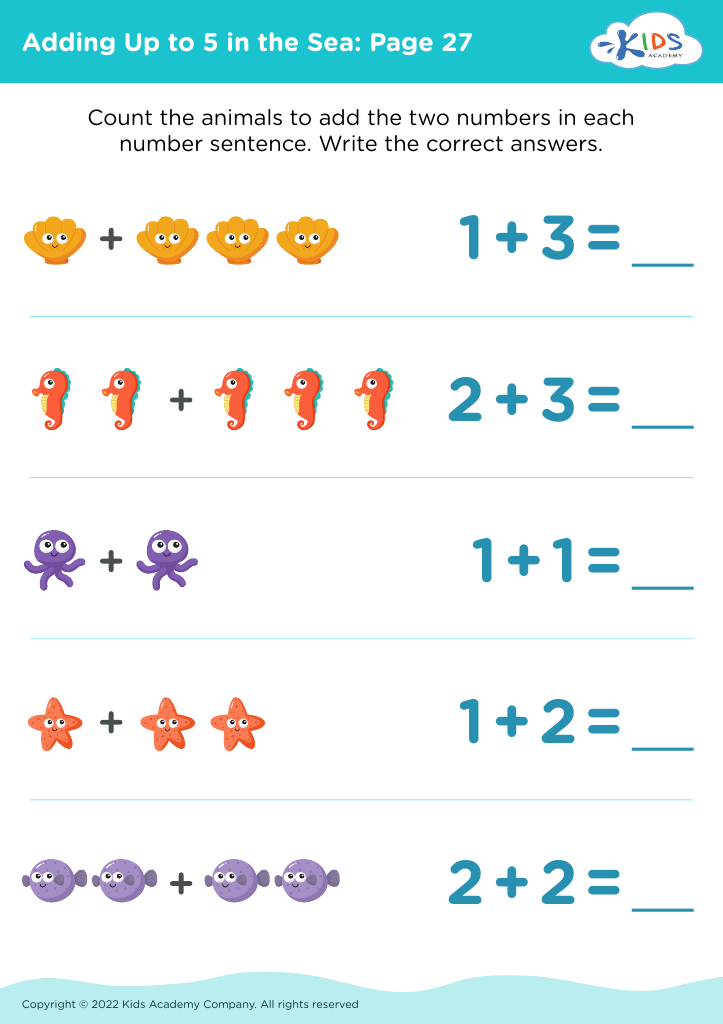
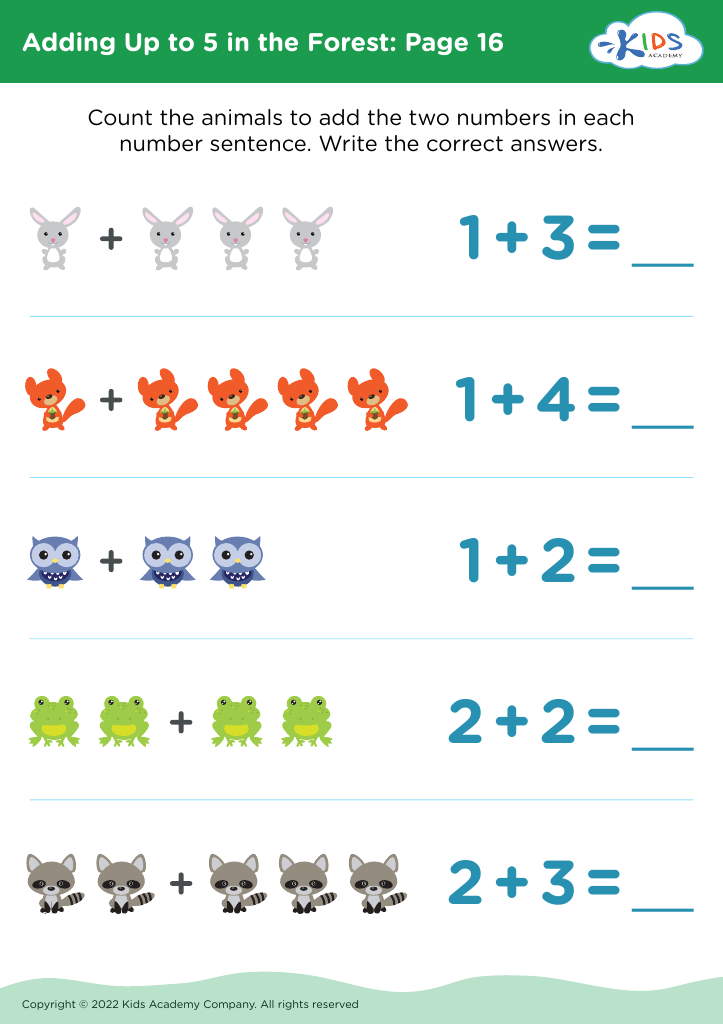
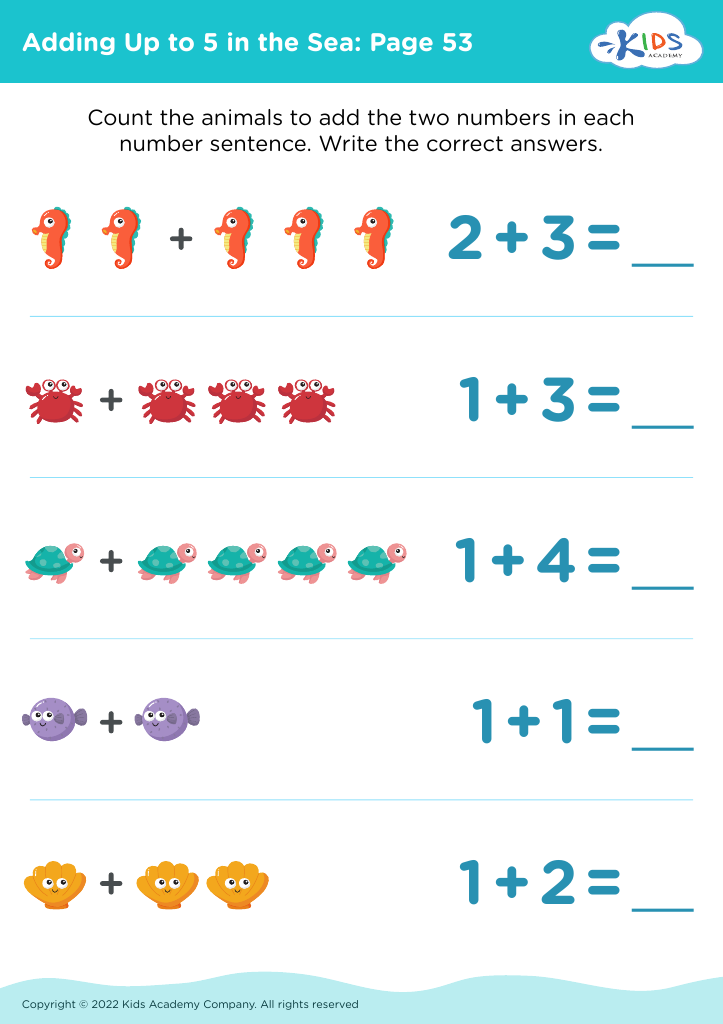
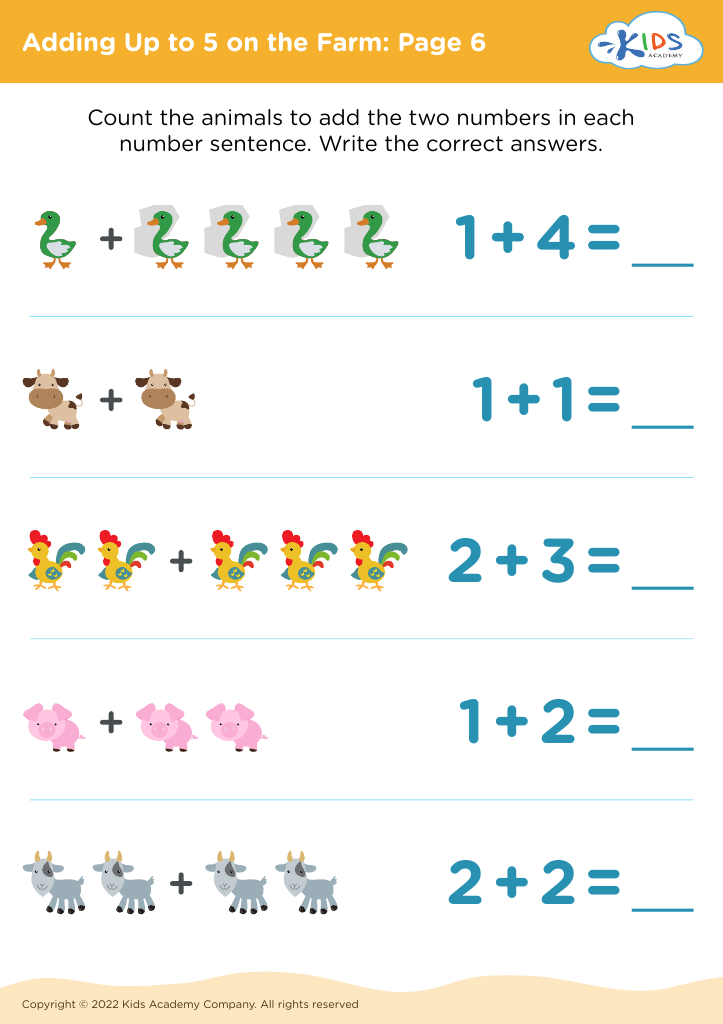
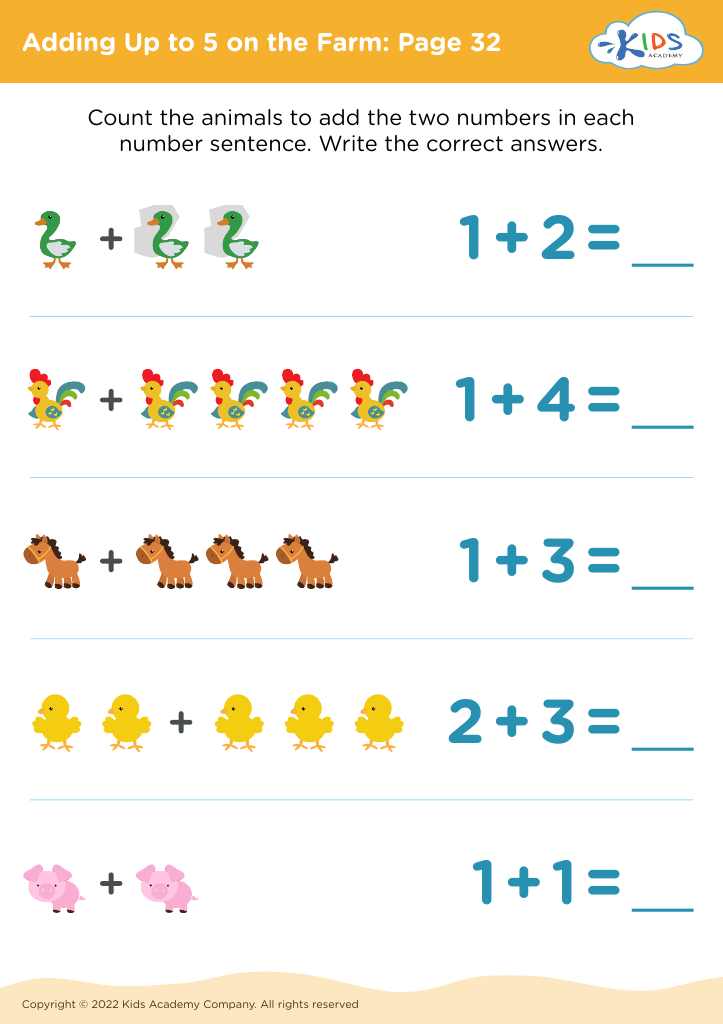
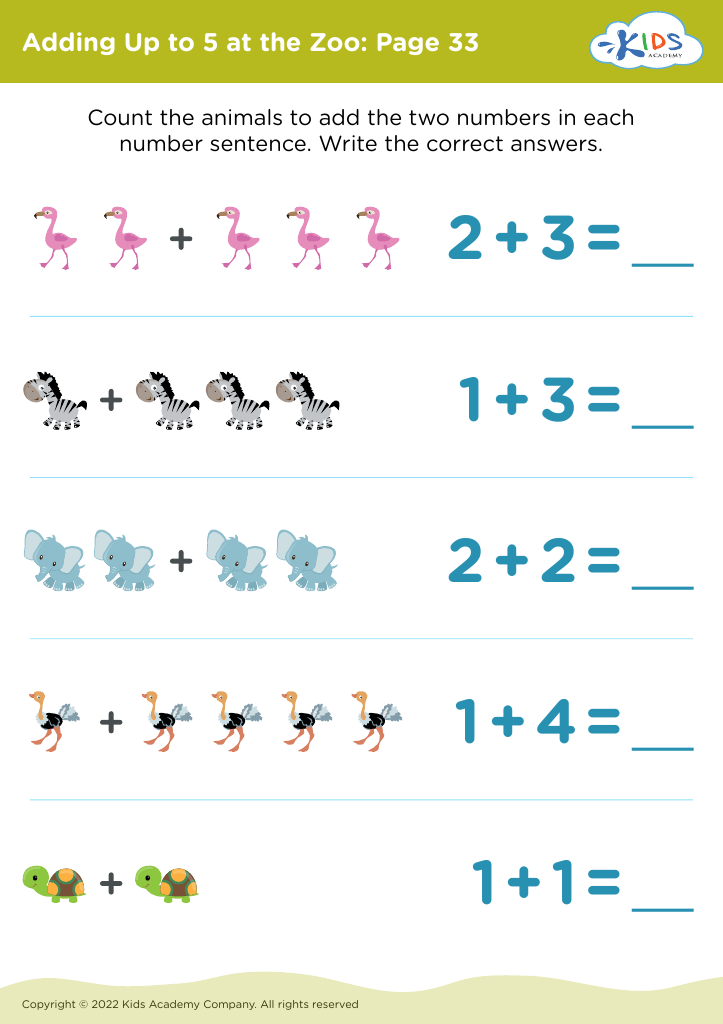
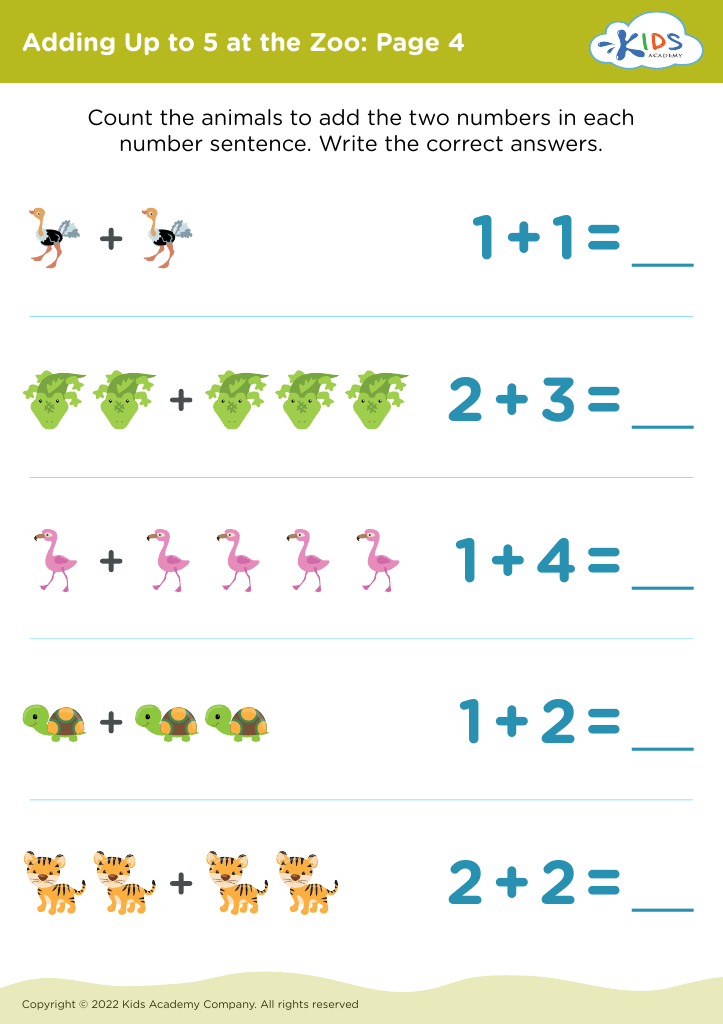
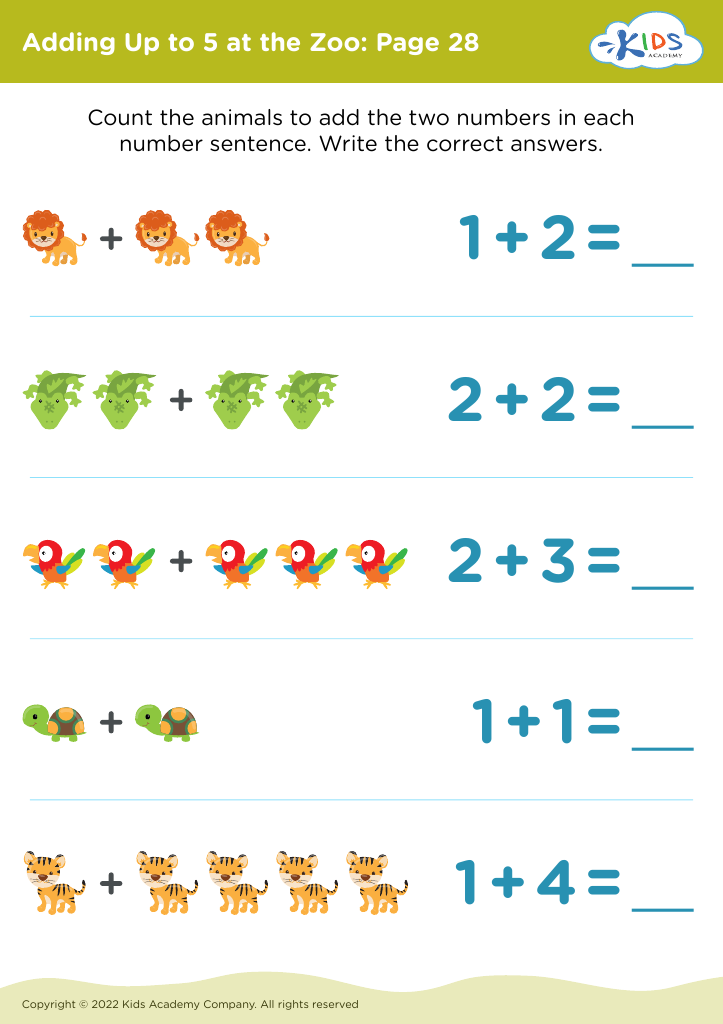
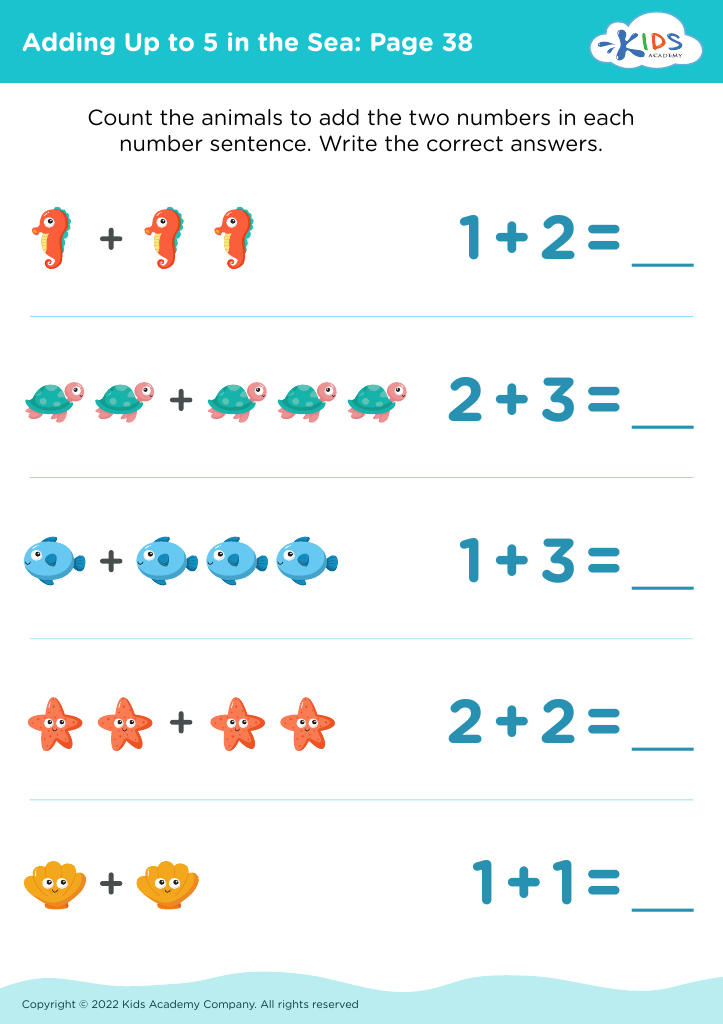
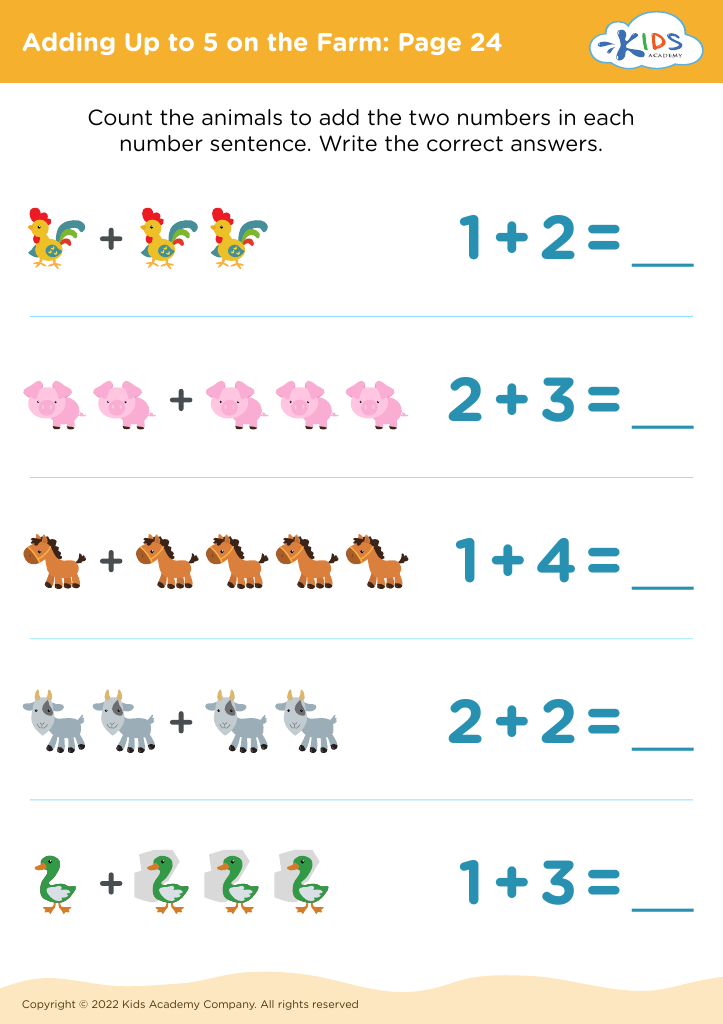
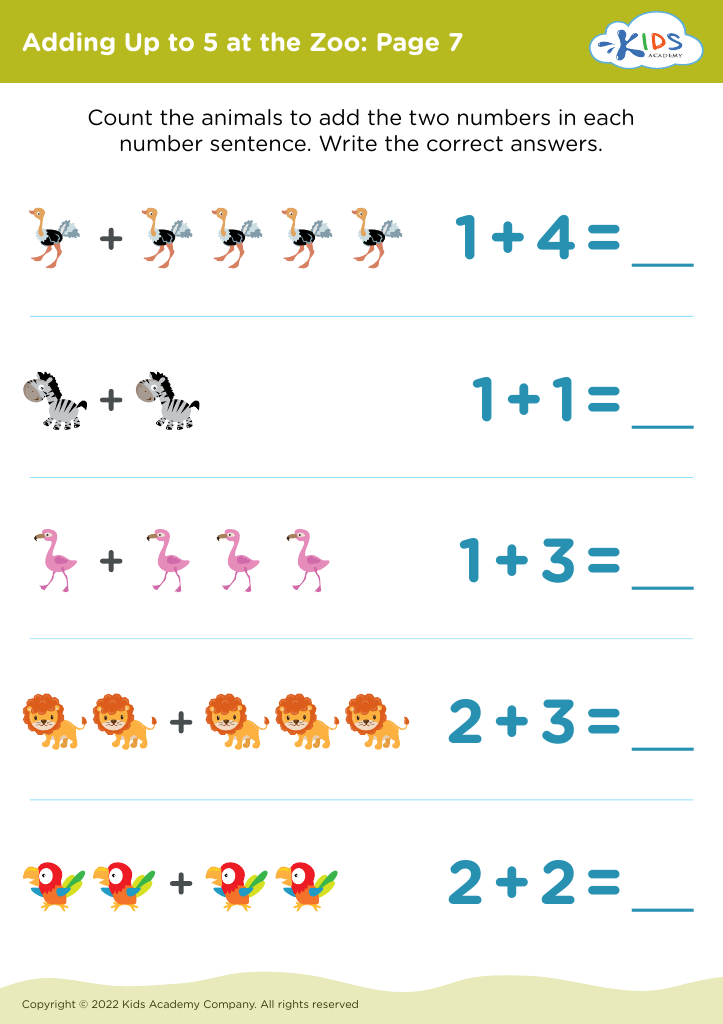
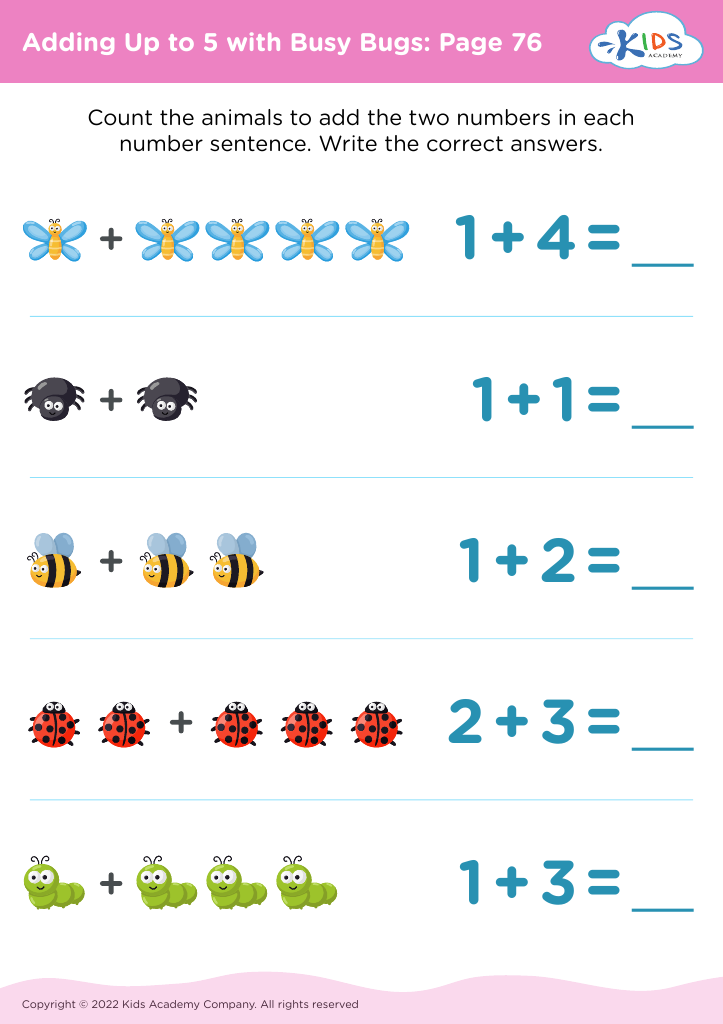
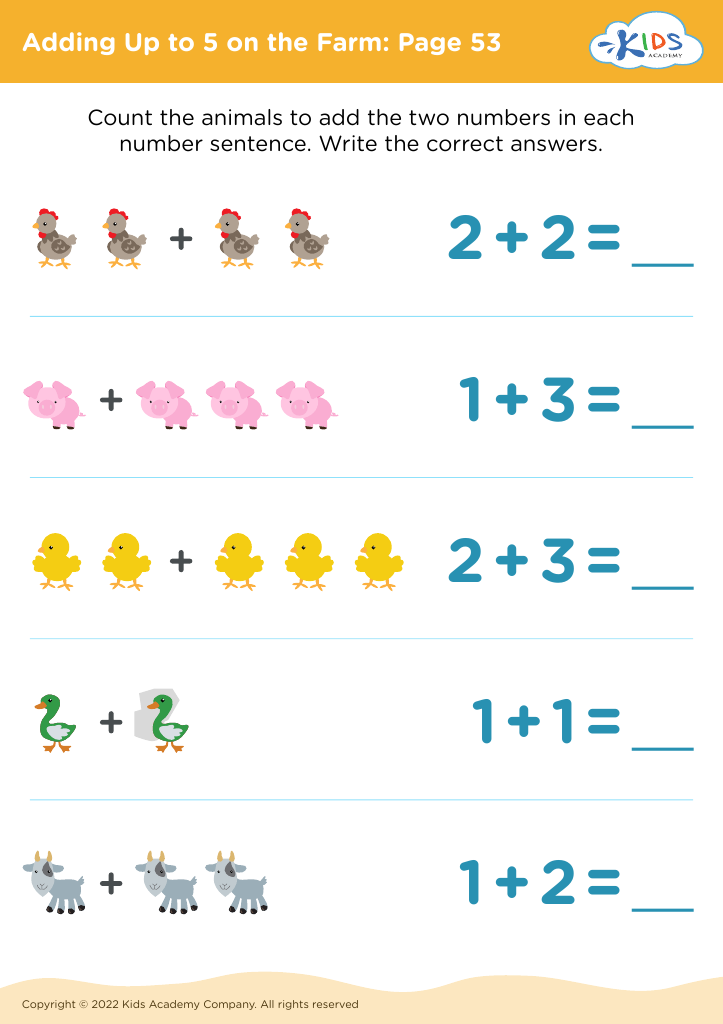
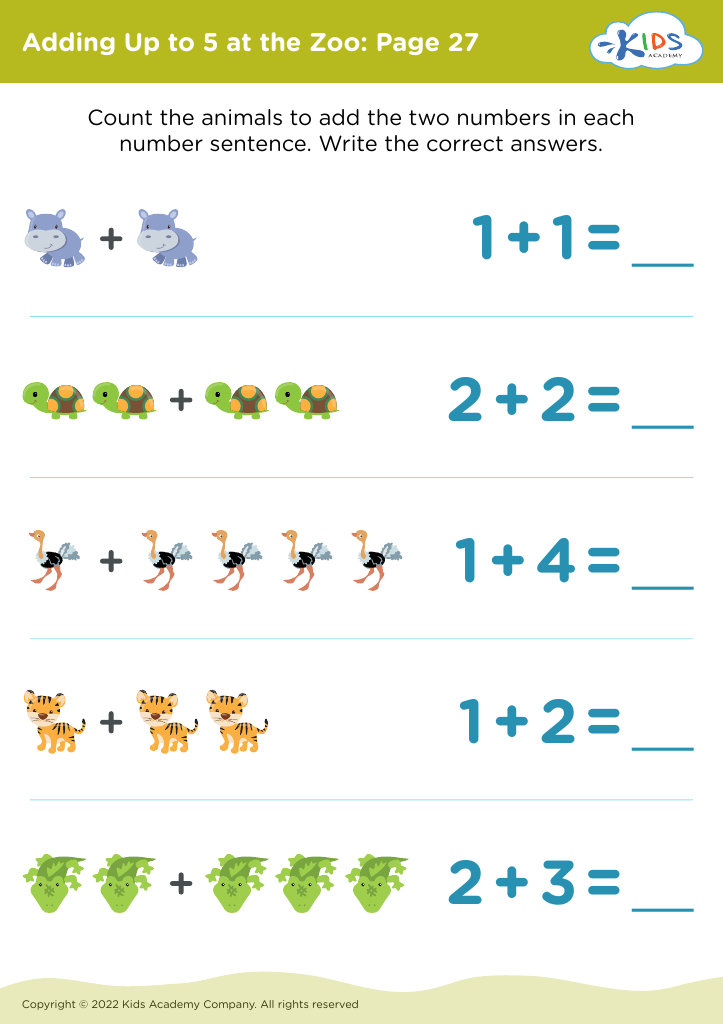
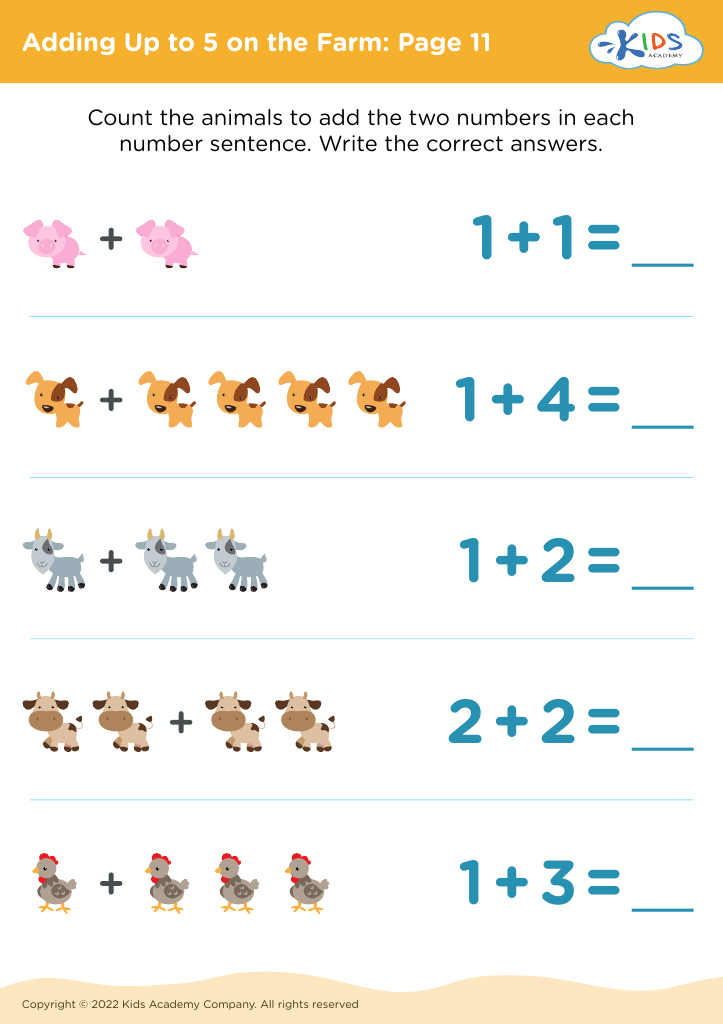
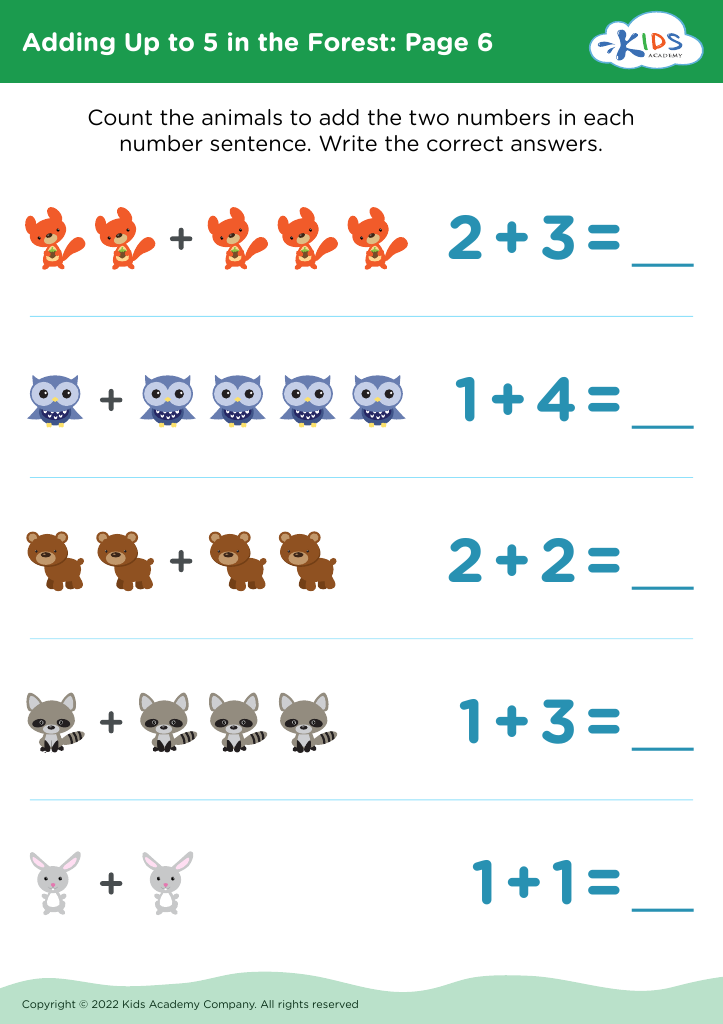
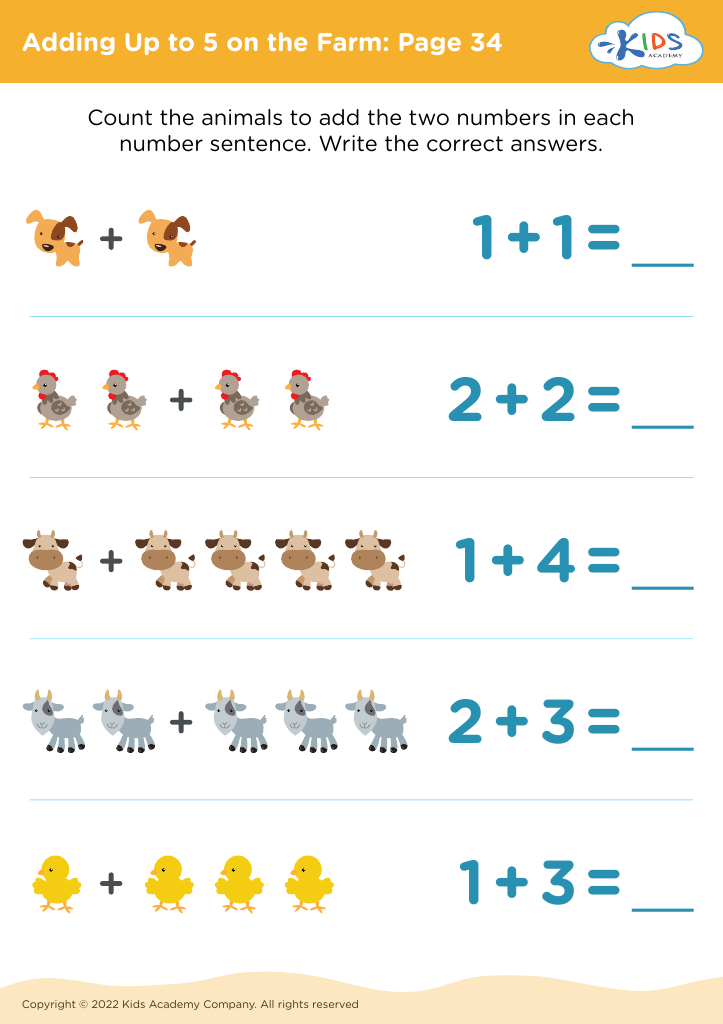
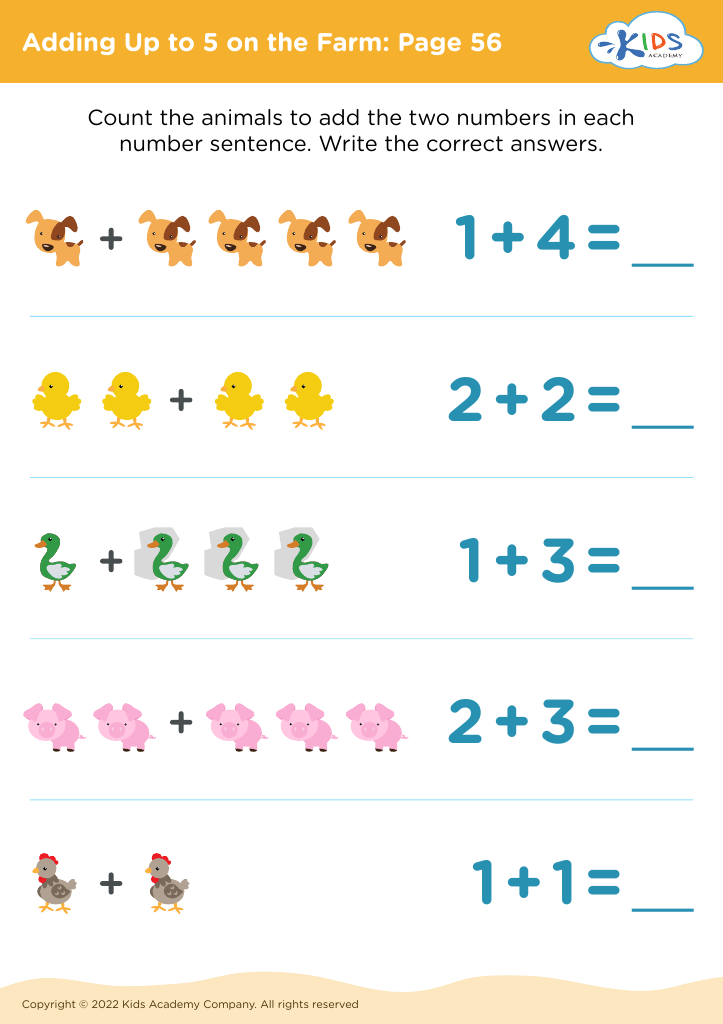
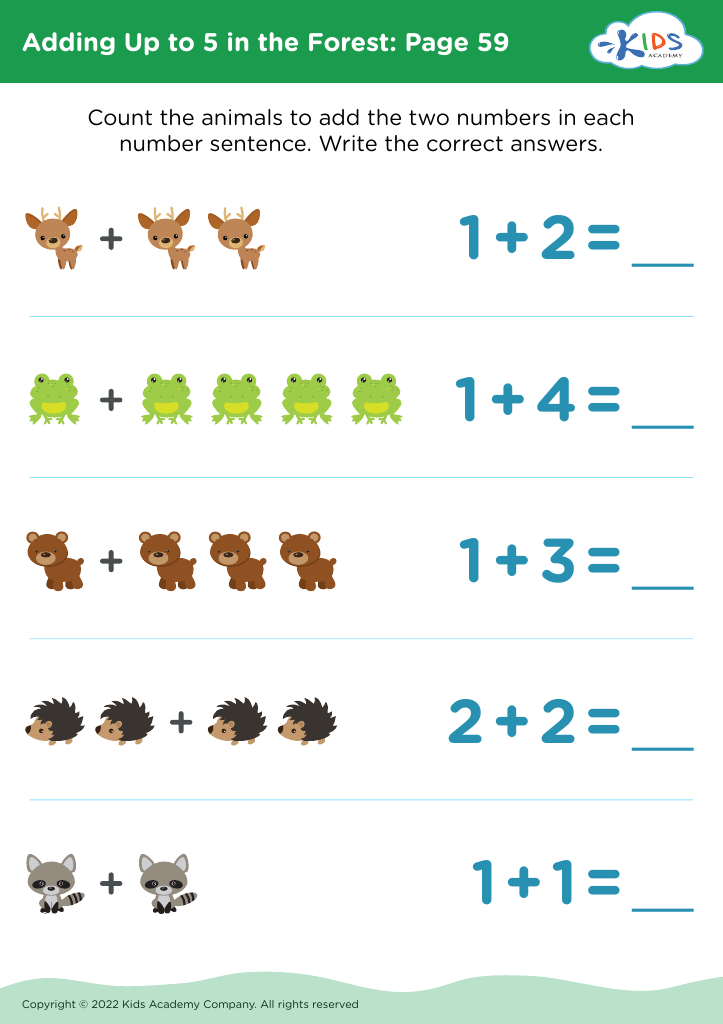
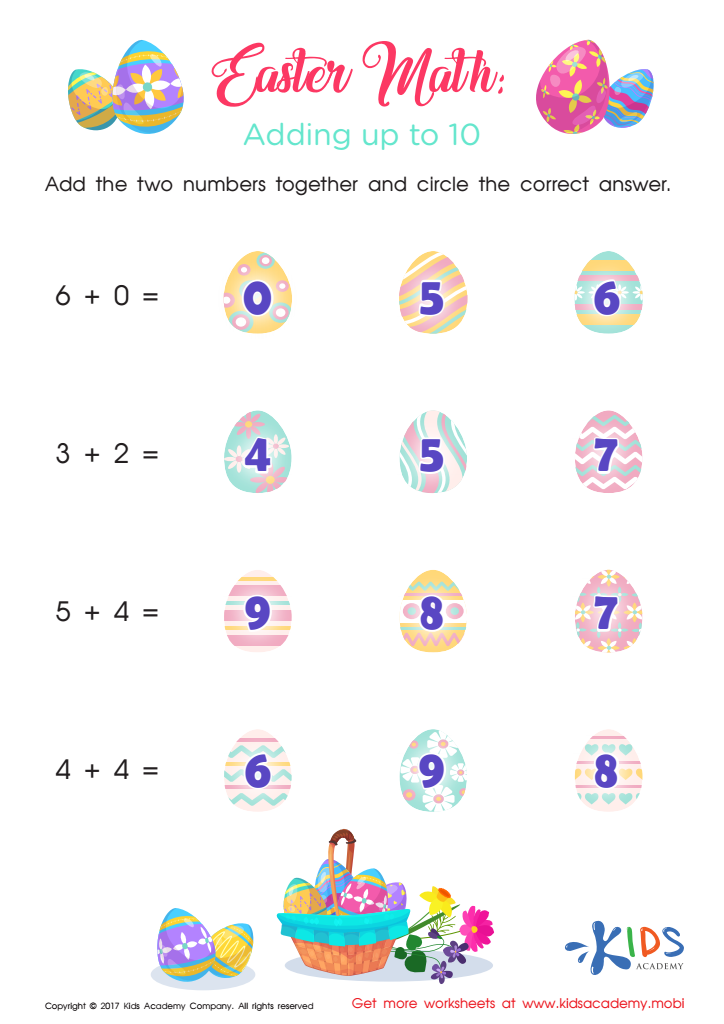
Addition Up To 10 Worksheet
 Assign to My Students



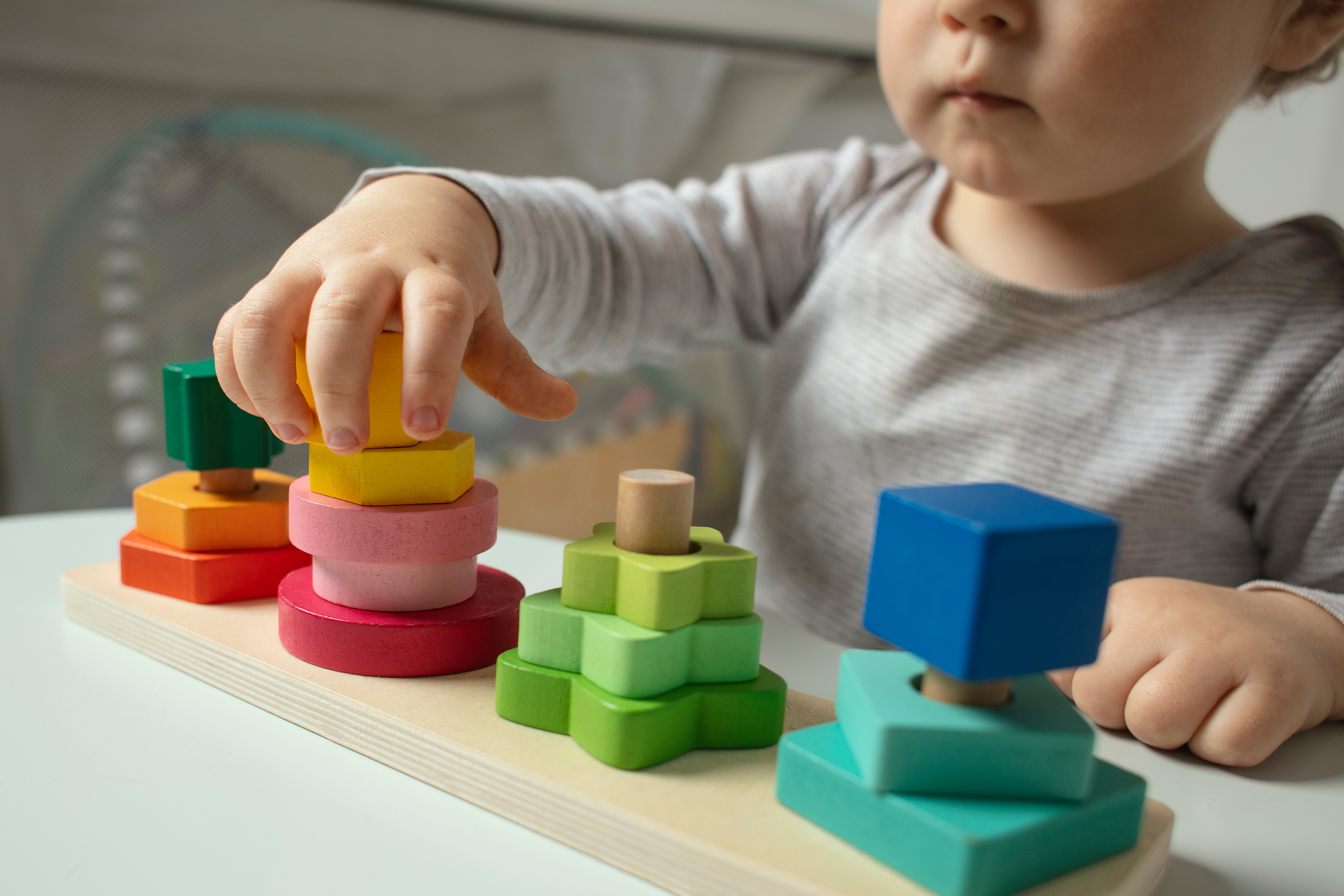



Parents and teachers should care deeply about basic addition skills in preschool math because these foundational skills set the stage for all future mathematical learning. Early competency in basic addition fosters numerical literacy, which is crucial as children progress to more advanced math concepts in later grades. Proficiency in early addition builds confidence, reduces math anxiety, and encourages a positive attitude toward mathematics overall.
Moreover, basic addition helps develop critical cognitive skills such as problem-solving, logical thinking, and memory. When young children understand that combining quantities leads to a sum, they enhance their ability to reason and make connections between numbers and real-world situations. This understanding is a cornerstone for daily activities involving money, time, and measurement.
Neuroscientific evidence also supports that early math skills are strong predictors of later academic achievement—not only in mathematics but in other subjects as well. Therefore, ensuring children are comfortable with basic addition skills can contribute to overall academic success. Lastly, in our increasingly data-driven world, nurturing early math skills prepares children to navigate and excel in a society where analytical capabilities are indispensable. Early attention to basic addition equips children with the tools they'll need for lifelong learning and problem-solving.