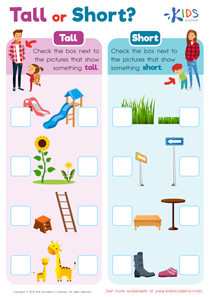
Matching skills Preschool Matching Worksheets
5 filtered results
Difficulty Level
Grade
Age
-
From - To
Subject
Activity
Standards
Discover Kids Academy’s “Matching Skills Preschool Matching Worksheets” and help your little learners develop crucial cognitive abilities through fun and engaging activities! These free, printable worksheets are designed for preschoolers to hone their matching skills, fostering early math proficiency and logical thinking. Activities range from matching shapes and colors to objects and patterns, making learning playful and interactive. Perfect for parents and teachers, these worksheets ensure kids grasp foundational concepts while enjoying the creative process. Download now to enhance your preschooler’s problem-solving skills, attention to detail, and preparation for future learning success. Start your child's educational journey with Kids Academy today!
Favorites
With answer key
Interactive
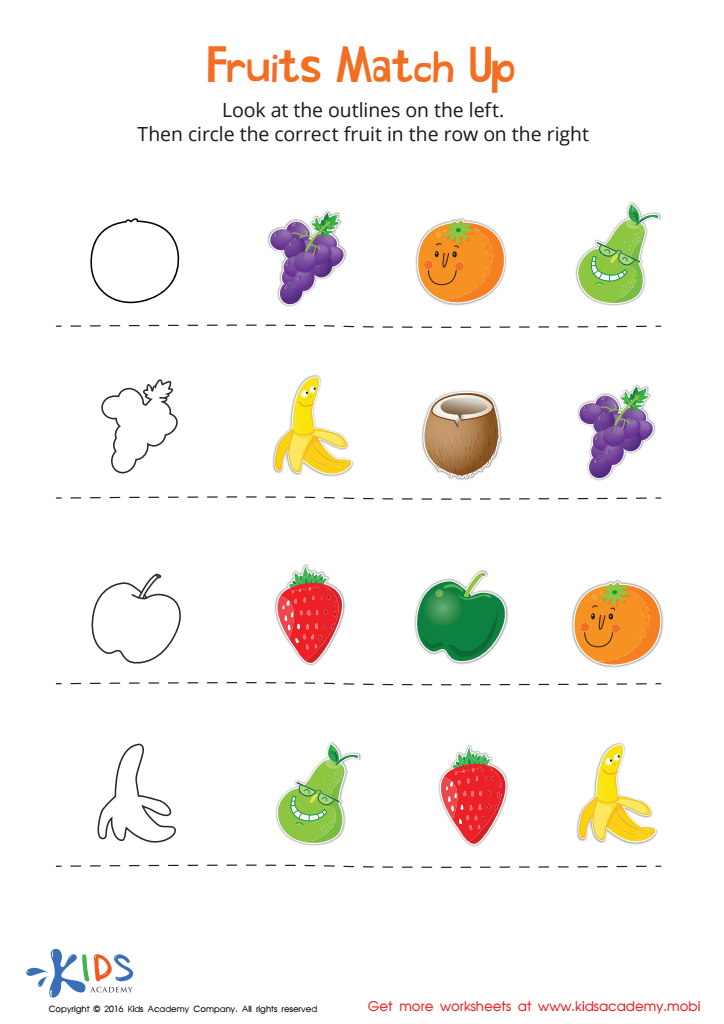
Fruits Match Up Worksheet
Motivate your child to count and sharpen their spatial reasoning skills with this vivid fruit worksheet.
 Assign to My Students
Fruits Match Up Worksheet
Worksheet
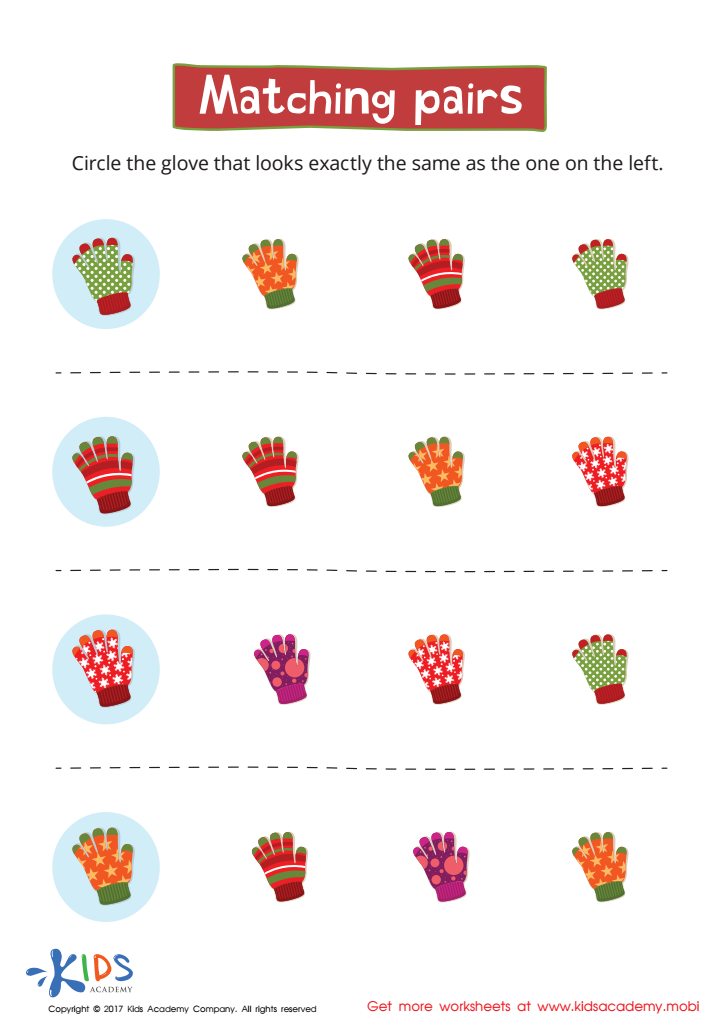
Matching: Matching Pairs Worksheet
Winter's here! Get your child ready with a fun matching worksheet. Challenge them to sort mitten designs, recognize directions, and match mittens in other rows. This helps preschoolers hone problem-solving skills and recognize shapes. Print out more seasonal activities for a diverse summer experience!
Matching: Matching Pairs Worksheet
Worksheet
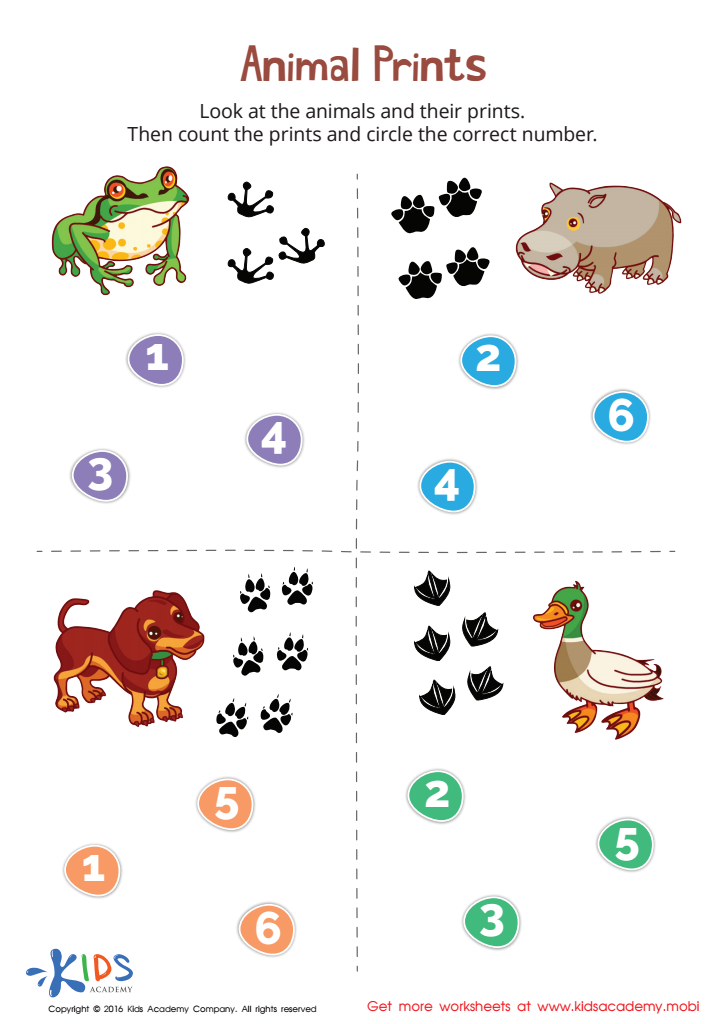
Animal Prints Match-Up Worksheet
Help your little learner build early math skills with this fun animal paw prints worksheet. With it, they'll count, recognize numbers, and learn about the animals that make the paw prints. Talk to them about the prints and ask them to count. They'll love exploring and learning about the different animals, all while sharpening essential math skills!
Animal Prints Match-Up Worksheet
Worksheet
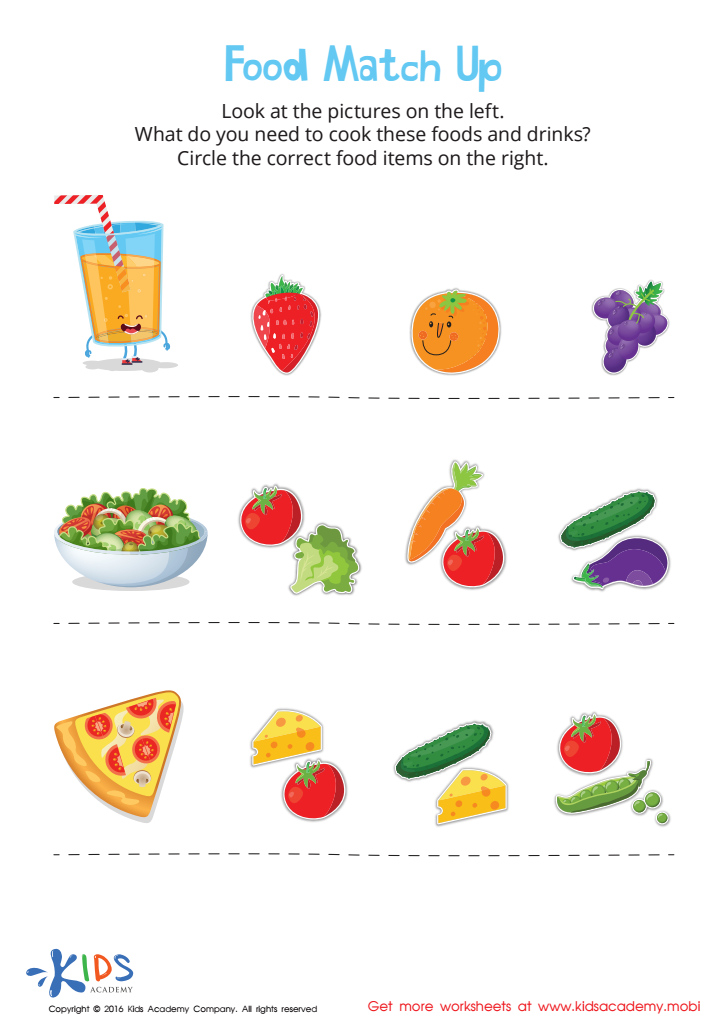
Food Match Up Worksheet
This worksheet will help your preschooler develop early math and cognitive skills. It challenges them to pay attention to details, understand how smaller parts make a whole, and increase important matching skills. Use it to give them a hands-on learning experience in the kitchen, and watch them understand how ingredients come together to make something delicious!
Food Match Up Worksheet
Worksheet
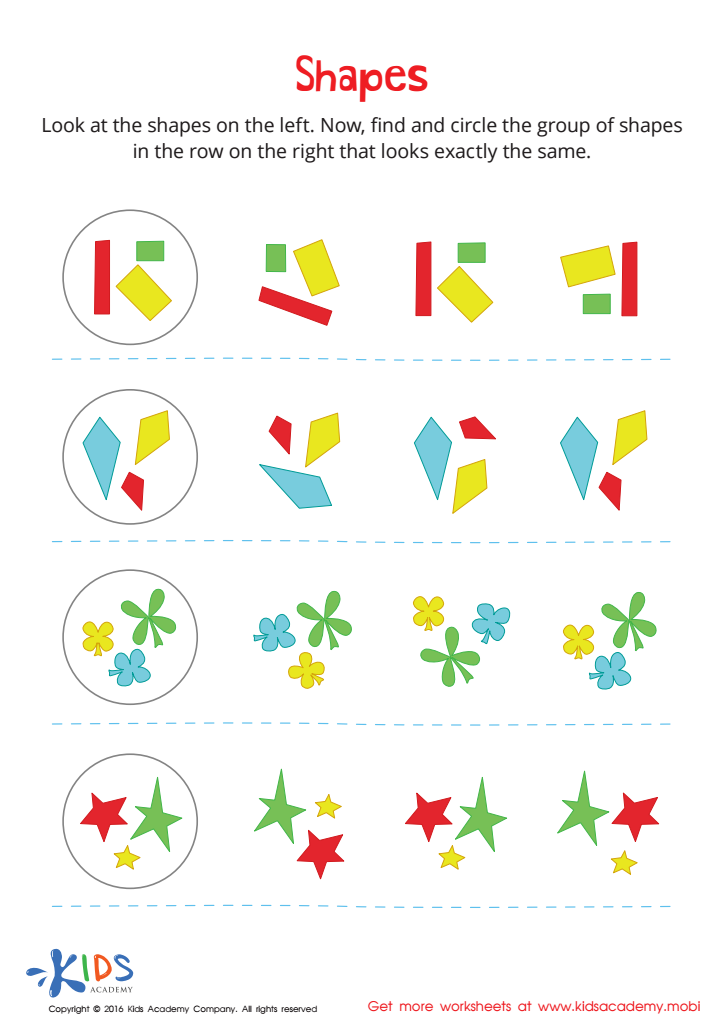
Shapes Worksheet
This fun worksheet will challenge your child to recognize tricky patterns, sort through similar ones, and create strategies to get the right answer. It'll also help them to strengthen problem-solving skills and build confidence. With more challenging tasks, your child will be ready to tackle higher level math and sequencing skills.
Shapes Worksheet
Worksheet
Join Kids Academy for Free
Who is primarily going to use this learning content?







Parents and teachers should place a high emphasis on developing matching skills in preschool children because these skills are foundational for cognitive development and later academic success. Matching activities—such as sorting objects by color, shape, or size—help children recognize patterns and relationships between different items, which is vital for logical thinking and problem-solving. These activities enhance children’s ability to make connections, a skill that will be beneficial when they learn early math concepts such as counting, classifying, and patterning.
Furthermore, matching exercises improve attention to detail and concentration. When children engage in these activities, they learn to focus on specific attributes and differentiate between them, a critical skill for reading and literacy. Recognizing letters, for example, requires distinguishing between similar shapes.
Socially, matching games often involve cooperative play, teaching kids to follow instructions, take turns, and develop communication skills. Successful matching also provides a sense of accomplishment, bolstering self-esteem and motivation.
In short, investing time and energy in preschool matching activities supports a broad range of critical developmental areas, making it a simple yet powerful tool in a child’s early education toolkit. Parents and teachers who incorporate these practices contribute significantly to their children’s holistic growth and future academic readiness.