Writing practice Preschool Tracing Numbers Worksheets
6 filtered results
Difficulty Level
Grade
Age
-
From - To
Subject
Activity
Standards
Enhance your preschooler's early math skills with our engaging Writing Practice Preschool Tracing Numbers Worksheets! Designed to introduce young learners to numbers from 0 to 20, these worksheets combine fun and education, helping children develop their fine motor skills while learning to write numbers correctly. Each worksheet features clear, dotted outlines for children to trace, reinforcing number recognition and writing techniques. Ideal for at-home learning or classroom activities, these printable worksheets promote active learning through repetition and joy. Watch your little one gain confidence in their writing ability as they enjoy the process of mastering numbers! Perfect for pre-kindergarten readiness.
Favorites
With answer key
Interactive
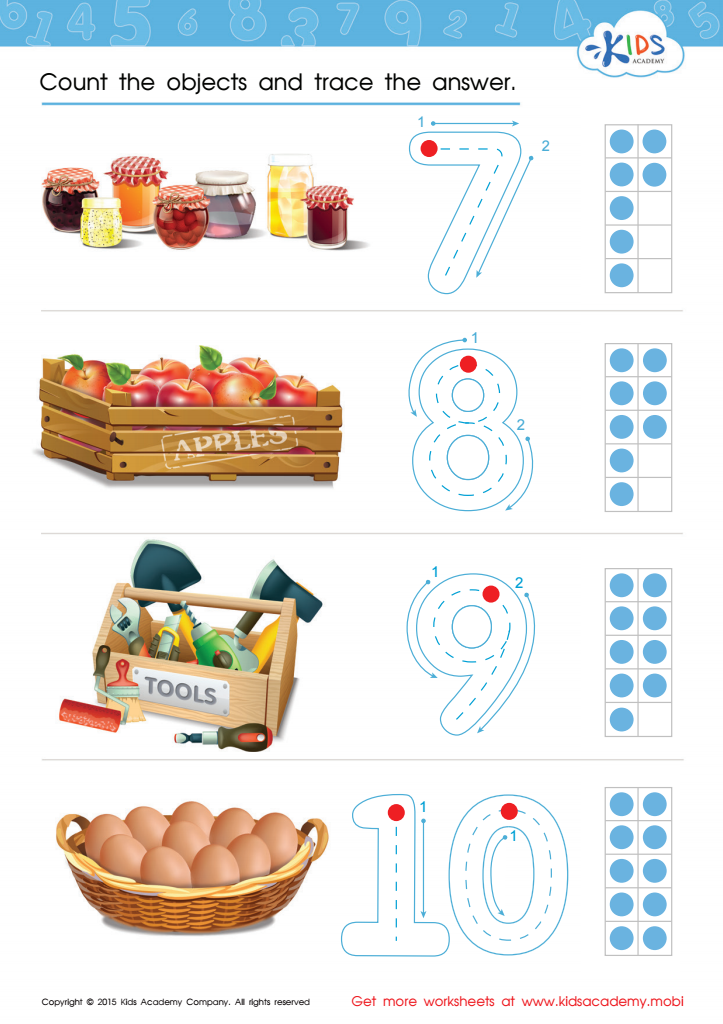
Count and Trace 7 – 10 Worksheet
Let your child develop a lifelong love of math with Kids Academy's printable math worksheet based on the innovative Singapore Math method. It uses funny pictures and graphs to help solve math problems. Check out our amazing collection of free printable math worksheets now!
 Assign to My Students
Count and Trace 7 – 10 Worksheet
Worksheet
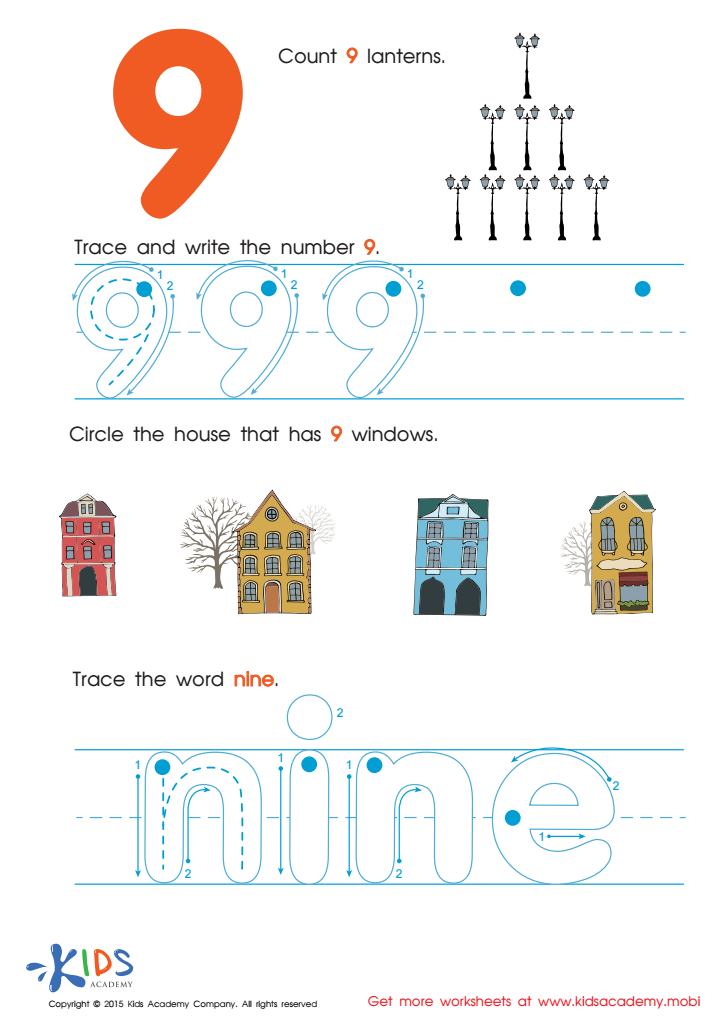
Tracing And Learning to Write Number 9 Worksheet
Explore our collection of learning numbers worksheets and make teaching numbers to preschoolers easier with Kids Academy. Trace numbers, circle houses with the specified number of windows, write the corresponding number words and revise previous numbers regularly to help kids learn.
Tracing And Learning to Write Number 9 Worksheet
Worksheet
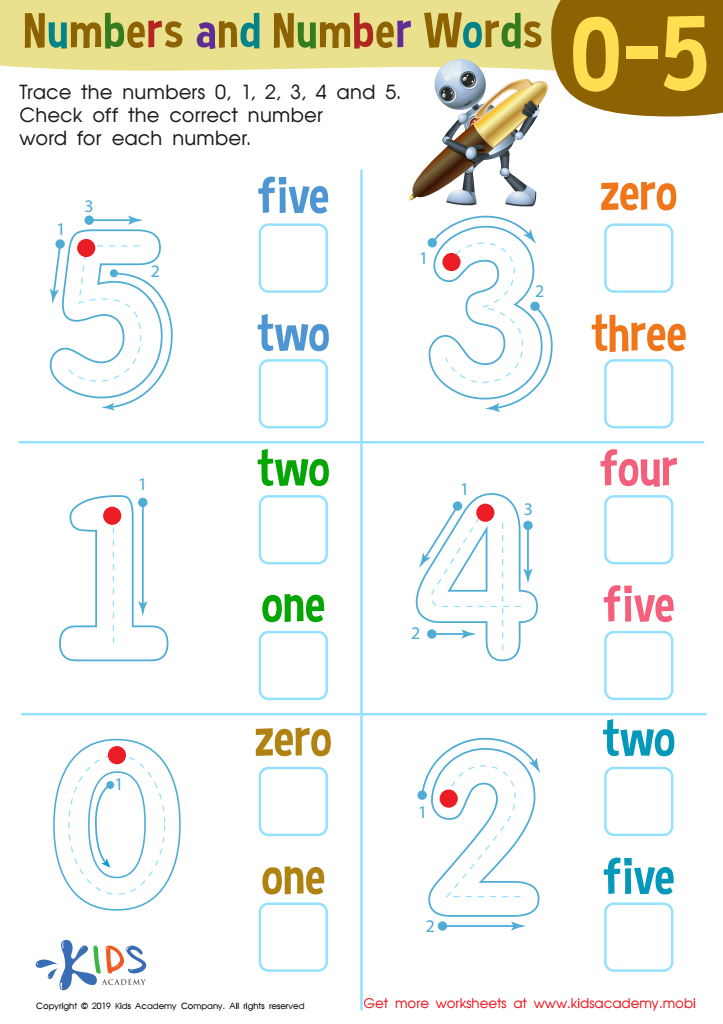
Numbers and Number Words Worksheet
Preschoolers can practice counting and recognizing numbers with this worksheet. Students trace the numbers zero through five and check the boxes next to each number to show the correct number word. Ideal for young kids, this printable helps them learn early math and number words.
Numbers and Number Words Worksheet
Worksheet
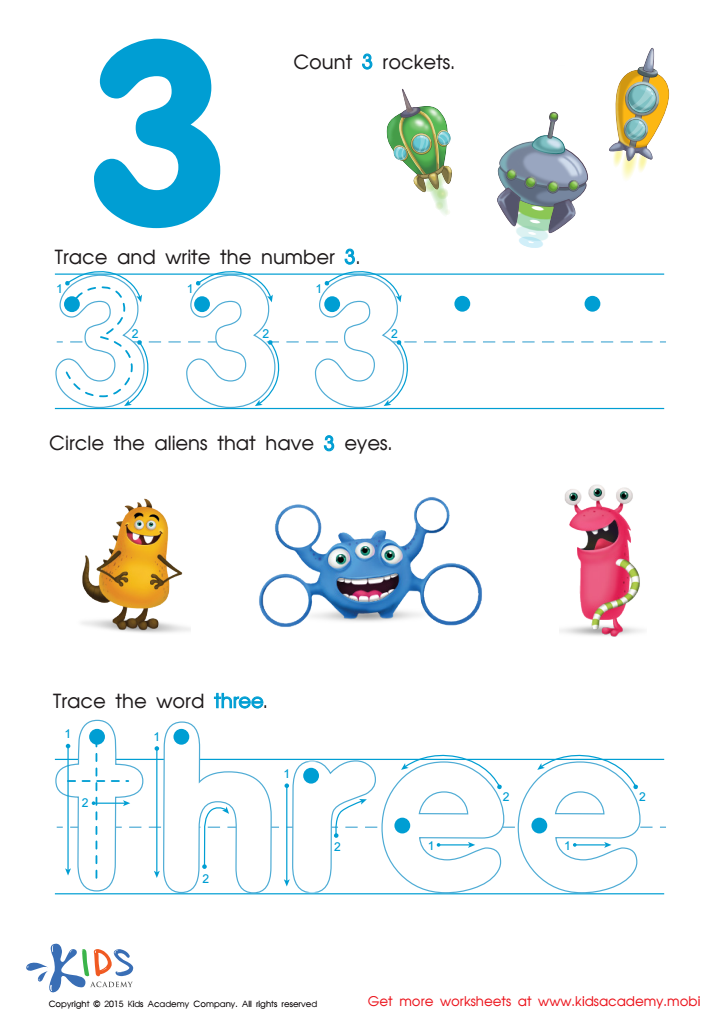
Learning Number Three Worksheet
Learn to count with aliens! Trace the number 3 and circle aliens with 3 eyes. Explore our web site for more number games and activities for preschoolers.
Learning Number Three Worksheet
Worksheet
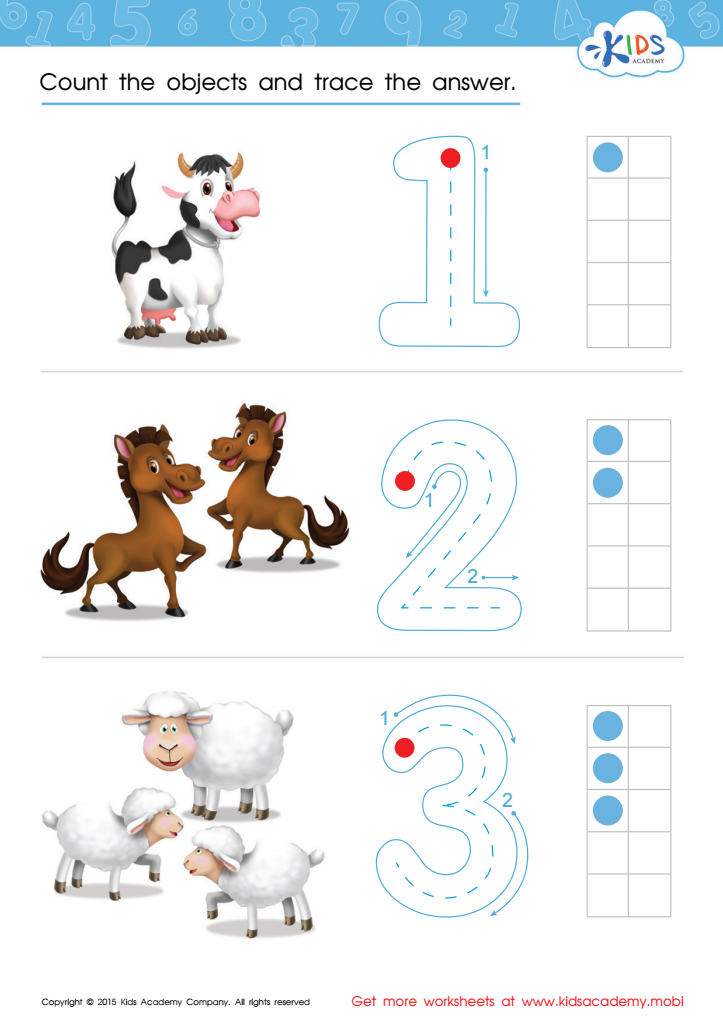
Count and Trace 1 – 3 Worksheet
Get your preschooler started on math with Kids Academy's newest worksheet! It's an enjoyable way for kids to learn how to count and trace numbers 1-3. Print it out and watch your learner have fun as they trace the lines. For more free math worksheets, click here.
Count and Trace 1 – 3 Worksheet
Worksheet
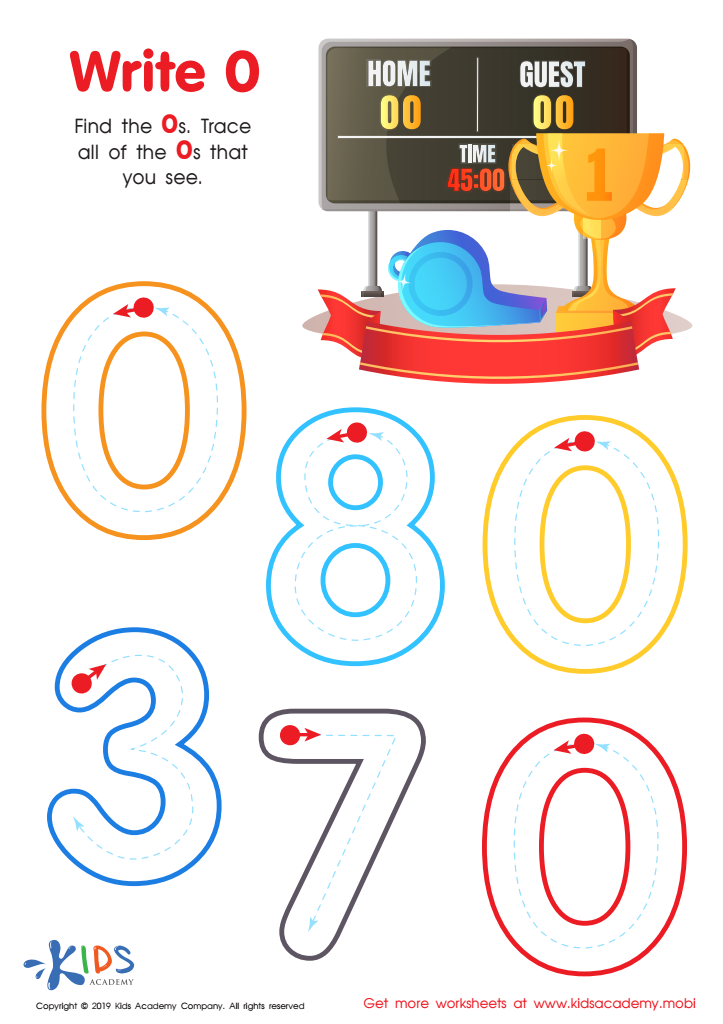
Write 0 Worksheet
Help your children become number pros! This worksheet will give them the edge they need to count, while also helping them practice writing the number 0. Have them find the 0s in the printout, then trace them. It's a great way to build a math foundation and get them ready to succeed with more advanced math concepts.
Write 0 Worksheet
Worksheet
Join Kids Academy for Free
Who is primarily going to use this learning content?








Writing practice through tracing numbers in preschool is essential for several reasons, making it a priority for both parents and teachers. Firstly, it helps children develop fine motor skills, which are crucial for handwriting and other tasks. Tracing serves as a foundational activity that enhances hand-eye coordination, finger strength, and dexterity.
Moreover, writing practice reinforces number recognition and understanding. By tracing numbers, children not only learn to identify them visually but also understand their shape and form. This early exposure aids in building a solid mathematical foundation, fostering confidence in their numerical skills.
In addition to cognitive benefits, tracing numbers encourages focus and discipline. Practicing writing requires concentration, helping children develop patience and perseverance, qualities that are beneficial throughout their educational journey.
Involving parents in this process can further enhance learning. Parents can create a supportive environment at home where writing and tracing become enjoyable activities, strengthening the bond between them and their children.
In summary, writing practice through tracing numbers plays a vital role in Early Childhood Education, as it promotes motor skills development, numerical comprehension, and essential life skills, benefiting children's overall growth and learning. Both parents and teachers should prioritize these activities for effective early learning experiences.