Story sequencing Building Vocabulary Worksheets
5 filtered results
-
From - To
Enhance your child's reading skills with our "Story Sequencing Building Vocabulary Worksheets." These engaging worksheets are designed to help early learners understand the logical order of events in a story, promoting critical thinking and comprehension. By arranging story elements sequentially, children reinforce their vocabulary and gain a deeper understanding of narrative structure. Each worksheet offers colorful illustrations and interactive activities that make learning fun and effective. Perfect for home or classroom use, our resources support young readers in developing their literacy skills while fostering creativity and imagination. Explore our collection to inspire a love for reading!
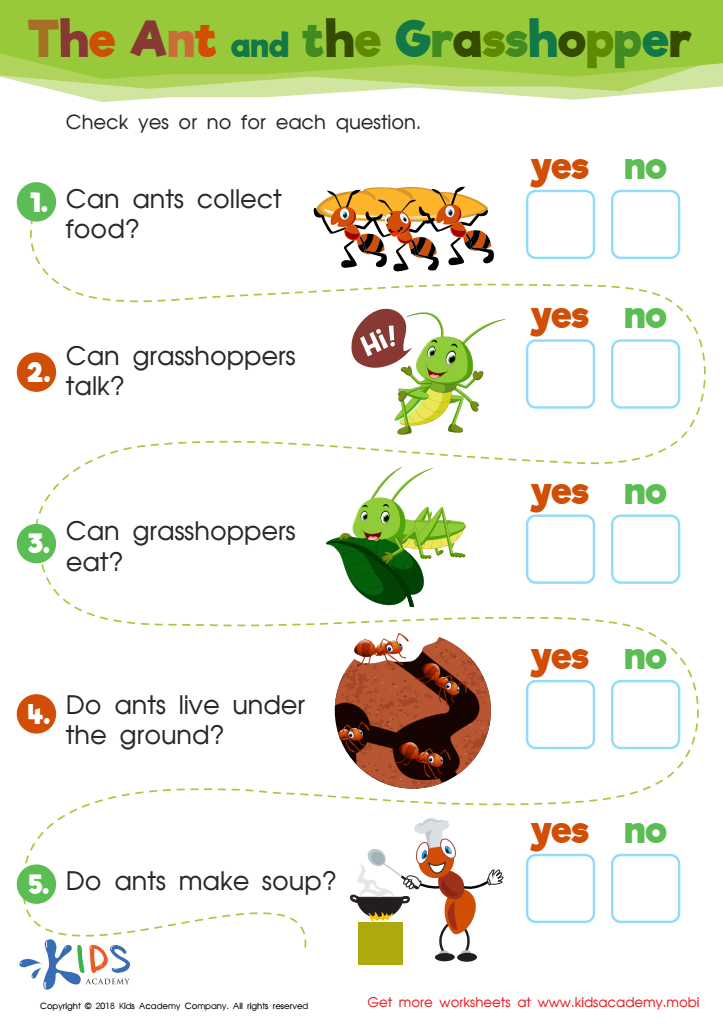
The Ant and The Grasshopper Worksheet
 Assign to My Students











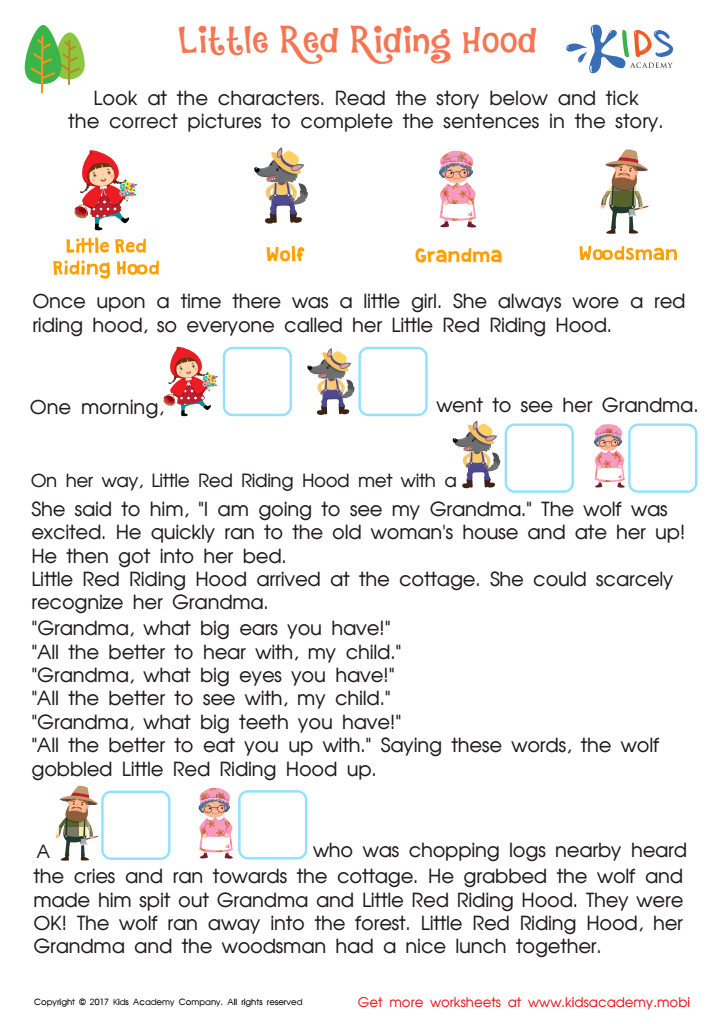
Little Red Riding Hood Printable
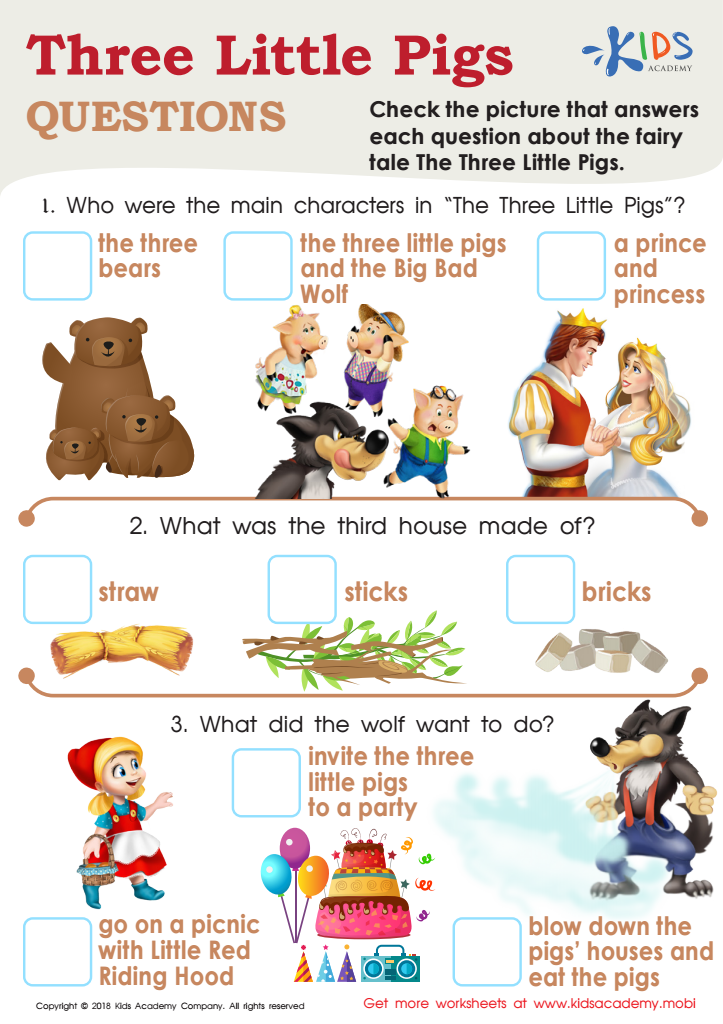
Three Little Pigs Questions Worksheet
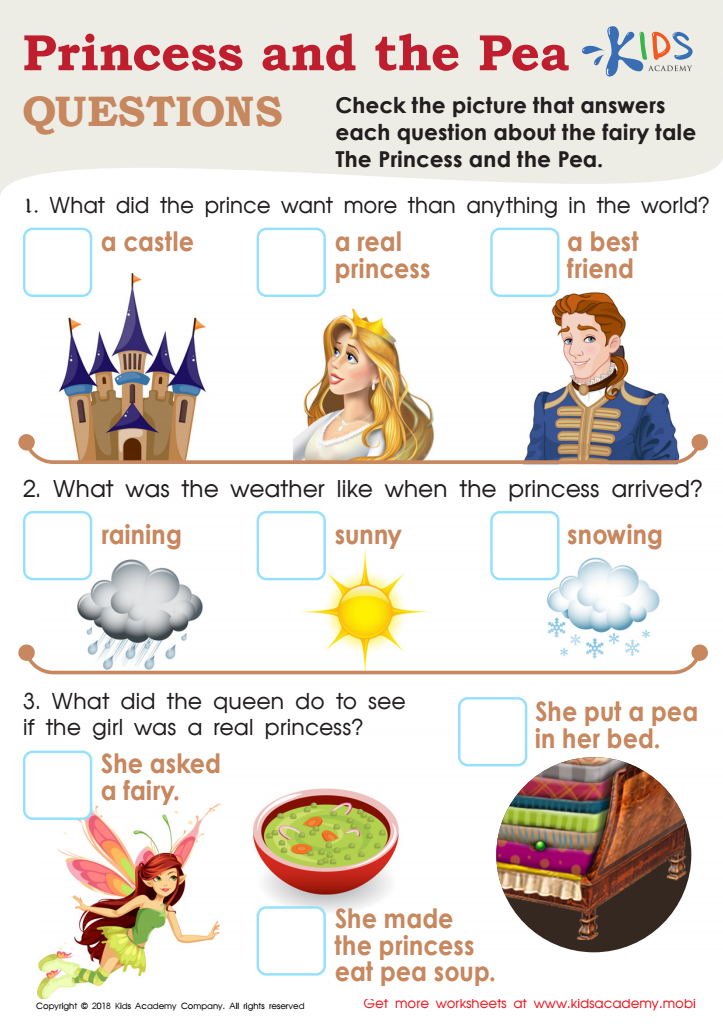
Princess and the Pea Questions Worksheet
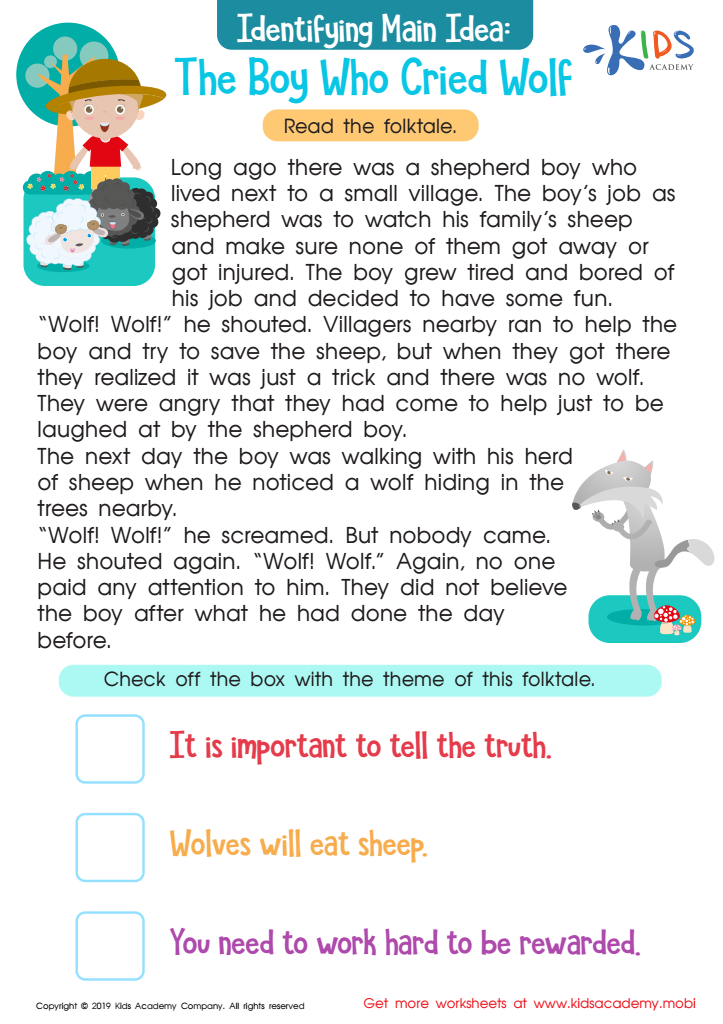
The Boy Who Cried Wolf Part 2 Worksheet








Story sequencing and building vocabulary are essential components of a child’s literacy development, significantly impacting their reading comprehension and communication skills. For parents and teachers, understanding the importance of these practices should be a top priority.
Firstly, story sequencing helps children grasp the logical flow of narratives, enabling them to understand beginnings, middles, and endings. This skill fosters critical thinking as children learn to compare various parts of a story and predict outcomes, laying a foundation for effective storytelling and completion of tasks.
Building vocabulary is equally crucial, as it enriches children's language skills and broadens their ability to express thoughts and emotions. A robust vocabulary allows for more nuanced communication and greater comprehension when engaging with texts. Children with strong vocabularies are often better equipped to understand complex ideas and improve their overall academic performance.
By actively engaging in story sequencing and vocabulary-building activities, parents and teachers can enhance a child's literacy skills, paving the way for successful communication and learning throughout their academic journey. Encouraging these practices creates confident readers and effective communicators who can better navigate the world around them. Thus, investing time in these areas reaps long-term benefits for children's education and personal development.








