Understanding prefixes Building Vocabulary Worksheets
3 filtered results
-
From - To
Enhance your child’s vocabulary with our "Understanding Prefixes Building Vocabulary Worksheets." These engaging and interactive worksheets are designed to help young learners comprehend the use of prefixes, turning basic words into expanded vocabulary. By identifying and attaching prefixes, children will learn to create new meanings and increase their word power. Our specially crafted exercises promote both reading and writing skills while fostering an enjoyable learning experience. Ideal for early grade teachers and parents alike, these worksheets provide a strong foundation in language development, preparing students for academic success. Explore our resources today and watch your child's vocabulary flourish!
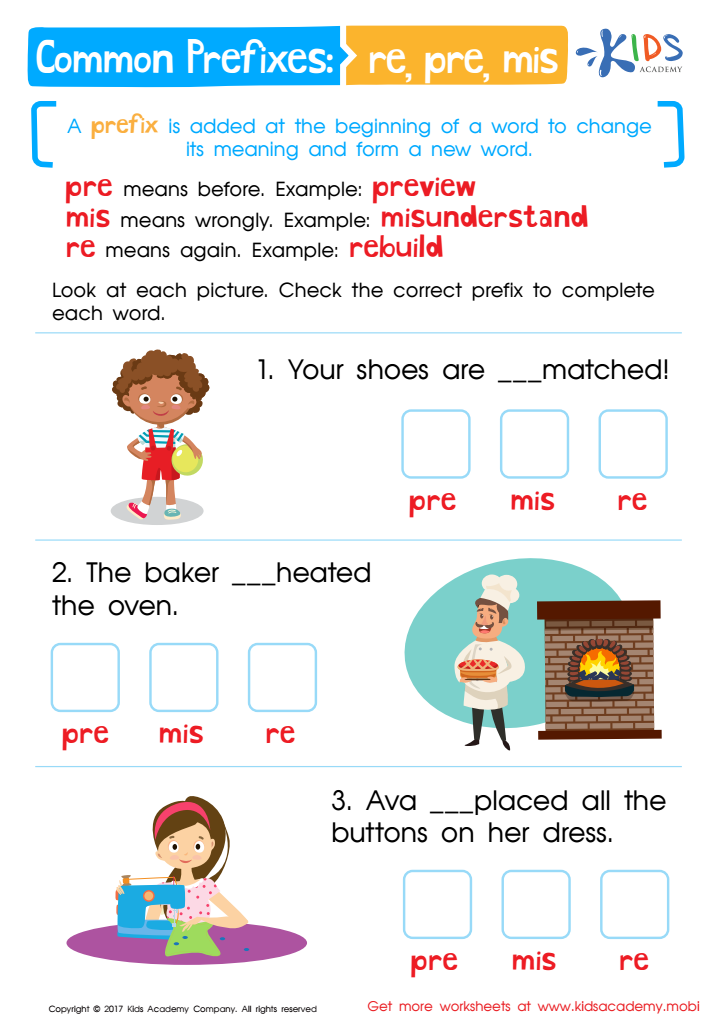
Common Prefixes Worksheet: RE, PRE, MIS
 Assign to My Students











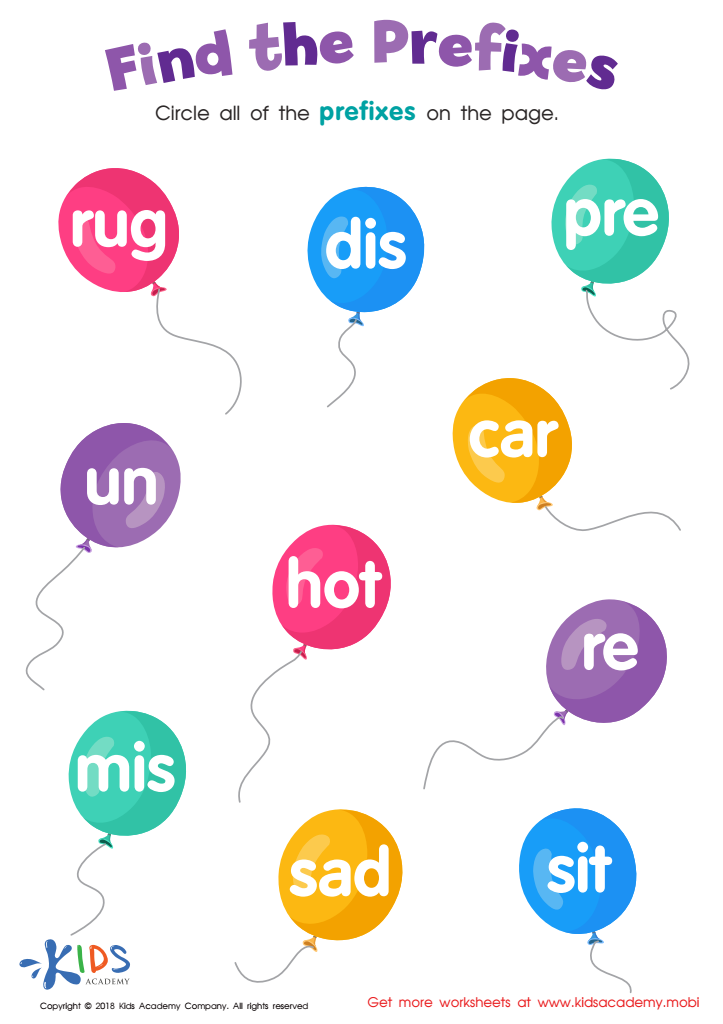
Reading: Find the Prefixes Worksheet
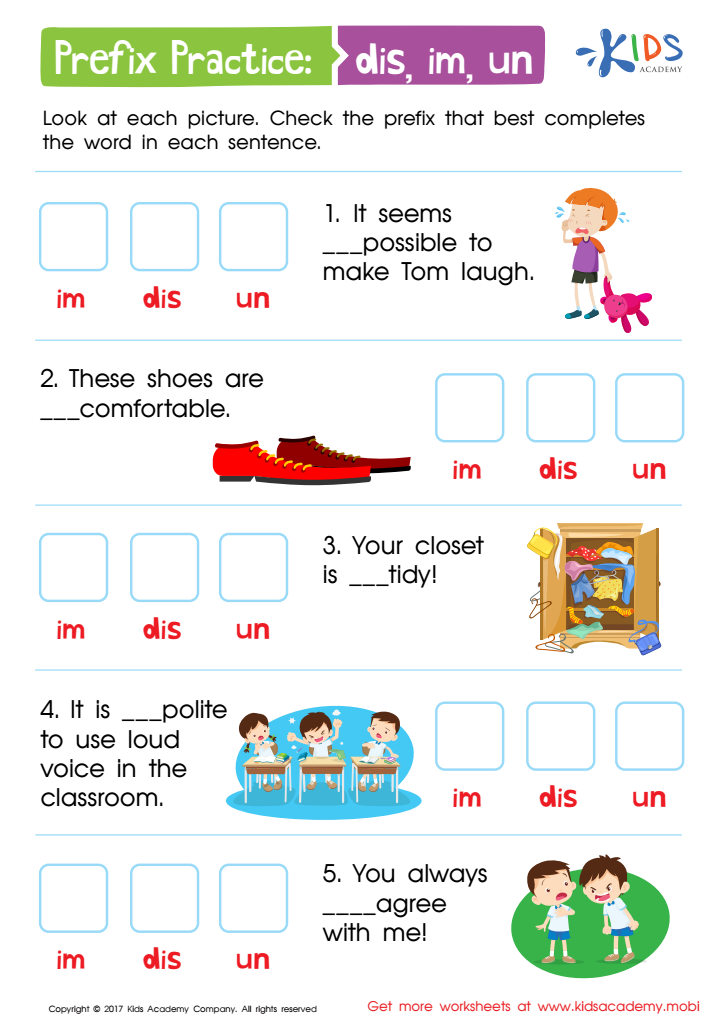
Prefix Practice Worksheet: DIS, IM, UM








Understanding prefixes is essential for building vocabulary because it equips children with the tools to decipher the meanings of new words they encounter. As foundations of language, prefixes attach to the beginnings of root words and can radically alter their meanings. For instance, the prefix "un-" generally means "not," as seen in words like "happy" becoming "unhappy." By grasping this concept, students can unlock the meanings of unfamiliar words rather than relying on memorization alone.
Additionally, familiarity with prefixes fosters independent reading and comprehension skills. When young learners recognize common prefixes, they are less intimidated by complex vocabulary, enabling them to enhance their ability to engage with a wider variety of texts. This bolstered confidence can encourage a love for reading, ultimately supporting academic success across subjects.
Both parents and teachers play a pivotal role in this vocabulary-building journey. By incorporating prefix activities into regular learning, such as games, flashcards, and contextual reading exercises, they can create an enriching environment where children thrive. Furthermore, effective communication about the importance of vocabulary development will encourage a lifelong appreciation for language, equipping children with skills they need in both academic settings and everyday interactions.








