Verb identification Building Vocabulary Worksheets
3 filtered results
-
From - To
Explore our engaging "Verb Identification Building Vocabulary Worksheets" designed to enhance your child's reading and language skills! These worksheets focus on helping young learners identify verbs, understand their functions, and expand their vocabulary. Each activity is crafted to make learning fun and interactive, featuring colorful illustrations and relatable contexts that encourage children to connect with the material. Ideal for classroom or at-home learning, these resources foster critical thinking and enhance literacy skills. Perfect for early grade teachers and parents, these worksheets promote a solid foundation in language arts, empowering kids to express themselves confidently. Start building your child's vocabulary today!
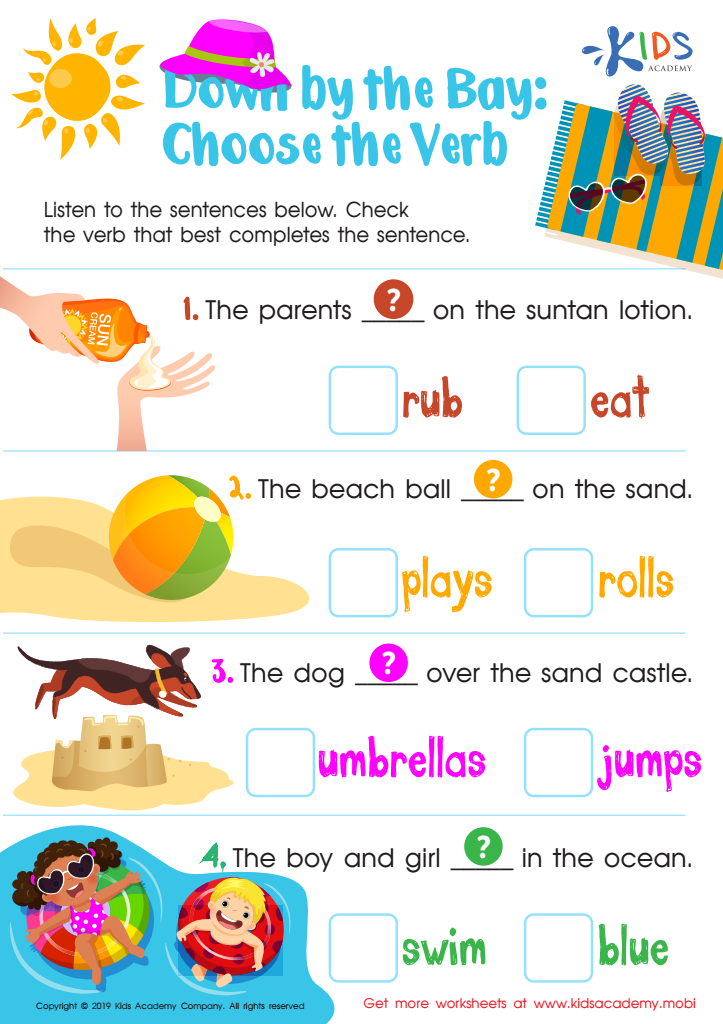
Down by the Bay: Choose the Verb Worksheet
 Assign to My Students











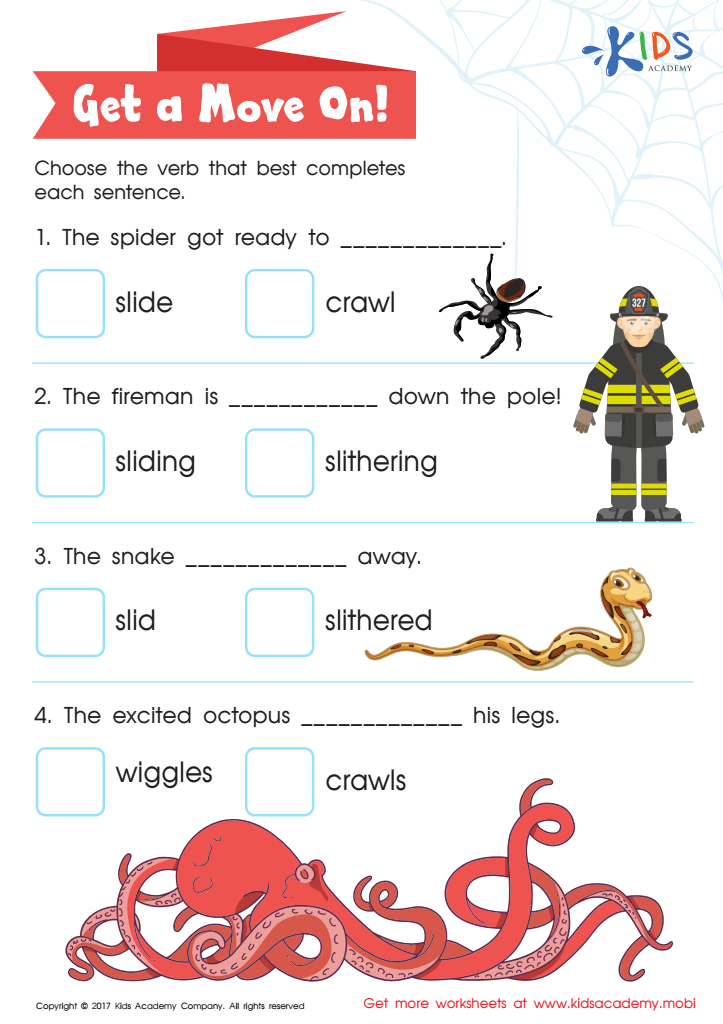
Verb Worksheet
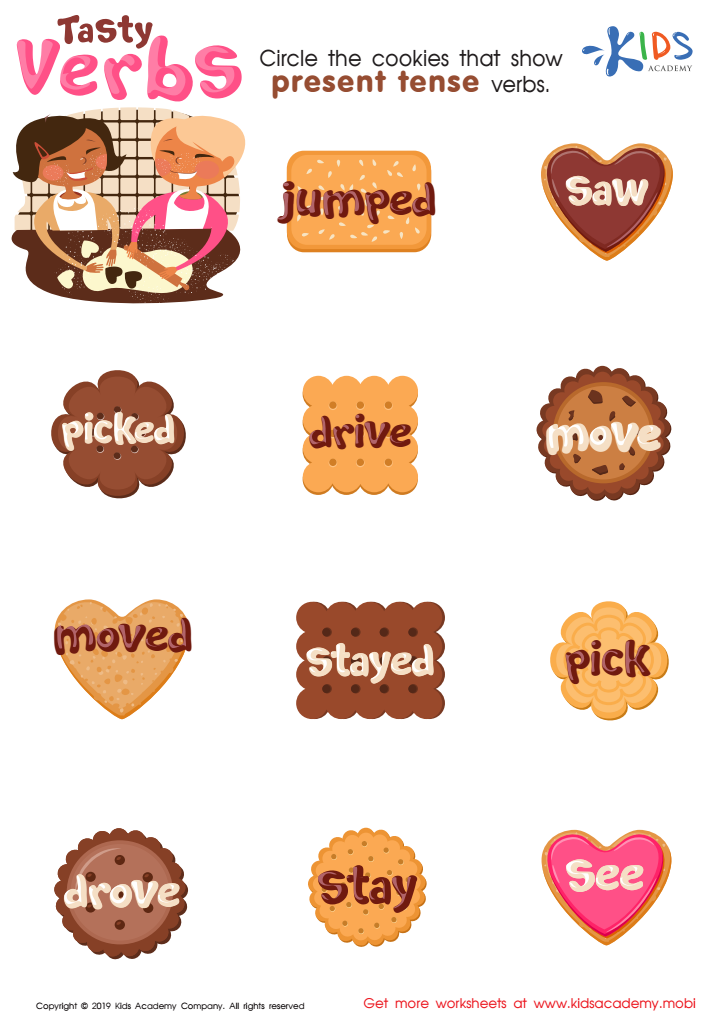
Tasty Verbs Worksheet





.jpg)


Parents and teachers should emphasize verb identification as a crucial aspect of building vocabulary because it forms the foundation of effective communication and comprehension skills in children. Verbs are action words that convey movement, occurrence, or states of being, making them vital for constructing clear and engaging sentences. By understanding verbs, children can enhance their writing and speaking abilities, allowing them to express thoughts and emotions more creatively and effectively.
Moreover, recognizing different verb forms—like action verbs, helping verbs, or linking verbs—enriches their language proficiency. This understanding supports reading comprehension, as identifying verbs in sentences helps children grasp the meaning and context of texts. Additionally, having a robust vocabulary that includes versatile verbs allows for more expressive storytelling and argumentation.
Furthermore, discussing verbs encourages critical thinking, as it prompts children to consider the nuances of actions, such as varying word choices based on context. Engaging with verbs through games, interactions, or storytelling can make learning enjoyable and reinforce its significance. Ultimately, fostering verb identification not only builds vocabulary but empowers children with essential language skills that are crucial for academic success and effective social interactions.








