
Critical thinking development Reading Worksheets
5 filtered results
Difficulty Level
Grade
Age
-
From - To
Subject
Activity
Standards
Enhance your child's reading comprehension and critical thinking skills with our engaging Critical Thinking Development Reading Worksheets. Designed for early learners, these worksheets encourage children to analyze texts, draw inferences, and engage with the material meaningfully. Each activity promotes problem-solving and reasoning, empowering kids to think deeply about what they read. Our worksheets are age-appropriate, featuring fun illustrations and diverse topics that captivate young minds. Perfect for home or classroom use, they provide a structured way for children to practice essential skills. Foster a love for reading while developing critical thinking abilities with these high-quality resources. Start exploring today!
Favorites
With answer key
Interactive
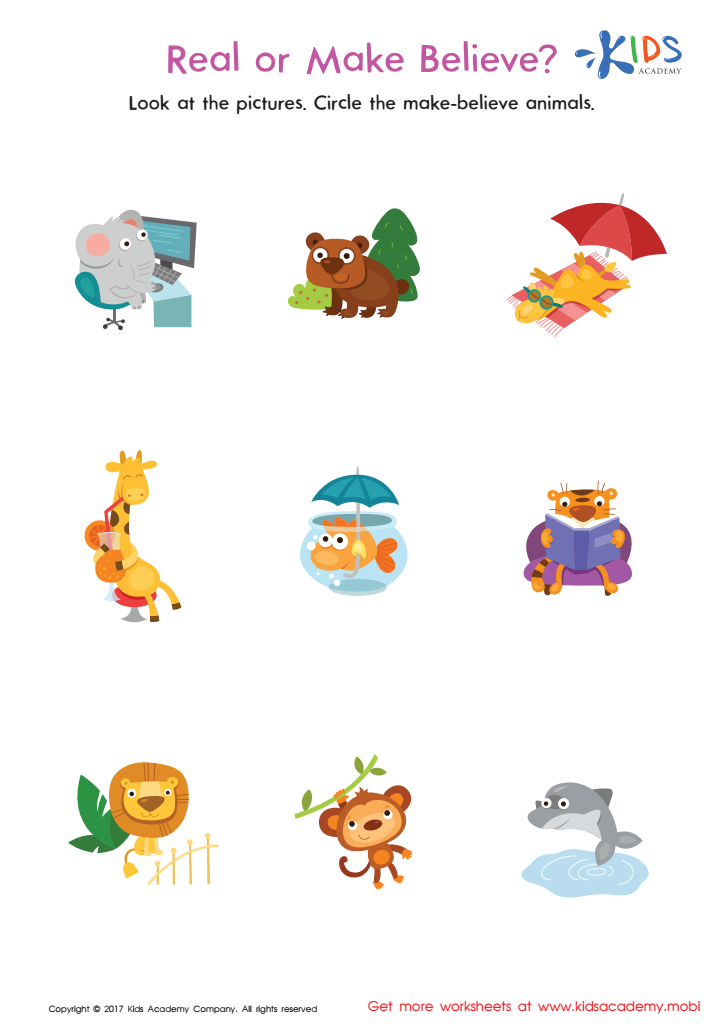
Fact or Make Believe Worksheet
This fun and funny worksheet challenges your child to decide if each animal can do the activity listed. Can a camel go sunbathing? Separating fact from fiction can be entertaining! Motivate your child while they complete this PDF worksheet.
 Assign to My Students
Fact or Make Believe Worksheet
Worksheet
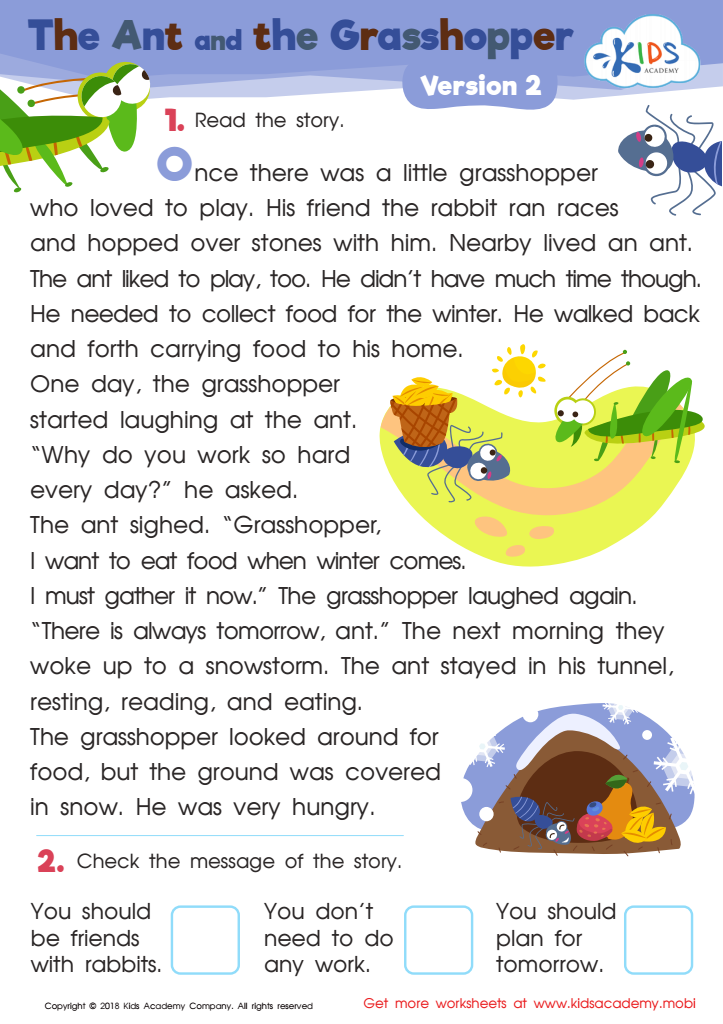
The Ant and The Grasshopper Version 2 Worksheet
Story time is a great way to bond with kids and share a fun story. The Ant and the Grasshopper is a classic with a lesson for everyone. Listen together and then ask your students what the message of the story was. Prompt them with choices from the worksheet and see which one they select. It's a great way to increase their vocabulary and help them learn important lessons.
The Ant and The Grasshopper Version 2 Worksheet
Worksheet
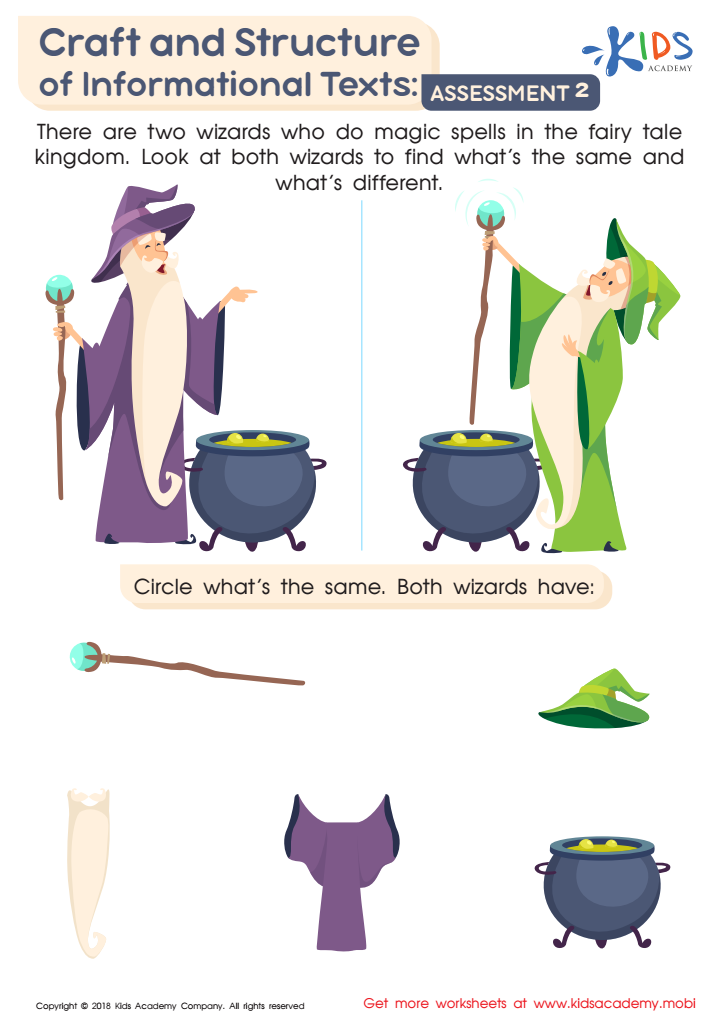
Craft and Structure of Informational Texts: Assessment 2 Worksheet
This assessment has kids looking at two similar fairy tale wizards, focusing on their visuals to find the similarities and differences. Then, they'll circle the things they both have. It's a great way to help children hone their detail-oriented comprehension skills, which is essential when using informational texts.
Craft and Structure of Informational Texts: Assessment 2 Worksheet
Worksheet
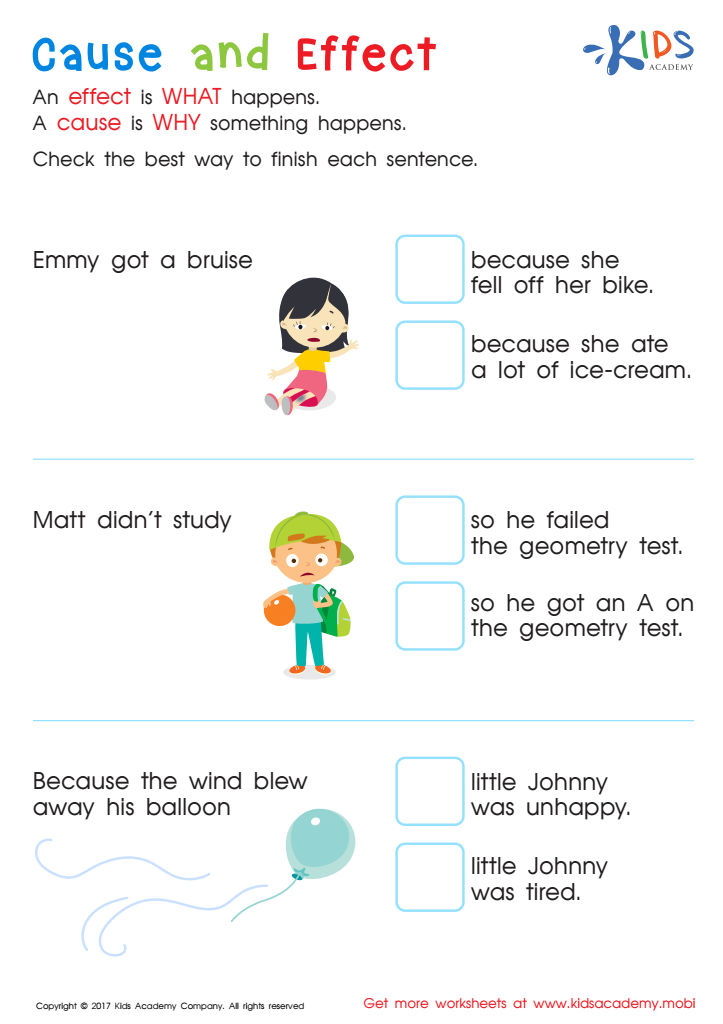
Cause and Effect Worksheet
Improve your child's reading comprehension and critical analysis skills with this cause and effect worksheet PDF! Have your child use the examples to create their own story, strengthening their understanding of the concept.
Cause and Effect Worksheet
Worksheet
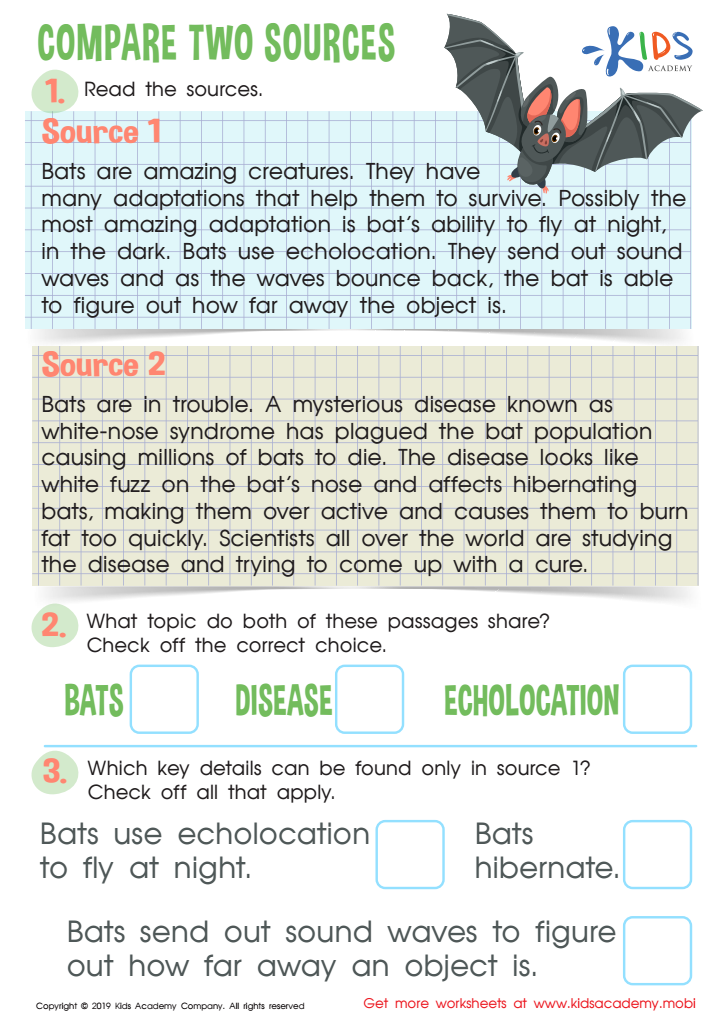
Compare Two Sources Worksheet
Reading exposes us to new words, spelling, and info about different topics. Kids can practice their reading skills, and learn about bats, with this worksheet. Read the two sources in the picture, then help your kids answer the questions at the bottom.
Compare Two Sources Worksheet
Worksheet
Join Kids Academy for Free
Who is primarily going to use this learning content?








Critical thinking development is crucial for children, as it fosters essential skills they will rely on throughout their lives. For parents and teachers, nurturing these skills through reading greatly enhances a child’s cognitive abilities. When students engage with diverse texts, they learn to analyze, evaluate, and synthesize information, which helps them distinguish between facts and opinions. This process encourages curiosity and fosters a sense of independence in thinking.
Moreover, critical thinking developed through reading enables children to tackle complex problems more effectively. As they explore various perspectives and contexts in literature, they cultivate empathy and understanding, skills vital for success in an increasingly interconnected world. Asking open-ended questions about texts—such as “What might the character have done differently?” or “How does this relate to current events?”—stimulates deeper reflection and discourse.
In a rapidly evolving information landscape, critical thinking prepares children for challenges they will face in their education and future careers. It fosters informed decision-making, helping them navigate societal complexities. Ultimately, enriching a child’s reading experience with a focus on critical thought not only enhances academic performance but also lays the foundation for reflective, engaged, and proactive citizenship. This is why parents and teachers should prioritize critical thinking in education.








