Understanding life cycles Reading Worksheets
3 filtered results
-
From - To
Explore our "Understanding Life Cycles Reading Worksheets" designed to engage young learners in the fascinating process of life cycles through interactive reading exercises. Tailored for early grade children, these worksheets enhance literacy skills while introducing concepts like growth and development in various organisms, from plants to animals. Each activity is crafted to encourage comprehension and critical thinking, making learning both fun and educational. Perfect for classroom and home use, our worksheets support differentiated learning and cater to diverse skill levels. Help your child discover the wonders of nature's cycles, fostering curiosity and love for learning in a supportive environment.
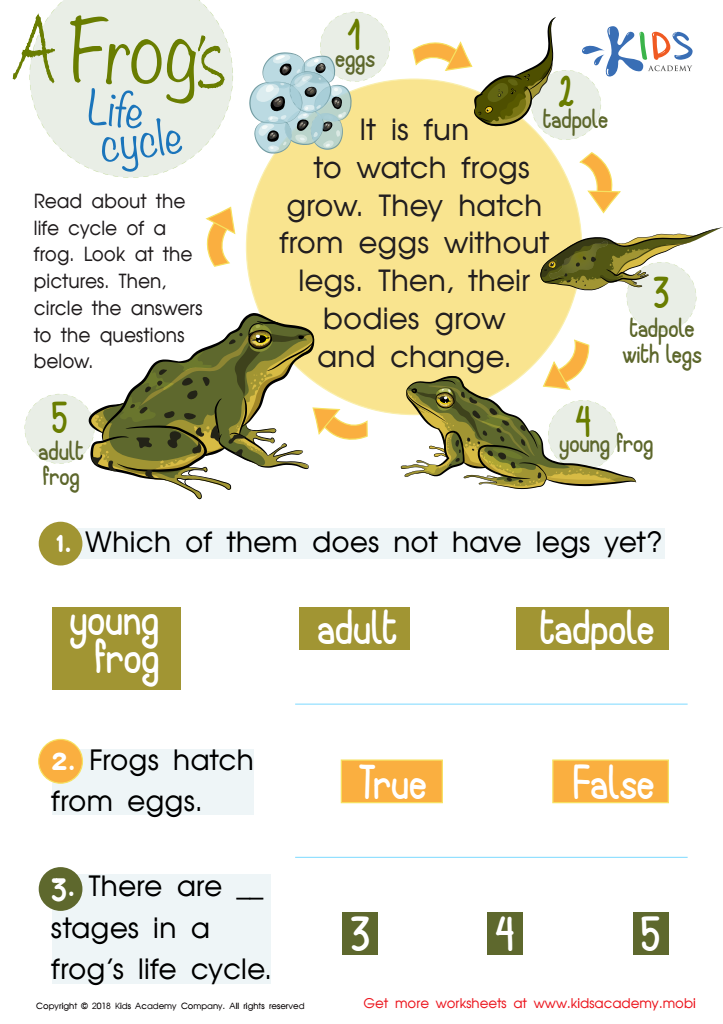
A Frog’s Life Cycle Worksheet
 Assign to My Students
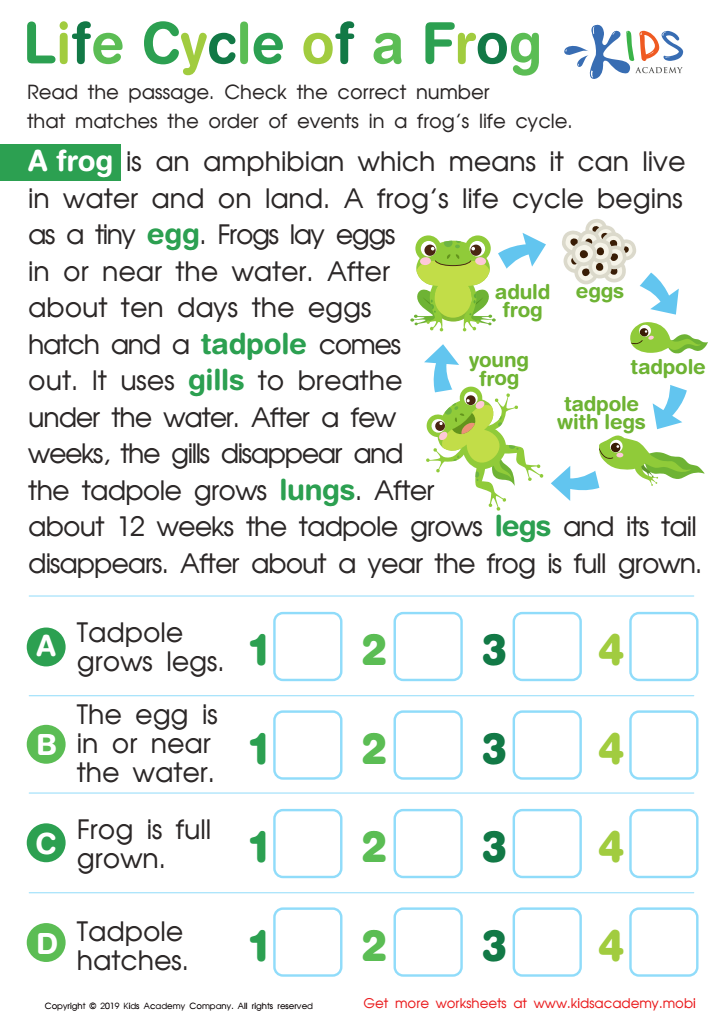
Life Cycle of a Frog Worksheet
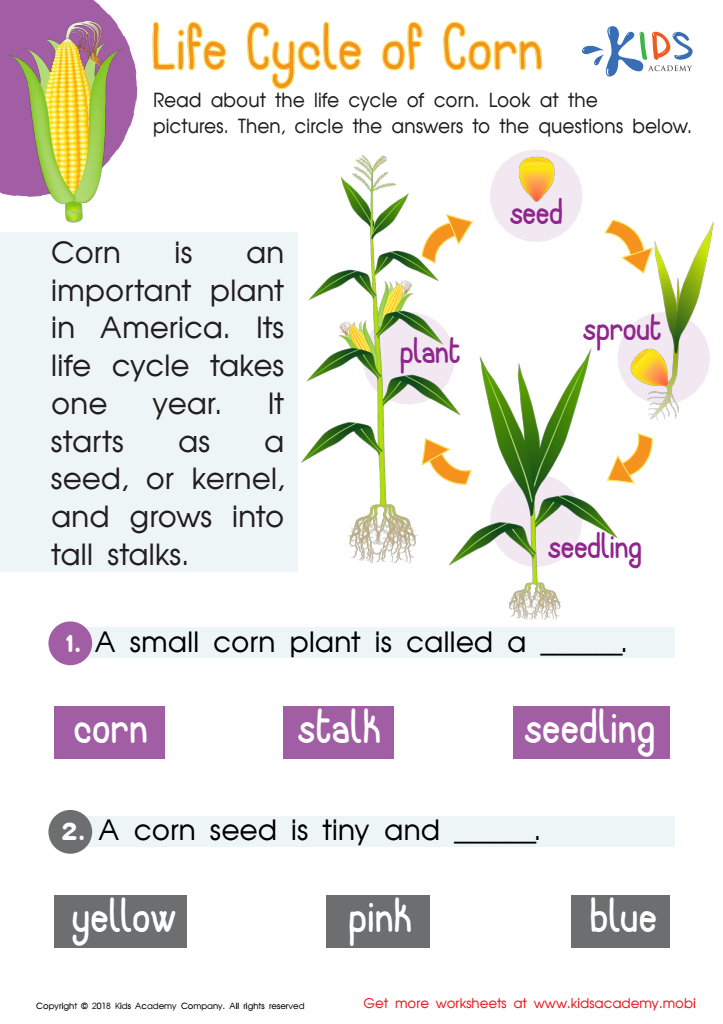
Life Cycle of Corn Worksheet






Understanding life cycles is essential for both parents and teachers because it provides children with foundational knowledge about the natural world, promoting curiosity and respect for living things. Life cycles illustrate the processes of growth and transformation that all organisms undergo, helping children appreciate diversity in nature through the stages of development—such as birth, growth, reproduction, and death.
Engaging with life cycles in a reading context enhances children's literacy skills by exposing them to new vocabulary, concepts, and comprehension strategies. Books about life cycles often incorporate illustrations that capture children's imaginations, making abstract concepts more tangible. This not only supports reading development but also promotes critical thinking as children learn to compare different life cycles and understand the interdependencies within ecosystems.
Furthermore, learning about life cycles can foster responsibility and empathy, especially when connected to real-world experiences, such as caring for plants or animals. This helps instill values regarding environmental stewardship as children recognize their role in the ecosystem.
Overall, understanding life cycles enriches children's educational experiences, empowers them to make meaningful connections with the world around them, and nurtures a sense of responsibility towards nature, all of which are essential skills for informed citizenship.








