Pattern recognition Reading Comprehension Worksheets
3 filtered results
-
From - To
Discover our engaging Pattern Recognition Reading Comprehension Worksheets designed to enhance early literacy skills in young learners. These worksheets focus on helping children identify and analyze patterns in text, a crucial aspect of reading comprehension. By encouraging students to recognize similarities and differences in narratives, they develop critical thinking and analytical skills. Each worksheet features fun, age-appropriate stories followed by questions that promote deeper understanding and retention. Ideal for teachers and parents, these resources are perfect for reinforcing classroom learning or supplementing home education. Foster a love for reading while building essential skills with our thoughtfully crafted worksheets!
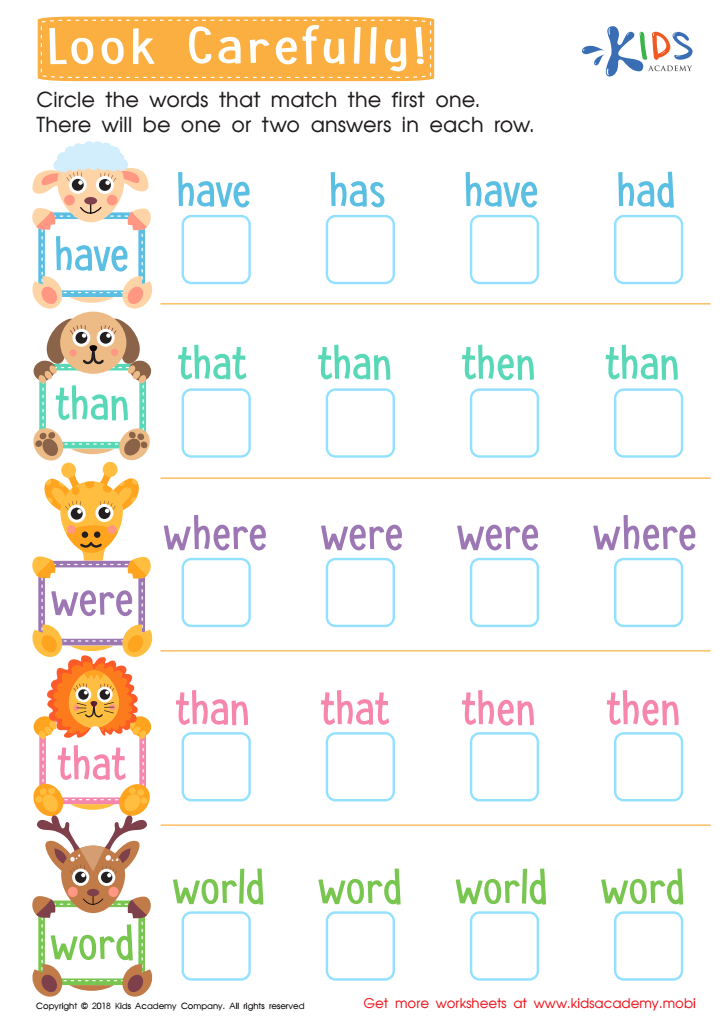
Look Carefully Worksheet
 Assign to My Students
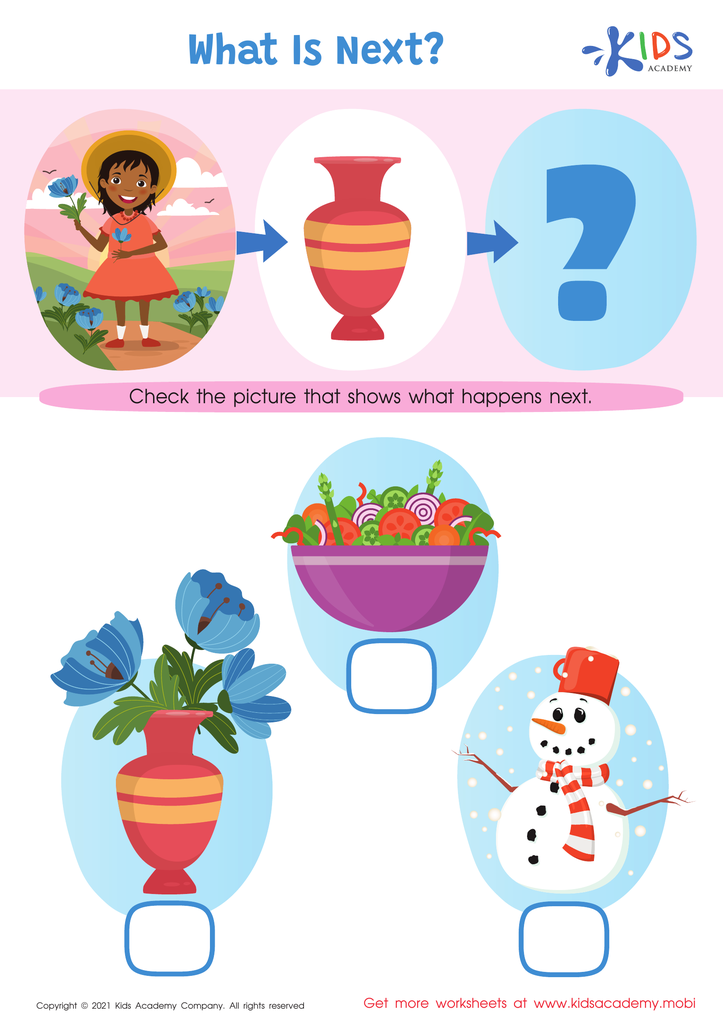
What is Next? Worksheet
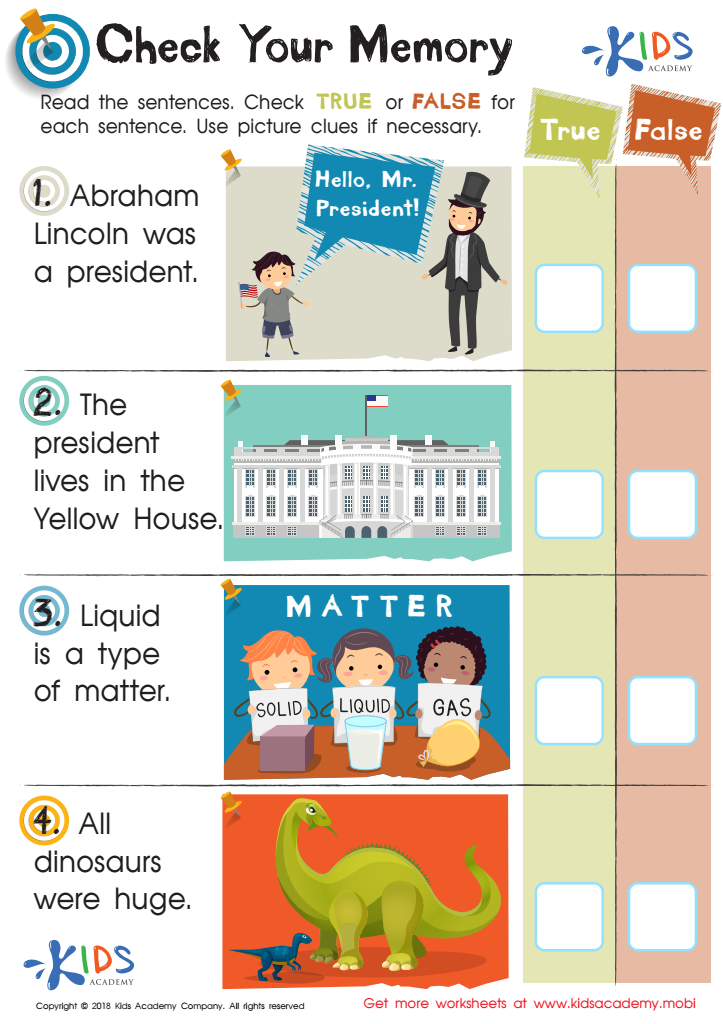
Check Memory Worksheet








Pattern recognition in reading comprehension is crucial for developing strong literacy skills in young learners. It enhances their ability to predict, infer, and draw connections between concepts, facilitating deeper understanding of texts. When students recognize patterns in language, such as phonetics, vocabulary usage, and text structures, they become more proficient readers. This proficiency boosts their confidence and motivation in language arts, fostering a lifelong love for reading.
For parents and teachers, supporting pattern recognition is vital because it lays the foundation for academic success across various subjects. As students encounter new material, their ability to identify patterns allows them to connect previously learned information with new concepts, enhancing retention and comprehension. This skill is particularly important as children engage with increasingly complex texts.
Moreover, recognizing patterns helps students develop critical thinking skills, enabling them to analyze and synthesize information effectively. It prepares them for standardized assessments and enhances their problem-solving abilities in real-world situations. Ultimately, prioritizing pattern recognition in reading comprehension equips children with the tools they need to become successful, independent learners, reinforcing the essential role of both parents and teachers in nurturing these skills.








