Discover our engaging Story Analysis Reading Comprehension Worksheets, designed to enhance students' understanding of narrative elements. These worksheets help young learners break down stories by examining key components such as characters, settings, plots, and themes. With a variety of age-appropriate exercises, students develop critical thinking and analytical skills, fostering a deeper appreciation for literature. Each worksheet provides guided questions and activities that encourage children to reflect on their reading, improving comprehension and storytelling abilities. Perfect for classroom use or at-home practice, our resources support educators in creating an interactive and enriching learning environment for developing readers. Explore our collection today!

Check out this FREE Trial Lesson on Reading Comprehension!

Key Details in a Text

Favorites
With answer key
Interactive
  • Story analysis
  • Reading Comprehension
Who Are The Characters Worksheet

Who Are The Characters Worksheet

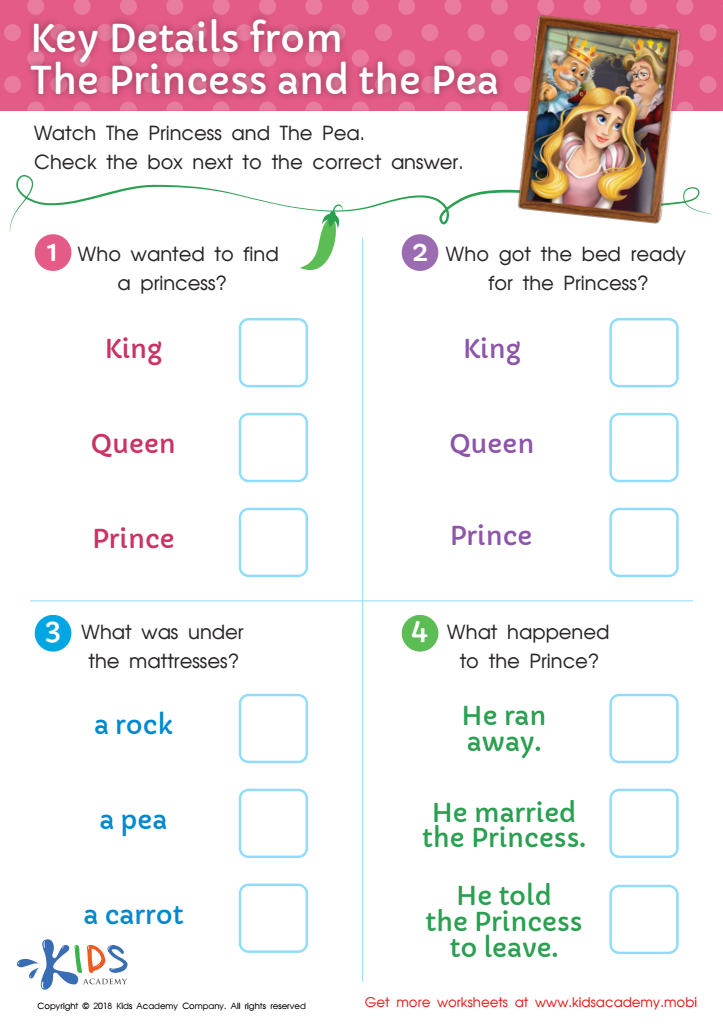
This worksheet tests your child's reading skills. Read each sentence out loud with them, then ask which of the two pictures match it. Help them check, then repeat this for the other sentences.
Who Are The Characters Worksheet
Worksheet
Key Details from the Princess and the Pea Worksheet

Key Details from the Princess and the Pea Worksheet

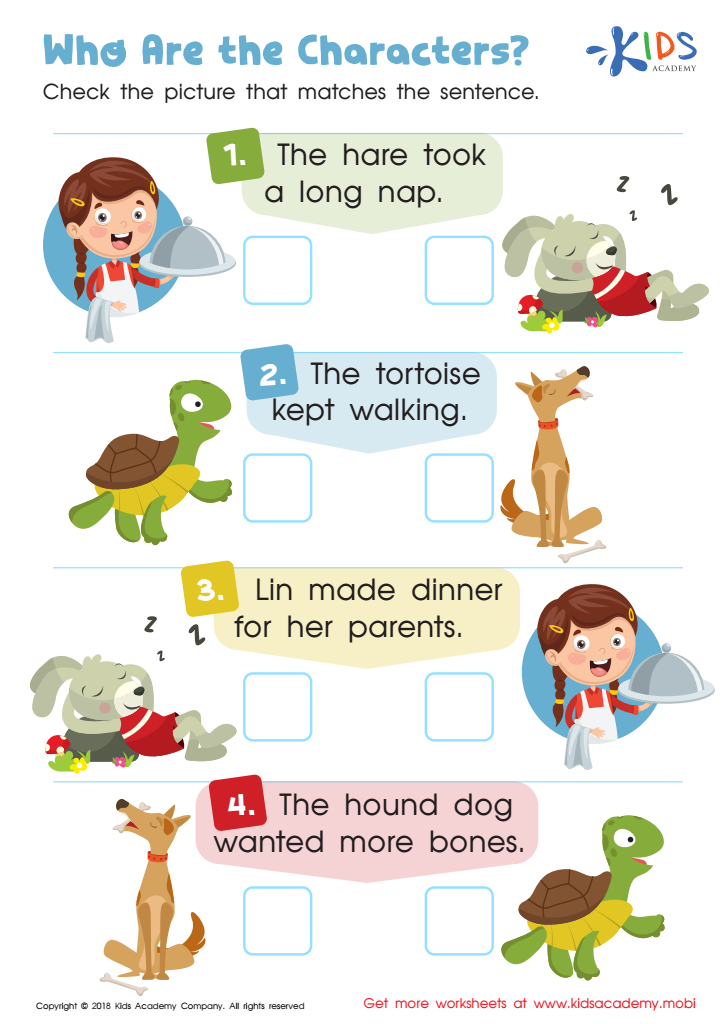
After reading The Princess and the Pea, ask your students questions to assess their comprehension of the story. Check their knowledge of key details. This printable can be used to help evaluate their understanding. Encouraging the recall of story events helps build important reading skills.
Key Details from the Princess and the Pea Worksheet
Worksheet
Questions About Stories: Assessment 3 Worksheet

Questions About Stories: Assessment 3 Worksheet

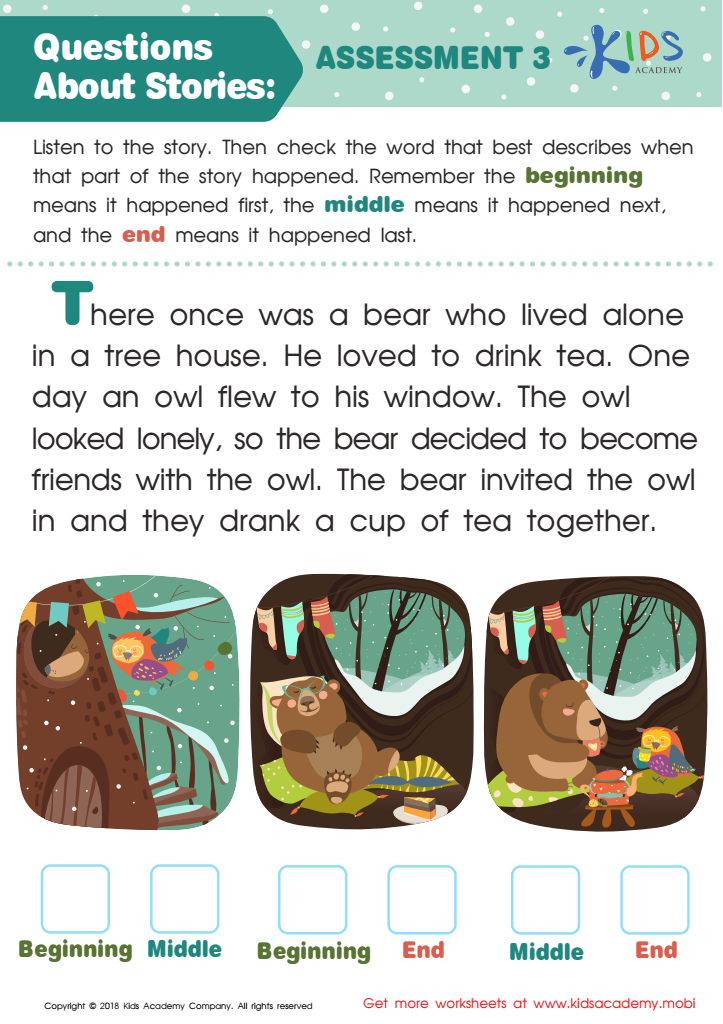
Help kids understand stories by having them listen to a story and check boxes for the beginning, middle, and end. This worksheet makes it fun for even the youngest learners to recall story elements and sequence of events. Let them listen to the story from start to finish, then look at the pictures to check which part of the story they depict.
Questions About Stories: Assessment 3 Worksheet
Worksheet
Craft and Structure of Stories: Assessment 2 Worksheet

Craft and Structure of Stories: Assessment 2 Worksheet

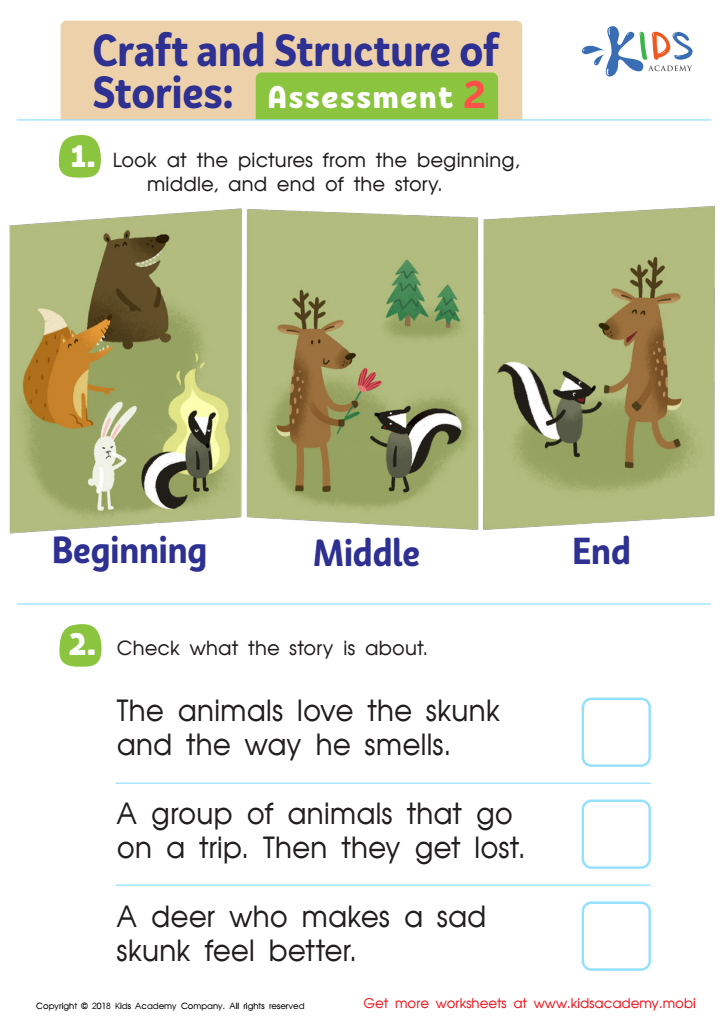
Help your child assess their story sequencing and reading comprehension skills using this cute worksheet! It encourages them to look at the three pictures on the page, each representing a scene from the beginning, middle and end. Ask them what the story is about, then let them check the box next to the correct answer. This is a great way to ensure they understand the main events of a story.
Craft and Structure of Stories: Assessment 2 Worksheet
Worksheet
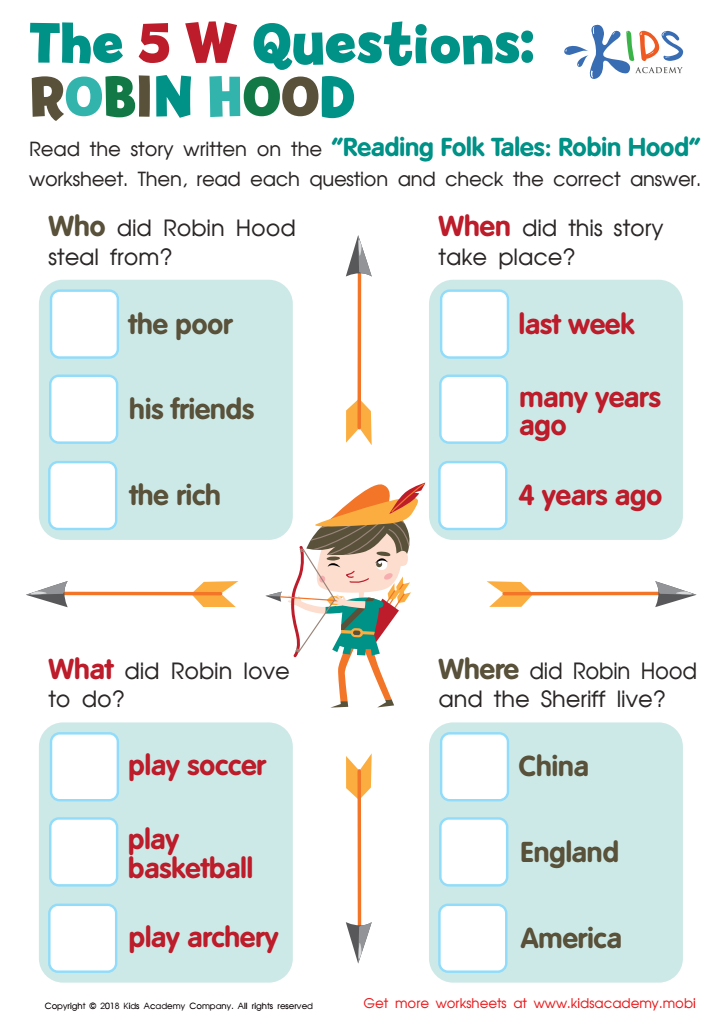
The 5 W Questions: Robin Hood Worksheet

The 5 W Questions: Robin Hood Worksheet

Before embarking on this Robin Hood adventure, ensure your child reads and comprehends the 'Reading Folk Tales: Robin Hood' worksheet. Have them consider the story's lessons, and observe the details. Read the questions and help your kids select the correct answers.
The 5 W Questions: Robin Hood Worksheet
Worksheet
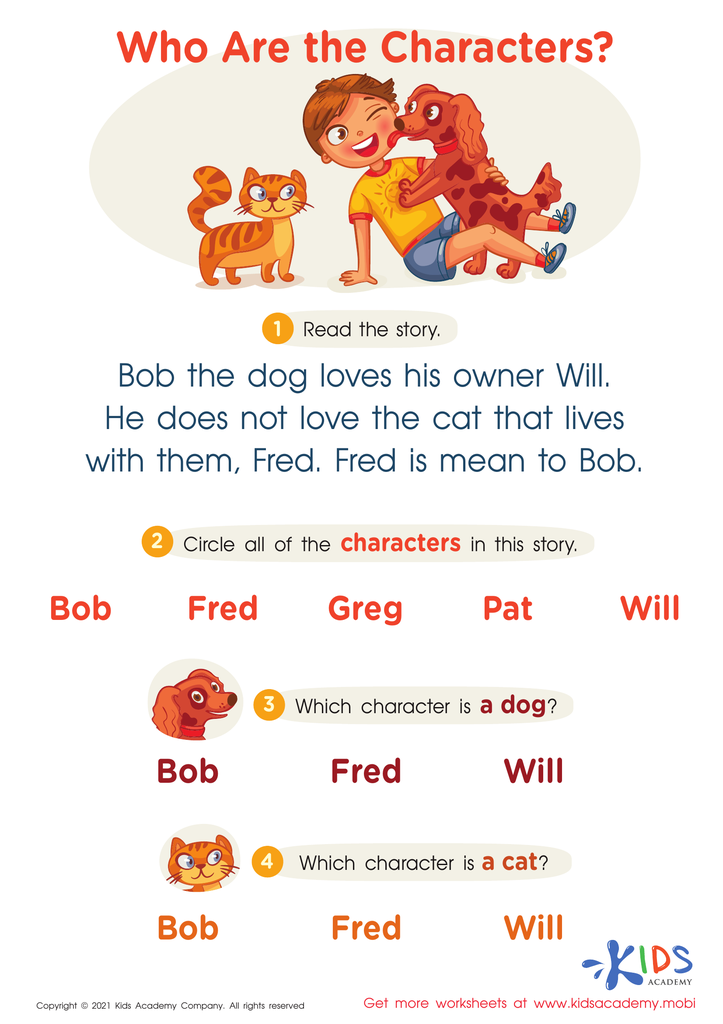
Who Are the Characters? Worksheet

Who Are the Characters? Worksheet

Original: The annual summer festival takes place on the last day of June and is celebrated with a parade and a carnival that features rides, games, and yummy food. Rewrite: Every June end marks the annual summer festival with a parade and carnival. Enjoy rides, games, and delicious food!
Who Are the Characters? Worksheet
Worksheet
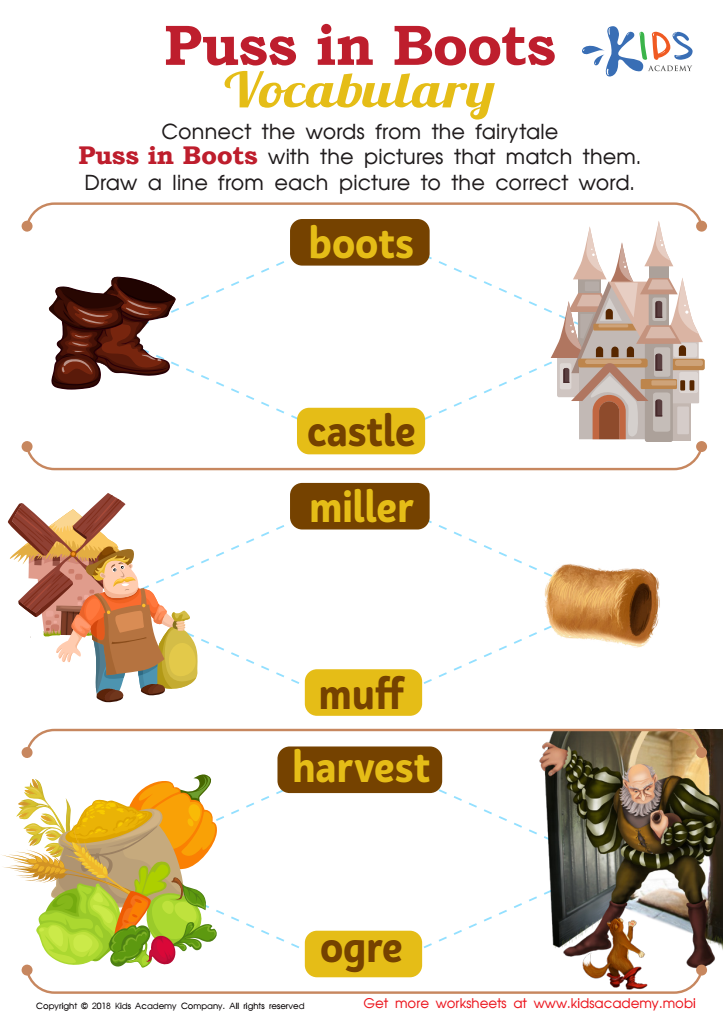
Puss in Boots Vocabulary Worksheet


Puss in Boots Vocabulary Worksheet

Let your kids enjoy story-telling while learning at the same time. Help them learn from the fairytale, Puss in Boots, by connecting words from the worksheet with the matching pictures. Ask them to draw a line between each picture and corresponding word to build their vocabulary.
Puss in Boots Vocabulary Worksheet

Worksheet


Story analysis and reading comprehension are vital skills that significantly enhance a child's literacy development and overall understanding of the world. When parents and teachers prioritize comprehension, they not only help children decode words but also empower them to derive meaning from text, fostering a deeper connection to the material.

Story analysis encourages critical thinking and engagement with the narrative, enabling children to identify elements such as character motives, plot structure, and themes. This process cultivates empathy and perspective-taking, allowing youngsters to appreciate diverse viewpoints and experiences. Furthermore, strong comprehension skills are linked to better academic performance across subjects, as reading is a fundamental tool for learning.

When parents and teachers emphasize story analysis, they also contribute to building a child's confidence and enthusiasm for reading. Engaged readers are more likely to explore literature beyond the classroom, sparking a lifelong love for reading. Communication between parents and teachers about a child's progress in these areas can create a supportive learning environment, ensuring that children develop the critical skills necessary for success in school and beyond. Overall, investing time in story analysis and reading comprehension is essential for nurturing well-rounded, literate individuals.