Character recognition Reading Fiction Worksheets
4 filtered results
-
From - To
Unlock your child's reading potential with our Character Recognition Reading Fiction Worksheets! These compelling resources help young readers identify and understand characters in various fiction stories. Our worksheets are expertly designed to enhance comprehension and critical thinking by focusing on character traits, motivations, and development. Perfect for early graders, each activity combines fun and learning to foster a love for reading while building essential skills. Explore a variety of engaging exercises that make character recognition an exciting adventure. Give your child the tools they need to thrive in their reading journey with our top-notch educational materials!
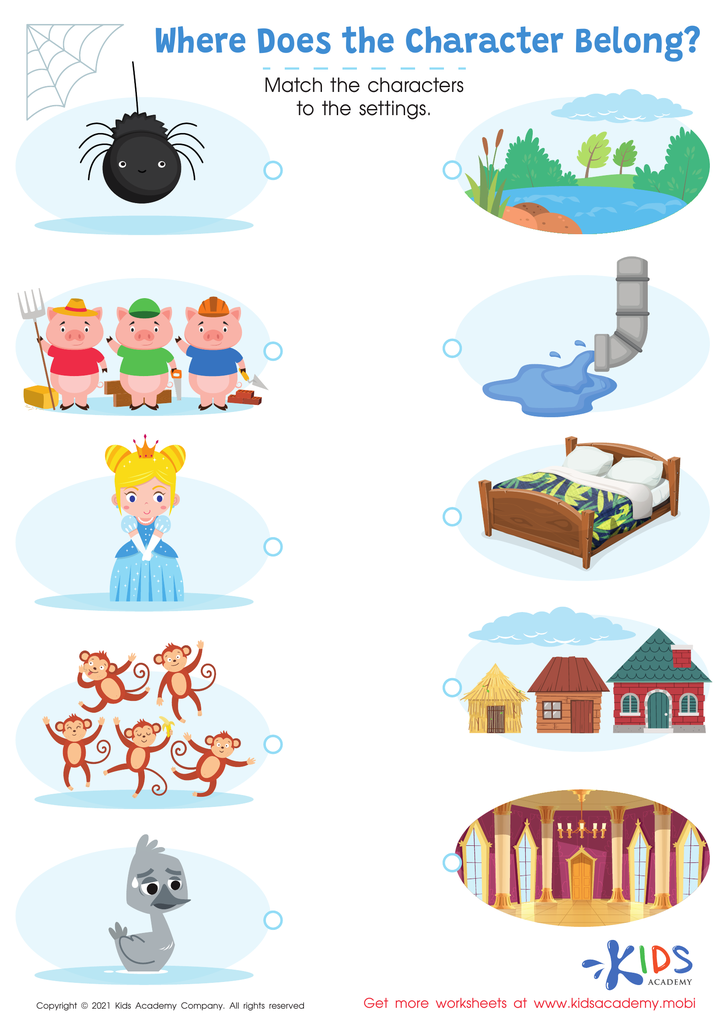
Where Does the Character Belong? Worksheet
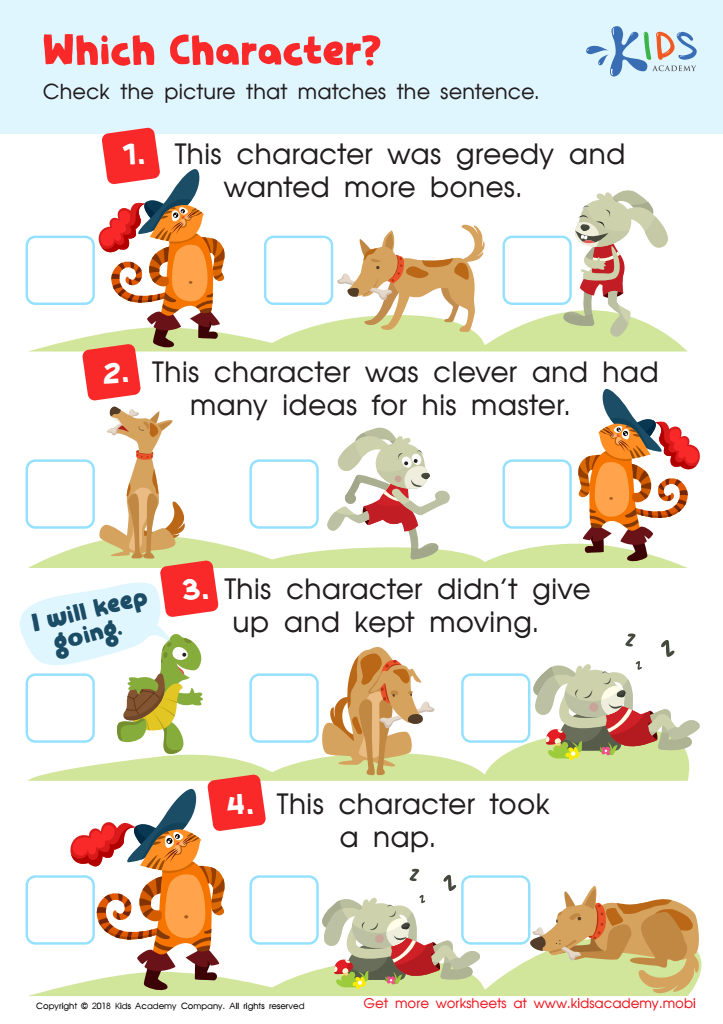
Which Character Worksheet
 Assign to My Students
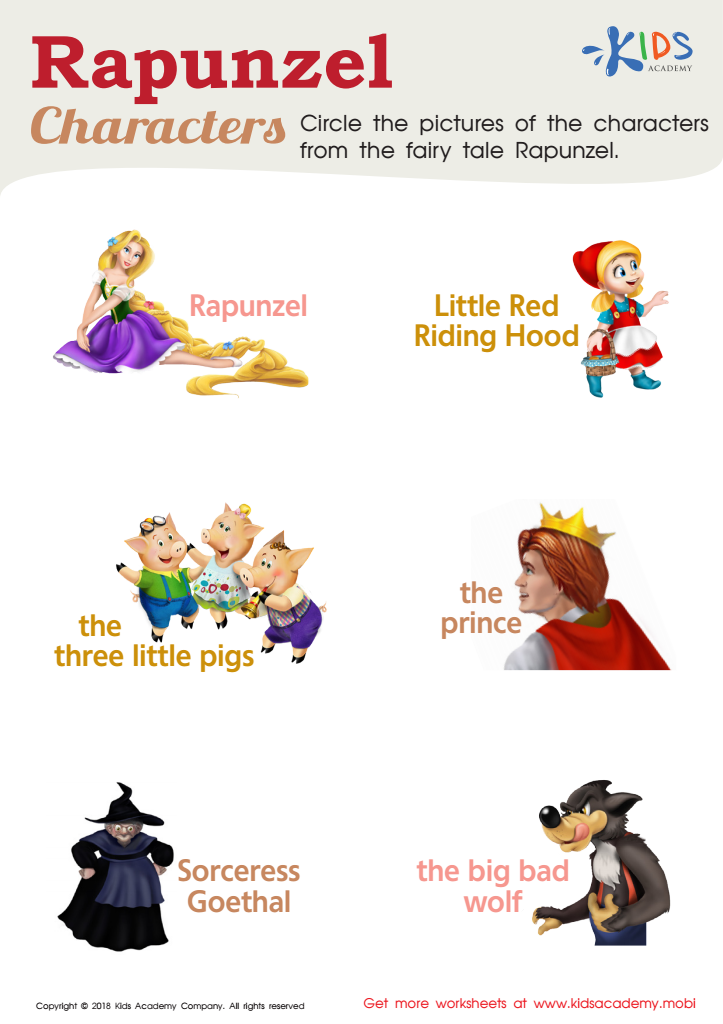
Rapunzel Characters Worksheet
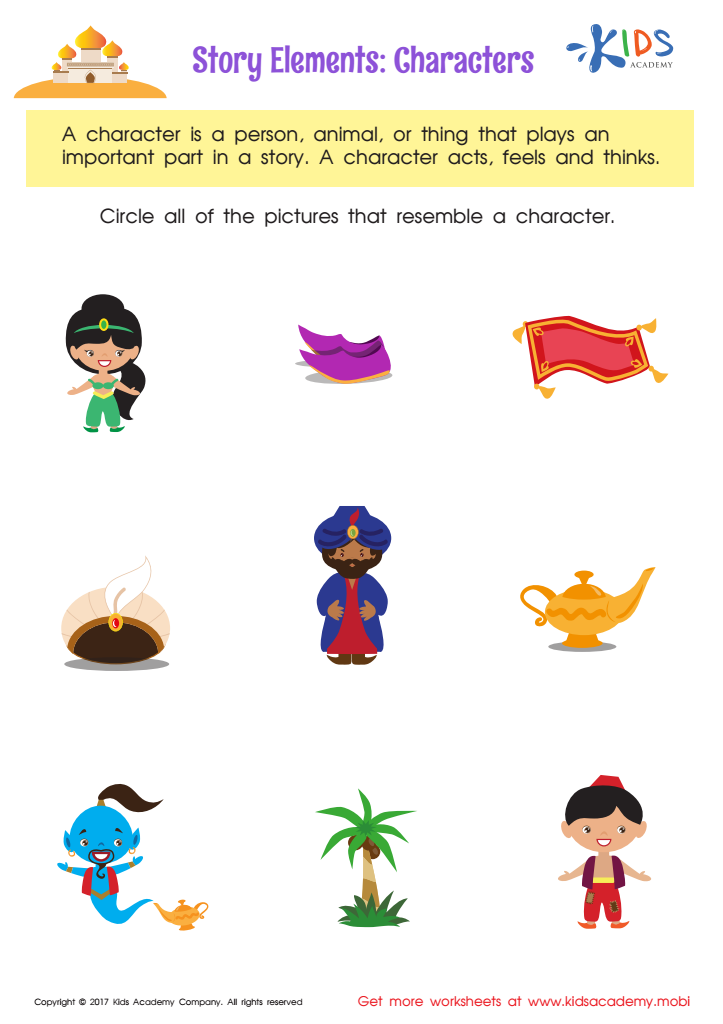
Story Elements Printable


.jpg)


.jpg)


Parents and teachers should care about character recognition in reading fiction because it is a key component in developing critical thinking and empathy in children. When young readers are adept at recognizing and understanding characters, they gain the ability to follow complex narrative structures and grasp the motivations and emotions driving each character's actions. This deepens their comprehension skills, making reading a more engaging and meaningful activity.
Recognizing characters also supports vocabulary development and language skills. As children learn to describe the traits, feelings, and actions of different characters, they use a broader and richer vocabulary. This verbal proficiency is crucial for effective communication, both in academic settings and everyday life.
Moreover, character recognition fosters empathy. When children identify with characters in stories, they learn to see the world from different perspectives. This helps them develop a sense of compassion and understanding for others, which are essential social skills.
Additionally, character-driven narratives often present moral and ethical dilemmas. Discussing these with young readers encourages moral reasoning and helps them form their value systems. Ultimately, prioritized character recognition in fiction not only enhances literary skills but also builds essential life skills that promote personal growth and social engagement.








