Moral understanding Reading Fiction Worksheets
5 filtered results
-
From - To
Explore our engaging Moral Understanding Reading Fiction Worksheets designed to enhance students’ comprehension and critical thinking skills. These worksheets encourage young readers to delve into various fictional narratives, identifying moral dilemmas and ethical lessons within the stories. By analyzing characters’ choices and the consequences of their actions, children develop a deeper understanding of values such as honesty, kindness, and responsibility. Ideal for classroom or at-home learning, these resources foster meaningful discussions about right and wrong, empowering students to apply these lessons in their own lives. Download now to inspire thoughtful reflection and enrich your reading curriculum!
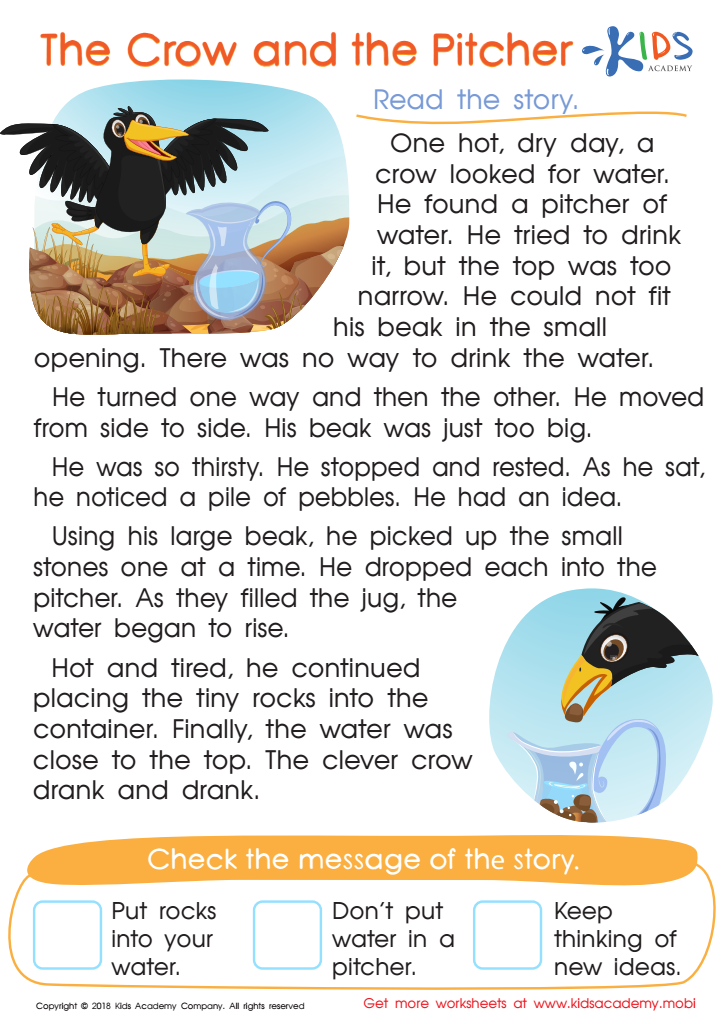
The Crow and the Pitcher Worksheet
 Assign to My Students
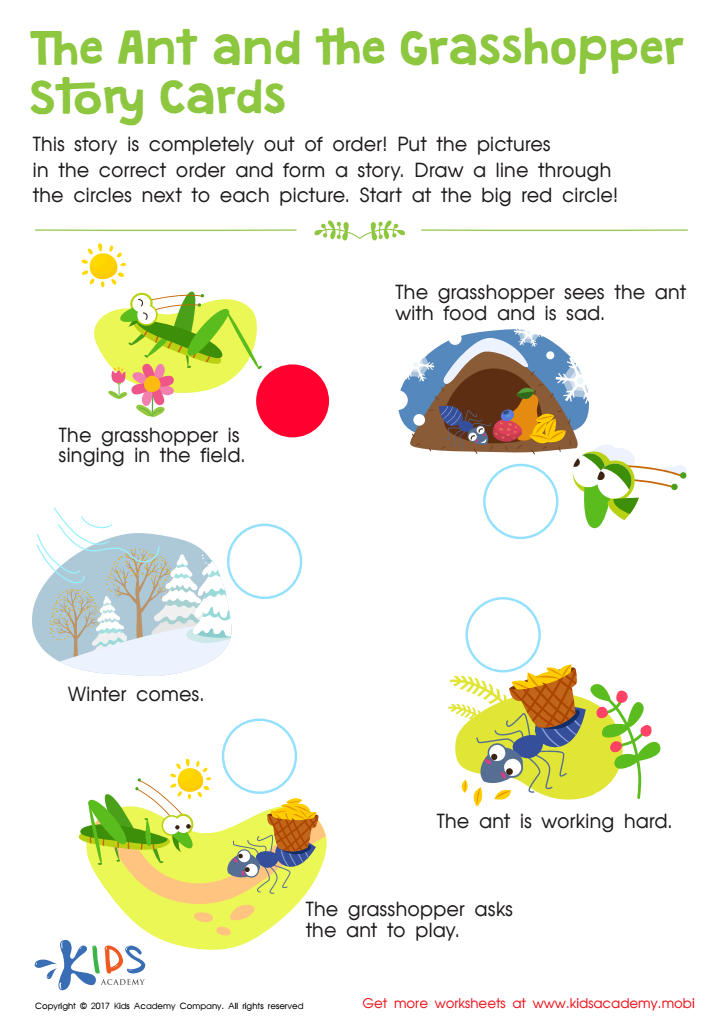
The Ant and The Grasshopper Worksheet
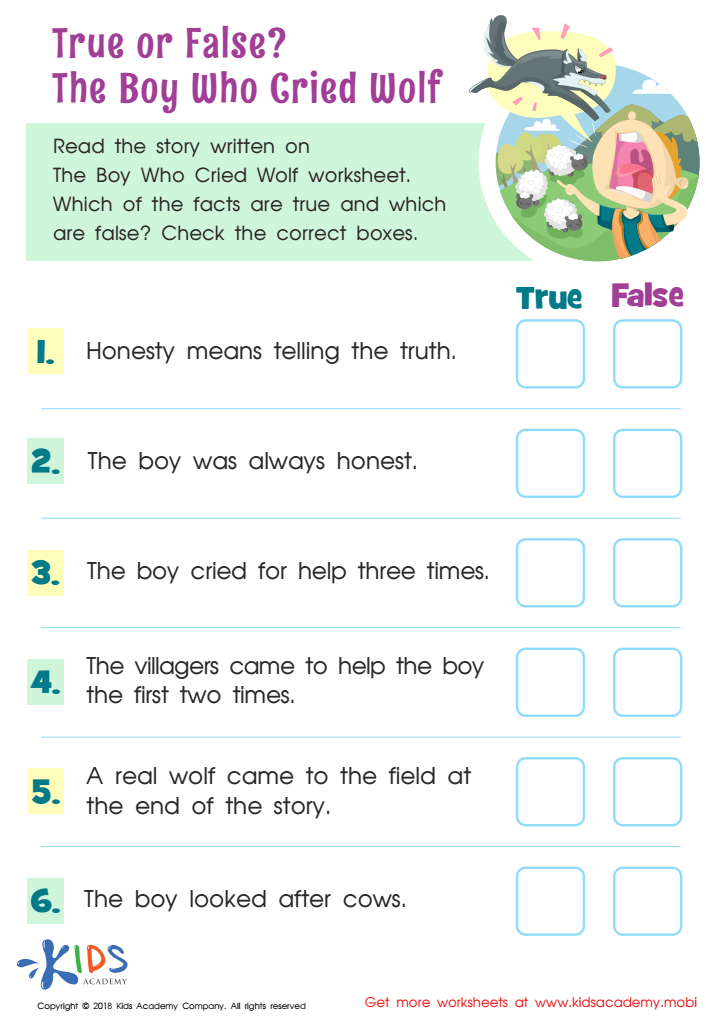
True or False? The Boy Who Cried Wolf Worksheet
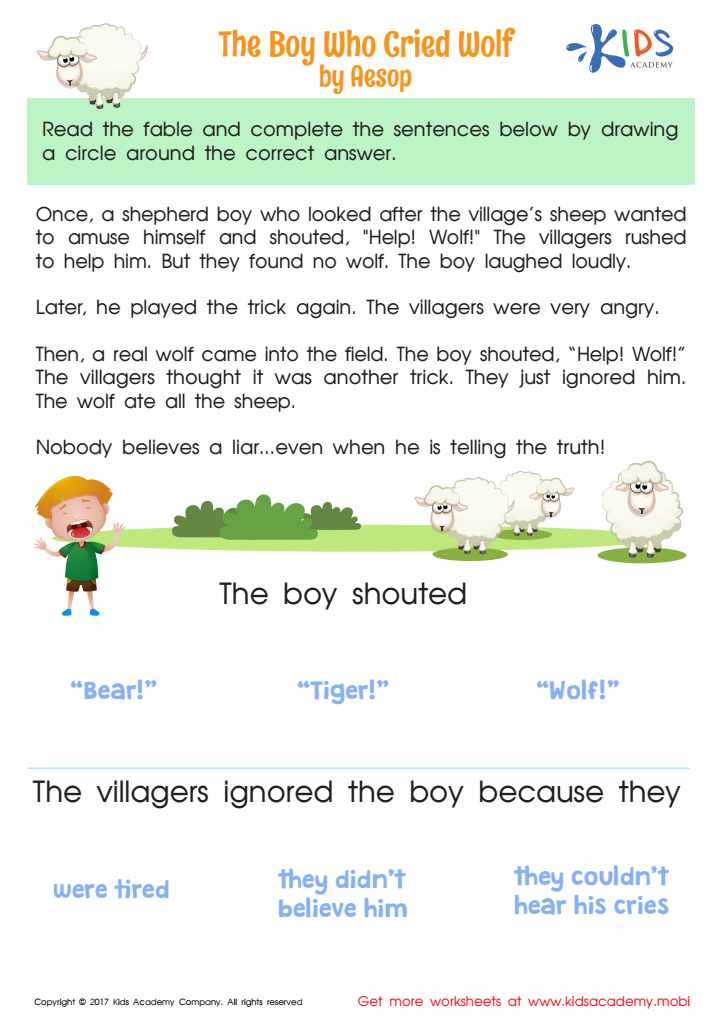
The Boy Who Cried Wolf Worksheet
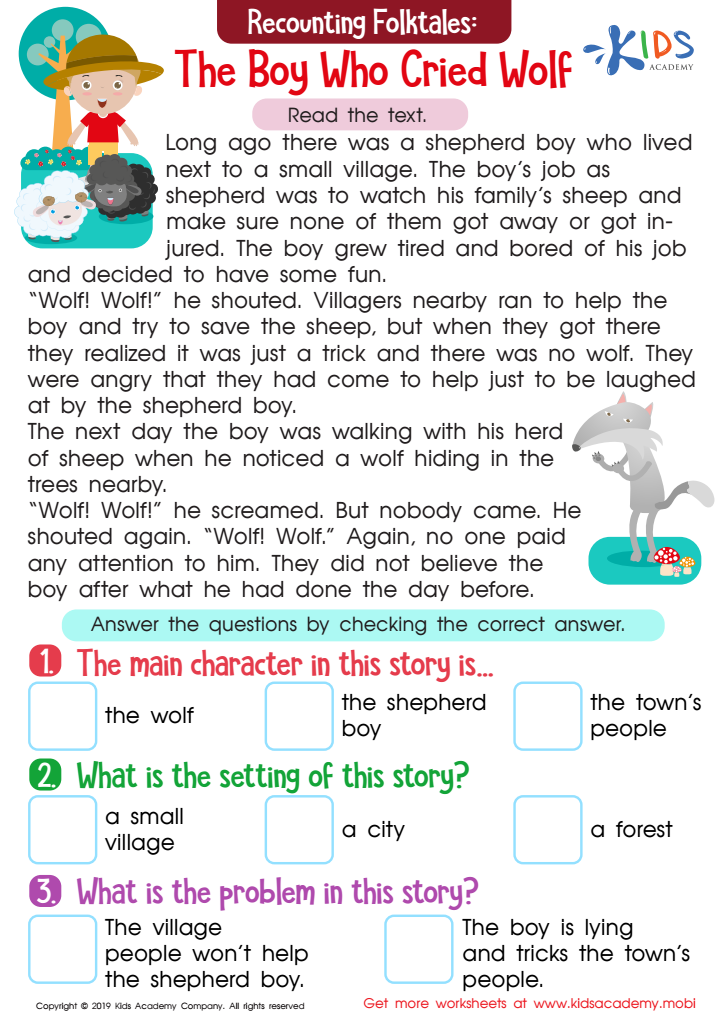
The Boy Who Cried Wolf Part 1 Worksheet







Moral understanding through reading fiction is vital for both parents and teachers as it nurtures empathy, ethical reasoning, and critical thinking in children. Engaging with diverse characters and scenarios allows young readers to step into another's shoes, fostering empathy and a deeper understanding of different perspectives. This emotional connection is crucial in helping children navigate real-life social dynamics and understand complex moral dilemmas.
Furthermore, reading fiction presents opportunities for discussion about right and wrong, justice, and the consequences of actions. Stories often center around characters facing moral choices, giving children a platform to explore these themes and articulate their thoughts. When adults guide discussions about these themes, they can help children develop their ability to analyze situations and cultivate their own moral compass.
Additionally, fiction can serve as a safe space for children to confront difficult emotions and ethical questions, enabling them to process these concepts in digestible ways. By prioritizing moral understanding through fiction, parents and teachers foster well-rounded individuals capable of making compassionate, informed decisions. Ultimately, children's exposure to morally rich narratives equips them with the skills needed to thrive in a diverse, interdependent world.








