Sentence construction Reading Fiction Worksheets
6 filtered results
-
From - To
Enhance your child’s literacy skills with our engaging Sentence Construction Reading Fiction Worksheets! Designed for early grade learners, these worksheets provide a fun and interactive way to improve sentence-building abilities while exploring captivating fiction stories. By combining reading comprehension with hands-on activities, students will learn to create coherent and grammatically correct sentences, fostering their writing skills and boosting their confidence. Our worksheets cater to various learning styles, ensuring that every child can grasp sentence structure effectively. Perfect for classroom use or at-home learning, these resources make reading and writing a delightful adventure. Start your child’s journey to literary excellence today!
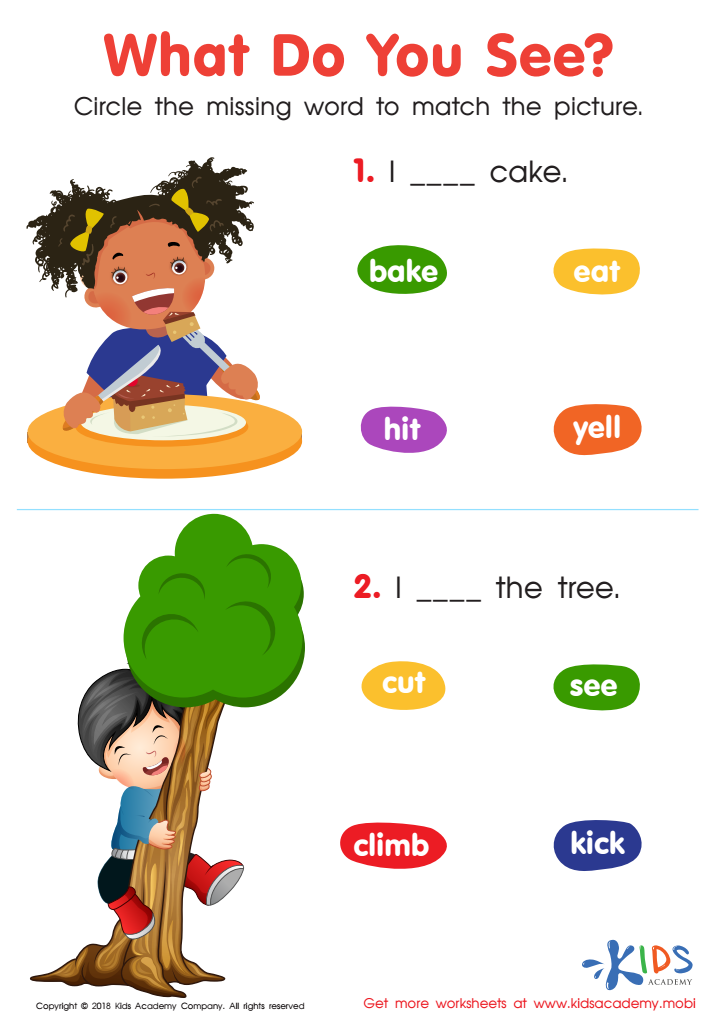
What Do You See? Reading Worksheet
 Assign to My Students
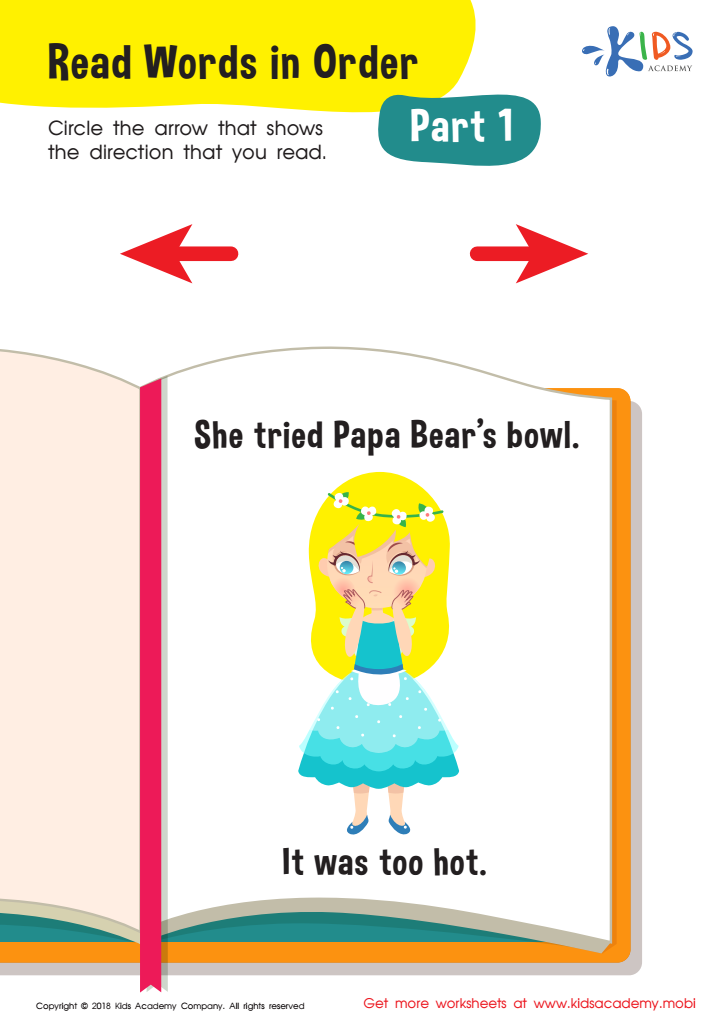
Read Words Order Part 1 Worksheet
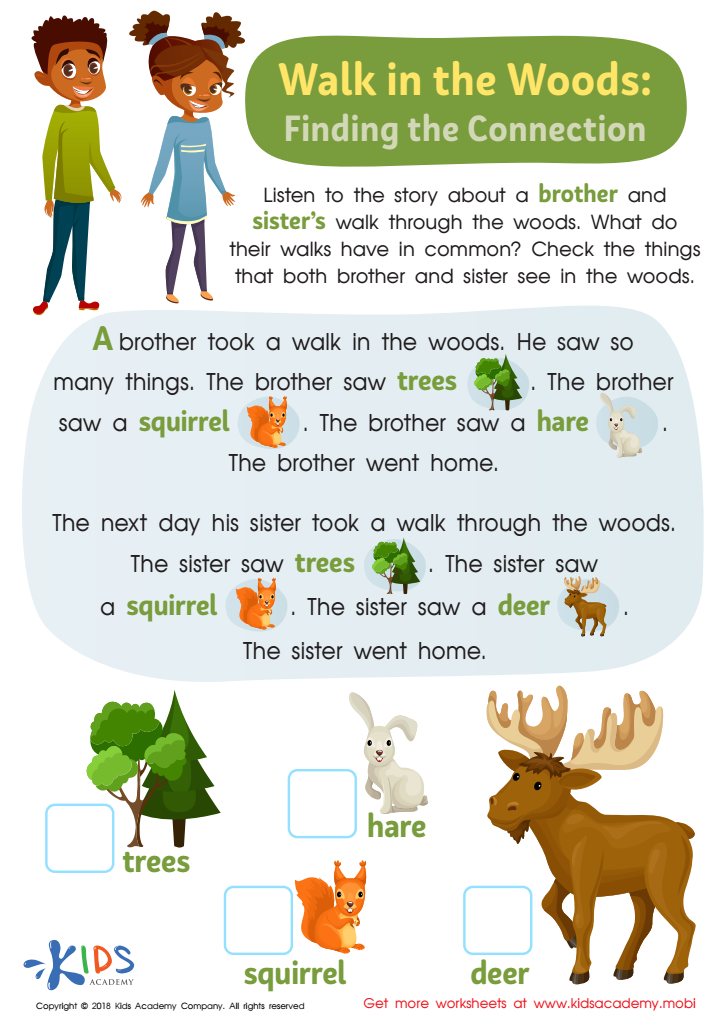
Walk In the Woods: Finding Connections Worksheet
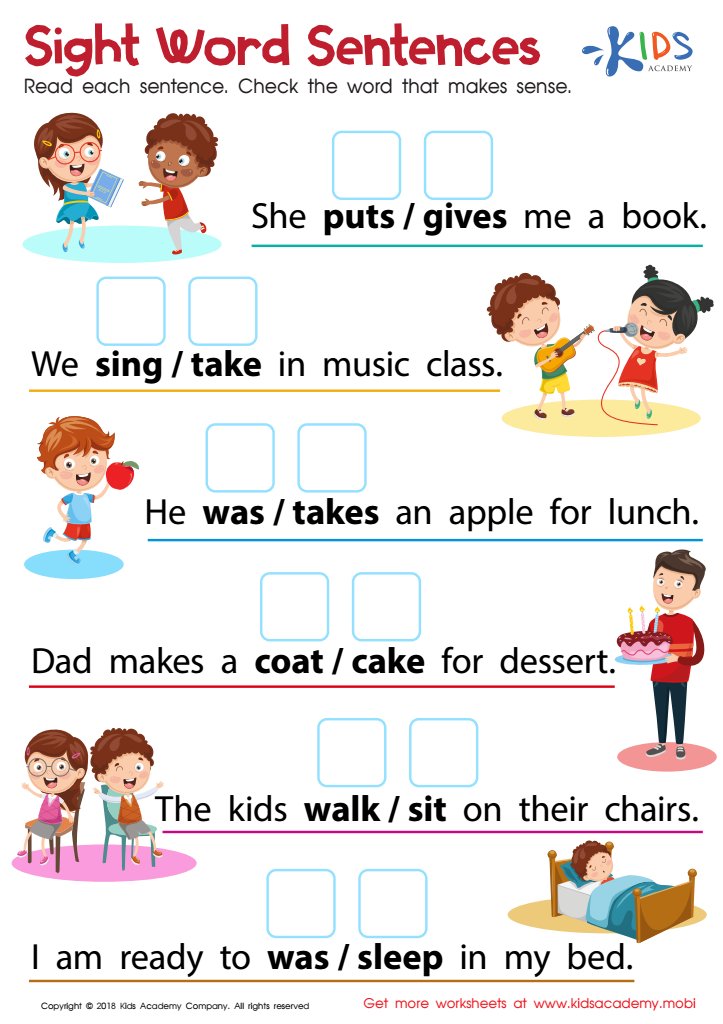
Sight Words Sentences Worksheet
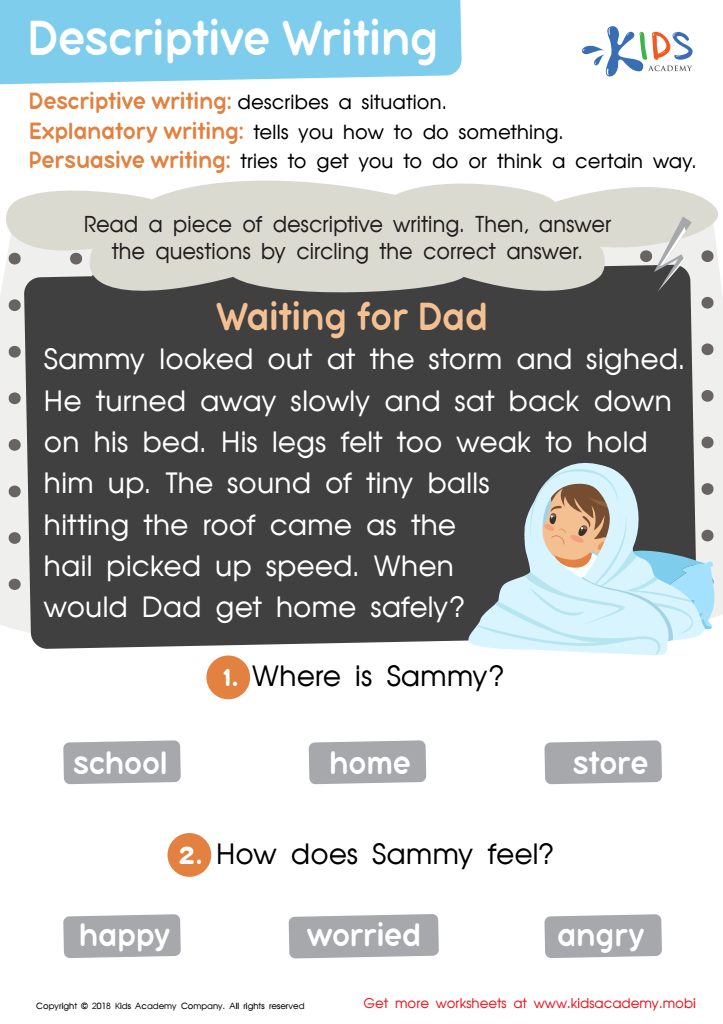
Descriptive Writing Worksheet: Part 2
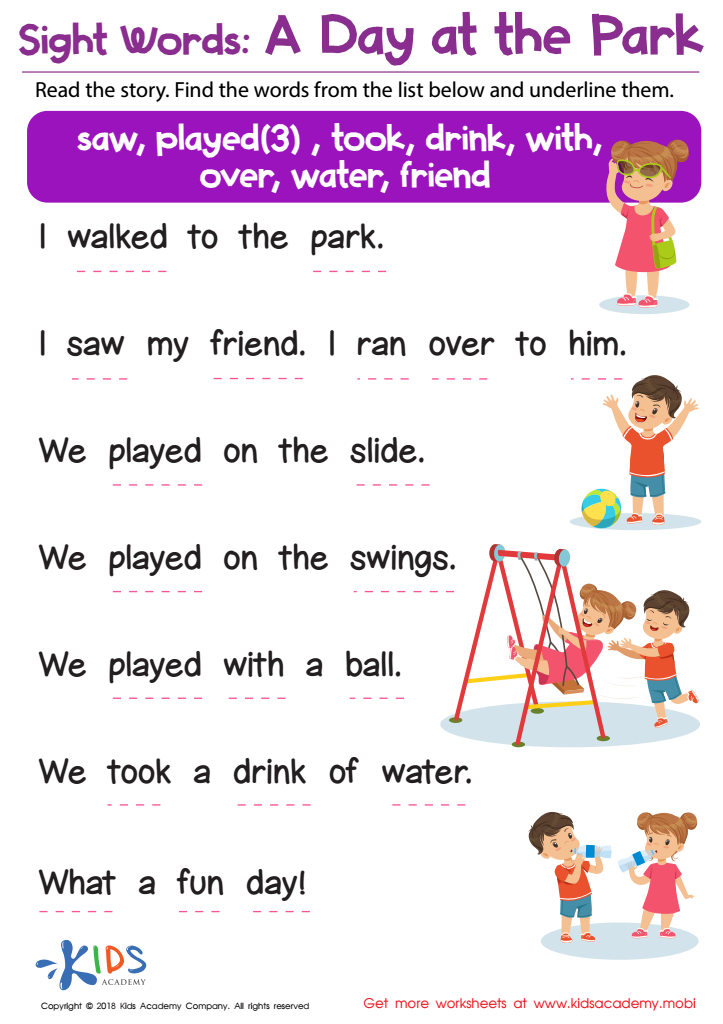
Sight Words: A Day at the Park Worksheet






.jpg)

Parents and teachers should care about sentence construction in reading fiction because it fundamentally shapes a child's language development and comprehension skills. Effective sentence construction enhances children's ability to understand story elements, including plot, character development, and settings, thus deepening their appreciation for literature.
When children engage with well-structured sentences in fiction, they naturally absorb grammar and syntax. This exposure fosters their own writing abilities, allowing them to communicate more effectively. Furthermore, strong sentence construction aids in building critical thinking. Students learn to analyze and interpret sentences, which encourages them to ask questions and make inferences about the text.
Additionally, reading fiction with quality sentence construction can improve a child's vocabulary as nuanced language often introduces new words and expressions. Expanding vocabulary not only enriches reading but also enhances verbal communication in everyday interactions.
Moreover, interestingly constructed sentences capture children's attention and motivate them to read more. This cultivates a lifelong love for literature. Therefore, by prioritizing sentence construction in reading fiction, parents and teachers can significantly contribute to developing well-rounded, articulate, and thoughtful learners who appreciate the beauty of language and storytelling.








