Understanding Sequences Reading Fiction Worksheets
3 filtered results
-
From - To
Understanding Sequences Reading Fiction Worksheets from Kids Academy are designed to enhance young readers' comprehension skills by focusing on narrative sequences. These engaging and educational worksheets help children identify the beginning, middle, and end of stories, fostering a deeper understanding of plot structure. Ideal for early grade students, the exercises integrate fun with learning, encouraging critical thinking and retention. Our worksheets offer a variety of activities, such as ordering events and identifying sequences, ensuring that children grasp story concepts effectively. Perfect for both classroom and home use, these resources support literacy development and instill a lifelong love for reading.
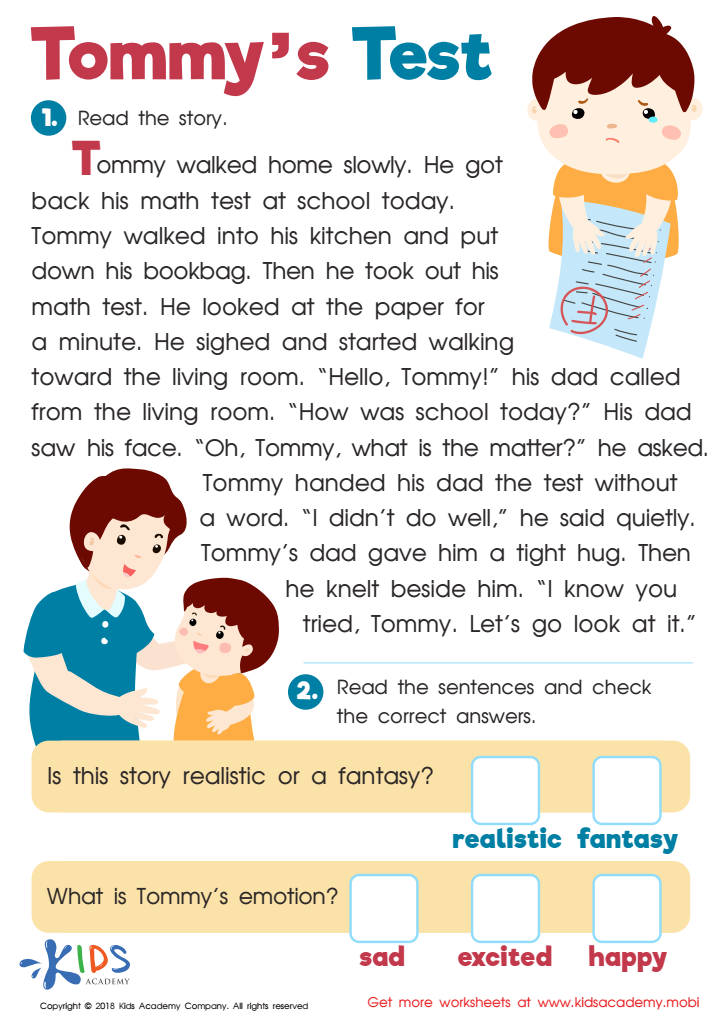
Tommys Test Worksheet
 Assign to My Students
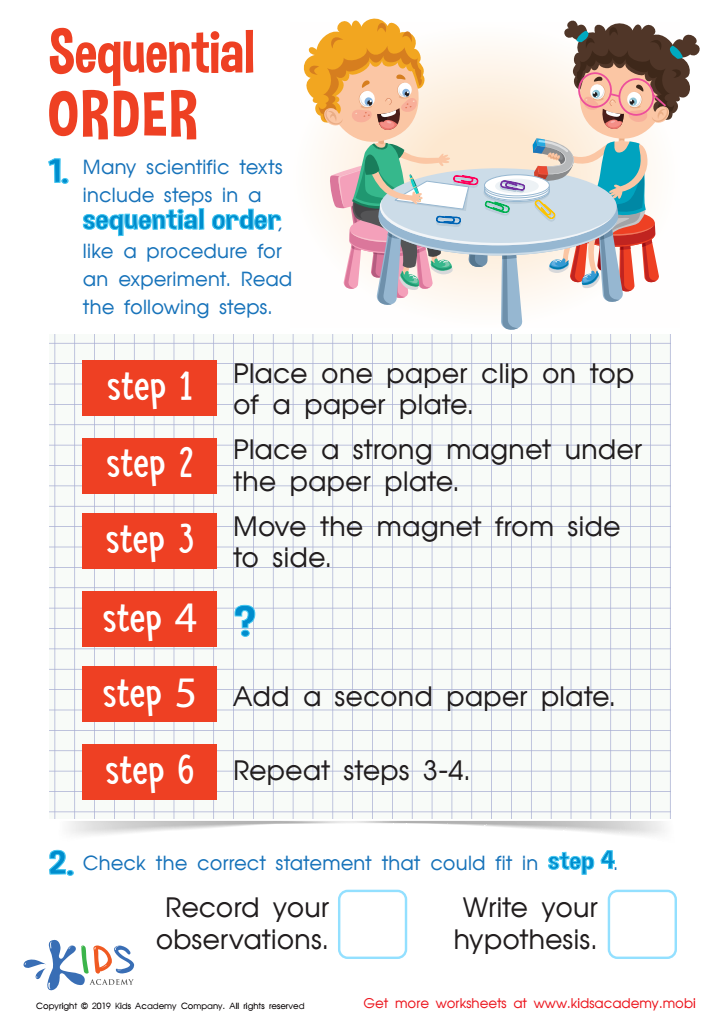
Sequencential Order Worksheet
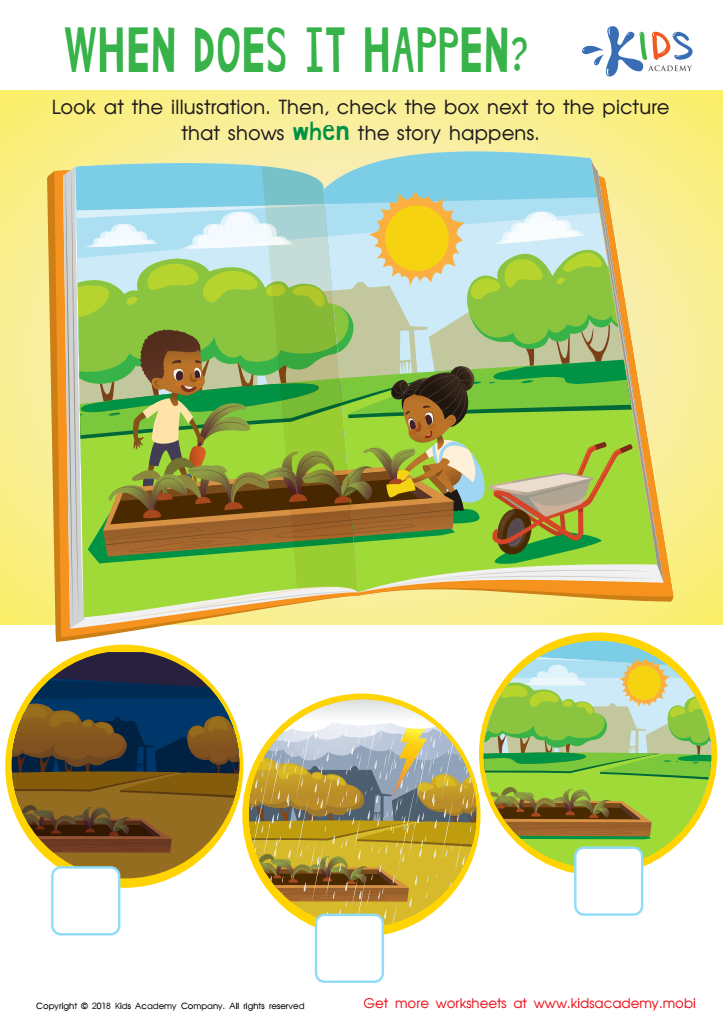
When Does It Happen? Worksheet








Understanding sequences in reading fiction is crucial for children's academic and cognitive development. When parents and teachers emphasize the comprehension of story sequences—like beginning, middle, and end—children gain vital skills that extend beyond literacy. Firstly, grasping sequences improves reading comprehension. Children become better at predicting outcomes and understanding cause-and-effect relationships, which enhances their overall understanding and enjoyment of stories.
Moreover, sequencing bolsters critical thinking skills. It teaches kids to organize information logically, fostering their ability to follow instructions, make connections, and solve problems in systematic ways. This logical structuring of thoughts is foundational, not just for literacy, but for subjects like math and science as well.
Furthermore, understanding sequences helps in developing communication skills. Children who can recall and narrate events in order autonomously are better storytellers. This skill boosts their confidence and aids in effective verbal and written communication.
Lastly, mastering sequences aids in memory retention. When children can arrange events coherently, they remember stories, facts, and lessons more effectively, which is beneficial for long-term academic success.
In essence, understanding sequences in reading fiction is not just about academic achievement; it fosters broad cognitive and communication skills, making it a priority for both parents and teachers.








