Analytical skills Animals Worksheets
3 filtered results
-
From - To
Enhance your child's analytical skills with our engaging Animals Worksheets! Designed for early learners, these worksheets combine fun animal themes with critical thinking exercises. Kids will explore various topics, such as animal habitats, life cycles, and adaptations, fostering curiosity about the natural world. Through activities like sorting, classifying, and problem-solving, children will develop their ability to reason, analyze information, and make connections. Perfect for homeschooling, classroom use, or extra practice, these worksheets encourage active learning while making education enjoyable. Give your child the tools to think critically and deepen their understanding of the fascinating animal kingdom. Download our worksheets today!
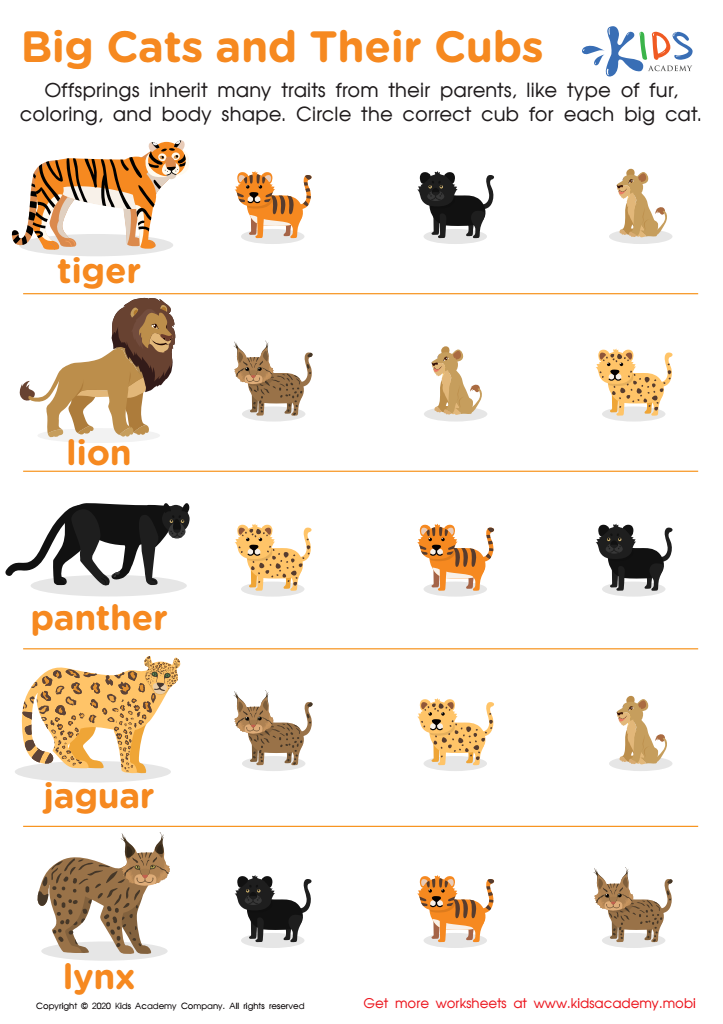
Big Cats and Their Cubs Worksheet
 Assign to My Students
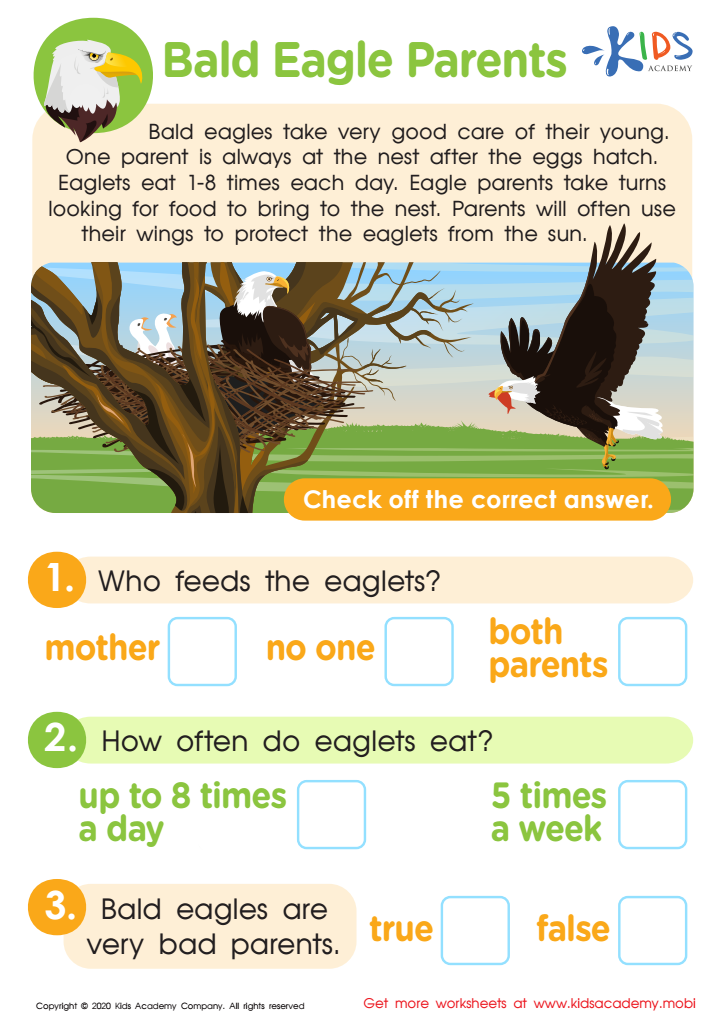
Bald Eagle Parents Worksheet
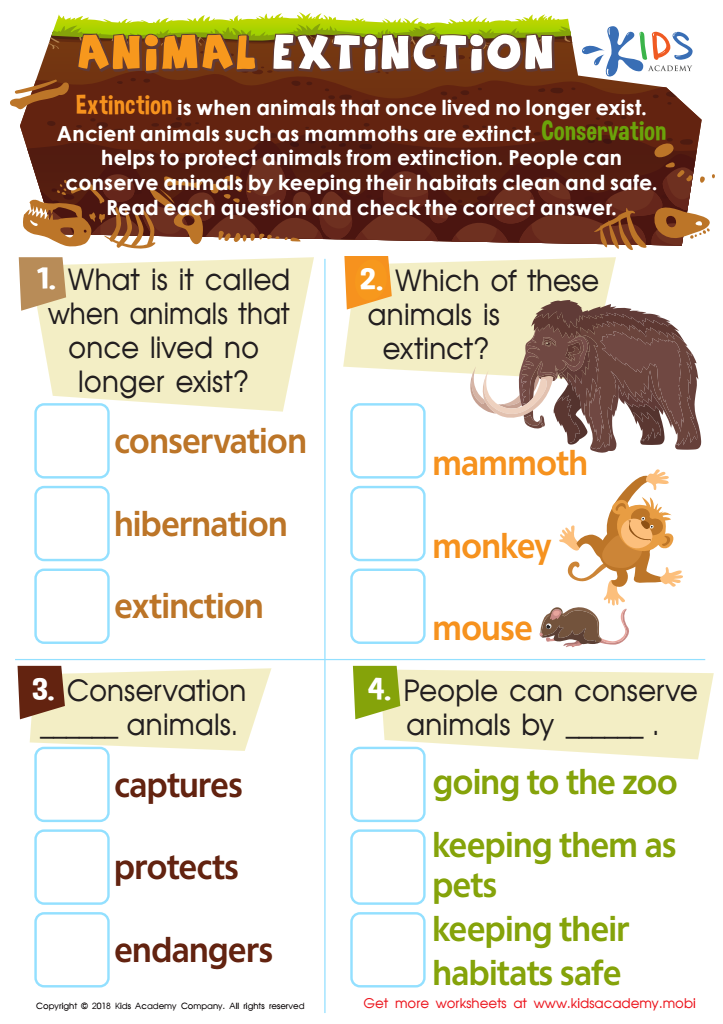
Animal Extinction Worksheet








Parents and teachers should care about analytical skills in animals because understanding these skills enriches children's knowledge of the natural world and encourages critical thinking. Animals exhibit a range of analytical abilities, from problem-solving to communication and social bonding. By exploring how animals analyze their environment, children can learn about adaptation, intelligence, and instinct, fostering a deeper appreciation for biodiversity.
Highlighting analytical skills in animals can also stimulate curiosity and engagement in learning. Whether observing a crow using tools, a dolphin coordinating with others to hunt, or ants collaborating to build complex structures, children can be inspired to investigate the underlying mechanisms of such behaviors. This exploration can lead to lessons in biology, ecology, and even ethics regarding animal treatment and conservation.
Moreover, linking analytical skills in animals to real-world applications helps children develop their own analytical thinking. By making connections between animal behaviors and human problem-solving, educators can promote creativity, collaboration, and resilience in students. Incorporating lessons about analytical skills in animals thus supports holistic education, inspiring young learners to think critically and empathetically about the living world around them. Ultimately, fostering an interest in these areas can shape future generations of scientists, conservationists, and informed citizens.








