Understanding ecosystems Animals Worksheets
3 filtered results
-
From - To
Explore the fascinating world of ecosystems with our "Understanding Ecosystems Animals Worksheets." Designed for young learners, these engaging printables help students grasp the intricate relationships between animals and their environments. The worksheets include fun facts, colorful illustrations, and interactive activities to enhance comprehension of diverse ecosystems. Focus areas include animal habitats, food chains, and the role of different species in their ecological communities. Perfect for classroom use or at-home learning, these resources foster critical thinking and promote a love for science. Dive into the study of life on Earth and empower students to appreciate the delicate balance of nature!
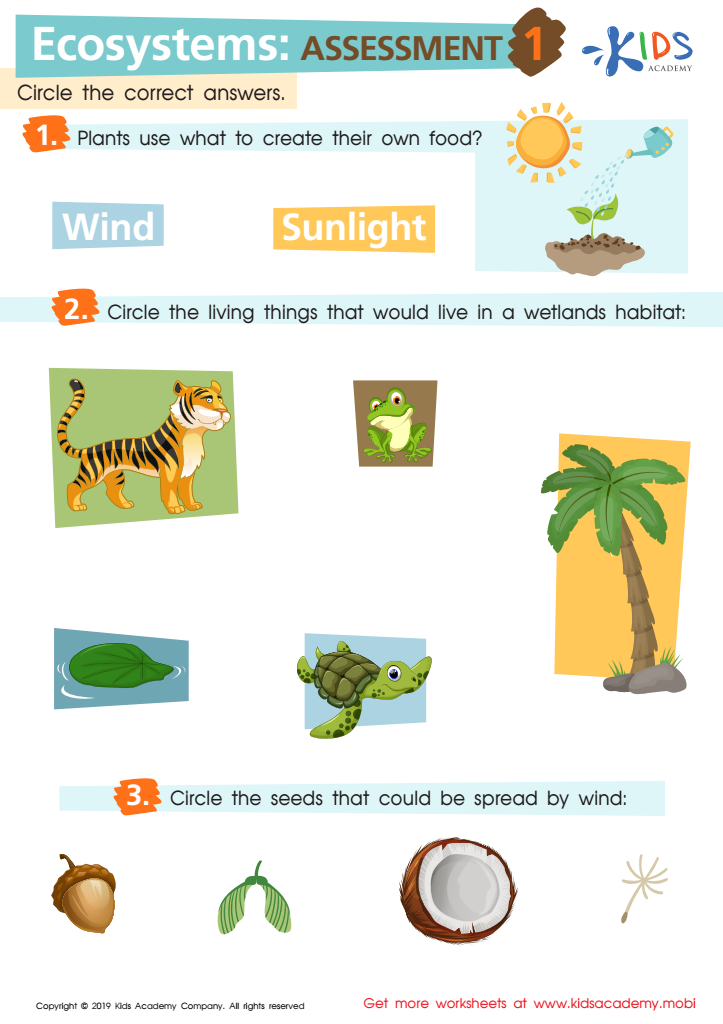
Ecosystems: Assessment 1 Worksheet
 Assign to My Students
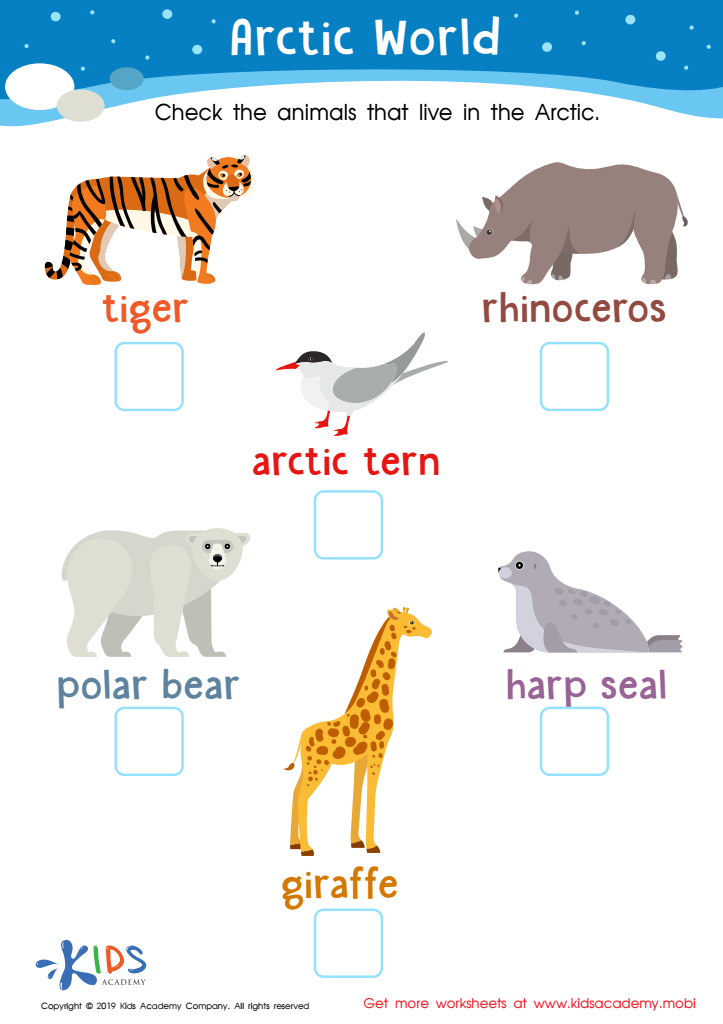
Arctic World Worksheet
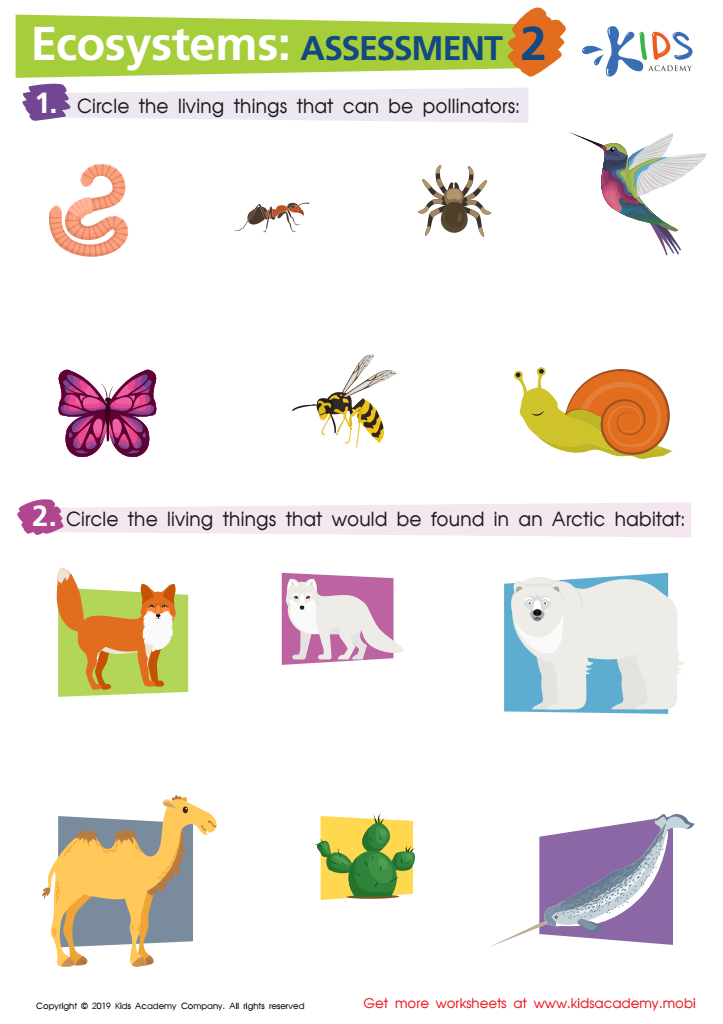
Ecosystems: Assessment 2 Worksheet








Understanding ecosystems and animals is crucial for parents and teachers because it lays the foundation for children's environmental literacy and stewardship. By learning about ecosystems, children gain insight into the interconnectedness of living organisms and their habitats. This knowledge fosters appreciation for biodiversity, highlighting the importance of every species in maintaining ecological balance.
Awareness of ecosystems helps children recognize human impact on the environment, promoting responsible behaviors such as conservation and sustainable practices. When parents and teachers introduce concepts related to animals and ecosystems, they are not just educating children about wildlife; they are nurturing critical thinking skills, observation skills, and a sense of empathy towards all living beings.
Moreover, understanding ecosystems enables children to appreciate the beauty of nature, which can inspire a lifelong passion for the outdoors and science. This subjects also facilitates discussions about climate change, habitat destruction, and the importance of biodiversity conservation—vital issues of our time.
In essence, teaching children about ecosystems and animals empowers them to become informed global citizens who care for the planet. They will be better equipped to advocate for environmental protection and contribute positively to the communities they inhabit. Engaging children in these topics makes them active participants in creating a sustainable future.








