Addition of fractions Grade 2 Worksheets
3 filtered results
-
From - To
Our "Addition of Fractions Grade 2 Worksheets" are designed to make learning fun and engaging for young students. These printable worksheets introduce second-graders to the concept of adding fractions with the same denominators using easy-to-follow exercises and colorful visual aids. Each sheet aims to build a strong foundation in fraction addition through hands-on practice and interactive activities. Ideal for classroom use or additional at-home practice, our worksheets encourage children to explore mathematical concepts while enhancing their problem-solving skills. Help your child gain confidence and excel in their math journey with our expertly crafted resources!
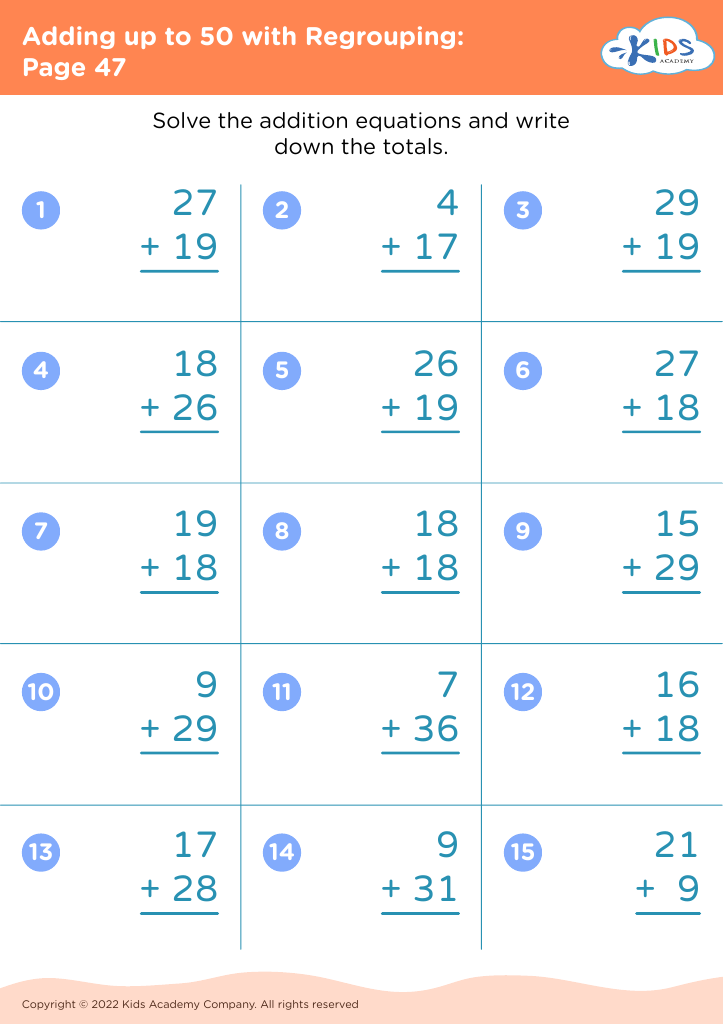
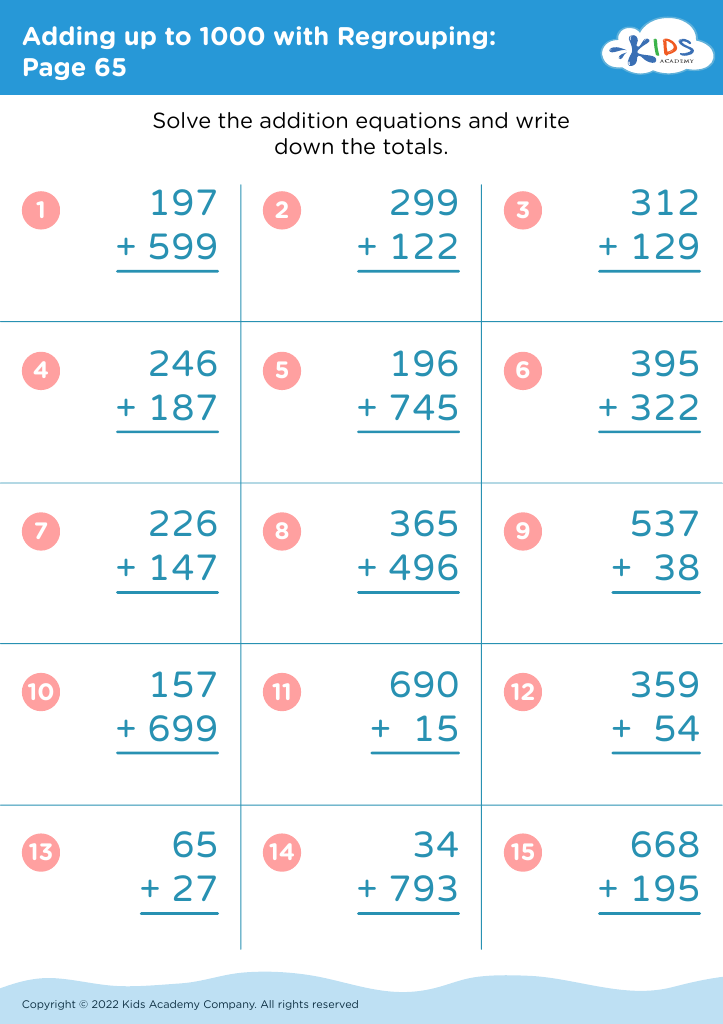
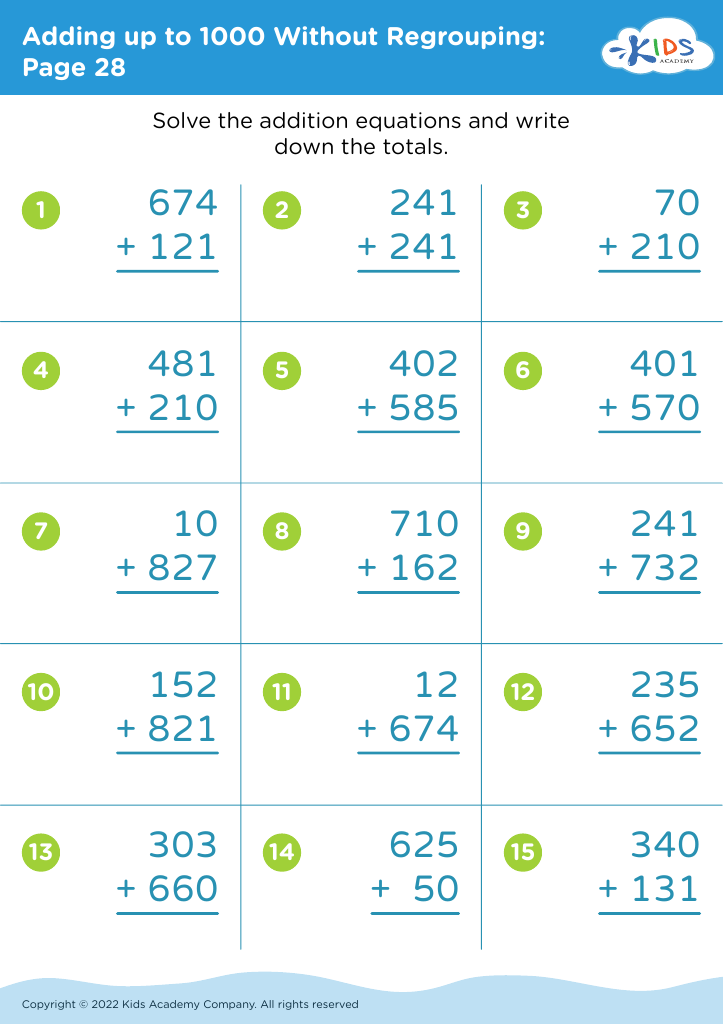








Understanding addition of fractions at an early age, such as in Grade 2, is essential for building a strong mathematical foundation. Parents and teachers should care about this concept for several reasons.
Firstly, learning to add fractions develops a child's number sense and helps them grasp more complex mathematical concepts in later grades. Fractions represent parts of a whole and are fundamental in understanding proportions, ratios, and decimals.
Secondly, developing these skills early on boosts a student's confidence and reduces math anxiety. Students who master addition of fractions are more likely to feel comfortable and competent in their math classes, fostering a positive attitude towards the subject.
Thirdly, addition of fractions has real-life applications that are relevant even at a young age. For example, sharing food, understanding portions, and measuring ingredients in cooking all require basic fraction knowledge. Grasping this concept allows children to relate math to everyday life, making it more engaging and practical.
Lastly, early proficiency in addition of fractions prepares children for standardized tests and future academic success. By ensuring that students are competent in this area, parents and teachers help pave the way for higher-level math achievement.
In conclusion, mastering the addition of fractions in Grade 2 is crucial for mathematical development, real-life problem-solving, reducing math anxiety, and future academic success.