Developing fine motor skills Grade 2 Worksheets
5 filtered results
-
From - To
Welcome to our Grade 2 Worksheets dedicated to developing fine motor skills! These engaging and thoughtfully crafted activities are designed to enhance your child's dexterity and hand-eye coordination through fun exercises. From tracing letters and numbers to cutting and pasting, our worksheets promote essential skills that support handwriting, art projects, and everyday tasks. Ideal for parents and educators, these resources provide a variety of challenges to cater to different learning styles, ensuring every second grader can build confidence in their abilities. Downloadable, easy to use, and aligned with educational standards, our worksheets make fine motor skill development enjoyable and effective!
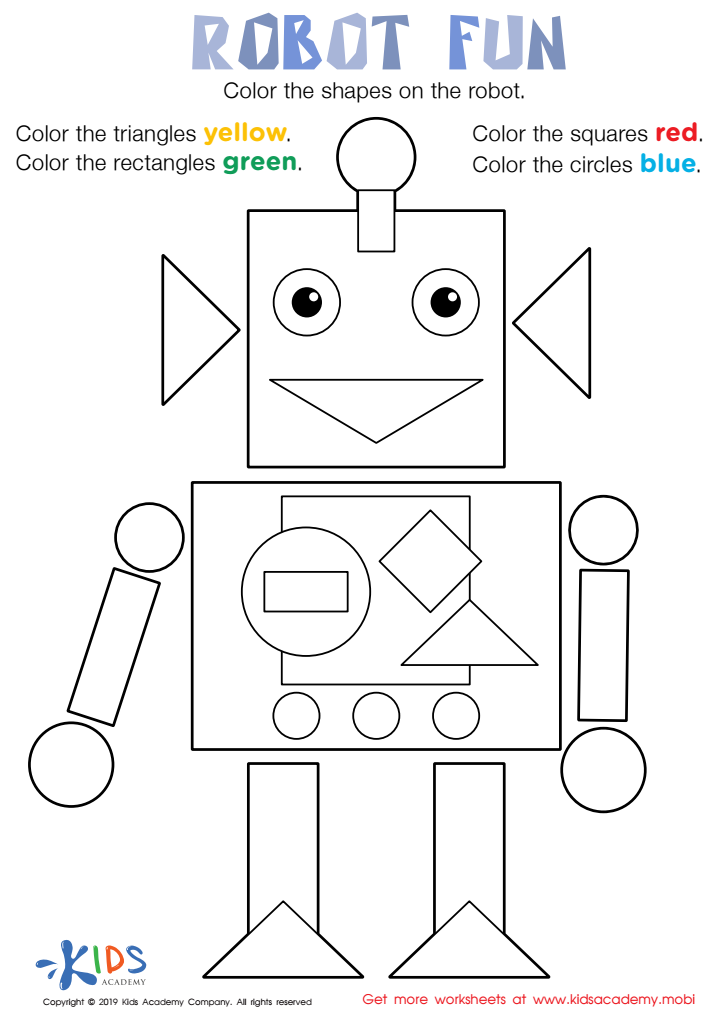
Robot Fun Worksheet
 Assign to My Students







Developing fine motor skills in Grade 2 is crucial for children's overall growth and learning. These skills involve the coordination of small muscles, particularly in the hands and fingers, allowing children to perform tasks such as writing, cutting, and manipulating small objects. As students progress through grade school, proficient fine motor skills greatly enhance their ability to engage in classroom activities and complete assignments independently.
Parents and teachers should care about fostering these skills because they are foundational for many academic tasks, including writing legibly and participating in arts and crafts. Children with strong fine motor skills often demonstrate better concentration and are more confident in their abilities, which can lead to improved academic performance and a love for learning.
Additionally, fine motor development is linked to cognitive skills: as children learn to grip a pencil or use scissors, they also enhance their problem-solving abilities and hand-eye coordination. By supporting fine motor skill development, parents and teachers can help children build independence, creativity, and self-esteem, laying a vital foundation for lifelong learning and success. Encouraging activities that promote these skills—such as drawing, threading beads, or building with blocks—can make a significant difference in a child's educational journey.