Fine motor skills (writing) Grade 2 Worksheets
7 filtered results
Difficulty Level
Grade
Age
-
From - To
Subject
Activity
Standards
Our Fine Motor Skills (Writing) Grade 2 Worksheets are designed to help young learners refine their hand-eye coordination and writing techniques. Focusing on skills such as pencil control, tracing, and letter formation, these worksheets provide engaging activities that make practice enjoyable. They offer a variety of exercises, from dot-to-dots to tracing lines and shapes, which enhance dexterity and precision. Ideal for teachers and parents, each worksheet supports second graders in developing the strong foundational skills necessary for clear, confident handwriting. Boost your child's fine motor skills and writing abilities with our expertly crafted resources today!
Favorites
With answer key
Interactive
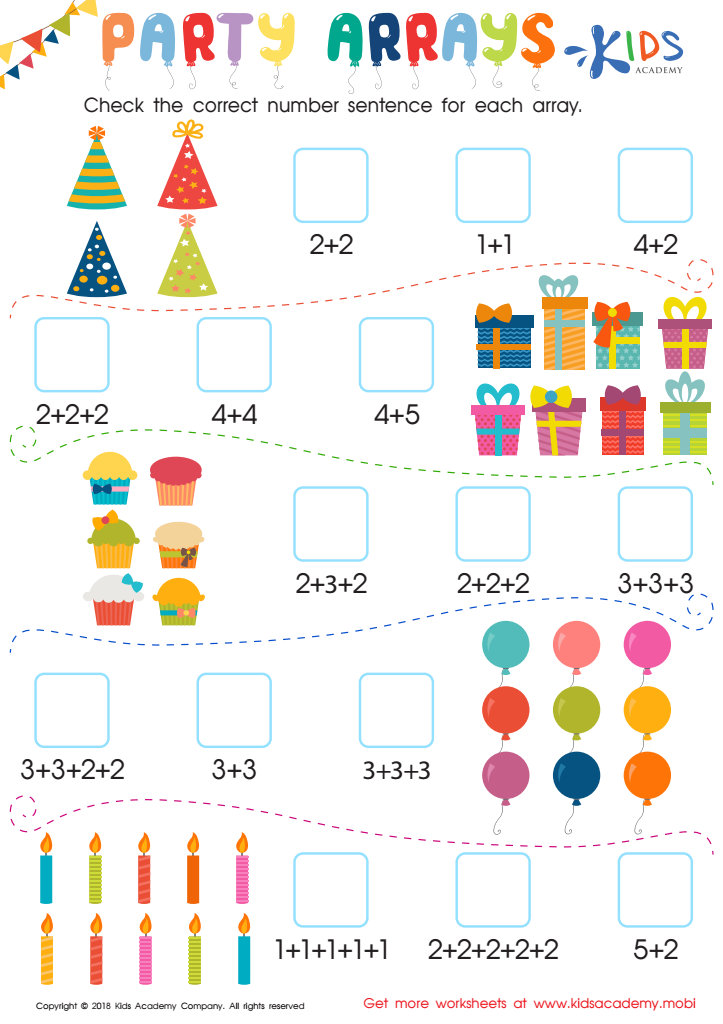
Party Arrays Worksheet
Help your child count the objects in each of the five arrays, then check the correct number sentence for each. This exercise will test their math skills and understanding of number sentences. Guide them to select the appropriate boxes.
 Assign to My Students
Party Arrays Worksheet
Worksheet
Join Kids Academy for Free
Who is primarily going to use this learning content?








Fine motor skills, critical for Grade 2 students, should highly concern parents and teachers due to their essential role in various aspects of childhood development. At this age, children are transitioning from the basic foundations of writing to more detailed and structured tasks, which forms a core part of their academic progress.
Fine motor skills involve the use of small muscles in the fingers and hands, necessary for tasks like writing, cutting, and buttoning clothing. Writing, a pivotal component, requires precision, coordination, and muscular control. Proficiency in these skills aids children in effectively expressing their thoughts and ideas on paper, a vital part of their learning processes. Furthermore, these skills are not only academic but also broadly impact children’s confidence and independence. Struggling with fine motor skills can lead to frustration and lower self-esteem, hampering their overall school experience and eagerness to learn.
For these reasons, actively nurturing fine motor skills through engaging activities, proper posture, and supportive tools is fundamental. It enables children to keep pace with curriculum demands and builds a strong foundation for future educational achievements, ensuring they gain the essential competencies needed for everyday tasks and creative expression. Therefore, both parents and teachers play a crucial role in prioritizing the development of these skills.