Fraction identification Grade 2 Worksheets
6 filtered results
-
From - To
Enhance your second grader's understanding of fractions with our engaging "Fraction Identification Grade 2 Worksheets." Designed to make learning fun, these worksheets help students identify and compare different fractions through colorful visuals and interactive exercises. With a variety of activities, children will master concepts like proper fractions, improper fractions, and mixed numbers while building their confidence in math. Perfect for classroom use or home practice, our resources cater to diverse learning styles, ensuring every child grasps essential fraction skills. Explore our worksheets today to support your child’s math journey and watch them thrive in their fraction identification abilities!
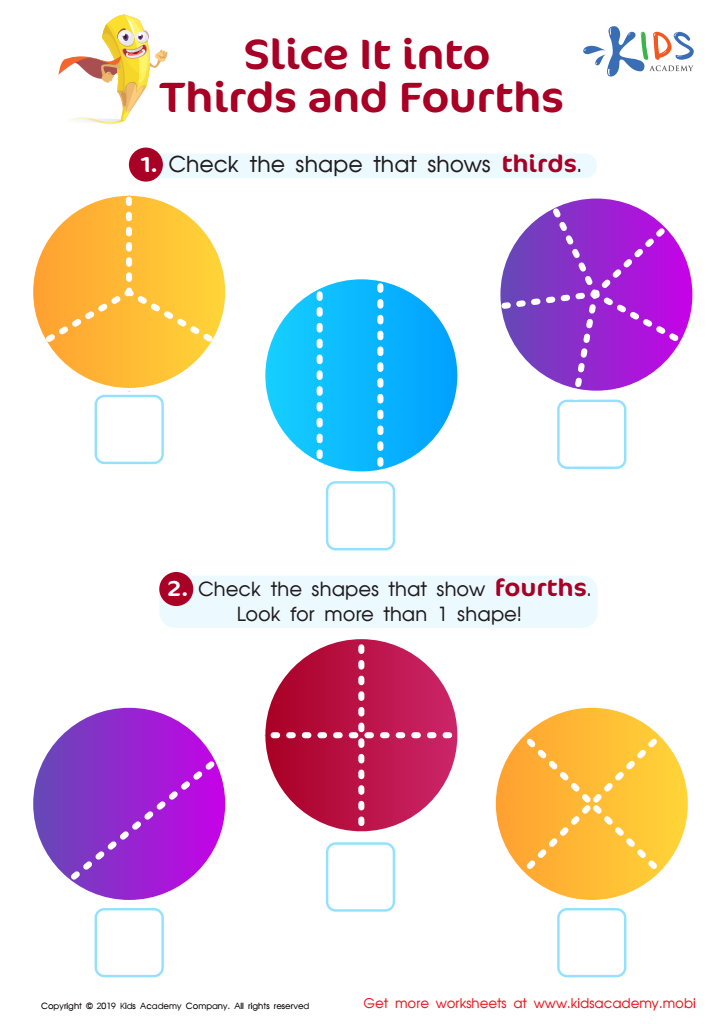
Slice in Thirds Fourths Worksheet
 Assign to My Students







Understanding fraction identification in Grade 2 is essential for young learners as it lays the foundational skills necessary for more complex mathematical concepts in the future. At this age, children begin to explore the idea of parts and wholes, which nurtures their critical thinking and problem-solving skills. Recognizing fractions—such as 1/2, 1/3, and 1/4—helps students understand relationships between numbers and the concept of dividing objects into equal parts.
For parents and educators, teaching fraction identification fosters not only mathematical skills but also everyday applications. Children begin to grasp how fractions are present in their surroundings, like sharing pizza or measuring ingredients in cooking, making math relatable and enjoyable. This real-world connection enhances their engagement and retention of concepts.
Moreover, proficiency in fractions boosts confidence and prepares students for more advanced topics in third grade and beyond. As they progress, strong fraction skills support learning in areas like geometry and measurement. By emphasizing the importance of fraction identification, parents and teachers can support a well-rounded mathematical foundation, encouraging a positive attitude towards math and lifelong learning. Investing time and effort in this area will yield benefits across the curriculum and in various aspects of students' futures.